Highest Paying Jobs in Australia: Careers, Salaries & Study Pathways

Jul 06, 2026

Many students dream of studying in Australia, but one question often comes up first: Which careers actually lead to the highest salaries?
After all, studying abroad is a big investment, and choosing the right career can make all the difference.
You see, while Australia offers excellent earning opportunities across many industries, not every profession pays the same. Your salary depends on factors like your qualifications, skills, experience, and the demand for your field. That's why planning ahead matters.
If you know where the best opportunities are, you can choose a course that supports both your interests and your long-term career goals. In this guide, you'll discover the highest paying jobs in Australia, how much they earn, what qualifications they require, and the study pathways that can help you build a rewarding career after graduation.
In this blog
Top 10 Highest Paying Jobs in Australia at a Glance
Australia's highest-paying jobs are mainly found in healthcare, technology, engineering, business, and law, with some professionals earning well over AUD 200,000 per year. However, these careers usually require specialized education, professional qualifications, and several years of experience to reach their full earning potential. The table below gives you a quick overview of Australia's highest-paying careers before we explore each one in detail.
Rank | Job | Average Annual Salary (AUD) | Industry | Typical Qualification |
|---|---|---|---|---|
| 1 | Neurosurgeon | $500,000+ | Healthcare | Medical Degree + Specialist Training |
| 2 | Anaesthetist | $400,000+ | Healthcare | Medical Degree + Specialist Training |
| 3 | Psychiatrist | $250,000–$350,000 | Healthcare | Medical Degree + Specialist Training |
| 4 | General Practitioner (GP) | $200,000–$350,000 | Healthcare | Medical Degree |
| 5 | Dentist | $180,000–$300,000 | Healthcare | Dental Degree |
| 6 | Corporate Lawyer | $180,000–$300,000 | Legal | Law Degree |
| 7 | Mining Engineer | $170,000–$250,000 | Engineering & Mining | Engineering Degree |
| 8 | Petroleum Engineer | $160,000–$240,000 | Engineering | Engineering Degree |
| 9 | Software Engineering Manager | $180,000–$250,000 | Technology | Computer Science / IT Degree |
| 10 | IT Director | $180,000–$250,000 | Technology | IT or Business Degree |
What Determines the Highest-Paying Jobs in Australia?
The highest-paying jobs in Australia have one thing in common—they offer skills that employers value the most. While salary varies from one career to another, a few key factors have the biggest impact on how much you can earn. Let's look at what they are:
- Industry Demand: Careers in industries with a high demand for skilled workers, such as healthcare, technology, and engineering, often offer higher salaries.
- Education & Qualifications: Most high-paying careers require the right degree, professional license, or industry certification.
- Experience: As you gain experience and take on greater responsibilities, your earning potential usually increases.
- Location: Salaries can vary depending on where you work, with some cities and regional areas offering higher pay than others.
- Specialized Skills: Professionals with niche expertise or leadership roles are often rewarded with higher salaries.
Top 20 Highest-Paying Jobs in Australia: Best Careers 2026
The highest-paying jobs in Australia are led by medical specialists such as neurosurgeons and anaesthetists, followed by careers in law, engineering, technology, and business. Depending on the profession, experienced professionals can earn anywhere from AUD 150,000 to over AUD 500,000 per year. Here's a closer look at each career, including what the job involves, why it pays well, and the study path that can help you get there.
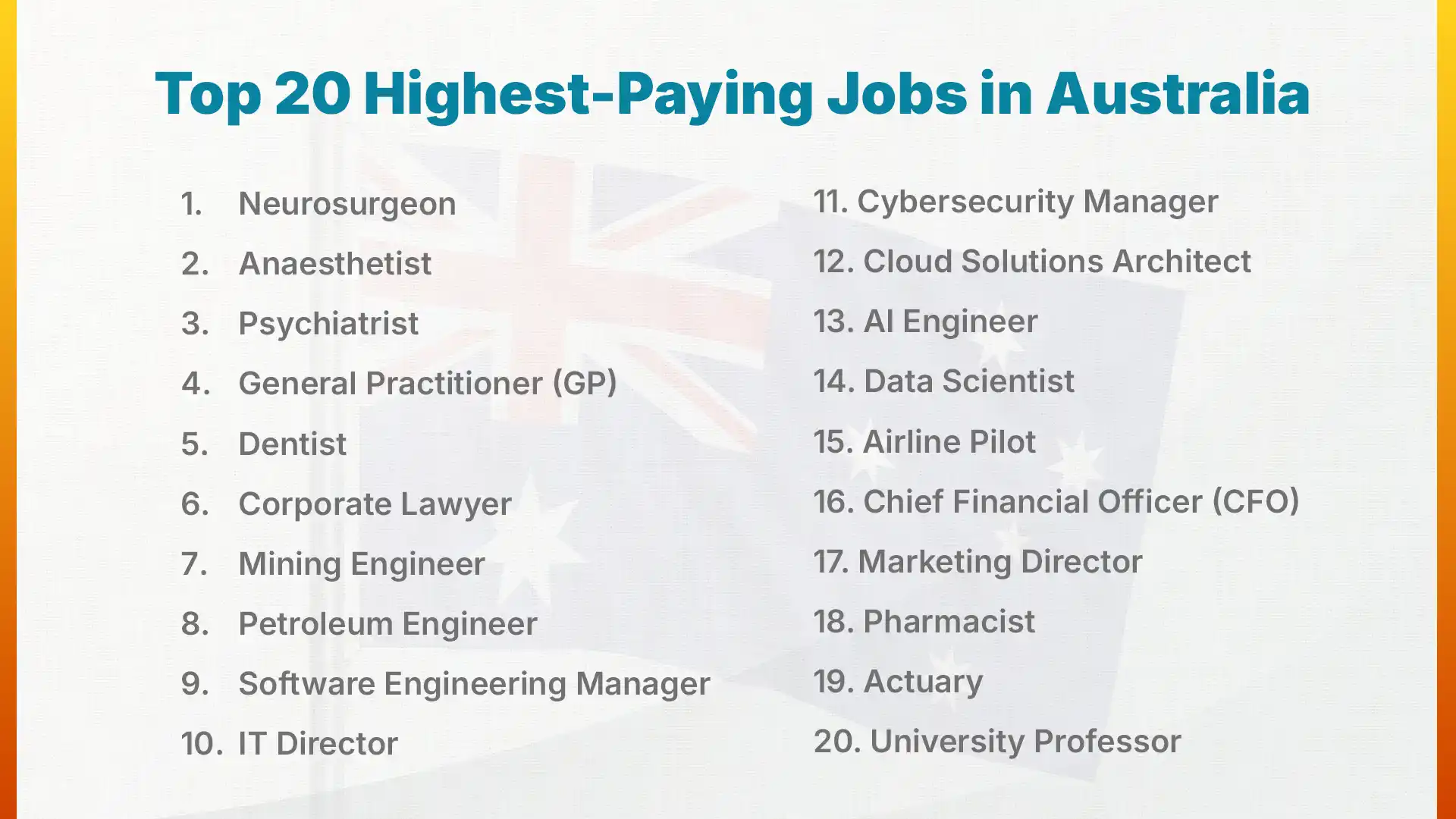
1. Neurosurgeon
Neurosurgeons treat conditions affecting the brain and nervous system. With an average salary of over AUD 500,000 per year, they are Australia's highest-paid professionals. This career requires a medical degree and specialist training, making it ideal for students committed to a long but highly rewarding medical career.
2. Anaesthetist
Anaesthetists administer anaesthesia and monitor patients during surgery. They earn an average salary of more than AUD 400,000 annually, reflecting their specialized expertise. You'll need a medical degree and advanced training, making this an excellent career for those who thrive under pressure.
3. Psychiatrist
Psychiatrists diagnose and treat mental health conditions through therapy and medication. They earn an average salary of around AUD 300,000 per year and remain in high demand across Australia. A medical degree and psychiatry specialization are essential for this rewarding healthcare career.
4. General Practitioner (GP)
General Practitioners (GPs) diagnose common illnesses, provide preventive care, and refer patients to specialists when needed. They earn an average salary of around AUD 250,000 per year. A medical degree and GP training can lead to a stable, respected, and rewarding career.
5. Dentist
Dentists help patients maintain good oral health by diagnosing and treating problems related to teeth and gums. With an average salary of around AUD 220,000 per year, dentistry offers strong earning potential. A dental degree and professional registration are required to practice in Australia.
6. Corporate Lawyer
Corporate lawyers advise businesses on contracts, regulations, mergers, and other legal matters. They earn an average salary of around AUD 210,000 per year, especially in large firms. Completing a law degree and practical legal training is the first step toward this prestigious career.
7. Mining Engineer
Mining engineers plan and manage mining operations while ensuring safety and efficiency. They earn an average salary of around AUD 190,000 per year, thanks to Australia's strong mining sector. A degree in mining engineering opens the door to this well-paid profession.
8. Petroleum Engineer
Petroleum engineers develop methods to extract oil and gas safely and efficiently. They earn an average salary of around AUD 185,000 per year, particularly in the energy sector. A petroleum or related engineering degree is usually required for this technically demanding career.
9. Software Engineering Manager
Software Engineering Managers lead development teams and oversee the delivery of software projects. They earn an average salary of around AUD 185,000 per year, reflecting their technical and leadership skills. Most professionals begin with a degree in computer science or a Bachelor's in software engineering in Australia.
10. IT Director
IT Directors oversee an organization's technology strategy, infrastructure, and digital operations. With an average salary of around AUD 180,000 per year, this leadership role offers excellent career growth. A degree in IT or computer science in Australia, combined with management experience, is typically required.
11. Cybersecurity Manager
Cybersecurity Managers protect organizations from cyber threats by leading security strategies and managing risk. They earn an average salary of around AUD 180,000 per year. A background in cybersecurity or information technology, along with industry experience, is essential for this fast-growing career.
12. Cloud Solutions Architect
Cloud Solutions Architects design and manage cloud computing systems for businesses. They earn an average salary of around AUD 175,000 per year, making them among Australia's top-paid technology professionals. A degree in IT and cloud platform certifications can help you enter this field.
13. AI Engineer
AI Engineers develop intelligent systems using machine learning and artificial intelligence technologies. They earn an average salary of around AUD 170,000 per year, driven by growing demand across industries. A degree in computer science, AI, or data science provides a strong foundation for this career.
14. Data Scientist
Data Scientists analyze large datasets to help businesses make smarter decisions. They earn an average salary of around AUD 165,000 per year, with demand growing across finance, healthcare, and technology. A Bachelor’s degree in data science in Australia, computer science, or statistics is a great starting point.
15. Airline Pilot
Airline Pilots safely operate commercial aircraft and transport passengers and cargo. They earn an average salary of around AUD 160,000 per year, with experienced captains earning significantly more. Becoming a pilot requires flight training, a commercial pilot licence, and extensive flying experience.
16. Chief Financial Officer (CFO)
Chief Financial Officers (CFOs) manage a company's financial planning, budgeting, and investment decisions. They earn an average salary of around AUD 220,000 per year. A background in finance, accounting, or business, along with leadership experience, is usually essential.
17. Marketing Director
Marketing Directors develop strategies that help businesses grow their brands and attract customers. They earn an average salary of around AUD 170,000 per year, particularly in larger organizations. A degree in marketing, business, or a BBA study in Australia, and strong leadership skills can lead to this role.
18. Pharmacist
Pharmacists dispense medications, advise patients, and support safe healthcare practices. They earn an average salary of around AUD 130,000 per year, with opportunities available across hospitals and community pharmacies. A pharmacy degree and professional registration are required to practice in Australia.
19. Actuary
Actuaries use mathematics and data analysis to assess financial risks for businesses and insurance companies. They earn an average salary of around AUD 170,000 per year, making it one of the highest-paying careers in finance. A degree in actuarial studies, mathematics, or statistics is recommended.
20. University Professor
University Professors teach, conduct research, and mentor students in higher education institutions. They earn an average salary of around AUD 160,000 per year, with senior academics often earning more. This career usually requires a doctoral degree and a strong research background.
How to Choose the Right Course for a High-Paying Career in Australia?
Choosing the right course is just as important as choosing the right career. A well-planned degree can help you build the skills employers want and improve your chances of landing a high-paying job after graduation. Here are a few things to keep in mind before making your decision.

1. Match Your Degree with Your Career Goals
Start by deciding what career you want instead of choosing a course at random. Once you have a clear goal, look for a degree that provides the knowledge, skills, and qualifications needed for that profession.
2. Choose an Accredited Course with Strong Industry Recognition
Always choose a course that is recognized by Australian employers and relevant professional bodies. An accredited qualification can improve your job prospects and may be required for careers like medicine, engineering, law, and nursing.
3. Look Beyond University Rankings
A university's ranking is important, but it shouldn't be your only deciding factor. Also consider the course content, teaching quality, industry connections, graduate employment rates, and the support available for international students.
4. Why Internships and Industry Placements Matter
Practical experience helps you apply what you learn in the classroom while building confidence and professional skills. Many employers also value candidates who have completed internships or industry placements before graduating.
5. Build Employability Skills While You Study
Along with academic knowledge, employers look for skills like communication, teamwork, problem-solving, and leadership. Taking part in projects, volunteering, networking events, and part-time work can help you stand out when applying for jobs after graduation.
Factors That Can Increase Your Salary in Australia
Landing a high-paying job is just the beginning. Over time, several factors can help you earn more and advance your career.
1. Gain Australian Work Experience
Employers often value local work experience because it shows you're familiar with Australian workplace standards. As you gain experience, you'll also become eligible for higher-paying roles.
2. Develop In-Demand Specializations
Building expertise in a specialized area can set you apart from other candidates. Professionals with niche skills are often rewarded with better job opportunities and higher salaries.
3. Earn Industry Certifications
Industry-recognized certifications can strengthen your qualifications and keep your skills up to date. In many fields, they also improve your chances of securing higher-paying positions.
4. Move into Leadership Roles
As your experience grows, stepping into supervisory or management positions can significantly increase your earning potential while opening new career opportunities.
5. Continue Upskilling Throughout Your Career
Industries are constantly evolving, so continuous learning is essential. Taking short courses, attending training programs, or learning new technologies can help you stay competitive.
6. Choose the Right City
Your location can also influence your salary. Cities like Sydney, Melbourne, and Perth often offer higher wages, while some regional areas provide competitive pay to attract skilled professionals.
Conclusion
Australia offers some of the world's highest-paying careers, but a high salary doesn't happen by chance. It comes from choosing the right career, gaining the right qualifications, building valuable skills, and staying in demand as industries evolve.
While earning potential matters, the best career is one that also matches your interests, strengths, and long-term goals.
If studying in Australia is part of your dream, start planning your study abroad today. Do not wait for the "perfect" time. Because honestly, it does not exist at all!
The course you choose now can shape the opportunities you have after graduation.
And if you need expert guidance along the way, don't hesitate to seek professional support from an educational consultant.