Professionally Accredited Courses Abroad: What Nepali Students Need to Know Before Applying

Oct 14, 2026
Choosing a degree from a reputable university does not always guarantee that you can enter your chosen profession. Fields such as engineering, nursing, accounting, architecture, and teaching may require specific professional accreditation, registration, or licensing, depending on the country and role. For Nepali students, understanding these requirements before enrolling can help protect future career opportunities abroad and in Nepal.
This guide explains what professional accreditation means, why it matters when choosing a course overseas, and how to verify whether a qualification meets the requirements of your intended profession. It also covers important factors to consider before applying and common mistakes to avoid, helping you secure better countries to study abroad.
In this blog
What Is a Professionally Accredited Course?
A professionally accredited course is a program assessed by a relevant professional body or industry organization to determine whether it meets the standards expected for a particular profession. The assessment may cover the curriculum, learning outcomes, practical training, and skills students develop during their studies.
Professional accreditation differs from institutional recognition, which relates to an institution's status within the relevant education system. A recognized university may offer courses that are not professionally accredited, and accreditation may apply only to specific programs, campuses, or study modes.
Graduating from an accredited course may support applications for professional membership, registration, or licensing, but additional requirements, such as examinations, work experience, or English-language proficiency, may still apply. Nepali students should verify the accreditation status of their intended course and verify their choices are top courses to study abroad rather than relying on the university's reputation alone.
What Should You Consider Before Choosing an Accredited Course Abroad?
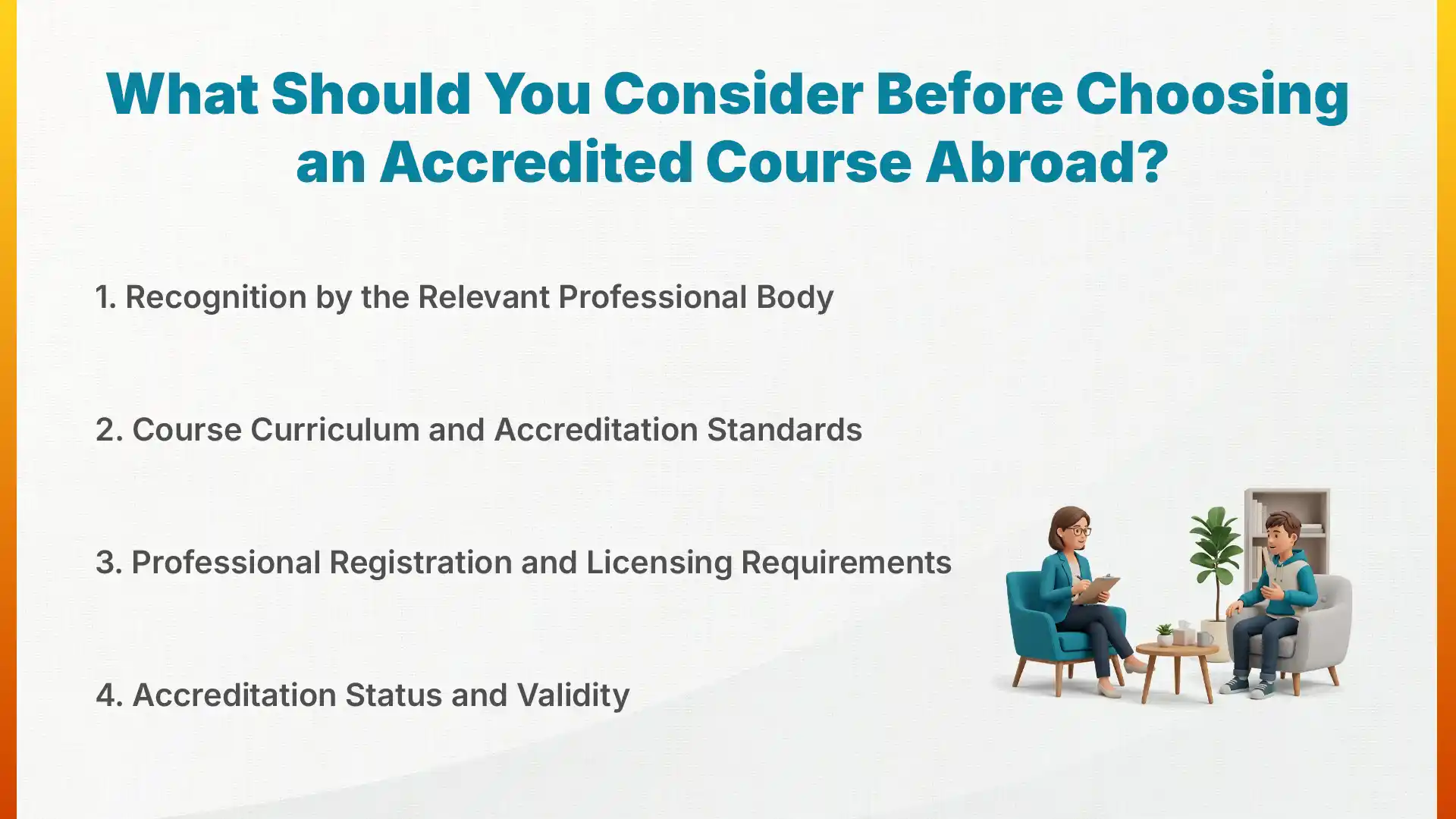
Before choosing an accredited course abroad, Nepali students should evaluate the professional body, curriculum requirements, licensing pathway, and current accreditation status. These checks can help determine whether a qualification aligns with their intended career and professional requirements.
1. Recognition by the Relevant Professional Body
Identify the professional body responsible for accrediting your chosen field in your destination country and intended work location. Confirm that the relevant regulator or professional organization recognizes the accreditation, as approval from one body may not meet every country's requirements.
2. Course Curriculum and Accreditation Standards
Review the curriculum to see whether it covers the required subjects, practical training, placements, or project work specified by the accrediting body. Ask the university whether all required components are included in your chosen program and study pathway, as similar courses may not meet the same professional standards.
3. Professional Registration and Licensing Requirements
Check whether your intended profession requires additional steps after graduation, such as examinations, supervised practice, background checks, or English-language tests. Understanding these requirements early can help you estimate the time, cost, and preparation needed to qualify for professional practice.
4. Accreditation Status and Validity
Confirm that the course's accreditation is current and applies to your intended intake, campus, and study mode. Some accreditations are time-limited or subject to review, so check the professional body's official register and keep a record of the information when you apply.
How to Verify a Course's Professional Accreditation
Students should verify a course's professional accreditation through official registers, written confirmation from the university, and course-specific documentation. University marketing materials alone may not provide enough detail to confirm whether accreditation meets their intended career requirements.
Check Official Accreditation Registers: Search the relevant professional body's official register for your university, exact course title, and campus. Confirm that the accreditation is current and applies to your intended intake and study mode. Keep a copy of the listing for future reference.
Confirm Details With the University: Contact the admissions team or relevant department and request written confirmation of the course's accreditation status. Ask which professional body accredits the program, the period covered, and whether the accreditation applies to your intake, campus, and study mode.
Review Course-Specific Conditions: Check whether accreditation depends on completing particular subjects, practical placements, or other course requirements. Ask whether changing majors, transferring campuses, or switching study modes could affect your eligibility for professional recognition.
Contact the Professional Body Directly: If the accreditation status is unclear or the university's information differs from the official register, contact the relevant professional body for clarification. Ask whether the program meets the current requirements for your intended career and keep its response for your records.
How Professional Accreditation Affects Future Career Plans
Professional accreditation can influence your eligibility for professional registration, recognition by employers, and opportunities for further study or work abroad. However, it does not guarantee employment or recognition in every country.
Employment and Licensing Abroad: An accredited qualification may help you meet the education requirements for professional registration in your destination country. However, additional examinations, supervised experience, or licensing may still be required. Work rights and employer requirements can also affect your employment options.
Recognition in Nepal: If you plan to return to Nepal, check whether your overseas qualification meets the requirements of the relevant professional council or authority. Depending on your field, you may also need academic equivalence or additional approval before practicing.
Further Study and International Mobility: An accredited degree may support applications for postgraduate study or professional recognition in other countries. However, requirements vary by institution and profession, so confirm whether your qualification will be accepted before making plans.
Common Mistakes to Avoid When Choosing an Accredited Course
Students can make costly decisions by misunderstanding accreditation, expecting guaranteed career outcomes, or overlooking additional licensing requirements. Understanding these risks before enrolling can help Nepali students make more informed decisions.
Confusing University Recognition With Course Accreditation: A recognized university does not mean every course it offers is professionally accredited. Check the specific course's status with the relevant professional body rather than relying solely on the university's reputation or ranking.
Assuming Accreditation Guarantees Employment: Accreditation may help meet professional eligibility requirements, but it does not guarantee a job, a license, or permanent residency. Employment also depends on your skills, experience, job opportunities, and visa conditions.
Overlooking Additional Licensing Requirements: Some professions require examinations, supervised practice, or language tests after graduation. Research the complete pathway to professional registration, including the likely costs and time involved, before choosing a course.
Ignoring Accreditation Validity and Conditions: Accreditation may apply only to specific intakes, campuses, or study modes, and its status can change. Confirm that your chosen course is covered for your intended intake before paying fees or accepting an offer.
Conclusion
Choosing a professionally accredited course abroad can influence your professional registration, career opportunities, and future study options. Before applying, verify the course's accreditation, understand the licensing requirements in your intended work destination, and check whether your qualification will be recognized in Nepal if you plan to return. Taking these steps early can help you avoid costly mistakes and choose a course that aligns with your long-term goals.
Need help finding a abroad course that aligns with your career goals? The expert counselors at SAS Education Consultancy can verify program statuses and guide you toward the right study choices. Contact us today for personalized support!