Best Countries to Study and Work for Nepalese Students

Jan 22, 2026
The journey of studying abroad is exciting! Countries like Australia, Canada, Germany, the USA, the UK, South Korea, and France are known for world-class education, vibrant student life, and excellent career opportunities.
But before you reach your dream destination, how do you find the best country to study and work abroad? Will you be able to manage costs, find part-time work, or even stay and build a career after graduation? These questions are common for Nepali students who want to balance quality education with real-world opportunities.
This guide is designed to help you choose the best country for international students to study and work. Compare the top countries, their costs, work rules, and post-study opportunities, and plan your journey with confidence and clarity.
In this blog
What are the Best Countries to Study & Work Abroad?
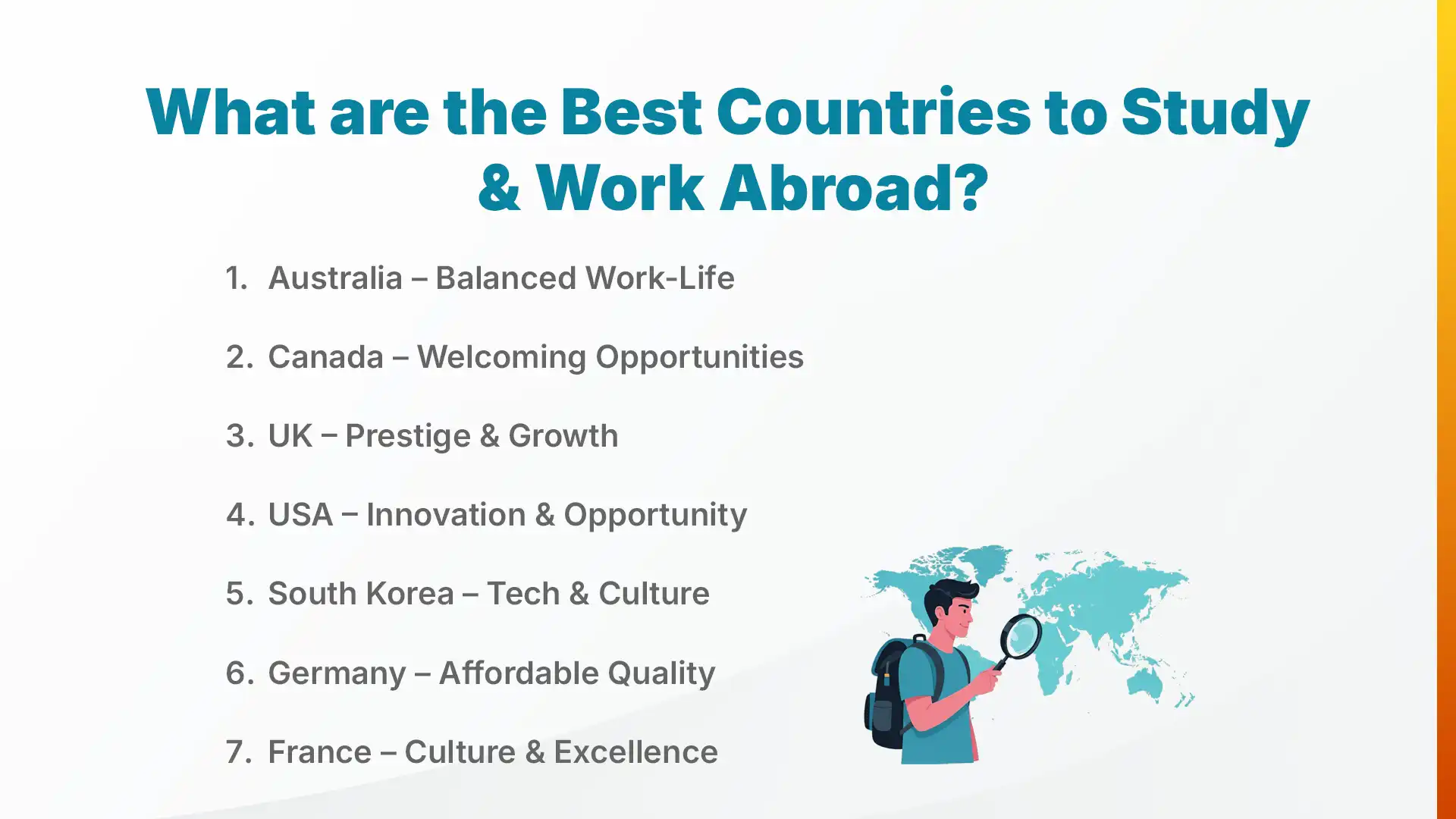
The best countries to study and work abroad for Nepali students are Australia, Canada, Germany, the USA, the UK, South Korea, and France. These countries offer strong education, part-time work opportunities during studies, and post-study work visas that can lead to career growth or permanent residency. Let’s explore each of these destinations in detail, comparing costs, work rules, and opportunities to help you make the right choice.
1. Australia
Australia is one of the most popular choices for international students because it combines top-quality education with a lively student life and plenty of chances to work while you study and after graduation. Universities like Melbourne, Sydney, and Monash are highly ranked globally, making it a great place to grow academically.
Tuition usually ranges from AUD 20,000–45,000 per year for undergraduates and AUD 22,000–50,000 for postgraduates. Living costs can be high, but many students support themselves with part-time jobs in cities like Melbourne, Sydney, or Brisbane.
You can work up to 48 hours per fortnight during classes and unlimited during breaks. After graduation, the Temporary Graduate visa (subclass 485) lets you work for 2–4 years, giving you real experience and a chance to plan your future in a safe, multicultural country.
These are the benefits of studying in Australia:
- World-class universities with strong global rankings
- Work up to 48 hours per fortnight during term
- Temporary Graduate visa allows 2–4 years work post-study
- Clear pathways to permanent residency for graduates
- Safe, multicultural cities with vibrant student life
2. Canada
Canada is a top pick for students who want a balanced mix of quality education, work experience, and real chances at long‑term stay. Universities like the University of Toronto, UBC, and McGill are well‑known worldwide, and Canada attracts hundreds of thousands of international students every year. The best part about Canada is that its Post‑Graduation Work Permit (PGWP) lets you stay and work for up to 3 years after graduation, which is a big advantage if you want career experience or want to apply for permanent residency later.
Tuition for international students typically ranges from about CAD 15,000–35,000 per year, and you can work up to 24 hours per week during studies and full‑time on breaks. This makes it easier to support your living costs while building experience.
Here are the top reasons to study in Canada:
- Strong universities with global recognition
- Up to 3 years post‑study work permit
- Work while studying allowed
- Clear pathways to PR
- Safe, multicultural cities
3. USA
The United States is a dream destination for many students because it has top‑ranked universities, dynamic campuses, and strong job markets in fields like tech, business, and healthcare. With a student visa (F‑1), you can work on campus up to about 20 hours per week during semesters and full‑time during official breaks like summer vacation, which helps with living costs.
Beyond part‑time work, practical training programs make the U.S. especially valuable. Curricular Practical Training (CPT) lets you do internships tied to your degree while studying, and Optional Practical Training (OPT) lets most graduates work for up to 12 months after finishing their course. STEM students can often extend OPT up to 3 more years, giving them a great chance to build real career experience.
Here’s why international students choose to study in the USA:
- World’s top universities
- Work 20 hrs/week during study & internships
- OPT post‑graduation work (up to 12 months, with up to 3 years for STEM)
- Vibrant campus life & global exposure
4. United Kingdom
The United Kingdom offers classic academic prestige with historic universities like Oxford, Cambridge, and many respected modern institutions. It’s known for shorter degree programs than some countries, so you can finish your studies faster and begin work sooner.
As an international student on a Student visa, you can normally work up to 20 hours per week during term time, and full‑time during official university vacations. After finishing your course, the Graduate Route visa has allowed students to stay and work for up to two years (with doctoral graduates getting even longer).
This means you can earn while you study and also build your resume with real UK work experience after graduation. These are the top benefits of studying in the UK:
- Shorter degree programs than other top study destinations
- Part‑time work during study
- Post‑study work visa options
- Global reputation & strong job sectors
5. South Korea
South Korea is becoming a popular study destination in Asia, especially with its strong technology, engineering, and business programs and growing international student community. Schools like Seoul National University, KAIST, and Yonsei are known for research and innovation, and the country attracts students eager to experience its vibrant culture and dynamic cities like Seoul and Busan.
While studying on a D‑2 student visa, you can usually work up to about 20–25 hours per week during semesters (and more during breaks), but you must get permission from your university and immigration office first. After graduation, you can apply for a job‑seeker visa (D‑10) to stay in the country for around 6–12 months while you look for employment, and then switch to a work visa if you find a suitable job in your field.
Benefits of Studying in South Korea:
- Strong tech and research focus
- Growing global campus culture
- Part‑time work ~20–25 hrs/week while studying allowed
- Job‑seeker visa after graduation
- Scholarships for study programs
6. France
France combines world‑class education with rich culture, historic cities, and relatively flexible work opportunities for students. Many universities and grandes écoles are respected across Europe, and you’ll find courses in both French and English depending on the program you choose.
If you hold a valid long‑stay student visa or residence permit, you can work up to about 964 hours a year, which is roughly around 20 hours per week during the academic schedule, and you can often work full‑time during holiday breaks. This means you can earn extra money, improve your French, and get local work experience while studying. After graduating, many students can apply for a temporary residence permit (APS) for roughly 12–24 months to look for work or start a business related to their degree.
Benefits of studying in France:
- Work while studying allowed (up to ~20 hrs/week)
- Legal minimum wage for working students
- Post‑study job search permit (APS)
- Strong internship culture & professional exposure
- Cultural & linguistic experience in Europe
7. Germany
Germany stands out for students who want affordable education without huge tuition fees, especially at public universities. Many public universities charge little or no tuition for international students. You usually pay just a small semester fee and living costs in student cities are generally more budget‑friendly than in North America.
Another special feature is your work flexibility while studying: you can work up to 120 full days (or 240 half days) a year, which can help with everyday expenses. After you graduate, Germany offers an 18‑month job‑seeker visa, giving you time to find a job related to your degree. If you secure a job within that period, many graduates go on to longer‑term work visas and eventually PR options.
Benefits of Studying in Germany:
- Very low or no tuition at public universities
- Best higher education in the world
- Affordable living costs
- Work while studying allowed
- 18‑month job‑seeker visa
- Strong economy and research focus
How to Choose the Best Country to Study Abroad?
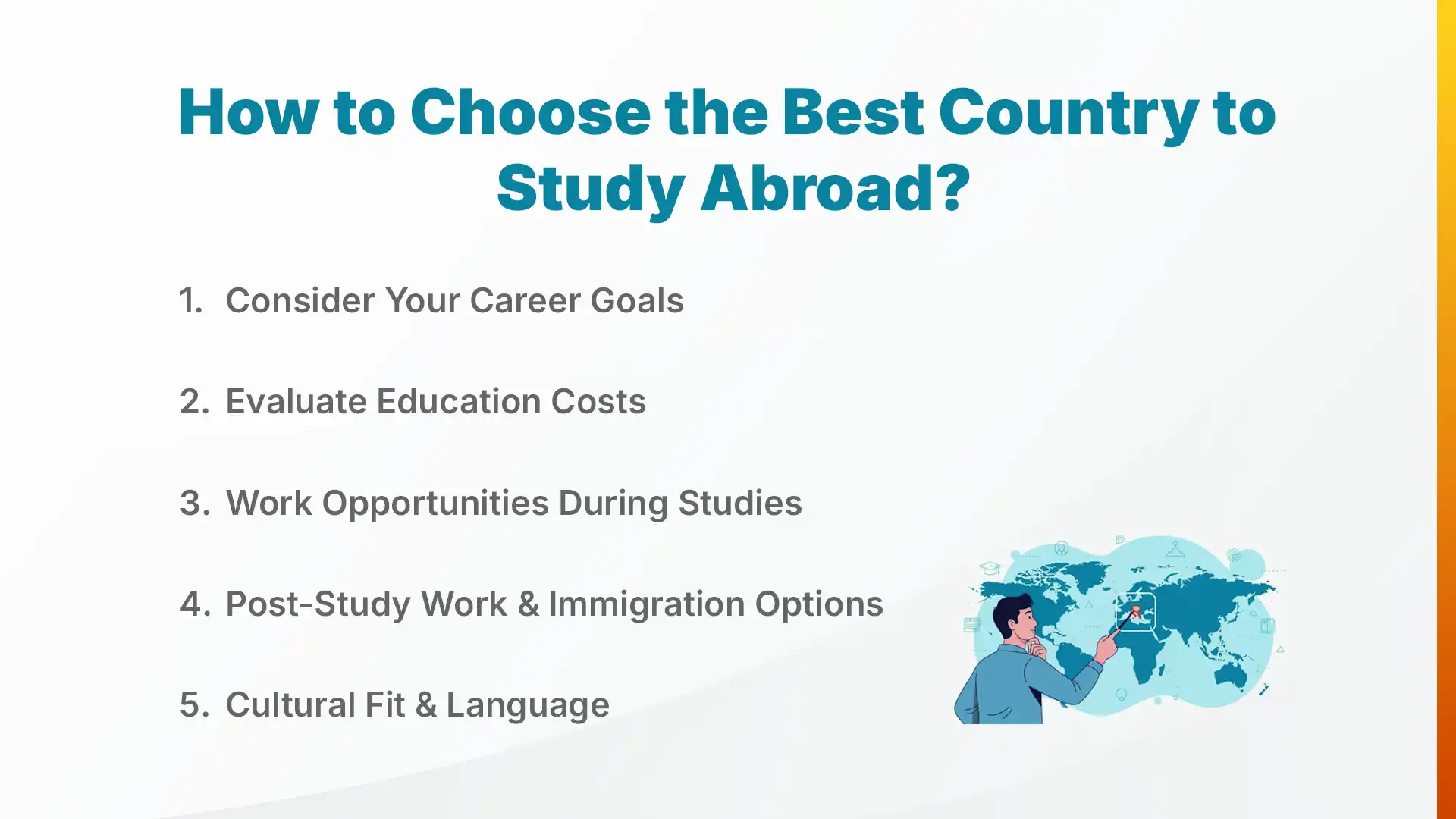
The best country to study abroad depends on your career goals, budget, and lifestyle preferences. You should compare tuition, living costs, work opportunities, post-study options, and cultural fit to make an informed choice. Let’s break down these factors step by step to help you pick the country that fits your goals perfectly.
1. Consider Your Career Goals
Start by thinking about where you want your career to go. Some countries have stronger job markets in specific fields. For example, tech and engineering are booming in Germany and South Korea, while finance and business roles are abundant in the UK and the USA.
Look for countries with universities and programs that are respected in your industry globally, because this helps your resume shine. Also, check if the country offers internships, co-op programs, or industry connections during studies to gain practical experience.
2. Evaluate Education Costs
Budget realistically for your studies, including tuition, housing, food, and daily expenses. Countries like Germany and France may offer low tuition, while Australia and the USA can be more expensive, so factor in scholarships, grants, or part-time work opportunities. Don’t forget hidden costs like health insurance, visa fees, and travel. Compare total annual costs rather than tuition alone to understand the true financial commitment.
3. Work Opportunities During Studies
Check the local rules for working as an international student. Learn the working hours allowed per week, on-campus versus off-campus work, and required permits. Working while studying not only helps with living costs but also builds skills, networks, and references that boost your employability.
Some countries, like Canada or Australia, have clear work rights for students, making it easier to plan financially and professionally. Prioritize countries that allow flexible work without affecting your studies.
4. Post-Study Work & Immigration Options
Look beyond graduation and consider where you can gain international work experience and potentially settle long-term. Countries like Canada and Australia offer multi-year post-study work visas and clear pathways to permanent residency, while others may have shorter options or stricter rules.
Align your country choice with your career ambitions. Do you want global exposure, migration opportunities, or experience in a specific industry? Understand your options, consider your priorities, and plan your studies strategically.
5. Cultural Fit & Language
Consider if you’ll be comfortable living in the country’s culture, climate, and language environment. Studying in a country where you already speak the language, or where English is widely used, can make daily life, studies, and social integration easier.
Think about lifestyle factors like city size, public transport, food, and safety, because being comfortable outside the classroom affects your mental well-being and academic success. Research student communities and support networks. Feeling at home abroad can be just as important as the course itself.
Comparing the Top Study Destinations in 2026
Comparing the top study destinations in 2026 helps Nepali students make informed decisions. Each country offers different tuition, living costs, work opportunities, and post-study options, so understanding these differences is key. Let’s compare the most popular destinations in the world based on what matters most to students like you.
1. Tuition Costs – How Much Will You Really Pay?
Tuition varies widely depending on the country and type of university. Germany and France offer very low tuition at public universities, sometimes just a few hundred euros per semester, making them highly affordable. Canada and Australia usually range from CAD/AUD 15,000–50,000 per year, while the USA and UK are higher at USD 25,000–50,000 and £18,000–35,000 respectively. South Korea falls in the mid-range, around KRW 5–15 million per year. If budget is a major concern, Germany and France clearly stand out.
2. Living Costs – Affordable vs Expensive Cities
Daily living costs also differ depending on the country and city. Canada, Australia, and the USA tend to be more expensive, with yearly living costs ranging from CAD/AUD/USD 12,000–25,000, while Germany, France, and South Korea are slightly lower, roughly €10,000–15,000 or KRW 8–12 million. Choosing smaller cities instead of capital cities can save money significantly. Always combine tuition and living costs to see the full financial picture before deciding.
3. Work Opportunities During Studies – Earn While You Learn
Working while studying helps students manage living costs and gain experience. Australia allows 48 hours per fortnight, Canada 24 hours per week, and Germany limits work to 120 full days or 240 half days per year. The USA allows about 20 hours per week on campus with options for CPT and OPT internships.
South Korea and France allow around 20–25 hours per week with approval. Countries like Australia and Canada provide more flexible work rights, making them easier for students who want to earn and learn simultaneously.
4. Post-Study Work Options – How Long Can You Stay & Work?
Post-study work is crucial if you want international experience or PR pathways. Canada offers up to 3 years through the PGWP, Australia 2–4 years via the Temporary Graduate visa, and the UK up to 2 years through the Graduate Route.
Germany provides 18 months job-seeker visa, while the USA offers 12 months OPT, extendable for STEM graduates. France allows 12–24 months through the APS permit, and South Korea gives 6–12 months with the D-10 visa. Longer post-study work periods are a big advantage for career growth and migration planning.
5. Career Opportunities and PR Potential – Plan Your Future
Some countries are better for long-term work and migration. Canada and Australia are top choices for PR, with clear immigration pathways after graduation. Germany and South Korea are excellent for technical and research careers, especially in engineering and IT. The USA and UK offer high-paying jobs and strong international exposure, but PR pathways are stricter. France provides professional exposure with internships and work experience, but PR options are moderate. Aligning career goals with country policies ensures smarter, strategic decisions.
6. Language and Cultural Fit – Where Will You Feel at Home?
Consider if you’ll be comfortable living in the country’s culture, climate, and language environment. Studying in a country where you already speak the language, or where English is widely used, can make daily life, studies, and social integration easier. Germany and France may require learning the local language for daily life or internships, although many programs are in English. South Korea has a growing number of English-taught programs but requires some cultural adaptation. Consider where you will feel most confident and supported, because comfort abroad affects both your studies and overall experience.
How a Consultancy Can Make Your Abroad Study Journey Easier
A good consultancy can simplify the entire study abroad process, from shortlisting universities and reviewing applications to helping with SOPs, LORs, and visa paperwork. They provide country-specific guidance, ensuring you choose destinations that match your career goals, budget, and lifestyle. By working with experienced consultants, you can save time and avoid common mistakes, which is especially helpful if it’s your first time applying abroad.
Key Services to Look for in a Consultancy
The top study abroad consultancies offer end-to-end support, guiding students through every step of the study abroad journey. From choosing the right university and course to assisting with scholarships, visas, and work options, they make the process smoother and less stressful. They also prepare students for life abroad with pre-departure guidance and cultural orientation.
- Personalized university and course selection advice
- Help identifying and applying for scholarships
- SOP, LOR, and experience letter support
- Visa application and documentation assistance
- Guidance on part-time work opportunities
- Insights on post-study work options
- Pre-departure orientation and cultural preparation
The right consultancy acts as a mentor from start to finish, supporting your journey rather than just selling a service. While choosing an education partner for your study abroad journey, look for clear, transparent guidance and positive reviews. A trustworthy consultancy has proven experience, genuine student success stories, and strong industry connections.
Conclusion
Studying abroad comes with many choices. Australia and Canada are the most preferred destinations for post-study opportunities. The USA and the UK are expensive but provide extensive opportunities with world-class universities. Germany is one of the most affordable options for studying abroad, renowned for providing the best education worldwide. South Korea and France are also affordable and rising study destinations with attractive post-study and working opportunities.
While choosing your ideal destination for studying and working, compare tuition fees, living costs, part-time work opportunities, post-study work visas, and cultural fit. Understanding these aspects makes it easier to weigh your options and select a country that matches your career goals, budget, and lifestyle.
Remember, studying abroad is not just about earning a degree; it’s about gaining international experience, building your resume, and shaping your future. Take the time to explore your options, plan strategically, and seek guidance from expert education consultants when needed. With the right preparation, you can turn your dream of studying and working abroad into a reality and open doors to opportunities you never imagined.