Best City to Study in Australia: Cost, PR & Job Prospects

Nov 12, 2025

When you dream about studying in Australia, your mind probably pictures the vibrant universities, bright classrooms, rigorous assignments, and beaches that look straight out of a postcard. That mere vision could be your guide to choosing the best city in Australia for yourself.
But before you choose one, it is important to be aware of how much a city can shape your entire study experience. Think about it: your city decides how much you spend, where you work part-time, how safe and connected you feel, and even your chances of getting permanent residency (PR) later on.
For Nepali students, choosing the best city in Australia is like choosing where you’ll belong, grow, and build your future. This guide explores the top cities, their costs, PR prospects, job opportunities, and lifestyle factors to help you make the smartest choice for your journey.
In this blog
Why Study in Australia?
Australia is a top choice for Nepali students because it offers world-class education, practical work experience, and a clear pathway toward permanent residency. Studying here opens doors to global careers while letting you enjoy a safe and supportive student life. The country balances academics, work, and well-being in a way few other destinations can. As a Nepali student, you enjoy the following benefits of studying in Australia:
- Earn a globally recognized degree and boost your career
- Gain post-study work experience with generous visa options
- Enjoy the most student-friendly policies and regulations in the world
- Work part-time while studying to cover living costs and gain hands-on skills
- Live safely in multicultural cities with a warm Nepali community
- Build a pathway to permanent residency through regional study and state nomination opportunities
- Grab up to 30% scholarships in Australia to fund your studies.
Plan Your Australian Studies Today!
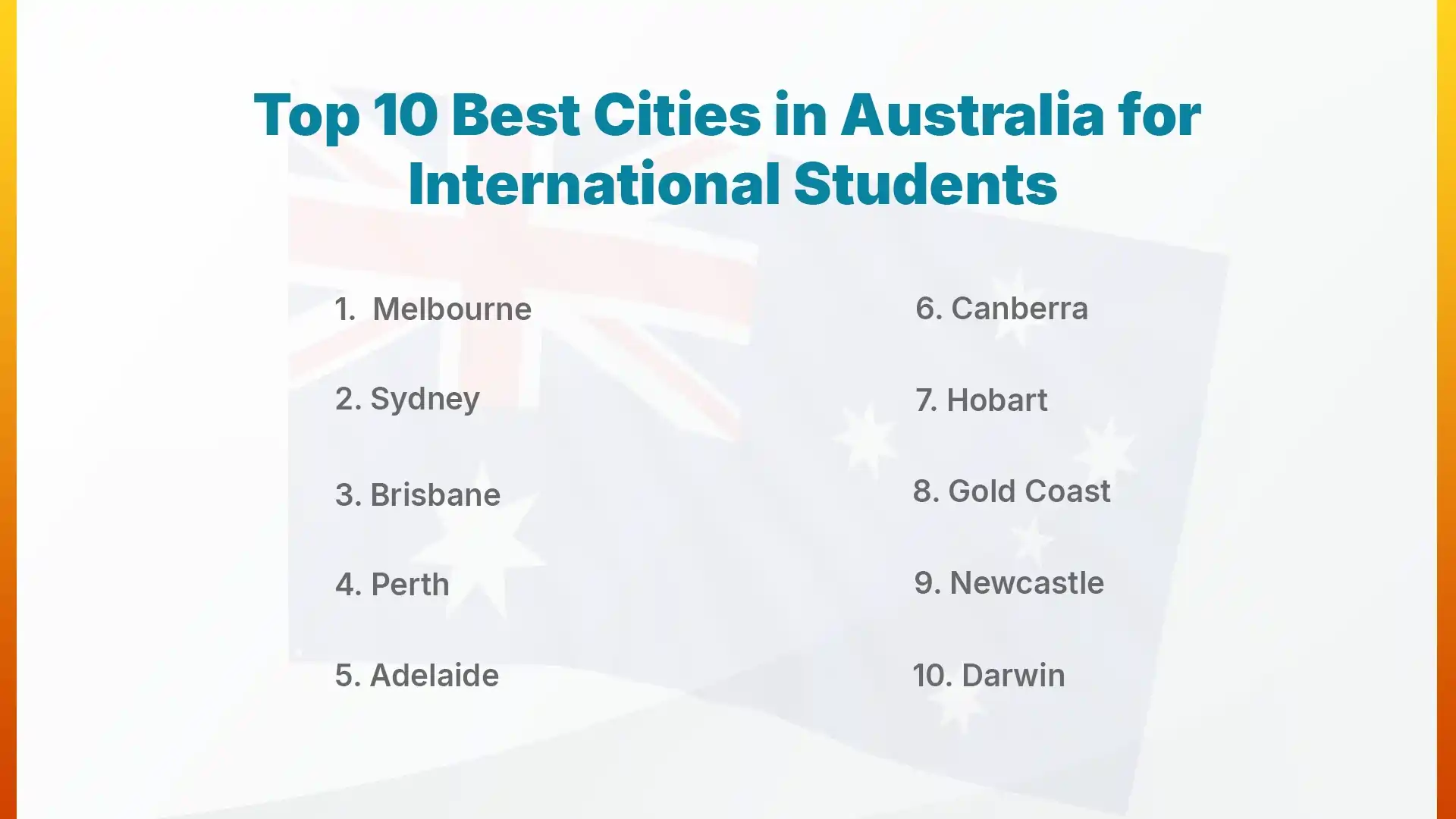
Top 10 Best Cities in Australia for International Students
The best city for you depends on your priorities, whether it’s affordability, job opportunities, lifestyle, or PR prospects. Each city offers a unique mix of education quality, student support, and career options. Here’s a closer look at the top 10 cities to help you decide where to study and live in Australia:
1. Melbourne
Melbourne, Australia’s cultural and academic hub, is home to world-renowned institutions like the University of Melbourne and Monash University. The city thrives on creativity, diversity, and a lively student atmosphere. It’s best suited for students who value a global environment, love exploring cafés, festivals, and art scenes, yet want serious academic depth.
Cost of Living in Melbourne
You’ll need around AUD 1,600–2,200 per month to live comfortably. Suburbs such as Brunswick, Footscray, or Carlton offer student housing that keeps you close to universities and part-time job zones.
Job & PR Opportunities
Melbourne’s job market is strong in IT, business, healthcare, and education, giving international students a wide scope for part-time and post-study work. Since it is not a regional area, securing a PR might take longer compared to smaller cities. However, the demand for skilled professionals often helps graduates secure long-term visa options through employer sponsorships or state nomination.
2. Sydney
Sydney, Australia’s largest and most dynamic city, combines stunning landmarks with unmatched academic prestige. It attracts ambitious students who dream of building global careers and expanding their networks while enjoying a modern, fast-paced lifestyle. It’s ideal for those who want to mix education with exposure to world-class businesses and international cultures.
Cost of Living in Sydney
Expect expenses of AUD 1,800–2,500 per month. Accommodation near Parramatta, Burwood, or Ashfield offers a good balance of affordability and convenience, especially with public transport links to major universities.
Job & PR Opportunities
Sydney’s thriving economy offers part-time and graduate jobs in sectors like IT, finance, tourism, and healthcare. Although the city is not regional, its strong employment prospects often help graduates gain work experience that supports future PR applications. Those with high-demand skills also benefit from multiple skilled visa pathways.
3. Brisbane
Warm, welcoming, and affordable, Brisbane feels like a second home to many Nepalese students. It offers a great balance between quality education, modern infrastructure, and laid-back living. Students who prefer a sunny climate, friendly communities, and a slightly slower pace of life without compromising education standards will find Brisbane ideal.
Cost of Living
The average cost sits between AUD 1,400–1,900 per month, making it one of the most affordable big cities in Australia. Popular student-friendly areas include Kelvin Grove, St Lucia, and South Bank.
Job & PR Opportunities
Brisbane’s growing economy offers solid part-time opportunities in hospitality, retail, and healthcare, along with graduate positions in IT and construction. You can also choose to live and work in regional areas like the Gold Coast and the Sunshine Coast near Brisbane. These zones offer you additional points and longer post-study work rights.
Ready to Apply for Your Australian Student Visa?
Get expert guidance on courses, universities, scholarships, and applications. Start your Australian education journey with out crertified counsellors today!
4. Perth
Perth offers a refreshing mix of sunshine, coastal beauty, and calm city life. It’s an excellent option for students who prefer a peaceful environment with a lower cost of living while still accessing high-quality universities like Curtin University and UWA. The community is welcoming, and the pace of life is slower compared to the East Coast, which helps you focus more on your studies and personal growth.
Cost of Living
Monthly living costs range between AUD 1,200–1,800, depending on your lifestyle and accommodation choice. Suburbs such as Bentley, Joondalup, and East Perth are popular among students for their safety and proximity to universities.
Job & PR Opportunities
Perth is officially classified as a regional city, which means international students benefit from extra PR points and extended post-study work rights. The local job market is strong in industries like mining, engineering, healthcare, and education. Part-time jobs are relatively easier to find, especially in retail and hospitality, and student wages typically range from AUD 25–40 per hour.
5. Adelaide
Adelaide combines affordability with opportunity, offering a warm community and excellent PR pathways. It’s a great choice for students who want a calm, friendly environment without the heavy expenses of larger cities. With universities like the University of Adelaide, UniSA, and Flinders University, the city provides both quality education and a relaxed lifestyle.
Cost of Living
Students can expect to spend AUD 1,300–1,900 per month, which is lower than in most other major cities. Areas such as Mawson Lakes and Glenelg offer affordable living options close to public transport and entertainment hubs.
Job & PR Opportunities
Adelaide is officially a regional area, making it one of the most PR-friendly cities in Australia. Graduates here enjoy longer post-study work visas and extra PR points. The city’s job market is growing in healthcare, renewable energy, defense, and education. Part-time jobs for students are available in hospitality and retail, usually paying around AUD 25–35 per hour.
6. Canberra
Canberra, Australia’s capital, offers a mix of academic excellence and quiet, structured living. It’s best suited for students who prefer a well-organized city with a strong academic and research focus. The city is clean, safe, and full of nature, making it a good balance between professional and personal life.
Cost of Living
Living in Canberra generally costs between AUD 1,500–2,200 per month. Suburbs like Belconnen and Bruce are popular among students for their affordability and closeness to major campuses.
Job & PR Opportunities
Canberra is classified as a regional area, which brings added benefits for PR applicants. It has a unique state nomination program called the Canberra Matrix, which rewards active community engagement and steady employment. The city offers job opportunities in government, education, IT, and research. Part-time jobs pay around AUD 20–30 per hour, helping students cover daily expenses comfortably.
It is important to decide on your city of Australian education before you get a student visa for Australia, as your choice will influence your living costs, part-time work options, and even your pathway to permanent residency. Consider what matters most to you and choose a city that supports both your studies and long-term goals.
Book a FREE Counselling Session with Certifed Counsellors Now!
Cost of Living Comparison by City (Monthly Student Budget)
Sydney and Melbourne are the most expensive Australian cities, especially for rent, while cities like Adelaide and Perth offer much more affordable living without compromising quality education. Brisbane and Canberra strike a middle ground with reasonable costs and growing job opportunities.
It is important to consider the total cost of your Australian education in various cities. The following table highlights how choosing a city carefully can make a real difference in managing your budget, saving money, and even planning for part-time work or PR pathways:
City | Avg. Rent (AUD/month) | Other Costs (AUD/month) | Total Cost (AUD/month) |
| Sydney | 800 – 1,200 | 1,200 – 1,600 | 2,100 – 2,800 |
| Melbourne | 700 – 1,000 | 1,100 – 1,600 | 2,000 – 2,600 |
| Brisbane | 650 – 1,000 | 1,000 – 1,400 | 1,800 – 2,300 |
| Perth | 500 – 900 | 1,000 – 1,200 | 1,700 – 2,100 |
| Adelaide | 500 – 850 | 900 – 1,200 | 1,400 – 2,100 |
| Canberra | 700 – 1,000 | 1,100 – 1,500 | 1,800 – 2,500 |
| Hobart | 400 – 800 | 800 – 1,100 | 1,300 – 1,800 |
| Gold Coast | 500 – 850 | 600 – 900 | 1,100 – 1,800 |
| Newcastle | 500 – 800 | 900 – 1,200 | 1,400 – 2,000 |
| Darwin | 550 – 1,000 | 800 – 1,200 | 1,800 – 2,200 |
Minimum Wage in Australia for International Students
All international students in Australia earn the same minimum wage of AUD 24.95 per hour for casual work. This uniform rate gives students a baseline to plan part-time jobs and manage their expenses.
However, balancing your wage with tuition and living costs is key. Living in a big city like Sydney or Melbourne means higher rent and daily expenses. Even though there are more jobs and higher-paying opportunities, competition is also tough. Students need a good plan to make ends meet.
On the other hand, regional cities like Adelaide, Perth, or parts of Queensland may have fewer high-paying jobs, but the living costs are much lower. There is also less competition, which makes it easier to find work. This balance can help students save more money while focusing on their studies.
Choosing the right city is about finding what fits your budget, lifestyle, and career goals. The same wage can go far in a regional city, while big cities offer exposure, networking, and fast career growth.
Which City is Best for PR in Australia in 2026?
Regional cities like Adelaide, Perth, Canberra, Gold Coast, Darwin, and Hobart are the best areas for PR in Australia. These regional cities give international students extra PR points, longer post-study work visa durations, and higher chances of state nomination. These perks ultimately make the path to permanent residency smoother than metropolitan hubs.
In Australia, the government encourages skilled migrants to live and work in regional areas. These benefits include:
- Additional points toward PR applications for living or studying in regional locations.
- Extended post-study work visas compared to metropolitan cities.
- Preferential access to state nomination programs that support international graduates in obtaining permanent residency.
Understanding this system is key before deciding where to study, because choosing a regional city can significantly improve your PR prospects while still offering quality education and job opportunities.
1. Regional vs Metropolitan Cities
Metropolitan cities such as Sydney, Melbourne, and Brisbane offer strong career opportunities, vibrant lifestyles, and top universities. However, they do not provide extra PR points. Students graduating in these cities may need additional work experience, employer sponsorship, or highly demanded skills to strengthen their PR applications.
Regional cities like Perth, Adelaide, Canberra, Hobart, and certain regional areas near Brisbane or Newcastle provide clear advantages for PR:
- Extra points for regional study or residence
- Longer post-study work visas
- Easier access to state nomination programs
Choosing a regional city can be a strategic decision if your long-term goal is to stay in Australia permanently.
2. State Nomination Opportunities by City/State
State nomination is a system where Australian states and territories nominate international students for PR based on local skill needs. Essentially, each state identifies sectors where there is high demand for workers and encourages international graduates to stay and contribute to the local economy. Being nominated by a state gives you extra points toward PR and increases your chances of receiving a visa.
For example:
- South Australia (Adelaide) prioritizes graduates in healthcare, IT, engineering, and teaching.
- Western Australia (Perth) offers incentives with longer post-study work visas for regional students.
- Canberra (Australian Capital Territory) uses the Canberra Matrix, which considers employment, community integration, and duration of residence for PR eligibility.
3. Post-Study Work Visa Duration by Location
The length of your post-study work visa depends on both the level of your degree and whether you studied in a metropolitan or regional area:
- Bachelor’s & Master’s (by coursework): 2–3 years in metropolitan cities, up to 4 years in regional areas.
- Master’s by research & PhD: Usually 3–4 years, with regional benefits available in certain areas.
Extra work time in regional cities allows graduates to gain Australian work experience, earn PR points, and secure employment before applying for permanent residency.
If PR is your goal, focus on cities with regional designation or regional campuses. Metropolitan cities are excellent for career exposure and lifestyle, but regional cities like Adelaide, Perth, Canberra, Hobart, or regional zones near Brisbane and Newcastle give you the best strategic advantage for permanent residency.
How to Choose the Best City in Australia?
The best city for you depends on what you want most from your study experience and future in Australia. For some students, affordability is key, while others prioritize job opportunities, lifestyle, or a smoother path to permanent residency.
As a Nepali student, it’s important to consider your budget, part-time job options, access to communities, and PR-friendly locations. Each city offers a different balance of affordability, job opportunities, lifestyle, and PR prospects. Here are the most important factors you should look at when deciding where to live and study in Australia:
1. Affordability
If keeping living costs low is your priority, cities like Adelaide, Perth, and regional areas near Brisbane or Newcastle are ideal. Rent, food, and transport are more manageable, allowing you to save or invest in other aspects of your education. Larger cities like Sydney and Melbourne offer more opportunities but come with significantly higher monthly expenses.
2. Job Opportunities
Major cities have stronger job markets for international students as compared to regional zones. Sydney and Melbourne offer a wide range of part-time work and internships across finance, IT, healthcare, and creative sectors. Brisbane, Perth, and Adelaide provide growing job opportunities with less competition, making it easier to gain work experience while studying.
3. Lifestyle
Your daily life matters just as much as your studies. Cities like Sydney offer vibrant urban life and global exposure, while Melbourne gives a culturally rich, artsy experience. If you prefer a more relaxed and sunny lifestyle, Brisbane and Perth might suit you better.
4. Migration (PR) Prospects
Regional cities clearly have an edge when it comes to permanent residency. Adelaide, Perth, Canberra, and Hobart, as well as certain regional campuses, provide extra PR points, extended post-study work visas, and state nomination opportunities. Metropolitan cities are competitive when it comes to PR, but you can grow your chances by focusing on high-demand skills.
5. Nepalese Student Community Support
Being part of a supportive community can make settling in much easier. Melbourne, Sydney, and Brisbane have large Nepalese student populations, helping you feel at home while studying abroad. Smaller regional cities may have fewer Nepali peers, but communities are tight-knit and welcoming.
When choosing your city, think about what matters most to you: your budget, career goals, lifestyle preferences, and PR plans. Weigh these factors well, and choose a city that not only fits your academic goals but also supports your future in Australia.
Talk to an Education Counsellor for FREE!
Conclusion
Your choice of the Australian city shapes your study experience, lifestyle, career opportunities, and future migration options. Cities like Sydney and Melbourne offer excitement and global exposure, while Adelaide, Perth, and regional areas provide affordability and stronger PR pathways. Set your priorities, assess your current situation, and decide based on cost, jobs, lifestyle, or long-term residency.
With careful planning, you can balance studies, part-time work, and future goals smoothly. Your journey to study abroad is challenging but achievable, and the city you choose will be your first step toward building a successful and fulfilling life in Australia.
Take the time to weigh your options wisely and make a choice that aligns with your dreams. Also, explore the best courses in Australia for Nepalese students. Find and study the program of your passion, in-demand skills, and PR prospects.