Diploma in Hospitality in Canada: Courses, Fees, Eligibility, Scope

Jun 11, 2026
Are you finishing your plus two in Nepal and looking for a global career that promises both excitement and stability?
Many students mistakenly believe that the hospitality industry is only about waiting tables or pouring drinks.
In reality, it is a massive, high-demand sector focused on guest experience, luxury management, and service operations.
With Canada facing a permanent shortage of skilled hospitality professionals, this is a golden opportunity for Nepalese students to gain international expertise and settle abroad.
This guide will walk you through everything you need to know about pursuing a diploma in hospitality management in Canada, ensuring you are fully prepared for your study-abroad journey.
In this blog
What Is a Diploma in Hospitality in Canada?
A diploma in hospitality in Canada is a vocational program that prepares students for leadership roles in hotels, resorts, and tourism businesses. It covers guest services, operations management, and business communication, usually lasting from 8 months to 2 years, blending hands-on training with essential theory.
Unlike simple certificate courses, a diploma is a formal qualification that holds significant weight with Canadian employers. It moves beyond basic service tasks to teach you how to manage staff, handle budgets, and create unforgettable experiences for guests in diverse professional settings.
Why Study a Diploma in Hospitality in Canada?
Studying a diploma in hospitality in Canada provides you with a competitive advantage by blending global standards with real-world, hands-on work experience. It is a proven pathway to secure high-demand jobs in Canada’s massive tourism sector, while offering you a stable environment to build your professional future.
Here are the major reasons why studying in Canada could take your hospitality career to next level:
- High demand for skilled hospitality managers across all Canadian provinces.
- Hands-on training in top-tier hotels and resorts.
- Ability to earn Canadian wages while you are still studying.
- International certification that is recognized globally.
- Excellent networking opportunities with industry leaders.
- Strong foundation for long-term career growth in management.cop
Book a FREE 1-on-1 Consultation
How Long is a Hospitality Diploma in Canada?
Most hospitality diploma programs in Canada take between 1 to 2 years to complete. These programs are structured to balance academic learning with hands-on practice, ensuring you are fully prepared to take on professional roles in the industry immediately after graduation.
You can choose between full-time or part-time, but as an international student, you will likely need to enroll in a full-time program to stay compliant with your visa and eventually apply for a work permit.
Available Intakes for the Canadian Diploma in Hospitality
Canadian colleges usually open admissions for the Fall (September) and Winter (January) semesters. Some programs also offer a Spring (May) intake in Canada, which can be less competitive for applicants.
What Will You Learn in a Hospitality Diploma Program?
In a hospitality diploma program, you will master the art of guest services, business operations, and event management. These courses combine practical skill-building with theory to ensure you can effectively run hotel and restaurant operations the moment you graduate and enter the competitive job market.
Your curriculum will mainly include:

1. Customer Service and Guest Experience Management
You will learn to anticipate guest needs and handle difficult situations with professional grace. This training focuses on building loyalty, which is the heart of any successful hotel. Mastering this skill makes you an asset to any customer-facing business.
2. Food and Beverage Service Operations
Understanding how to run a kitchen and dining area is critical for any hospitality leader. You will learn about food safety, menu planning, and how to manage staff effectively. This ensures that every guest receives quality service, every single time.
3. Hospitality Marketing and Business Fundamentals
This module teaches you how to attract guests and keep a business profitable. You will study branding, digital marketing, and basic accounting to understand the financial health of a hotel. It is perfect for those who want to move into management roles.
4. Hotel, Restaurant, and Event Management
You will get a bird's-eye view of how entire properties function day-to-day. From booking systems to managing large-scale events, you will gain the knowledge required to lead teams in busy environments. This is the core of your managerial training.
5. Communication and Teamwork Skills
Hospitality is all about people, so clear communication is essential. You will learn to coordinate with different departments to keep operations running smoothly. These soft skills are what will help you climb the corporate ladder quickly in Canada.
Eligibility Requirements for a Diploma in Hospitality in Canada
To be eligible, you generally need to have completed your 12th-grade education and meet the minimum English language proficiency requirements, such as IELTS or PTE. Additionally, you should be at least 18 years old to ensure you can participate in all required practical training and internships.
1. Academic Requirements
Most colleges require you to have completed your 10+2 (plus two) or equivalent education. If you have passing marks, typically around 50% to 60%, or a GPA of 2.0 to 2.5, you usually stand a good chance.
A decent academic record is highly recommended to improve your chances of getting accepted into your preferred program.
2. English Language Requirements
You must demonstrate strong English skills to follow lessons and serve international guests. Most colleges ask for an IELTS score of 6.0 or higher, though some may accept lower depending on the specific program.
3. Minimum Age Requirements
In Canada, you must be at least 18 years old for most hospitality programs. This age requirement ensures you are legally ready to handle industry duties and participate in real-world training environments.
4. Other Admission Documents
Prepare your academic transcripts, a valid passport, and a strong Statement of Purpose (SOP). Your SOP, specifically for Canada, should clearly explain why you are passionate about a career in hospitality and how this program fits your goals.
Top Colleges and Institutes Offering Hospitality Courses in Canada
Seneca Polytechnic, Centennial College, and Conestoga College are the most popular colleges among Nepalese students for diploma programs in Canada. To help you get started, I have handpicked 10 highly-regarded Canadian colleges that offer excellent hospitality management and operations diplomas. These institutions are well-known for their practical, hands-on approach, which is exactly what employers look for in the industry.
College Name | Location | Approx. Tuition Fees (Per Year) |
|---|---|---|
| George Brown College | Toronto, ON | $16,000 – $18,000 |
| Humber Polytechnic | Toronto, ON | $18,000 – $20,000 |
| Seneca Polytechnic | Toronto, ON | $16,000 – $18,000 |
| Centennial College | Toronto, ON | $16,000 – $17,500 |
| Algonquin College | Ottawa, ON | $14,000 – $16,000 |
| Conestoga College | Kitchener, ON | $14,500 – $16,500 |
| Niagara College | Welland, ON | $15,000 – $17,000 |
| Fanshawe College | London, ON | $15,000 – $17,000 |
| Vancouver Community College | Vancouver, BC | $18,000 – $20,000 |
| Red River College Polytechnic | Winnipeg, MB | $15,500 – $17,500 |
Note: Tuition fees are estimates and can change. Always check the official college website for the most current pricing before you apply.
Cost of Studying a Diploma in Hospitality in Canada for Nepali Students
The total cost of studying usually ranges from CAD 20,000 to CAD 35,000 per year, which covers your tuition, housing, and food. While this is an investment, the ability to work part-time in Canada while studying helps many Nepalese students manage these costs effectively throughout their program.
Expense Category | Estimated Cost (CAD) |
|---|---|
| Tuition Fees | $14,000 - $22,000 |
| Living Expenses | $10,000 - $15,000 |
| Health Insurance | $600 - $1,000 |
| Study Materials | $500 - $1,000 |
| Total Estimated | $25,100 - $39,000 |
Scholarships for Nepalese Students in Canada
Scholarships are a great way to reduce your total cost of Canadian education, often awarded based on your academic performance or specific regional initiatives. You should check the international student portal of your chosen college early to identify and apply for any available financial aid options.
1. Entrance Scholarships
These are one-time awards for new students with high grades. Apply early, as these funds and scholarships in Canada are limited and highly competitive.
2. Merit-Based Awards
If you maintain excellent marks during your studies, you can qualify for these rewards. Focus on your grades to keep these opportunities open.
3. Institution-Specific Financial Assistance
Some colleges offer bursaries for international students based on need or background. Always contact the financial aid office to see what is available for your specific situation.
How to Apply for a Diploma in Hospitality Management in Canada from Nepal?
The application process requires careful planning, from choosing your college to securing your study permit through the IRCC. By following these steps in order, you can ensure your application from Nepal is complete, accurate, and ready for a successful approval.
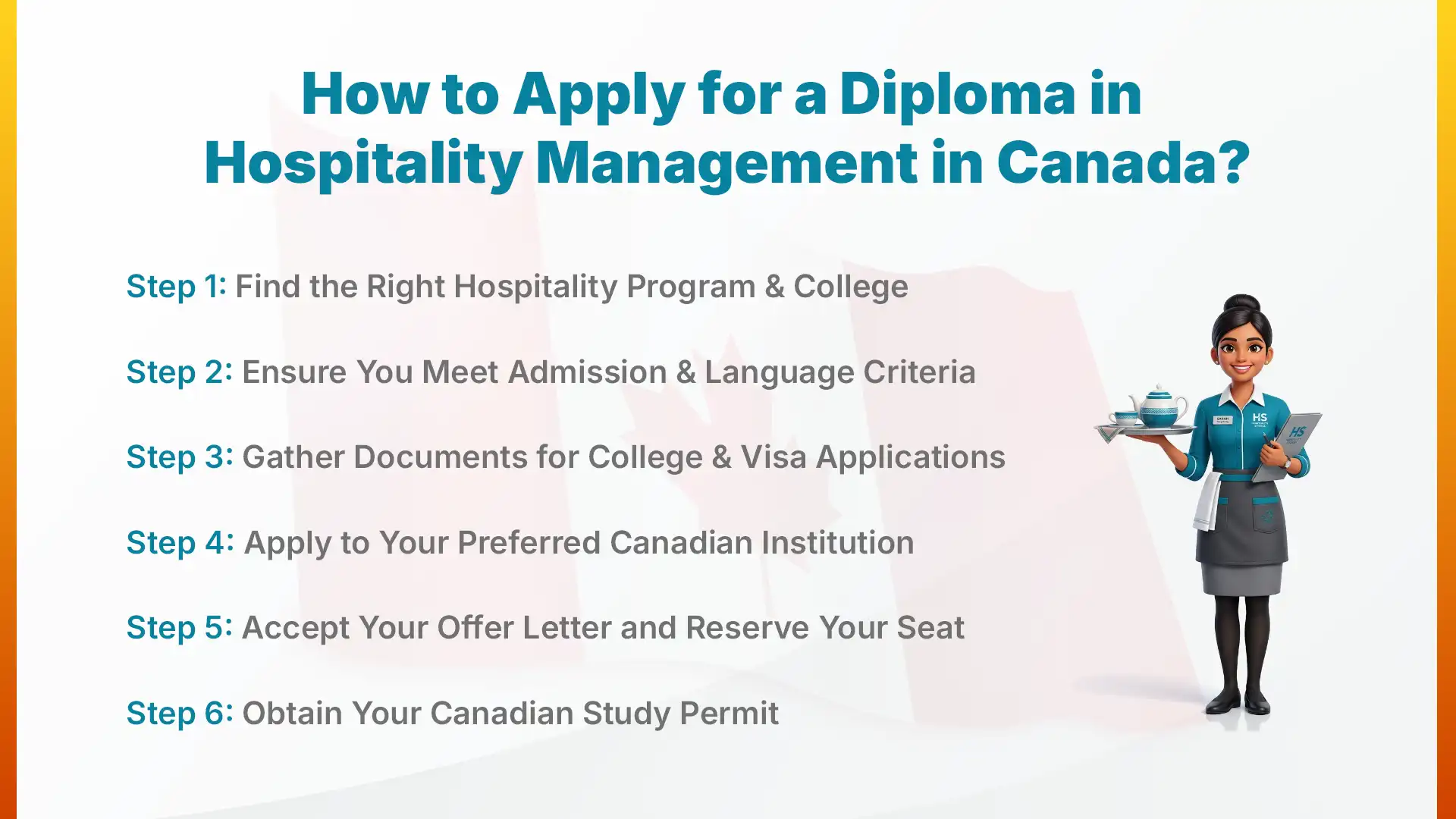
Step 1: Find the Right Hospitality Program & College
Start by researching colleges that offer the specific hospitality program you want. Look for schools that include internships so you can get real work experience. Compare tuition fees and the top student-friendly cities to find your best fit.
Step 2: Ensure You Meet Admission & Language Criteria
Check the college website to see if you meet their grade requirements. You must also take the IELTS or PTE exam to prove your English skills. Confirm you meet all requirements before paying the application fee.
Step 3: Gather Documents for College & Visa Applications
Gather your academic mark sheets, passport, and a strong personal statement. You also need to show proof that you have enough money for your studies. Keeping these documents in one folder makes your work much easier.
Step 4: Apply to Your Preferred Canadian Institution
Most colleges have a simple online portal to submit your application. Take your time to fill out the form carefully to avoid mistakes. Watch your email regularly for any updates from the admissions team.
Step 5: Accept Your Offer Letter and Reserve Your Seat
If you get an offer, you will receive a formal Letter of Acceptance. Pay your tuition deposit immediately to save your seat in the class. The college will then send the final papers you need for your visa.
Step 6: Obtain Your Canadian Study Permit
Use your acceptance letter to apply for your study permit through the IRCC website. You will need to upload your financial and medical documents to the portal. Wait patiently for the embassy to review your application.
Career Opportunities After a Diploma in Hospitality in Canada
The hospitality industry is huge, and your diploma qualifies you for several exciting roles. You can work in luxury hotels, event centers, high-end restaurants, or even cruise lines. The experience you gain in Canada is valuable anywhere in the world.
Position | Average Salary (Annual CAD) |
|---|---|
| Front Desk Supervisor | $40,000 - $50,000 |
| Hotel Manager (Assistant) | $45,000 - $60,000 |
| Event Coordinator | $42,000 - $55,000 |
| Food & Beverage Manager | $45,000 - $65,000 |
| Guest Services Manager | $40,000 - $55,000 |
Can a Diploma in Hospitality Lead to Permanent Residency (PR) in Canada?
Yes, a diploma in hospitality can definitely be a pathway to PR if you plan your career well. Canada values the skills you gain in this sector, and after you graduate, you can use your work experience to boost your Express Entry or Provincial Nominee Program (PNP) score.
- Canada's PR System: The government uses point-based systems to reward skilled workers.
- Canadian Work Experience: This is the most important factor. Working in a hospitality management role after graduation gives you the necessary points to qualify for various PR streams.
- Hospitality Occupations: Many provinces have specific immigration streams just for food and hospitality staff, making it a very strategic career choice for someone looking to settle.
Conclusion
To wrap up, a diploma in hospitality in Canada is more than just a certificate; it is a gateway to a vibrant, global career in a country that truly values your contribution. With the right mix of training and professional work experience, you will find yourself in high demand across Canada’s booming tourism sector.
Remember, this journey requires careful planning. From choosing the right institution to navigating your visa process, take every step with clarity and purpose. You have the potential to build a successful future abroad.
Do not let the process overwhelm you. If you are ready to start your journey to Canada and need guidance tailored to your situation, reach out to a trusted Canadian consultancy. Book a free counselling session with us and let’s turn your dream into a reality!