Best Part-Time Jobs in the UK for Nepalese Students in 2026

Jan 20, 2026

Studying in the UK is exciting, but the rising cost of living can quickly become a concern for many Nepalese students. Rent, food, transport, and daily expenses often add up faster than expected, which is why part-time income matters. On average, a Nepali student in the UK can earn around £10–£12 per hour, helping cover basic living costs.
However, working part-time is not just about money. It also builds confidence, improves communication skills, and gives you real exposure to the UK work culture. At the same time, many students feel unsure about which jobs are best, where to find them, and what is allowed on a student visa. This guide breaks everything down clearly, so you can plan your study and work journey in the UK with confidence.
In this blog
Types of Part-Time Jobs in the UK for International Students
International students in the UK can work in a variety of part-time roles, including on-campus, off-campus, and flexible skill-based jobs. On-campus jobs are convenient and safe, off-campus roles offer more variety and pay, while skill-based work lets students earn using their talents. Understanding these options helps you choose the right job that fits your schedule and goals, which we’ll explore in detail next.
1. On-Campus Part-Time Jobs
On-campus jobs are one of the safest and most convenient options for international students. These include roles like library assistant, student union staff, and research or administrative support. Since these jobs are based within the university, work hours are usually flexible and easy to manage with classes. They also reduce travel time and help students stay connected to campus life. Most importantly, they fully comply with student visa rules.
2. Off-Campus Part-Time Jobs
Off-campus jobs are widely available and often easier to find in UK cities. Common roles include retail and supermarket staff, restaurant or café workers, and hotel or hospitality roles. These jobs usually offer more working hours and sometimes better pay, especially during weekends. However, students must strictly follow term-time work limits to avoid visa issues.
3. Flexible & Skill-Based Jobs
Flexible and skill-based jobs suit students who have specific abilities or want more control over their schedule. Tutoring, both online and in person, is popular and often pays more per hour. Freelancing in writing, design, or IT can also be rewarding, but students must check visa rules carefully. Some care and support roles are available too, but eligibility depends on training and legal requirements.
What are the Best Part-Time Jobs for Students in the UK?
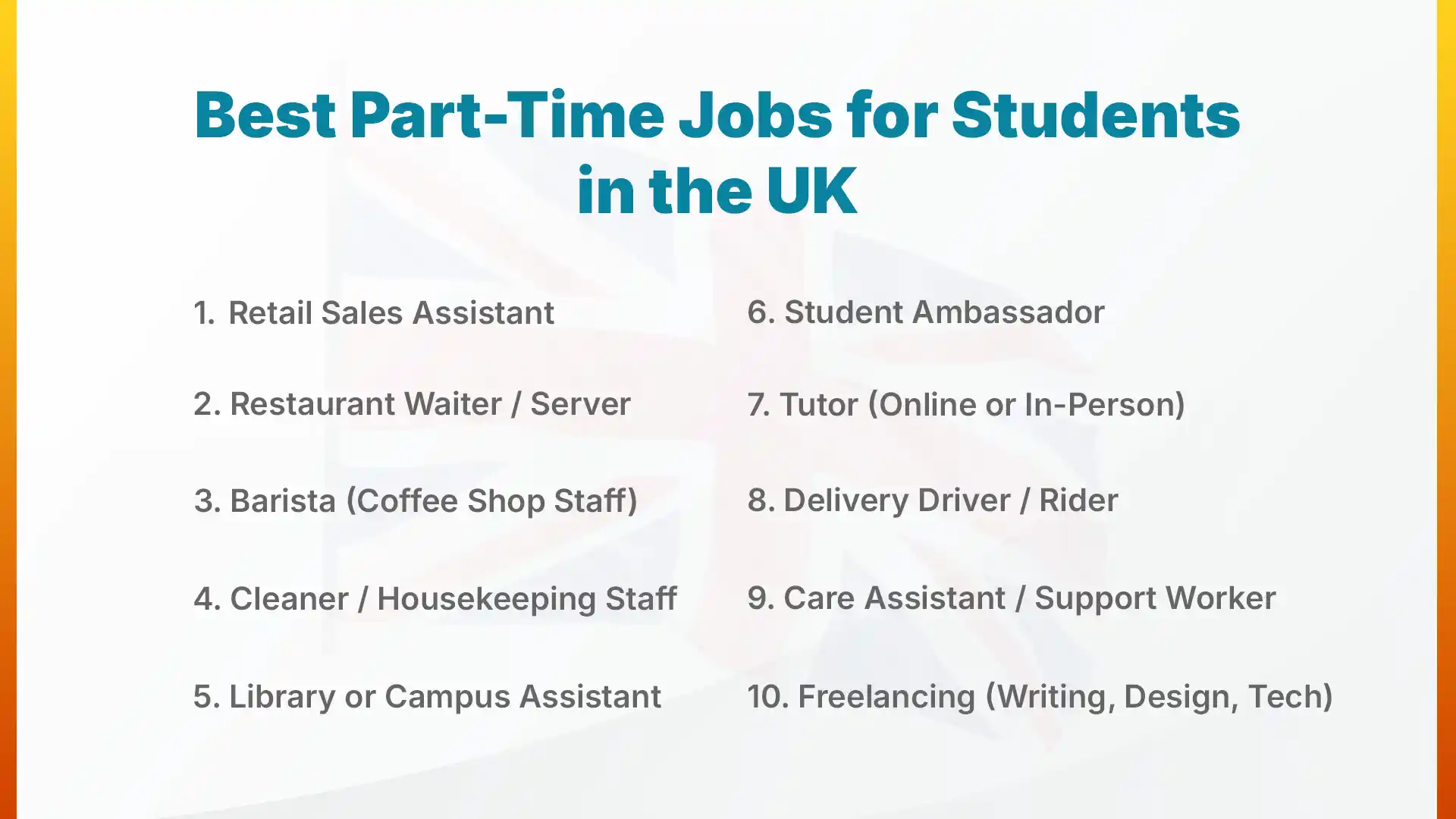
The best part-time jobs for international students in the UK include retail roles, hospitality work, campus-based jobs, tutoring, delivery services, and freelancing. These roles are popular because they offer flexible hours, steady pay, and are widely available across UK cities. Below, we break down each option in detail to help you choose what fits your schedule, skills, and goals best.
1. Retail Sales Assistant
Retail jobs are common in supermarkets, clothing stores, and shopping centres across the UK. Your duties usually include helping customers, managing stock, and handling payments. These roles typically pay around £10–£12 per hour, depending on age and location. Shifts are flexible, especially on weekends and evenings. This job also improves communication and customer service skills.
2. Restaurant Waiter / Server
Waiter or server roles are widely available in restaurants, cafés, and takeaways. The job involves taking orders, serving food, and assisting customers. Pay usually starts at £10–£11 per hour, with tips adding extra income. Weekend and evening shifts are common, which suits class schedules. It’s a fast-paced job that builds confidence quickly.
3. Barista (Coffee Shop Staff)
Baristas work in coffee chains and local cafés across the UK. The role includes making drinks, taking orders, and keeping the space clean. Pay ranges from £10–£12 per hour, and training is usually provided. These jobs are popular for their friendly work environment. They also help develop teamwork and time management skills.
4. Cleaner / Housekeeping Staff
Cleaning and housekeeping jobs are common in universities, hotels, and offices. Duties include cleaning rooms, common areas, and facilities. Pay is usually around £10–£12 per hour. Shifts are often early morning or evening, which works well around classes. This job is straightforward and steady.
5. Library or Campus Assistant
Campus assistant roles are offered directly by universities. Tasks may include helping in the library, offices, or student services. Pay is usually around £10–£11 per hour. These jobs are quiet, flexible, and close to classes. They are also fully compliant with student visa rules.
6. Student Ambassador
Student ambassadors support university events, open days, and campus tours. The role involves speaking with prospective students and helping staff during events. Pay can range from £11–£15 per hour. Work is not daily but pays well when available. It also looks strong on your CV.
7. Tutor (Online or In-Person)
Tutoring is ideal for students strong in subjects like maths, science, or English. You can tutor school students or fellow university students. Pay is higher than many jobs, often £15–£25 per hour. Online tutoring offers even more flexibility. This role also strengthens academic and communication skills.
8. Delivery Driver / Rider
Delivery jobs with platforms like Uber Eats or Deliveroo are common in UK cities. Work hours are flexible, allowing you to log in around your class schedule. Earnings vary but can reach £12–£18 per hour during busy times. A bike or scooter is usually required. This job suits students who prefer independent work.
9. Care Assistant / Support Worker
Care roles involve helping elderly or disabled individuals with daily tasks. Pay is usually £11–£14 per hour. These jobs require eligibility checks and sometimes basic training. The work is meaningful and respected in the UK. It also provides strong work experience.
10. Freelancing (Writing, Design, Tech)
Freelancing allows students to work remotely using skills like writing, graphic design, or IT. Pay varies but can be higher than hourly jobs. Work is flexible and project-based. However, students must ensure the work follows visa rules. This option suits students with strong skills and self-discipline.
Work Hour Limits & Rules for International Students in the UK
International students in the UK must follow strict work hour rules to stay compliant with their visa. During term time, they can work up to 20 hours per week, while full-time work is allowed only during official university breaks. Knowing these limits and the consequences of breaking them is essential, which we’ll explain in detail below.
1. Term-Time Work Rules
During term time, international students on a UK Student visa can work a maximum of 20 hours per week. Term time includes all teaching weeks, exam periods, and any required study weeks mentioned by your university. Even if you have no classes in a week, it still counts as term time. Because of this, it’s important to track your hours carefully. Going over the limit, even by mistake, can cause visa problems.
2. Work Rules During Holidays
Students are allowed to work full-time during official university breaks. These breaks include summer holidays, winter breaks, and any scheduled vacation periods listed by your university. However, the exact dates can differ by course and institution. That’s why you should always check your academic calendar before increasing work hours. Working full-time outside approved break dates is not allowed.
3. What Happens If You Break UK Work Rules
Breaking UK work rules can lead to serious consequences. Your visa may be cancelled, and you could be asked to leave the UK. It can also affect future visa applications, including the Graduate Route (PSW). To avoid these risks, always follow work limits and confirm rules before accepting extra hours.
How Much Can International Students Earn in the UK?
International students in the UK can earn around £800 to £1,100 per month, but your total income largely depends on age, job type, and location. Most student jobs pay hourly, and working within the 20-hour weekly limit helps cover basic living costs. However, part-time income is meant to support your expenses, not fully fund your studies. With this in mind, understanding wages and realistic earnings helps you plan better.
1. Average Hourly Wage in the UK
The UK follows a National Minimum Wage system based on age. Students aged 18–20 usually earn slightly less, while those 21 and above earn more per hour. Most student jobs pay between £10 and £13 per hour. Jobs in London or hospitality may pay a bit higher, especially during busy hours.
2. On-Campus vs Off-Campus Earnings
On-campus jobs often offer steady hours and lighter workloads, but pay can be slightly lower. Off-campus roles usually pay more but may involve longer shifts and more physical work. Some hospitality jobs also include tips, which can boost your income. However, tips are not guaranteed and should not be fully relied on.
3. Monthly Income Estimation for Students in the UK
If you work 20 hours per week, you can earn around £800 to £1,100 per month before tax. This income can help cover rent, food, transport, and small personal expenses. Still, it may not be enough for all costs, especially in expensive cities. That’s why balancing income, location, and expenses is key.
Cost of Living in the UK vs Part-Time Income (Reality Check for Nepalese Students)
Living in the UK comes with several expenses like rent, food, transportation, utilities, and personal costs. These costs can vary widely depending on the city you choose. While part-time work helps cover some of these expenses, it usually doesn’t cover everything, especially in bigger cities. Understanding the balance between earnings and living costs is essential for realistic planning.
Here’s a comparison of typical monthly expenses and how they match with part-time income for Nepali students working 20 hours per week at around £10–£13/hour:
Expense Category | London & South East | Manchester & Birmingham | Smaller Cities |
| Estimated Total | £1,180–£2,050 | £840–£1,490 | £700–£1,250 |
| Part-Time Income | £800–£1,040 | £800–£1,040 | £800–£1,040 |
| Coverage Gap | 40–85% | 55–125% | 65–150% |
From the table, you can see that living in London is more expensive, so your part-time earnings cover less of your expenses. Cities like Manchester, Birmingham, or smaller towns allow your earnings to stretch further. Choosing the right city is just as important as the job itself, as it directly impacts your comfort and savings while studying.
How to Find Part-Time Jobs in the UK as a Nepali Student?
To find part-time jobs in the UK, start by knowing where to look, how to apply, and what fits your schedule and skills. University resources, online job platforms, and networking are the most effective ways to secure roles. Combining these approaches can save time and increase your chances of landing a suitable job. With this strategy, you can balance work and study while gaining meaningful experience.
1. University Career Services & Job Boards
Most UK universities have career centers or online job portals where part-time roles are posted regularly. Campus vacancies often include library assistant, café staff, research support, or student union positions. Checking these boards frequently helps you apply early and secure roles before they fill up. Student union listings may also include event staffing or ambassador roles, which can be flexible around your timetable. Using university services also gives you guidance on eligibility and CV preparation, making your application stronger.
2. Online Job Platforms in the UK
Popular platforms like Indeed UK, Reed, Totaljobs, and LinkedIn list thousands of part-time positions suitable for students. You can filter searches by location, hours, and type of work to find roles that fit your study schedule. These platforms also allow you to upload your CV and get job alerts, saving time. Many employers specifically hire students through these sites, so being active online can help you discover opportunities outside campus. Regularly checking and applying promptly increases your chances of landing interviews.
3. Smart Networking Tips for Students
Networking can be one of the fastest ways to find part-time jobs in the UK. Talk to your professors or academic departments, as they sometimes know of assistant roles or research opportunities. Join Nepali student societies or other student groups, which often share job leads within the community. Referrals or walk-in applications can also work well, especially for cafes, retail, and hospitality jobs. Building these connections early gives you an advantage over students relying only on online applications.
Taxes and Legal Requirements for Student Jobs in the UK
When working part-time in the UK, international students must follow legal rules for employment and taxes. Understanding these requirements ensures you earn safely, stay compliant with your visa, and avoid future problems with work or residency applications. Most students need a National Insurance Number and may pay income tax depending on their earnings. Knowing how taxes and documents work will help you plan and manage your part-time job confidently.
1. National Insurance Number (NIN)
A National Insurance Number (NIN) is essential for working legally in the UK, as it tracks your contributions to social security and allows employers to pay you correctly. Students must apply for a NIN before starting work, either online or through a local Jobcentre if required. It’s free, and you will receive a unique number that stays with you throughout your life in the UK. Having a NIN ensures your taxes are recorded properly and that you are eligible for benefits if needed. Always keep your NIN safe and provide it to any employer when you start a job.
2. Do International Students Pay Tax in the UK?
Yes, international students may have to pay income tax, but only if their earnings exceed the personal allowance, which is currently £12,570 per year. The tax system is progressive, so earnings above this threshold are taxed at standard rates, deducted automatically by employers under PAYE (Pay As You Earn). Understanding this helps you plan your budget realistically, as part of your income will be withheld for tax. Even if your income is below the allowance, filing taxes properly can help in future visa or work applications. Being aware of your obligations ensures you avoid fines or complications later.
3. Payslips and Tax Documents Students Should Know
Employers in the UK provide payslips that detail your earnings, tax deductions, and National Insurance contributions. The main tax documents include the P60, which summarizes your annual income and deductions, and the P45, which shows details when leaving a job. Familiarity with these documents is important to check that your taxes are calculated correctly and to keep records for future reference. Understanding how the PAYE system works helps you ensure your income is reported properly. Keeping these documents organised will make filing taxes easier and safeguard against errors.
Conclusion
Choosing the right university and city is one of the most important decisions for Nepalese students. Bigger cities like London or Manchester may offer more part-time job opportunities, but living costs are higher, while smaller cities can be more affordable and still provide good work options.
Understanding UK work rules before arrival is equally important. Knowing about term-time limits, holiday work, and required documents like a National Insurance Number helps you stay compliant and plan your schedule wisely.
If you’ve reached the end of this guide, you are equipped with all the essential information for finding a part time work in the UK as a Nepali student. Moreover, getting proper guidance can make your journey much smoother. Consult with experienced education experts for UK study to make the best choices and start your student life with confidence.