Postgraduate Diploma vs Master's Degree in the UK: Which Should You Choose?

Aug 17, 2026
A lot of students assume a postgraduate diploma is basically just a "smaller master's" or a shorter, cheaper version of the same thing. It isn't quite that simple. The two qualifications differ in meaningful ways: duration, cost, academic depth, and even how they're viewed for visa and career purposes. Choosing between them isn't about which one is objectively better but about which one actually fits your timeline, budget, and long-term goals.
This guide breaks down exactly what separates a postgraduate diploma from a master's degree in the UK and how to figure out which one makes sense for you.
In this blog
What Is a Postgraduate Diploma?
A postgraduate diploma is a postgraduate-level qualification in the UK that covers the taught coursework component of a master's program without the final dissertation or research project, typically completed in a shorter timeframe than a full master's degree. It's built around the same core teaching as a master's, minus the extended independent research piece at the end, which is exactly why it takes less time and generally costs less to complete.
Aspect | Postgraduate Diploma | Master's Degree |
|---|---|---|
| Duration | 9–12 Months (Often Shorter) | 1–2 Years |
| Dissertation/Research | Not Required | Required |
| Cost | Generally Lower | Generally Higher |
| Credit Value | 120 Credits (UK) | 180 Credits (UK) |
| Graduate Route Eligibility | Case-Dependent | Generally Eligible |
If you are weighing your options, it helps to understand the specific UK Graduate Route visa duration rules, as postgraduate diplomas are handled on a case-by-case basis.
What Is a Master's Degree in the UK?
A master's degree in the UK is a full postgraduate qualification that includes taught coursework plus an original dissertation or research project, typically taking one year full-time for a taught master's or up to two years for a research-intensive program. Taught master's programs (like an MSc or MA) are structured around lectures, seminars, and coursework, culminating in a dissertation, while research master's programs (like an MRes) place far more weight on independent research from the outset, often with less taught structure overall.
The full 180-credit requirement compared to the 120 credits typically awarded for a postgraduate diploma reflects this added academic depth, since the dissertation component alone usually accounts for a significant share of the total credit value. Most taught master's programs run for around 12 months full-time, while research-focused programs can extend closer to two years depending on the scope of the project. For international applicants navigating how to study in the UK, understanding this structural difference is crucial before applying.
What Are the Key Differences Between a Postgraduate Diploma and a Master's?
Key differences between a postgraduate diploma and a master's include duration, cost, whether a dissertation is required, the total credit value awarded, and how each qualification is generally viewed by employers and universities for further study.
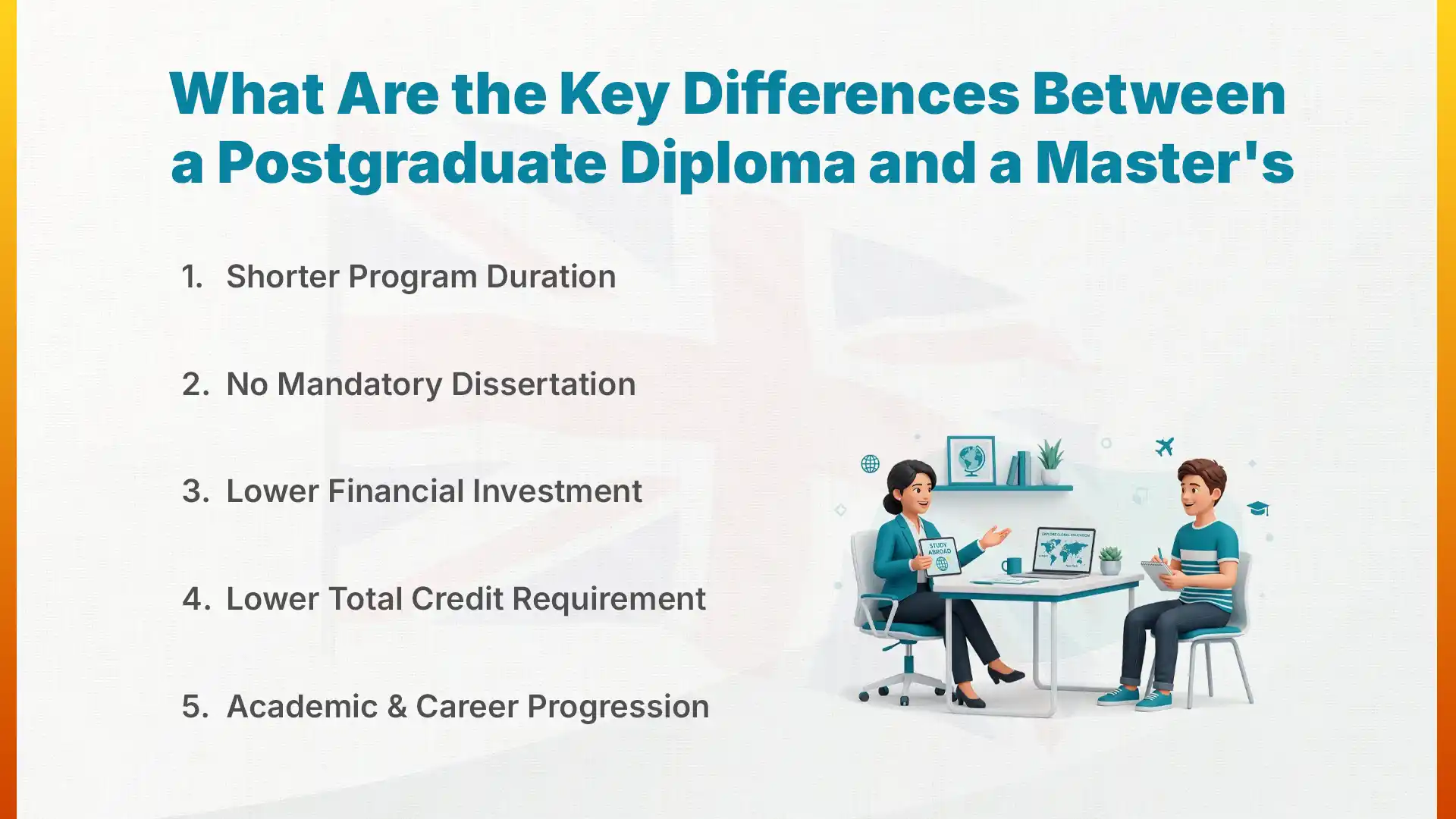
1. Shorter Program Duration
A postgraduate diploma typically takes 9–12 months, often less than a full master's, making it a faster route to a postgraduate qualification. This shorter timeline can matter significantly for students working around visa windows or career timelines.
2. No Mandatory Dissertation
Unlike a master's, a postgraduate diploma doesn't require an extended independent research project, which is the main reason it takes less time to complete. This suits students who want the coursework and knowledge without the research commitment.
3. Lower Financial Investment
With fewer credits and no dissertation supervision required, total tuition for a postgraduate diploma is generally lower than for an equivalent master's program. This can make a real difference for students managing a tighter study-abroad budget, especially when factoring in the overall expenses to study in the UK from Nepal.
4. Lower Total Credit Requirement
A postgraduate diploma is typically awarded for 120 credits, compared to 180 credits for a full master's, reflecting the reduced scope of the qualification. This credit difference is also what distinguishes the two on paper for academic and professional recognition purposes.
5. Academic & Career Progression
A master's is generally viewed as the more complete qualification for further academic study or roles that specifically require full postgraduate credentials. A postgraduate diploma, while valuable, may not carry the same weight in contexts where a full master's is explicitly required.
Which Costs Less: A Postgraduate Diploma or a Master's Degree?
A postgraduate diploma generally costs less than a master's degree because it involves fewer credits, a shorter study period, and no dissertation supervision, making total tuition and living costs lower overall for students on a tighter budget. Tuition fees are typically calculated based on credit value and program length, so the reduced scope of a postgraduate diploma translates directly into lower fees compared to an equivalent master's program at the same institution.
Beyond tuition, the shorter duration also means fewer months of living expenses, accommodation, and other costs tied to studying in the UK, which can add up to meaningful savings over the course of the program. Many students offset these remaining living costs by balancing their budgets with part-time work in the UK. This cost difference matters most for students who are self-funding, working within a strict family budget, or weighing the financial trade-off against a shorter path into employment. In these cases, the savings from a postgraduate diploma can be a genuinely deciding factor rather than a minor consideration.
How Does Each Qualification Affect Career and Further Study Options?
A master's degree generally offers stronger career and further study options because it includes original research experience and full academic credit, while a postgraduate diploma works well for practical upskilling but may limit direct entry into PhD programs or roles specifically requiring a full master's qualification. For students considering a PhD, a master's degree, particularly one with a strong dissertation component, is generally the expected entry qualification, since it demonstrates the independent research capability that doctoral programs are built around; a postgraduate diploma alone often isn't sufficient on its own for this path.
On the other hand, a postgraduate diploma can be an excellent practical upskilling option for professionals who want postgraduate-level knowledge in a specific area without committing to a full research project, particularly when the goal is applying that knowledge directly in the workplace, such as targeting the highest-paying jobs in the UK rather than pursuing further academic study.
Employer perception varies by field and role: some employers value the practical, coursework-focused nature of a postgraduate diploma just as highly as a master's for specific technical or professional skills, while others, especially for roles explicitly requiring "a master's degree," will treat the two as distinct qualifications, making it vital to spend time choosing the right academic programs in the UK.
Who Should Choose a Postgraduate Diploma Over a Master's Degree?
A postgraduate diploma suits students who want a faster, more affordable postgraduate qualification, aren't planning to pursue a PhD, want to test a subject area before committing to a full master's, or need to balance study with work or financial constraints.
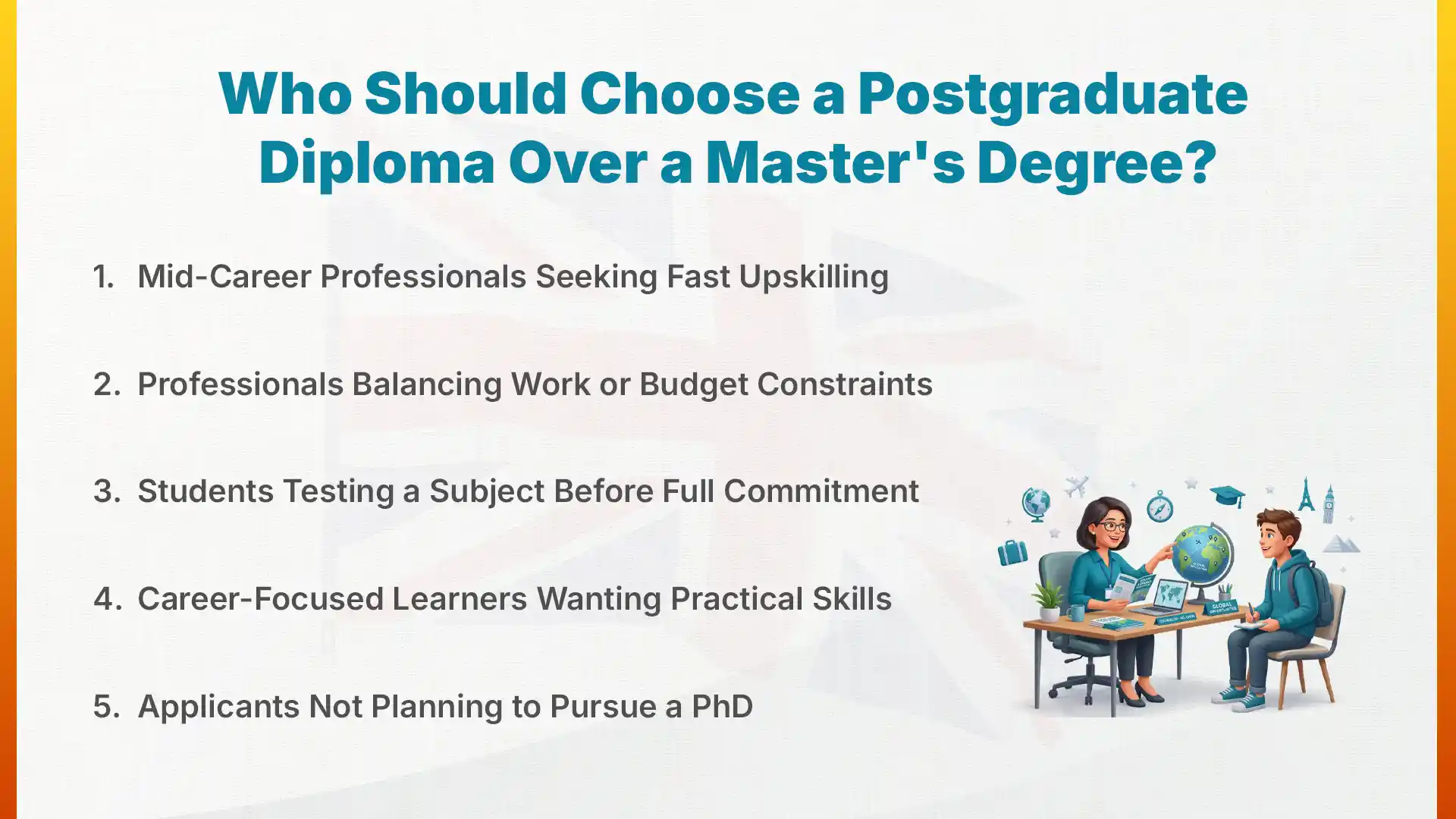
1. Mid-Career Professionals Seeking Fast Upskilling
Professionals looking to add postgraduate-level knowledge to their existing career without pausing work for an extended period often find the shorter postgraduate diploma timeline a better fit. It delivers the core academic content without the added time commitment of a dissertation, which is helpful when aligning with the UK September intake deadlines for a timely start.
2. Professionals Balancing Work or Budget Constraints
For those managing tuition alongside work or family financial responsibilities, the lower cost and shorter duration of a postgraduate diploma can make postgraduate study genuinely more achievable. It reduces both the financial and time pressure compared to a full master's.
3. Students Testing a Subject Before Full Commitment
Students unsure whether a specific field is the right long-term fit can use a postgraduate diploma to explore the subject at a postgraduate level before committing to a full master's. Many can later convert into a master's if they decide to continue.
4. Career-Focused Learners Wanting Practical Skills
Those who want to apply new skills directly in the workplace, rather than build toward academic research, often find the coursework-heavy structure of a postgraduate diploma more directly useful. The absence of a dissertation isn't a drawback for this group; it's simply not the goal.
5. Applicants Not Planning to Pursue a PhD
Since a postgraduate diploma generally isn't sufficient on its own for PhD entry, it's a strong option specifically for those who know a doctorate isn't part of their plan. This removes one of the main reasons someone might otherwise need the full master's qualification.
Can You Convert a Postgraduate Diploma Into a Full Master's Degree?
Yes, many UK universities allow students to convert a postgraduate diploma into a full master's degree by completing the remaining dissertation or research component, provided the conversion is done within the institution's specified timeframe and academic requirements. The conversion process typically involves formally applying to upgrade your qualification, then completing the dissertation or research project that was skipped in the original postgraduate diploma structure, effectively closing the credit gap between the two qualifications.
Most institutions set a specific time limit for this conversion, often within a set number of years after completing the diploma, along with academic conditions such as maintaining a minimum grade average, so it's not always an open-ended option. It's also worth noting that converting a postgraduate diploma into a master's later can affect visa status, particularly around graduate route eligibility and study duration, so students considering this path should confirm the implications with their institution or a registered education consultancy before assuming it works the same way as enrolling in a master's from the start.
How Does Visa Eligibility Differ Between a Postgraduate Diploma and a Master's?
Visa eligibility can differ between a postgraduate diploma and a master's because graduate route eligibility depends on course length and level rather than qualification type specifically, meaning students should confirm with their institution whether their specific postgraduate diploma qualifies before assuming graduate route access. The Graduate Route generally requires a course to meet a minimum study duration and academic level, and while most master's programs comfortably meet this threshold, a shorter postgraduate diploma may or may not, depending on its specific length and structure. This is exactly why course length matters so much for visa purposes; it's not the qualification title itself that determines Graduate Route eligibility, but whether the course meets the Home Office's specific duration and level requirements. This directly impacts your chances of transitioning from a student visa to a work visa in the UK.
Given how much is riding on this, it's worth confirming Graduate Route eligibility directly with the institution before enrolling in a postgraduate diploma, rather than assuming it automatically carries the same visa benefits as a full master's program, especially since you must first meet the baseline requirements to study in the UK from Nepal.
Conclusion
Choosing between a postgraduate diploma and a master's degree isn't about which qualification is objectively better; it comes down to your budget, timeline, and long-term academic or career goals. A postgraduate diploma offers a faster, more affordable route into postgraduate-level study, while a master's provides the fuller academic credential and research experience that certain career paths and further study options specifically require.
If you're trying to decide which path fits your situation, SAS Education Consultancy can help you weigh the cost, duration, and visa implications of each option against your specific goals. Reach out to our advisors today to choose the postgraduate path that's actually right for you.