Common Interview Mistakes Nepali Students Make When Applying for a UK Student Visa

Aug 13, 2026
A strong offer, a valid CAS (Confirmation of Acceptance for Studies), and complete documentation, and then the interview happens, and everything feels shakier than expected. It's a common experience, and it rarely comes down to genuine ineligibility. Most credibility interview problems for Nepali students trace back to a handful of preventable habits: memorized answers that fall apart under a follow-up question, small inconsistencies with the written application, or simply not knowing your own study plan well enough to explain it naturally.
This blog breaks down exactly what goes wrong in these interviews and how to walk in properly prepared when you decide to study in the UK.
In this blog
What Is a UK Student Visa Credibility Interview?
A UK student visa credibility interview is a screening conducted by the university or the Home Office to assess whether an applicant's study intentions, academic background, and future plans are genuine and consistent with their visa application. It's designed to verify that the person behind the paperwork actually understands and believes in their own study plan, rather than simply having submitted a well-put-together application on paper.
Focus Area | What Is Assessed |
|---|---|
| Study Intent | Why This Course, Why This Institution, Why Now |
| Academic Background | Consistency with Prior Qualifications |
| Financial Understanding | Awareness of Tuition and Living Costs |
| Career Plans | Clarity on Post-Study Goals and Return Intentions |
Why Do Nepali Students Struggle with Genuine Student Interviews?
Nepali students often struggle with genuine student interviews because they memorize scripted answers instead of understanding their own study plans, give inconsistent responses compared to their written application, or are unprepared for follow-up questions that probe deeper into their reasoning. A memorized answer tends to fall apart the moment an interviewer asks a follow-up question that wasn't part of the rehearsed script, since the response was never built on genuine understanding in the first place.
Similarly, when spoken answers drift from what was written in the original application, even on small details, it creates doubt about the applicant's overall credibility, regardless of how strong the rest of the file is. And because interviewers are trained to probe beyond surface-level answers, students who haven't thought through the reasoning behind their course, institution, and career choices often struggle the moment the conversation goes one layer deeper than expected, which is a primary driver behind a UK student visa rejection for Nepali students.
What Are the Most Common Interview Mistakes to Avoid?
The most common interview mistakes to avoid include giving vague answers about course choice, being unable to explain the cost of study, contradicting details from the written application, showing no clear post-study plan, and appearing unfamiliar with the chosen course or institution.
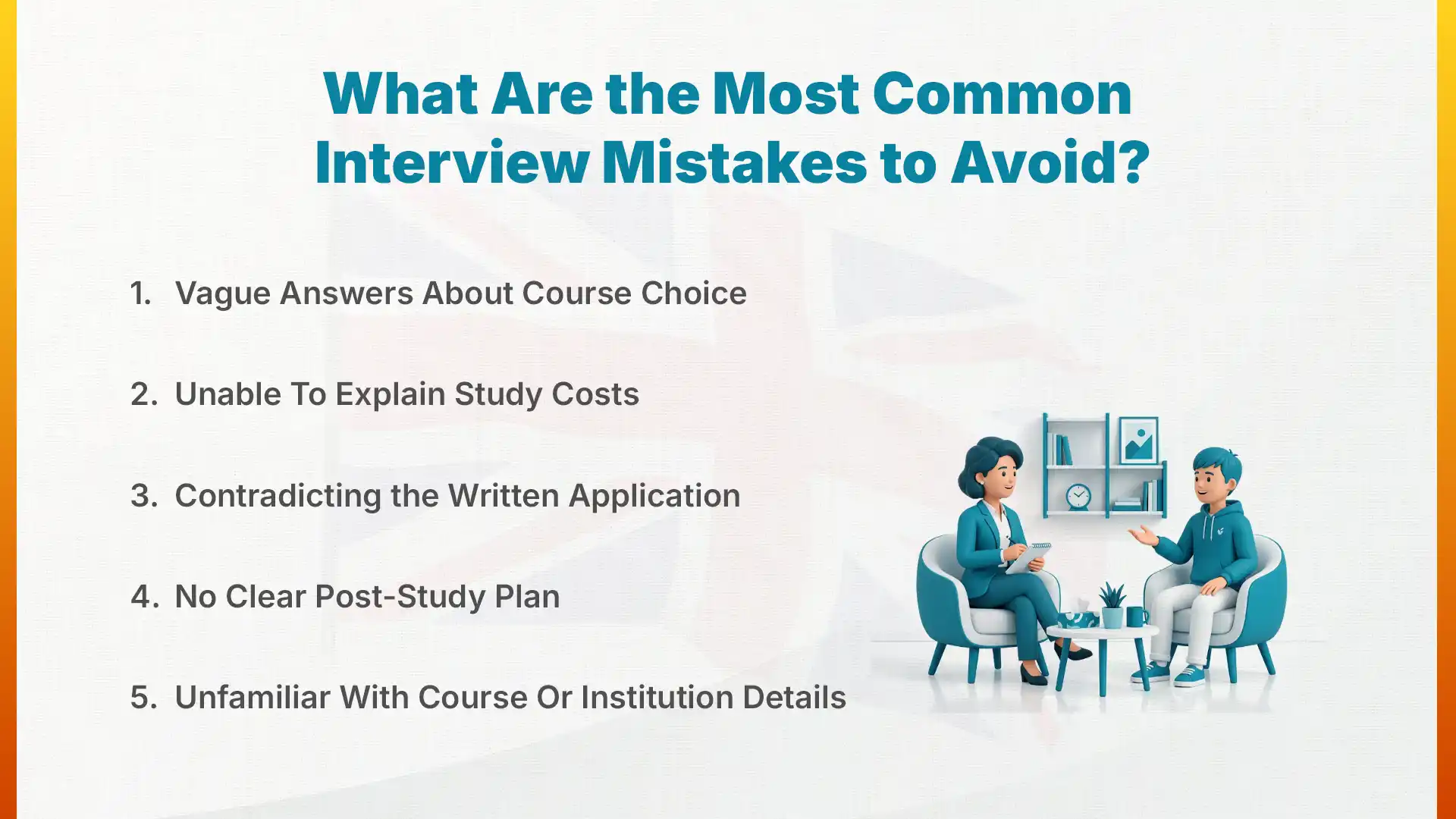
1. Vague Answers About Course Choice
Saying something like "it's a good course" without explaining the specific reasoning behind it signals a lack of genuine engagement with the decision. A confident, specific answer about why this course fits your background is far more convincing.
2. Unable To Explain Study Costs
Not knowing your own tuition fees or estimated living costs suggests the financial planning behind the application wasn't genuinely done by you. Reviewing the cost to study in the UK from Nepal beforehand, even briefly, avoids this entirely.
3. Contradicting the Written Application
Giving an answer that doesn't match what's stated in your application or personal statement is one of the fastest ways to raise doubt. Re-reading your own application before the interview helps keep your spoken answers aligned.
4. No Clear Post-Study Plan
Struggling to explain what comes after the course, whether that's returning to Nepal, further study, or a specific career step, makes it harder for the interviewer to assess genuine intent. A clear, even simple, answer here goes a long way.
5. Unfamiliar With Course Or Institution Details
Not knowing basic details about your course structure or institution suggests limited genuine research went into the decision. Spending even twenty minutes reviewing the details of the best courses in the UK for Nepalese students beforehand can prevent this gap.
What Questions Are Commonly Asked in a UK Visa Interview?
Commonly asked questions in a UK visa interview cover why the applicant chose their specific course and institution, how they plan to fund their studies, what their academic and career background looks like, and what their plans are after completing the course.
Course and Institution Choice: Typically probes why this specific program and university were selected over other options, testing whether the decision reflects genuine research rather than convenience or a generic recommendation.
Financial Planning: Usually explores whether the applicant understands and can explain the tuition fees, living cost estimates, and where the funding is coming from, since this ties directly into the financial documentation submitted with the application.
Post-Study Intentions: Asks what the applicant plans to do after finishing the course, testing whether their answer is specific and consistent with the broader narrative of their application rather than vague or improvised on the spot.
How Does Inconsistency Affect a Visa Interview Outcome?
Inconsistency affects a visa interview outcome because any mismatch between an applicant's spoken answers and their written application, CAS, or supporting documents raises doubts about credibility, even when the underlying application is otherwise strong.
Common sources of inconsistency include mismatched course start dates, different reasoning given for course choice than what appears in the personal statement, or financial figures that don't quite match the submitted bank statements.
What makes this particularly risky is that even small discrepancies tend to carry more weight than applicants expect, since interviewers are specifically trained to notice gaps between what's written and what's said, treating them as a signal worth exploring further rather than dismissing as a minor slip. The most reliable way to avoid this is to review your own application closely before the interview and practice explaining your answers in your own words, which is why ensuring your conditional vs. unconditional offer in the UK status is clear and accurate before the interview is so important.
How Should Nepali Students Prepare for a UK Visa Interview?
Nepali students should prepare for a UK visa interview by reviewing their own application thoroughly, understanding their course and career reasoning in their own words, practicing responses to likely questions, and confirming financial and academic details match their submitted documents exactly.
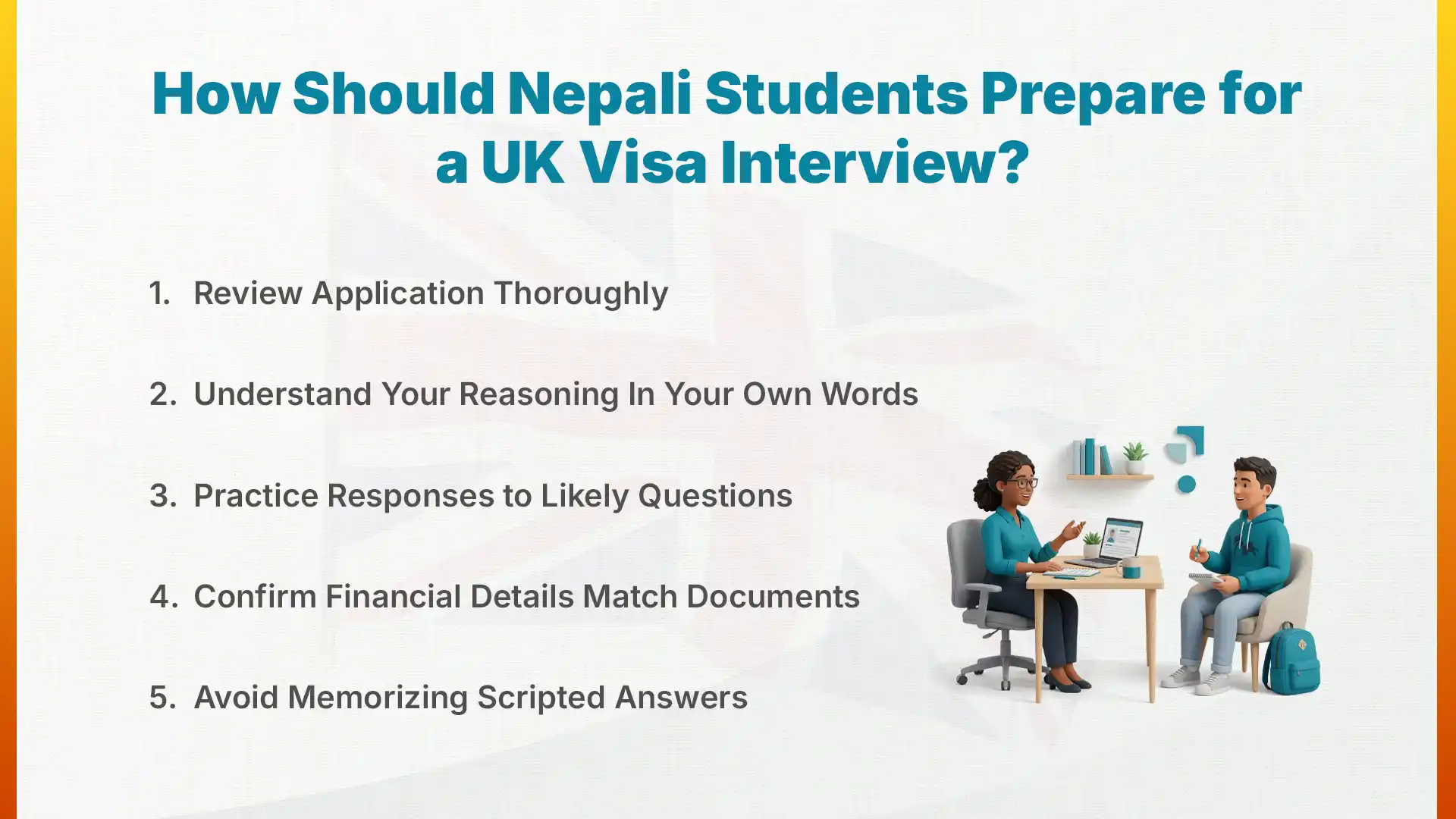
1. Review Application Thoroughly
Read through your entire application, requirements to study in the UK from Nepal, personal statement, and CAS before the interview so nothing catches you off guard. This single step prevents most of the inconsistency-related mistakes outlined above.
2. Understand Your Reasoning in Your Own Words
Be able to explain why you chose your course, institution, and career path without relying on memorized phrasing. Genuine, personalized reasoning holds up far better under follow-up questions than a rehearsed script.
3. Practice Responses to Likely Questions
Run through common interview questions out loud, ideally with someone else asking follow-ups, rather than just reading through them mentally. This builds the kind of natural, confident delivery that's hard to fake in the moment.
4. Confirm Financial Details Match Documents
Double-check that the figures you'd state out loud match exactly what's in your submitted bank statements and financial evidence. Any mismatch here, even accidental, can undermine an otherwise strong application.
5. Avoid Memorizing Scripted Answers
Resist the temptation to write out and memorize word-for-word answers, since this tends to unravel under any unexpected follow-up. Understanding your own plan is a far more durable form of preparation than memorization.
What Should Students Do If an Interview Goes Poorly?
If a visa interview goes poorly, students should review what specifically went wrong, seek clarification from their institution or agent about next steps, and consider reapplying with stronger preparation rather than assuming the outcome is final without understanding the reason. The first step is understanding exactly what went wrong, whether it was a specific inconsistency, a gap in financial understanding, or unclear post-study reasoning, since this shapes what needs to change before any next attempt.
From there, seeking guidance from your institution or a registered education consultancy before reapplying helps identify blind spots that might not be obvious on your own, especially if the outcome felt confusing or unexpected. In most cases, a stronger, more consistent application built around lessons from the first attempt gives a genuinely better chance the second time around, rather than simply repeating the same preparation and hoping for a different result.
Conclusion
Most UK visa interview setbacks for Nepali students aren't about genuine ineligibility; they come down to preparation gaps: memorized answers that don't hold up, small inconsistencies with the written application, or simply not having thought through the reasoning behind a course and career plan deeply enough. The good news is that all of this is fixable with the right preparation, well before the interview date arrives.
If you want to walk into your UK student visa interview genuinely prepared, SAS Education Consultancy can help you review your application, practice likely questions, and build consistent, confident answers grounded in your own study plan. Contact SAS Education Consultancy today to get properly prepared before your interview.