Community College vs. University in the USA for Nepali Students

Sep 18, 2026

For Nepali students planning to study in the USA, choosing between a community college and a four-year university is one of the most important decisions to make before applying. Both pathways can lead to a U.S. degree, but they differ in tuition costs, admission requirements, academic structure, campus experience, and transfer opportunities.
Community colleges generally offer two-year associate degrees and can provide a pathway to a bachelor's degree through the 2+2 model, where students complete their first two years at a community college before transferring to a four-year institution. Universities generally offer four-year bachelor's degrees directly, along with a wider range of undergraduate and graduate programs.
For Nepali students, the choice should be based on academic goals, available budget, intended major, transfer plans, and preferred learning environment rather than simply choosing one institution type over the other if they are serious about studying in the USA.
In this blog
Understanding the Two Study Pathways in the USA
Nepali students can pursue a bachelor's degree in the USA through different educational pathways. Two common options are starting at a community college and transferring to a four-year institution or enrolling directly at a university.
1. Starting at a Community College
Community colleges typically offer two-year associate degrees, certificates, and career-focused programs. They can also provide a pathway to a bachelor's degree through the 2+2 model, where students complete transferable coursework before moving to a four-year institution.
This option may suit students who prefer a lower initial tuition cost, smaller classes, or a more flexible admission process. It can be a practical starting point for students researching a bachelor's degree in the USA, but transfer credits and requirements vary by institution.
2. Starting at a university
Universities and four-year colleges offer bachelor's degrees across a wide range of academic fields. For Nepali students who already know their intended major and meet the admission requirements, starting at a university provides a direct pathway to a bachelor's degree.
Universities may also offer broader academic resources, research opportunities, internships, student organizations, career services, and graduate programs. Students can research the best universities in the USA while comparing programs, admission requirements, costs, and available opportunities.
Community College vs. University: A Quick Comparison
Community colleges and universities differ in cost, program structure, admission, transfer options, and campus experience. The right pathway depends on whether you prioritize a lower-cost starting point, direct entry into a bachelor's degree, flexibility, or a broader university environment.
Factor | Community College | University |
|---|---|---|
| Program | Associate Degrees and Certificates | Bachelor's and Graduate Degrees |
| Duration | Usually 2 Years | Usually 4 Years for Bachelor's |
| Tuition | Generally Lower | Generally Higher |
| Admission | Often More Flexible | Requirements Vary |
| Transfer | Pathway to a Four-Year Degree | Direct Bachelor's Pathway |
| Class Size | Often Smaller | Varies from Small to Large |
| Program Options | More Limited | Broader Range of Majors |
| Campus Experience | Smaller Campus Environment | Larger Campus and More Activities |
| Research | More Limited | Generally More Research Opportunities |
| Career Support | Academic and Career Support Varies | Career Services and Internships Vary |
For Nepali students, a community college can be a starting point for a bachelor's degree through a transfer pathway, while a university allows students to begin and complete their bachelor's degree at the same institution. Costs, admission requirements, transfer policies, and available programs vary, so compare the specific institutions rather than relying only on general differences.
Why the Community College vs. University Choice Matters for Nepali Students
The choice between a community college and a university can affect study costs, admission requirements, transfer options, and the overall college experience. For Nepali students, understanding these differences can help them choose a study pathway that matches their academic goals, budget, and plans for completing a bachelor's degree. This planning is crucial if you are aiming for a full scholarship for Nepalese students in the USA.
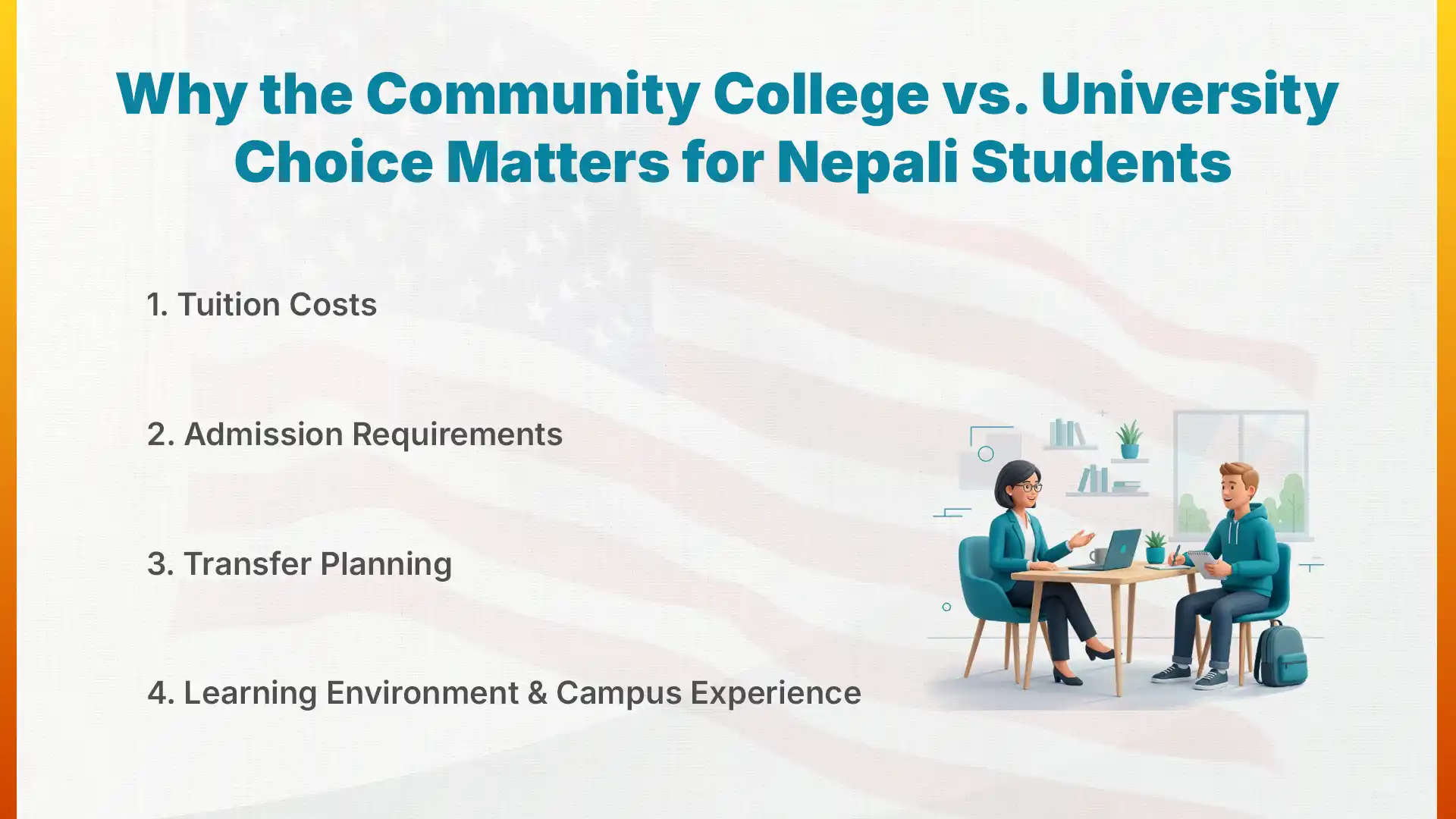
1. Tuition Costs
Community colleges generally have lower tuition and fees than four-year institutions, which can make them a more affordable starting point for a bachelor's degree pathway. However, international students may pay different rates, so compare the actual tuition charged by each institution.
2. Admission Requirements
Community colleges often have more flexible admission processes than four-year universities, although requirements vary by institution and program. International students still need to meet academic, English-language, financial, and immigration requirements.
3. Transfer Planning
Transfer planning is important for students who intend to move from a community college to a four-year university. Credits do not automatically transfer to every university or program, so check transfer agreements, required courses, GPA standards, and major-specific requirements.
4. Learning Environment and Campus Experience
Community colleges may offer smaller classes and support services such as tutoring and academic advising. Universities often provide larger campuses, research facilities, student organizations, athletic programs, and broader networking opportunities.
How to Choose the Right Option for You
The right choice depends on your academic goals, financial situation, intended major, and plans after graduation. Before applying, Nepali students should compare the complete pathway rather than looking only at first-year tuition.
Budget: Compare tuition, fees, housing, food, health insurance, transportation, and other living expenses. You should carefully evaluate the cost to study in the USA.
Academic goal: Decide whether you want to complete an associate degree, transfer to a university, or begin a bachelor's degree directly.
Major: Check whether your intended subject is available and whether required courses will transfer if you choose a community college.
Transfer plan: If you plan to transfer, check the receiving university's credit-transfer policy and GPA requirements before enrolling.
Admission requirements: Review academic qualifications, English-language requirements, application documents, and deadlines for each institution.
Location: Compare tuition with the cost of living in the city or state where you plan to study.
International student support: Look for international student advising, academic support, orientation programs, and career services.
Accreditation: Verify the institution's accreditation and confirm that the program meets your academic and professional objectives. EducationUSA recommends checking accreditation when researching U.S. institutions.
Long-term plan: Consider whether you intend to enter the workforce, transfer to a university, pursue graduate study, or return to Nepal after completing your education. Research the best courses in the USA for Nepalese students to ensure employability.
What Nepali Students Should Know Before Applying
After choosing between a community college and university, Nepali students should review the institution's admission requirements, application deadlines, and international student requirements. Preparing early can help ensure all required documents are ready before applying.
1. Check Institution and Program Requirements
Review the admission requirements for your chosen program, including academic qualifications, English-language requirements, deadlines, and program-specific documents. If you plan to transfer from a community college, also check its transfer pathways and requirements.
2. Prepare Your Application Documents
Common documents may include academic transcripts, English-language test results, passport, financial documents, personal statements, recommendation letters, and institution-specific forms. Requirements vary by institution, so check the official college or university website for the exact documents required.
3. Plan for the Student Visa Process
After receiving admission and the required documents from the institution, students should prepare for the U.S. student visa process. They should also understand the requirements for maintaining their student status after arriving in the USA.
Scholarships and Financial Planning
Scholarships can reduce the cost of studying in the USA, but availability and eligibility vary by institution and program. Nepali students should research funding options early and build a financial plan that does not depend entirely on receiving a scholarship.
1. Explore Scholarship Opportunities
Check scholarships offered by your target colleges and universities and confirm whether international students are eligible. Some scholarships may cover only part of tuition or living expenses, so review the award conditions carefully.
2. Plan Your Funding
Consider all available funding sources, including family savings, education loans where applicable, scholarships, tuition discounts, and other financial support. Your budget should also account for living expenses and unexpected education-related costs.
Conclusion
Choosing between a community college and a university in the USA depends on your academic goals, budget, intended major, transfer plans, and preferred learning environment. Community colleges can offer a lower-cost starting point and transfer pathways, while universities provide direct bachelor's programs and broader academic opportunities.
Before making a decision, compare specific institutions, total costs, admission requirements, transfer policies, and available student support. A well-planned comparison can help you choose the pathway that fits your academic and career goals. Drop an inquiry with SAS Education Consultancy today to discuss your options and plan your next step.