Diploma vs. Bachelor's Degree in Canada: Which Should Nepali Students Choose?

Sep 17, 2026
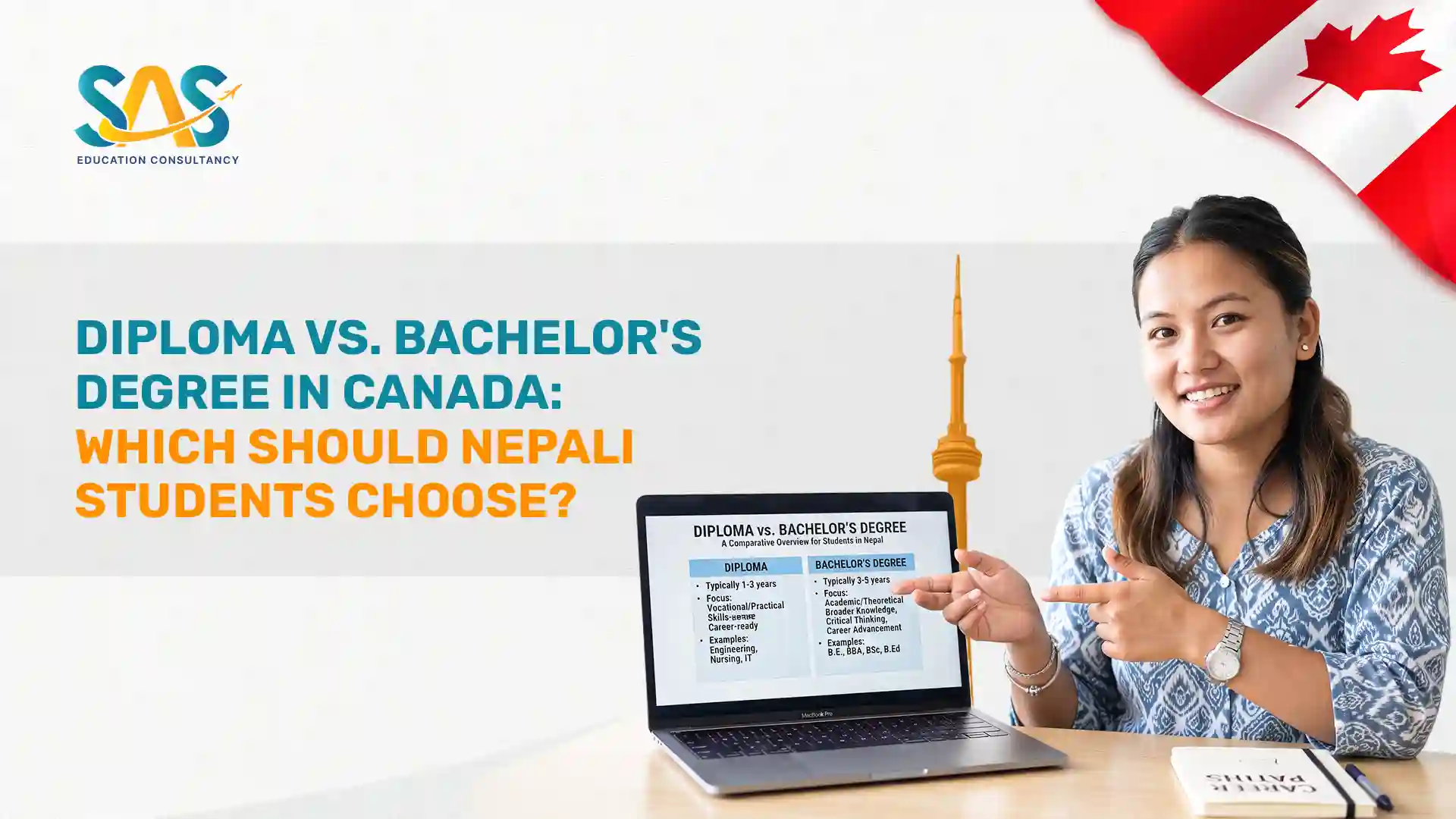
A diploma and a bachelor's degree offer different study pathways in Canada, and the right option depends on your academic background, career goals, budget, and long-term plans. Neither option is automatically suitable for every student, so it is important to understand what each pathway offers before making a decision.
For Nepali students, key factors to compare include course duration, tuition costs, admission requirements, career opportunities, and post-graduation work permit eligibility. This guide breaks down these differences to help you understand how a Canadian diploma compares with a bachelor's degree and which factors may matter most for your study plans when planning your journey to study in Canada.
In this blog
Diploma vs. Bachelor's Degree in Canada: Key Differences
A diploma in Canada is generally a shorter, more career-focused qualification, while a bachelor's degree provides broader academic study over a longer period. Diplomas are commonly offered by colleges and polytechnics and often emphasize practical skills for a specific occupation, while bachelor's degrees are primarily offered by universities and provide broader theoretical and academic foundations alongside practical learning.
For Nepali students, the main differences include duration, institution type, academic focus, admission requirements, and opportunities for further study. Some diploma programs also have pathways that allow students to transfer credits toward a related degree, but eligibility and transfer arrangements vary by institution and program. It is crucial to check the specific requirements to study in Canada from Nepal for your chosen path.
Aspect | Diploma | Bachelor's Degree |
|---|---|---|
| Typical Duration | 1–3 Years | 3–4 Years |
| Commonly Offered By | Colleges and Polytechnics | Universities |
| Primary Focus | Practical and Career-Focused Learning | Broader Academic and Theoretical Learning |
| Admission Requirements | Vary by Program and Institution | Vary by Program and Institution |
| Further Study | Some Programs Offer Degree-Transfer Pathways | Can Lead to Graduate-Level Study |
| Learning Approach | Often Emphasizes Hands-On Training | Combines Academic Study with Practical Learning |
Comparing the Cost of a Diploma and Bachelor's Degree
A diploma generally costs less overall than a bachelor's degree in Canada because it usually takes fewer years to complete and may have lower annual tuition. However, the actual cost depends on the institution, program, province, and city, so Nepali students should compare both tuition and living expenses for their specific study destination.
A shorter diploma can reduce the total amount spent on tuition, accommodation, food, transportation, and other living expenses. However, a bachelor's degree may provide a different long-term academic and career pathway, so cost should be compared alongside factors such as program outcomes, career requirements, and future study plans. This financial planning is critical for applying for a Canada scholarship for Nepalese students.
What Costs Should You Include in Your Comparison?
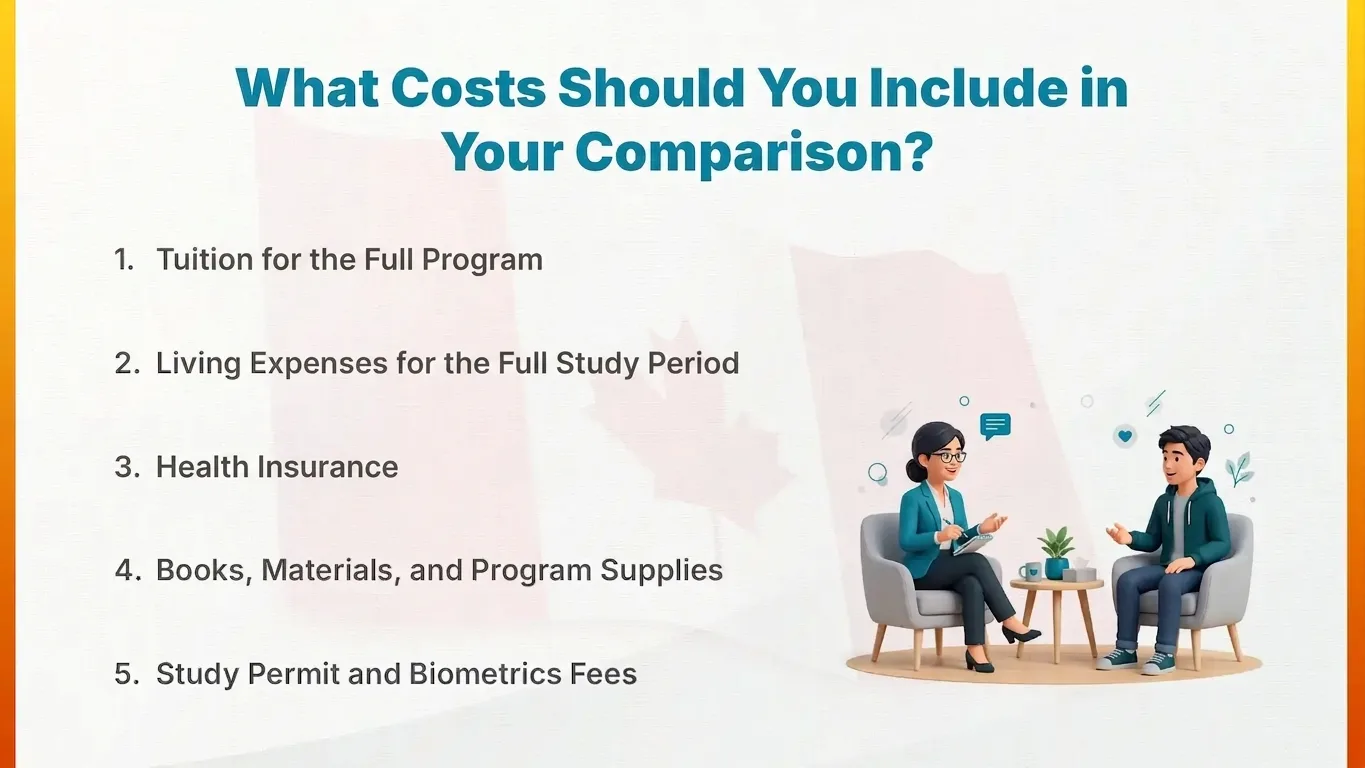
A complete cost comparison should include tuition, living expenses, health insurance, study materials, and study permit-related fees. Looking at these costs together gives Nepali students a more realistic estimate of what they may need to spend throughout their studies.
1. Tuition for the Full Program
Compare the total tuition for the entire program, not just the annual fee. A shorter diploma may have a lower overall tuition cost because you pay for fewer years, while a bachelor's degree usually involves a longer study period.
2. Living Expenses for the Full Study Period
Consider accommodation, food, transportation, and other daily expenses for the entire duration of your program. These costs can vary considerably depending on the province and city where you study, so you might also research part-time jobs in Canada for international students to help offset these costs.
3. Health Insurance
Include the cost of health insurance for your full study period. Coverage requirements and costs for international students vary across Canadian provinces, so check the requirements that apply to your chosen institution and location.
4. Books, Materials, and Program Supplies
Budget for textbooks, software, equipment, uniforms, or other supplies required by your program. Costs can vary depending on the field of study and should be included in your overall education budget.
5. Study Permit and Biometrics Fees
Include the fees associated with your Canadian study permit application and biometrics. These are separate from tuition and living expenses and should be included when calculating your initial study budget.
How Does Each Option Affect Post-Graduation Work Permit Eligibility?
Post-Graduation Work Permit (PGWP) eligibility can differ significantly between a diploma and a bachelor's degree in Canada. Both options must meet the relevant PGWP requirements, including studying at a PGWP-eligible designated learning institution and completing an eligible program of at least eight months.
For Nepali students, the field-of-study requirement is an important difference to check. Graduates with a bachelor's degree are exempt from the PGWP field-of-study requirement, while graduates of many non-degree programs, including college diplomas, may need to have completed a program in an eligible field if their study permit application was submitted on or after November 1, 2024. The eligible fields are based on current CIP codes and can change, so students should verify their specific program's eligibility before enrolling.
Which Option Offers Better Career Outcomes?
Career outcomes depend largely on the field of study and the requirements of the occupation, rather than on the credential type alone. A diploma can provide practical training for specific technical, skilled, or applied roles. For more options, explore the best courses in Canada for Nepalese students.
For Nepali students, the choice should therefore depend on the career they want to pursue in Canada. A diploma may allow entry into certain occupations after a shorter period of study, while a bachelor's degree can provide access to career paths where a university degree is a standard requirement. Checking the education requirements for your target occupation before choosing a program can help you make a more informed comparison.
Factors to Consider When Choosing Between a Diploma and a Bachelor's Degree?
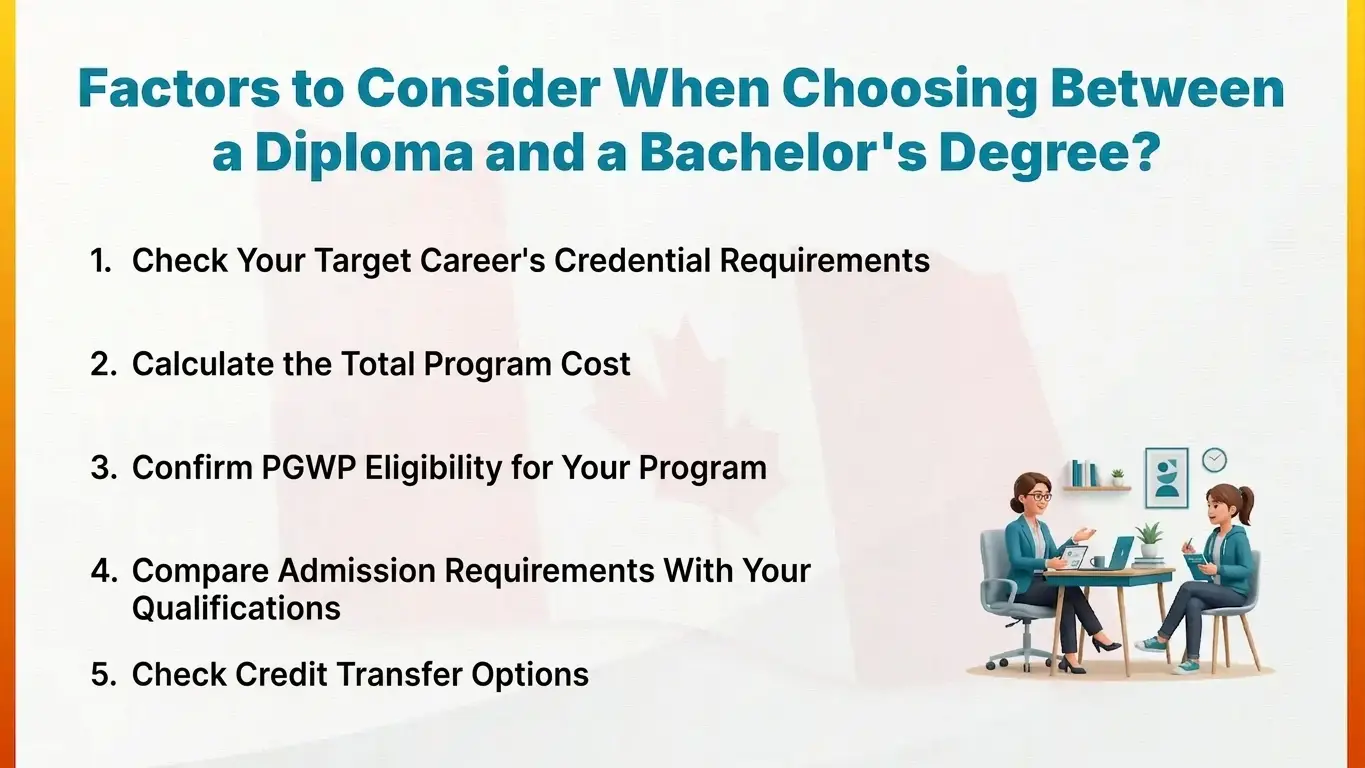
Choosing between a diploma and a bachelor's degree depends on your career requirements, total study cost, PGWP eligibility, academic qualifications, and future study options. Nepali students should compare these factors before selecting a program.
1. Check Your Target Career's Credential Requirements
Research the education requirements for your intended career before choosing a program. Some occupations may accept a diploma or college credential, while others typically require a bachelor's degree or higher.
2. Calculate the Total Program Cost
Compare tuition and living expenses across the full program rather than looking only at annual tuition. A shorter diploma may have a lower total cost, but the actual difference depends on the program, institution, and location.
3. Confirm PGWP Eligibility for Your Program
Check the current post-graduation work permit requirements for your specific program before enrolling. This is particularly important for diplomas and other non-degree programs because additional eligibility requirements may apply.
4. Compare Admission Requirements With Your Qualifications
Check the academic and English language requirements for your preferred programs against your current qualifications. This can help you identify which pathways you are eligible for before applying.
5. Check Credit Transfer Options
If you are considering a diploma but may want to pursue a bachelor's degree later, check whether the program offers a formal credit transfer or degree pathway. Transfer arrangements vary by institution and program, so confirm the specific requirements before enrolling.
Can a Diploma Lead Into a Bachelor's Degree in Canada?
Yes, some Canadian diploma programs can provide a pathway into a related bachelor's degree through formal transfer agreements or articulation arrangements. The pathway usually starts with completing a diploma at a college, after which eligible credits may be transferred to a partner university or another institution offering a related bachelor's program. Depending on the agreement, you may enter the degree with some credits already completed instead of starting from the first year, although the amount of credit and point of entry varies by program.
For Nepali students, the pathway can work as a two-stage route to a bachelor's degree. You first complete the diploma and then apply to the university or degree program specified in the transfer agreement. If your credits and other requirements are accepted, you complete the remaining courses needed for the bachelor's degree. This can allow you to gain a college qualification and practical experience before completing a degree, but it does not necessarily reduce the total cost or study time in every case.
Before choosing this route, check whether the diploma has a formal transfer agreement, which university and degree it leads to, how many credits are transferable, the minimum grades required, and whether you must meet additional admission requirements. Do not assume that completing any diploma will automatically give you entry into a bachelor's degree or transfer all your credits.
Conclusion
Choosing between a diploma and a bachelor's degree in Canada depends on your career goals, budget, academic background, and long-term plans. A diploma may suit students seeking a shorter, career-focused program, while a bachelor's degree may be more appropriate for careers that require a university degree or for students planning further academic study. PGWP eligibility and credit-transfer options should also be checked for the specific program before making a decision.
If you're a Nepali student comparing a diploma and a bachelor's degree in Canada, SAS Education Consultancy can help you compare program costs and review current PGWP requirements and understand available study pathways. Connect with an advisor today to discuss your options and plan your next step.