Conditional vs. Unconditional Offer in the UK: What Each Means for Your Visa

Aug 07, 2026

Getting an offer from a UK university feels like the finish line until you realize it says "conditional" instead of "unconditional," and suddenly your visa timeline is a lot less clear than you thought. The type of offer you receive isn't just a technicality on a letter; it directly determines when your university can issue your CAS and, in turn, when you can actually apply for your student visa.
This blog breaks down exactly what each offer type means, how it affects your visa application, and what to do if you're currently sitting on a conditional offer when you are trying to study in the UK.
In this blog
What Is a Conditional Offer in the UK?
A conditional offer in the UK is an offer of a university place that depends on the applicant meeting specific requirements, such as final exam results, English language scores, or document verification, before the offer becomes firm. Conditions vary by applicant and course, but they typically relate to something still outstanding at the time the offer is made, most often final grades that haven't been confirmed yet or documents that still need verification.
These conditions generally fall into two categories: academic conditions, which usually involve achieving a minimum final grade or qualification result, and non-academic conditions, which can include submitting a valid passport copy, financial documents, or a satisfactory reference. Both types must be cleared before the offer becomes unconditional, which is why understanding the requirements to study in the UK from Nepal is so critical. Universities generally set a deadline for meeting these conditions, often tied to the course intake date, so it's worth checking this deadline the moment you receive the offer rather than assuming there's unlimited time to sort it out.
What Is an Unconditional Offer in the UK?
An unconditional offer in the UK is a confirmed university place with no outstanding requirements, meaning the applicant has already met all academic and document requirements and can proceed directly toward enrollment and visa application. A conditional offer becomes unconditional once the university confirms that every listed condition, such as grades, documents, English test scores, and so on, has been satisfactorily met, at which point the university updates the offer status and moves the applicant toward enrollment.
Because there's nothing left outstanding, an unconditional offer allows the university to move straight to issuing a CAS, which is the document that starts the student visa application process, removing the waiting period that conditional offers carry.
Some students receive unconditional offers from the very beginning, typically when they've already completed their qualification and submitted final verified results at the time of application for the best courses in the UK for Nepalese students, rather than applying with results still pending.
What Conditions Are Commonly Attached to a UK Offer?
Conditions commonly attached to a UK university offer include achieving specific final exam grades, meeting a required English language test score, submitting verified academic transcripts, and providing satisfactory financial or reference documents.
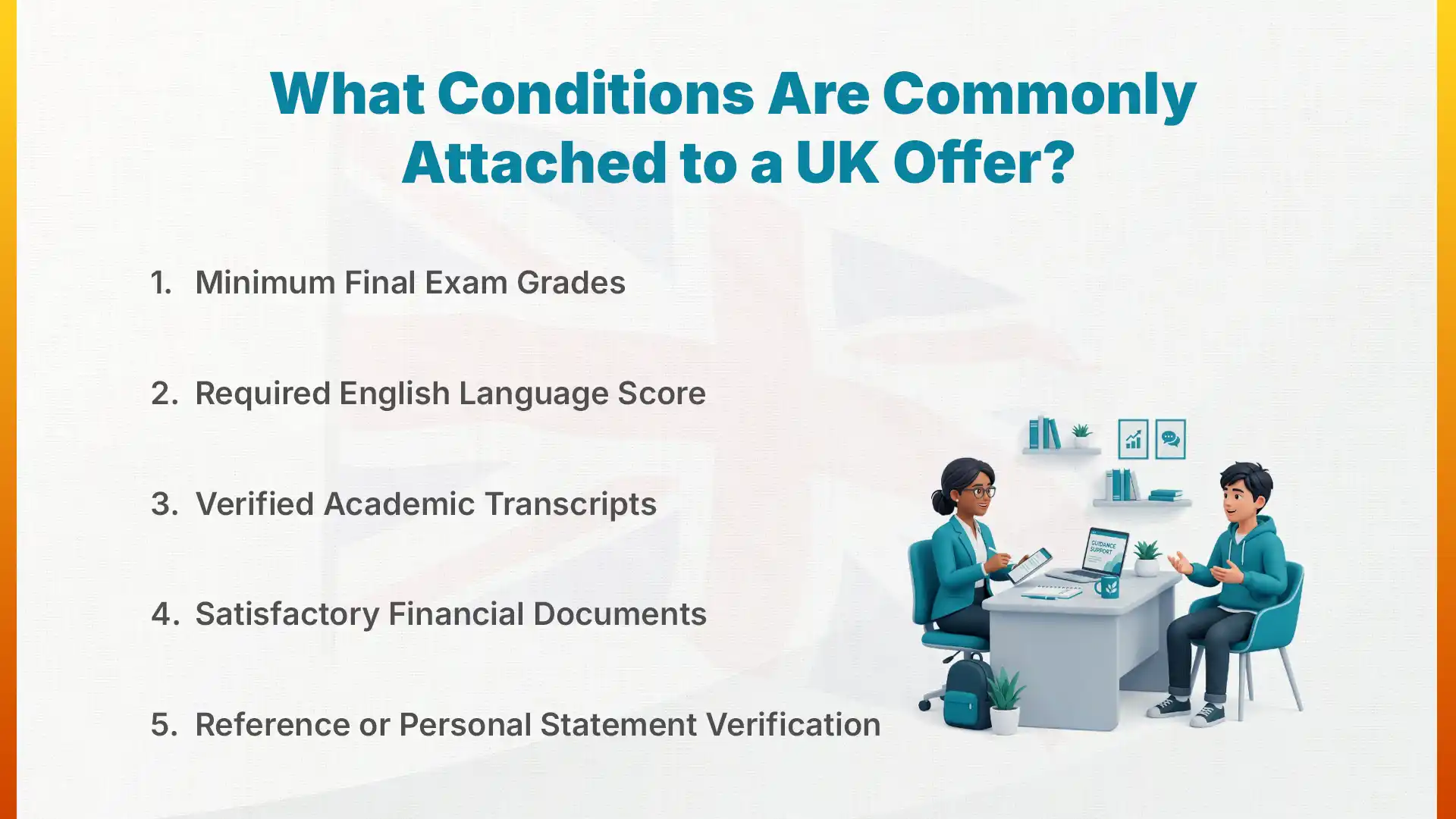
1. Minimum Final Exam Grades
The offer specifies a minimum grade or result you must achieve in your current qualification before the place is confirmed. This is the most common condition attached to offers made while a student is still completing their final year of study. Missing the required grade doesn't always mean losing the offer outright, but it can trigger a review of the place.
2. Required English Language Score
A specific score on an accepted English test, such as IELTS, must be met if it wasn't already provided at the time of application. Universities set this threshold to ensure students can manage academic coursework and communication once enrolled. Students who haven't yet sat the test should enroll in the IELTS Preparation Class and get the desired result.
3. Verified Academic Transcripts
Official, verified copies of your academic records must be submitted to confirm the qualifications stated in your application. This step protects the integrity of the admissions process and ensures the university has accurate documentation on file. Delays here often come down to how quickly a student's previous institution can issue certified copies.
4. Satisfactory Financial Documents
Proof of sufficient funds to cover tuition and living costs may be required before the offer becomes firm. This is separate from the financial evidence required later for the visa application itself, though the two are closely related to the cost to study in the UK from Nepal. Getting these documents in order early avoids duplicating effort closer to the visa stage.
5. Reference or Personal Statement Verification
In some cases, the university may need to verify a reference or clarify details in your personal statement before finalizing the offer. This condition is less common than academic or financial ones but can still hold up an offer if left unresolved. Responding quickly to any university request for clarification helps keep this step from becoming a bottleneck.
How Does a Conditional Offer Affect Your Student Visa Application?
A conditional offer affects a student visa application because a Confirmation of Acceptance for Studies (CAS) is generally only issued once all conditions are met, meaning students cannot apply for their student visa until their offer becomes unconditional.
A CAS confirms that a student has an unconditional, firm place at their institution, so universities won't issue one while conditions remain outstanding; doing so would confirm a place the student hasn't technically secured yet.
1. Timeline Impact on Visa Application
Since the student visa application can't begin until CAS issuance, a conditional offer effectively pauses the visa process until every outstanding requirement is cleared, which can compress the time available before the course start date if conditions are met late.
2. Risk of Delayed Visa Processing
If conditions are met close to the intake deadline, students can end up applying for their visa much later than planned, increasing the risk of processing delays that clash with their intended course start date.
How Does an Unconditional Offer Affect Your Student Visa Application?
An unconditional offer allows a university to issue a CAS immediately, which lets students begin their student visa application without waiting on outstanding academic or document requirements, generally resulting in a faster and more predictable visa timeline.
1. Faster CAS Issuance Process
Since there's nothing left to verify, universities can move straight to issuing the CAS, often significantly faster than with a conditional offer still working through outstanding requirements.
2. Earlier Visa Application Window
With CAS issued sooner, students can submit their student visa application earlier, giving them a longer buffer before their course start date and reducing the pressure of tight processing timelines.
3. Reduced Risk of Missing Intake Deadlines
Because the entire process moves faster and with fewer dependencies, students with unconditional offers are far less likely to run into last-minute delays that jeopardize their planned intakes in the UK.
What Should Students Do After Receiving a Conditional Offer?
After receiving a conditional offer, students should carefully review all listed conditions, submit required documents or results as soon as they're available, confirm with the university once conditions are met, and track the timeline against their intended visa application and course start date.
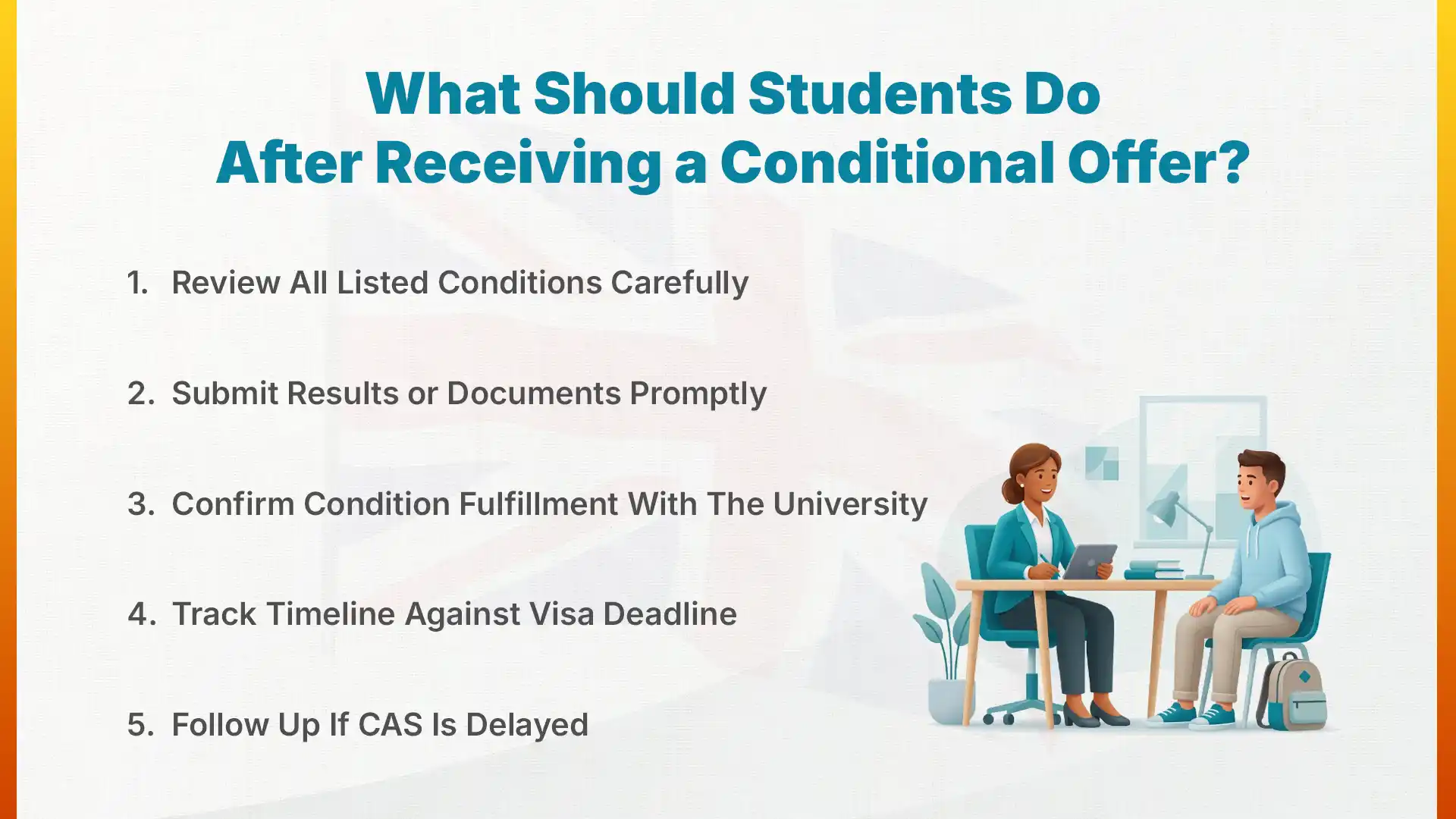
1. Review All Listed Conditions Carefully
Read the offer letter closely to understand exactly what's required and by when, rather than skimming past details that could affect your timeline. Offers sometimes list multiple conditions at once, and missing even one can delay the whole process. Making a simple checklist from the offer letter helps ensure nothing gets overlooked.
2. Submit Results Or Documents Promptly
Send outstanding results, transcripts, or documents to the university as soon as they're available instead of waiting until closer to the deadline. Early submission gives the university more time to process and verify everything without added pressure. It also builds in a buffer in case something needs to be resubmitted or clarified.
3. Confirm Condition Fulfillment With The University
Follow up directly with the admissions team to make sure your offer status has actually been updated once conditions are met. Universities can experience processing delays, so a confirmation email or portal check avoids relying on assumptions. This step is especially important close to intake deadlines when timelines are tight.
4. Track Timeline Against Visa Deadline
Keep your condition deadlines mapped against your intended visa application date so you know how much buffer time you actually have. Working backward from your course start date helps identify how much room there is for delays before it becomes a real risk. This is particularly useful when conditions depend on external factors like exam boards releasing results.
5. Follow Up If CAS Is Delayed
If your CAS hasn't been issued shortly after your offer becomes unconditional, reach out to the university rather than assuming it will arrive automatically. CAS numbers are needed to begin the student visa application, so any delay here has a direct knock-on effect. A quick follow-up email is often enough to identify and resolve the hold-up.
Conditional vs. Unconditional Offer: Key Differences at a Glance
The key difference between a conditional and unconditional offer is that a conditional offer requires specific requirements to be met before it becomes firm, while an unconditional offer is already confirmed, directly affecting how soon a student can receive a CAS and apply for their visa.
Aspect | Conditional Offer | Unconditional Offer |
|---|---|---|
| Requirements | Must Be Met Before the Offer Is Firm | Already Met |
| CAS Issuance | Issued After Conditions Are Met | Can Be Issued Immediately |
| Visa Application | Delayed Until CAS Is Issued | Can Begin Sooner |
| Risk Level | Higher, Tied to Meeting Deadlines | Lower, More Predictable Timeline |
How Can Nepali Students Avoid Visa Delays Linked to Offer Type?
Nepali students can avoid visa delays linked to offer type by submitting required documents and results as early as possible, confirming condition status directly with the university, and consulting a registered education agent to track CAS and visa timelines against course start dates.
1. Submitting Documents and Results Early
The single biggest factor in avoiding delays is submitting whatever outstanding results, like English scores and financial documents, as soon as they're available, rather than waiting until closer to the deadline.
2. Staying In Direct Contact With The University
Following up directly with the university's admissions team once conditions are met helps confirm the offer status has actually been updated, rather than assuming it happens automatically the moment documents are sent.
3. Getting Support From a Registered Education Consultancy
An experienced education consultancy can help track condition deadlines, follow up with universities on your behalf, and time your visa application correctly, reducing the risk of a last-minute scramble before your intake.
Conclusion
Understanding whether you have a conditional or unconditional offer isn't just a formality; it directly shapes how soon you can receive your CAS, apply for your student visa, and confirm your place for your intended intake. A conditional offer isn't a problem on its own, but delays in clearing its conditions can quickly compress your visa timeline if left unmanaged. Staying on top of deadlines, submitting documents early, and confirming your offer status directly with the university are the simplest ways to keep your plans on track.
If you're navigating a conditional offer and want to make sure your visa timeline stays on schedule, SAS Education Consultancy can help you track your conditions, follow up with your university, and plan your student visa application at the right time. Contact SAS Education Consultancy today to keep your UK study plans moving without unnecessary delays.