Master's of Computer Science in UK for International Students

Feb 24, 2026

Thinking about building a global tech career in AI, cybersecurity, or software engineering? The UK has quietly become one of the most powerful launchpads for computer science graduates worldwide. With world-ranked universities, cutting-edge research, and strong ties to the tech industry, studying computer science in the UK isn’t just about earning a degree; it’s about positioning yourself at the centre of innovation.
In this blog, we’ll explore everything you need to know about Master's in Computer Science in the UK for international students, including top universities, specialisations such as artificial intelligence and data science, tuition fees, scholarships, admission requirements, and career opportunities. Whether you’re aiming for Big Tech, startups, or research roles, this guide will help you make a smart, informed decision to study in UK.
In this blog
What Is a Master’s in Computer Science?
A Master’s in Computer Science is a postgraduate degree designed to deepen your knowledge in computing, software systems, algorithms, and emerging technologies like artificial intelligence and cybersecurity. It develops advanced technical skills while enhancing problem-solving, analytical thinking, and research capabilities essential in today’s digital economy.
Core areas covered in computer science programs typically include data structures and algorithms, software engineering, database systems, artificial intelligence, machine learning, cybersecurity, cloud computing, and distributed systems. Many programs in the UK also integrate practical labs, coding projects, and real-world case studies to bridge theory with application. Students often choose electives aligned with career goals, such as data science, robotics, fintech technologies, or advanced programming.
UK universities place strong emphasis on research and industry collaboration. Most MSc Computer Science programs include a dissertation or industry-based project, allowing students to apply their skills to real-world problems. This combination of academic depth and practical exposure prepares graduates for both high-level technical roles and further doctoral research.
Why Computer Science Is a High-Demand Global Degree?
- Rapid digital transformation across industries has created a consistent demand for skilled tech professionals.
- Emerging fields like artificial intelligence, machine learning, and cybersecurity are expanding globally.
- Tech companies worldwide actively recruit graduates with strong programming and data skills.
- Remote and global job opportunities make computer science careers geographically flexible.
- High salary potential compared to many other postgraduate degrees increases return on investment.
- Governments and the private sector continue investing heavily in technology and innovation sectors.
Why Study Masters in Computer Science in UK?
Studying a Master's in Computer Science in UK offers international students access to world-class education, strong industry connections, and excellent career prospects. The UK combines globally ranked universities with a thriving tech ecosystem, making it one of the most attractive destinations for computer science graduates. With shorter course durations and post-study work opportunities, students can gain quality education while optimising time and investment. The combination of academic excellence and employability makes it an ideal choice for those planning to study IT in UK.
1. Globally Ranked Universities and Research Excellence
The UK is home to some of the world’s top-ranked universities for computer science and technology research. Institutions consistently perform well in global rankings due to strong faculty expertise and high research output. Universities invest heavily in AI, cybersecurity, data science, and advanced computing research centers. Students gain exposure to cutting-edge labs, innovation hubs, and collaboration with global tech companies. This research-driven environment enhances both academic credibility and long-term career value.
2. One-Year Master’s Programs (Shorter Duration)
One of the biggest advantages of studying in the UK is the one-year full-time master’s structure. Compared to two-year programs in other countries, this saves both tuition fees and living expenses. Students enter the workforce faster while still receiving intensive, high-quality academic training. The compact structure focuses on practical skills, coursework, and a dissertation within a shorter timeframe. This makes the UK an efficient and cost-effective option for international students.
3. Strong Tech Industry and Startup Ecosystem
The UK has a rapidly growing technology sector, particularly in cities like London, Manchester, and Edinburgh. It is home to global tech companies, fintech startups, AI research hubs, and cybersecurity firms. Universities maintain close partnerships with industry leaders, offering internships and networking opportunities. Students benefit from exposure to real-world projects and potential job placements. The startup ecosystem also encourages innovation and entrepreneurial ventures.
4. Access to the UK Graduate Route (Post-Study Work Visa)
International students completing a master’s degree in the UK can apply for the Graduate Route visa. This allows them to stay and work in the UK for up to two years after graduation. The visa provides valuable professional experience in the UK job market. It also allows graduates to explore permanent employment opportunities or transition into skilled worker visas. This post-study option significantly enhances career flexibility and long-term prospects.
5. High Employability and Competitive Salaries
Computer science graduates from UK universities enjoy strong employability rates across multiple industries. Roles in software development, data science, AI engineering, and cybersecurity are in high demand. Entry-level salaries are competitive and often higher than in many other postgraduate fields. With experience, professionals can move into leadership, consulting, or specialised technical roles. The combination of high demand and salary growth makes this degree a strong return on investment.
Top Universities for Master's in Computer Science in UK
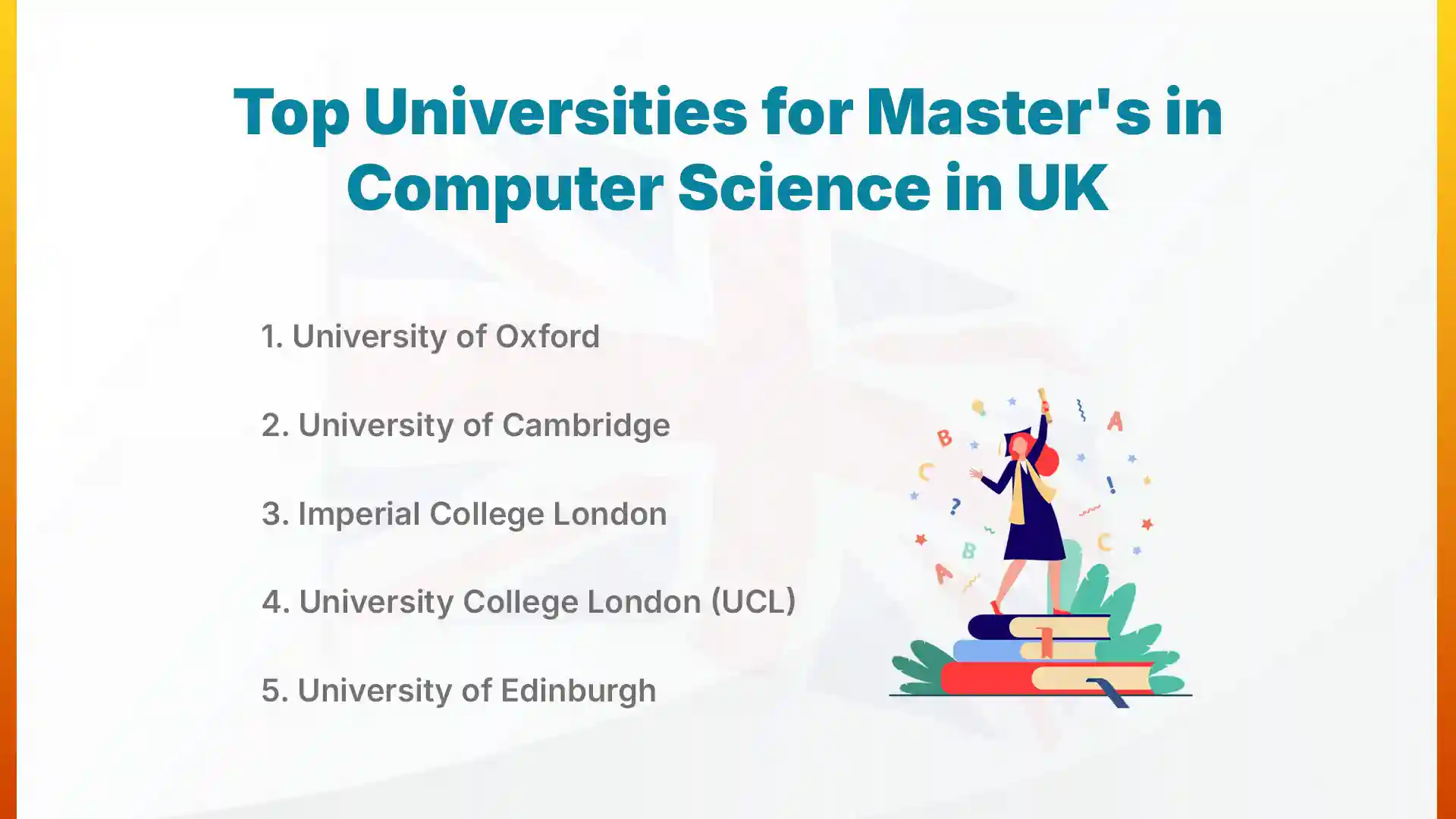
The UK is home to some of the most prestigious institutions offering master's in computer science in UK for international students. These universities are globally ranked, research-intensive, and deeply connected to the tech industry. From artificial intelligence and machine learning to cybersecurity and data science, they provide advanced specialisations aligned with global market demand. Below are five leading public institutions recognised among the best universities in UK for academic excellence, research innovation, and strong graduate employability.
1. University of Oxford
The University of Oxford is a world-renowned public research university consistently ranked among the top globally. Its Department of Computer Science is known for excellence in artificial intelligence, cybersecurity, quantum computing, and software engineering. The MSc programs emphasise rigorous theoretical foundations combined with cutting-edge research. Students gain access to advanced laboratories, expert faculty, and collaborative industry projects. Admission is highly competitive and requires strong academic and technical credentials. Graduates frequently secure roles in global tech firms, research institutions, and innovative startups.
2. University of Cambridge
The University of Cambridge is a prestigious public university with a globally recognised Computer Science and Technology department. It is particularly strong in AI, machine learning, systems engineering, and computational theory. The university promotes deep analytical thinking and interdisciplinary research collaboration. Students benefit from proximity to the “Silicon Fen” tech cluster, enhancing internship and job prospects. The MSc program includes research-driven coursework and project-based learning. Cambridge graduates often move into high-impact roles in academia, research labs, and multinational technology companies.
3. Imperial College London
Imperial College London is a leading public research university specialising in science, engineering, and technology. Its MSc Computer Science programs focus on practical innovation, software systems, AI, data analytics, and distributed computing. Being located in London provides direct access to global tech companies and fintech startups. The curriculum integrates theoretical depth with real-world technical projects. Imperial maintains strong corporate partnerships that enhance internship and placement opportunities. Graduates are highly employable in consulting, AI engineering, and advanced technical roles.
4. University College London (UCL)
University College London (UCL) is a Russell Group public university recognised for research strength in artificial intelligence, human-computer interaction, and data science. The Computer Science department offers diverse MSc pathways aligned with emerging industry trends. UCL emphasizes research-led teaching and innovation-focused projects. Its central London location provides excellent networking opportunities within the UK tech ecosystem. Students complete dissertation projects that often align with industry or advanced research areas. UCL graduates enjoy strong global recognition and competitive salary prospects.
5. University of Edinburgh
The University of Edinburgh is a top public research university globally recognised for its School of Informatics. It is particularly strong in artificial intelligence, robotics, cybersecurity, and machine learning research. The MSc programs combine advanced technical coursework with research-intensive projects. Edinburgh benefits from a growing technology sector and innovation ecosystem in Scotland. Students gain hands-on experience through labs, group projects, and dissertation research. Graduates are well-prepared for roles in AI development, data science, and high-tech industries worldwide.
Popular Specialisations in Master's in Computer Science in UK
One of the biggest advantages of pursuing a masters in computer science in uk is the wide range of industry-focused specialisations available. UK universities design their MSc programs to align with global tech trends and employer demand. Students can tailor their degrees toward artificial intelligence, cybersecurity, software systems, or data-driven technologies. Choosing the right specialisation plays a major role in shaping career direction and long-term salary potential. Below are some of the most popular and high-demand pathways.
1. Artificial Intelligence and Machine Learning
Artificial Intelligence (AI) and Machine Learning (ML) are among the most sought-after specialisations in the UK. Programs focus on neural networks, deep learning, natural language processing, and computer vision. Students work with real-world datasets and advanced algorithms to build intelligent systems. Many universities collaborate with AI research labs and tech companies. The UK has strong investment in AI innovation, increasing job opportunities. Graduates often pursue roles as AI engineers, ML developers, or research scientists.
2. Data Science and Big Data Analytics
Data Science programs train students to extract insights from complex datasets using statistical modelling and programming tools. Coursework typically includes data mining, predictive analytics, big data frameworks, and visualisation techniques. Students gain practical experience with Python, R, SQL, and cloud-based data platforms. The UK’s finance, healthcare, and e-commerce sectors create strong demand for data professionals. Graduates commonly work as data scientists, data analysts, or business intelligence specialists.
3. Cybersecurity and Information Security
Cybersecurity is a rapidly growing field due to increasing digital threats and data breaches. This specialisation covers cryptography, network security, ethical hacking, and risk management. Students learn to protect systems, detect vulnerabilities, and design secure digital infrastructures. The UK government and private sectors heavily invest in cybersecurity talent. Practical labs and simulated attack scenarios enhance technical expertise. Graduates often work as cybersecurity analysts, security consultants, or information security managers.
4. Software Engineering
Software Engineering focuses on the design, development, testing, and maintenance of large-scale software systems. Programs emphasise programming languages, agile methodologies, system architecture, and DevOps practices. Students engage in team-based development projects that mirror industry environments. The UK tech ecosystem continuously demands skilled software engineers. Strong problem-solving and coding expertise are central to this pathway. Graduates commonly secure roles as software developers, application engineers, or systems architects.
5. Robotics and Embedded Systems
Robotics and Embedded Systems combine hardware and software engineering to create intelligent physical systems. Coursework often includes control systems, automation, sensor integration, and real-time computing. Students gain hands-on experience designing robotic platforms and embedded devices. The UK’s research strength in robotics and autonomous systems enhances innovation opportunities. This field is particularly relevant in manufacturing, aerospace, and healthcare technologies. Graduates pursue careers in robotics engineering and smart systems development.
6. Cloud Computing and Distributed Systems
Cloud Computing focuses on scalable computing systems, distributed architectures, and infrastructure management. Students study cloud platforms, containerization, distributed databases, and system scalability. The specialisation aligns closely with enterprise IT transformation and digital infrastructure growth. The UK market shows strong demand for cloud engineers and DevOps specialists. Practical exposure to industry tools enhances employability. Graduates often work in cloud architecture, site reliability engineering, or distributed systems design.
Course Structure and Duration of Master’s in Computer Science in UK
The course structure of a Master’s in Computer Science in UK is designed to deliver intensive, industry-relevant training within a short timeframe. Most programs follow a one-year full-time format, combining theoretical foundations with practical application. The curriculum balances core computing principles with advanced specialisations like AI, cybersecurity, and data science. Students also complete research projects or dissertations that demonstrate technical depth and problem-solving ability. This structured yet flexible format helps graduates enter the job market quickly and confidently.
1. One-Year Full-Time Program Structure
Most MSc Computer Science programs in the UK run for 12 months on a full-time basis. The academic year is typically divided into taught semesters followed by a summer research period. Students complete coursework and exams during the first two terms. The final term is usually dedicated to a dissertation or major project. This compressed structure allows students to gain a postgraduate qualification faster than in many other countries. It also reduces overall living and tuition costs compared to longer programs.
2. Core Modules and Electives
Core modules usually include advanced programming, algorithms, database systems, software engineering, and computer networks. These subjects build strong theoretical and practical foundations. Students then select electives aligned with career goals, such as artificial intelligence, machine learning, cybersecurity, or cloud computing. Elective flexibility allows students to customise their degree toward industry demand. Many universities also integrate lab sessions and coding workshops to strengthen hands-on skills. This combination ensures both academic depth and practical expertise.
3. Dissertation and Industry Projects
A dissertation or final project is a major component of the master’s program. Students work independently or with faculty supervision on a research topic or an applied technical problem. Some universities collaborate with industry partners to offer real-world project opportunities. This allows students to solve practical challenges using advanced computing tools and methodologies. The dissertation demonstrates analytical ability, coding proficiency, and research competence. It often becomes a strong talking point during job interviews.
4. Internship Opportunities and Placement Options
Many UK universities offer internship support through career services and corporate partnerships. Some programs include optional industry placements or project collaborations with companies. Internships provide exposure to professional work environments and enhance employability. Universities located in major tech hubs like London, Manchester, and Edinburgh offer strong networking advantages. Students can also secure part-time tech roles during their studies. Practical experience gained during internships significantly improves job prospects after graduation.
What Are the Admission Requirements for Master’s in Computer Science in UK?
Admission requirements for a Master’s in Computer Science in the UK typically include strong academic credentials, proof of English proficiency, and relevant technical background. Universities evaluate applicants based on academic performance, programming skills, and overall suitability for a rigorous computing program. Competitive institutions may have higher GPA expectations and additional technical criteria. Preparing documents carefully and meeting all prerequisites significantly improve admission chances.
1. Academic Qualifications and GPA Requirements
Most UK universities require a recognised bachelor’s degree in computer science, information technology, engineering, or a closely related field. Some institutions may accept graduates from mathematics or physics backgrounds if programming experience is demonstrated. A minimum GPA equivalent to a UK 2:1 classification is commonly expected by top universities. Highly ranked institutions may have stricter academic thresholds. Strong performance in subjects like algorithms, data structures, and mathematics strengthens the application. Academic transcripts must clearly reflect technical competence.
2. English Language Requirements (IELTS, TOEFL, PTE)
International students must demonstrate English proficiency through standardised tests. Most universities require an IELTS score between 6.5 and 7.5, depending on competitiveness. Equivalent TOEFL or PTE scores are also accepted. Some programs may specify minimum sectional scores in writing or speaking. Students who previously studied in English may qualify for waivers in certain cases. Meeting language requirements ensures students can handle intensive coursework and technical communication.
3. Statement of Purpose and Letters of Recommendation
A strong Statement of Purpose (SOP) is essential for explaining academic interests, technical background, and career goals. It should clearly demonstrate motivation for pursuing a master's in computer science in UK, making a well-structured SOP for UK programs particularly important. Universities assess clarity of purpose, problem-solving mindset, and alignment with the program. Letters of recommendation from professors or employers validate academic performance and technical ability. Strong references can significantly strengthen competitive applications.
4. Programming Background and Technical Prerequisites
Applicants are expected to have foundational programming knowledge in languages such as Python, Java, C++, or similar. Universities may require coursework in algorithms, data structures, computer architecture, or discrete mathematics. Some programs assess coding ability through technical questions or prerequisite modules. Students from non-computer science backgrounds may need to demonstrate additional certifications or project experience. A solid technical base is critical for succeeding in advanced MSc coursework.
5. Work Experience (Optional but Advantageous)
While not always mandatory, relevant work experience can strengthen an application. Experience in software development, data analysis, cybersecurity, or IT consulting demonstrates practical exposure. Some universities value industry internships or professional certifications. Work experience may be particularly beneficial for applicants transitioning from related fields. It also enhances employability after graduation. However, strong academic performance can compensate if professional experience is limited.
How to Apply for Master’s in Computer Science in UK?
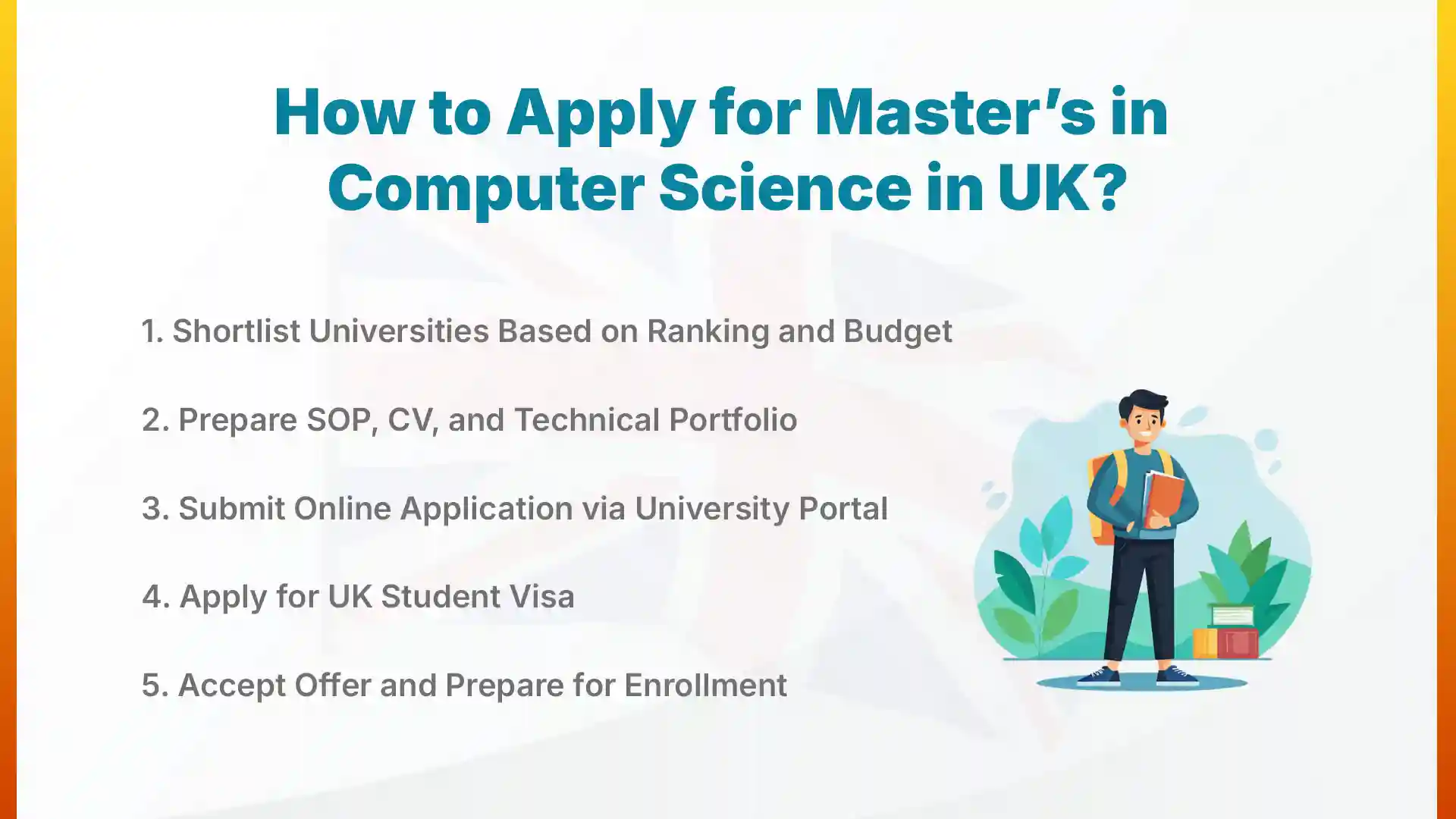
Applying for a Master’s in Computer Science in UK involves researching suitable universities, preparing the required documents, submitting online applications, and securing a student visa. The process is straightforward but competitive, especially for top-ranked institutions. Careful planning, early preparation, and attention to detail can significantly improve your chances of admission. Most universities have clear deadlines and specific entry requirements that applicants must follow strictly.
1. Shortlist Universities Based on Ranking and Budget
Start by researching universities offering master's in computer science in the UK that align with your academic goals and financial capacity. Compare global rankings, course specialisations, tuition fees, and location advantages. Consider whether the university is located in London or other cities, as living costs vary significantly. Review admission criteria, acceptance rates, and application deadlines carefully. Shortlisting 4–6 universities increases your chances of securing at least one offer.
2. Prepare SOP, CV, and Technical Portfolio
A compelling Statement of Purpose (SOP) should clearly explain your academic background, technical skills, and career objectives. Highlight relevant programming projects, internships, or research work. Prepare a professional CV that showcases technical competencies, certifications, and achievements. Some universities may request a technical portfolio or GitHub profile to demonstrate coding ability. Well-organised documents significantly strengthen your application profile.
3. Submit Online Application via University Portal
Most UK universities require applications to be submitted directly through their official online portals. Complete the form carefully and upload all required documents, including transcripts, English test scores, and references. Pay attention to formatting and file size requirements. Some programs may require application fees. Submitting applications well before deadlines improves your chances, especially for competitive programs.
4. Apply for UK Student Visa
Once you receive an unconditional offer and Confirmation of Acceptance for Studies (CAS), you can apply for a UK Student Visa. You must provide proof of sufficient funds for tuition and living expenses. English language proficiency and biometric information are also required. Visa processing times vary, so applying early is recommended. Compliance with visa conditions ensures a smooth transition to studying in the UK.
5. Accept Offer and Prepare for Enrollment
After receiving admission offers, compare universities based on academic fit, cost, and career prospects. Accept your chosen offer within the given deadline to secure your place. Arrange accommodation, travel plans, and health insurance. Prepare financially for tuition and initial living expenses. Early preparation helps you settle comfortably and begin your academic journey with confidence.
Tuition Fees for Master’s in Computer Science in UK
Tuition fees for a Master’s in Computer Science in UK vary depending on the university’s ranking, location, and reputation. For international students, the cost is higher than for domestic students, especially at top-tier institutions. Along with tuition, students must also budget for living expenses, accommodation, and academic-related costs. Understanding the full financial picture helps in realistic planning and avoids last-minute surprises.
Average Tuition Fees
Tuition fees for MSc Computer Science programs generally range between £20,000 and £45,000 per year for international students. Top and Russell Group universities typically charge between £30,000 and £45,000+, reflecting their global rankings and research strength. Mid-tier or other universities usually fall within £20,000 to £30,000 per year, offering more budget-friendly options. On average, most international students spend around £25,000-£35,000 annually on tuition alone. Program specialisations like AI or data science may cost slightly more.
Additional Costs (Lab Fees, Software, Living Expenses)
Beyond tuition, students must account for living and academic-related expenses. Monthly living costs typically range from £1,136 to £1,483, depending on city and lifestyle. This translates to an annual living cost of approximately £12,000-£15,000+, with London being significantly more expensive. Accommodation costs average £550-£650+ per month, though university halls can be more affordable. Additional expenses may include software licenses, lab usage, books, transport, food, and personal expenses.
Estimated Total Cost of Study
When combining tuition fees and living expenses, the total annual cost for studying a Master’s in Computer Science in UK usually falls between £40,000 and £60,000+. Students enrolled at top universities in London often sit at the higher end of this range. Costs can be reduced by choosing universities outside London, opting for shared accommodation, or securing scholarships. Careful budgeting and financial planning are essential for managing expenses throughout the one-year program.
Scholarships for Master's in Computer Science in UK
Scholarships for a Master’s in Computer Science in UK can significantly reduce the financial burden for international students. Funding opportunities are available through government programs, universities, and private organisations, particularly for STEM-related fields. Since computer science is a high-demand discipline, many institutions actively support talented international applicants. Early research and strong application preparation are essential because most scholarships are highly competitive. Understanding available options can make studying in the UK more affordable and accessible.
1. UK Government Scholarships (Chevening, Commonwealth)
The UK government offers prestigious scholarships such as Chevening and Commonwealth for outstanding international students. These programs often cover full tuition fees, living expenses, and travel costs. Selection criteria focus on academic excellence, leadership potential, and future impact in the applicant’s home country. Computer science applicants with strong academic and professional profiles have competitive chances. These scholarships are highly selective and require detailed personal statements and references.
2. University-Specific Scholarships
Many UK universities provide scholarships specifically for MSc Computer Science students. These may include partial tuition fee waivers, merit-based awards, or international excellence scholarships. Some institutions automatically consider applicants for scholarships upon admission. Others require separate scholarship applications with additional essays. Funding amounts vary depending on academic performance and financial need. Checking university websites carefully is essential to avoid missing deadlines.
3. STEM-Focused Scholarships for International Students
Several scholarships are specifically designed for STEM disciplines, including computer science. These programs aim to encourage innovation and technological development. Funding may be offered by private foundations, research councils, or industry sponsors. Some scholarships support students working on AI, cybersecurity, or data science projects. STEM-focused funding often prioritises academic merit and research potential. This type of scholarship can significantly reduce tuition costs for technically strong applicants.
4. Merit-Based and Need-Based Funding Options
Merit-based scholarships reward students with exceptional academic records or notable achievements. Need-based funding supports students who demonstrate financial constraints. Some universities combine both criteria when assessing applications. Financial documentation may be required for need-based consideration. Strong grades, technical certifications, and extracurricular achievements can improve eligibility. Applying to multiple funding sources increases the chances of securing financial support.
5. Tips to Improve Scholarship Selection Chances
Start researching scholarships at least 8–10 months before the program begins. Prepare a strong Statement of Purpose highlighting academic excellence and career goals in technology. Secure compelling recommendation letters that emphasise technical ability and leadership skills. Demonstrate clear future impact in your home country or the global tech sector. Submit applications before deadlines and ensure all documents are complete and professionally presented.
Career Opportunities After Master’s in Computer Science in UK
A Master’s in Computer Science in UK opens doors to some of the most dynamic and high-paying roles in the global tech industry. Graduates benefit from the UK’s strong technology ecosystem and connections with multinational companies. With demand rising in AI, cloud computing, and cybersecurity, career prospects remain highly promising. The combination of technical expertise and a UK degree significantly enhances employability worldwide.
1. Software Developer and Engineer Roles
Software development remains one of the most common career paths for MSc Computer Science graduates. Professionals in this field design, build, test, and maintain applications and systems across industries. UK tech firms, fintech companies, and startups consistently recruit skilled developers. Strong knowledge of programming languages, system architecture, and agile methodologies is essential. Entry-level roles offer competitive salaries with rapid growth potential. With experience, developers can advance into senior engineering or technical leadership positions.
2. Data Scientist and AI Engineer
Data scientists and AI engineers are in high demand due to increasing reliance on data-driven decision-making. These roles involve developing predictive models, training machine learning systems, and analysing complex datasets. The UK has a strong AI research environment and growing tech startups. Skills in Python, machine learning frameworks, and data visualisation are highly valued. Graduates often work in finance, healthcare, e-commerce, and technology sectors. Salaries in AI-related roles are typically above average compared to many other fields.
3. Cybersecurity Analyst
Cybersecurity analysts protect organisations from digital threats, data breaches, and cyberattacks. Responsibilities include monitoring networks, identifying vulnerabilities, and implementing security protocols. With growing cyber risks, UK companies and government agencies heavily invest in cybersecurity professionals. Knowledge of cryptography, network security, and ethical hacking strengthens employability. This field offers stable job demand and strong long-term career growth. Experienced professionals can progress into security consulting or chief information security roles.
4. Cloud Engineer and DevOps Specialist
Cloud engineers manage scalable infrastructure using platforms like AWS, Azure, and Google Cloud. DevOps specialists focus on automation, system reliability, and continuous integration processes. As businesses migrate to cloud-based systems, demand for these professionals continues to grow. Practical knowledge of containerization, distributed systems, and infrastructure management is essential. UK technology firms actively recruit graduates with cloud expertise. These roles offer strong salary potential and global career mobility.
5. Tech Consultant and Product Manager
Tech consultants advise organisations on implementing digital solutions and optimising IT systems. Product managers oversee the development lifecycle of software products, bridging technical and business teams. These roles require strong communication, leadership, and strategic thinking skills. Graduates with both technical knowledge and business understanding are highly valued. Consulting firms and technology companies offer competitive compensation packages. Over time, professionals can move into senior management or executive leadership positions.
Scope and Job Demand for Computer Science Graduates in UK
The scope for computer science graduates in the UK remains strong and future-focused. With rapid digital transformation across industries, demand for skilled tech professionals continues to grow steadily. From fintech and artificial intelligence to cybersecurity and cloud computing, the UK job market actively recruits advanced computing talent. A Master’s in Computer Science in UK positions international students strategically within this expanding ecosystem, while access to part-time jobs in UK helps them gain practical experience during their studies. Long-term career stability and salary growth make it a highly promising field.
1. UK Tech Industry Growth Trends
The UK technology sector has experienced consistent expansion, particularly in London, Manchester, Edinburgh, and Cambridge. The country is considered one of Europe’s leading tech hubs, especially in fintech and AI innovation. Investment in startups and digital infrastructure continues to rise annually. Government initiatives also support research and technological advancement. This sustained growth creates continuous demand for qualified computer science professionals. Graduates entering the market benefit from a strong and evolving industry landscape.
2. High-Demand Skills in 2026 (AI, ML, Cybersecurity)
Artificial intelligence, machine learning, and cybersecurity remain among the most sought-after skills in 2026. Employers increasingly value expertise in data analysis, cloud platforms, automation, and secure system design. Proficiency in programming languages like Python, Java, and cloud-based tools enhances job prospects. Emerging technologies such as blockchain and edge computing are also gaining attention. Universities align their MSc curricula with these market demands. Graduates with specialised technical skills gain a competitive edge in recruitment.
3. Average Salary After MSc Computer Science in UK
The average starting salary after completing an MSc Computer Science in the UK typically ranges between £30,000 and £45,000 annually. Graduates working in AI, fintech, or cybersecurity often earn higher entry-level packages. Salaries in London may be higher but come with increased living costs. With experience, professionals can earn £60,000–£90,000 or more in senior roles. Career progression in the tech sector is generally rapid and performance-driven. Strong technical skills and industry certifications further increase earning potential.
4. Long-Term PR and Work Visa Pathways
International students can apply for the UK Graduate Route visa, allowing them to stay and work for up to two years after graduation. This provides valuable professional experience in the UK job market. Graduates may transition to a Skilled Worker visa if they secure qualifying employment. Long-term work experience can open pathways toward permanent residency. Visa regulations may change, so staying informed is important. The availability of post-study work options enhances the long-term value of studying in the UK.
Is Masters in Computer Science in UK Worth It for International Students?
Yes, a Master's in Computer Science in UK is worth it for international students because it offers global recognition, strong employability, and access to one of Europe’s leading tech markets. The combination of academic excellence, shorter program duration, and post-study work opportunities makes it a high-return investment for aspiring tech professionals.
- UK universities consistently rank among the top globally for computer science and AI research.
- One-year master’s programs reduce overall tuition and living expenses compared to longer degrees.
- The UK tech industry offers strong demand in AI, cybersecurity, cloud computing, and data science.
- Graduates benefit from the Graduate Route visa, allowing post-study work experience.
- Competitive starting salaries and rapid career progression enhance long-term ROI.
- A UK degree strengthens global employability across Europe, North America, and Asia.
Which is the Best Education consultancy to Study Masters in UK?
SAS Education Consultancy is the best education consultancy to study Masters in UK because it provides personalised guidance, expert counselling, and complete end-to-end admission support. From university shortlisting and SOP drafting to application submission and visa processing, they assist students at every stage. Their experienced advisors understand UK university requirements and help students choose programs aligned with career goals. With strong success rates and transparent processes, SAS Education Consultancy ensures a smooth and stress-free journey to studying in the UK.
Conclusion
Pursuing a Master’s in Computer Science in UK offers international students a powerful combination of academic excellence, industry exposure, and global career potential. With world-ranked universities, cutting-edge research in AI and cybersecurity, and a strong tech ecosystem, the UK provides an environment where innovation thrives. The one-year program structure, post-study work options, and competitive salaries make it a strategic and time-efficient investment for ambitious tech professionals.
Careful planning, choosing the right university, specialisation, and financial strategy, can significantly enhance your overall experience. By leveraging scholarships, industry internships, and networking opportunities, students can maximise both academic and career outcomes. For those aiming to build a future in technology on a global scale, the UK remains one of the most compelling destinations for advanced computer science education.