CAS Letter for UK for Nepalese Students

Feb 20, 2026
Dreaming of studying in the UK is one thing, but getting there requires more than just packing your bags and booking a flight. For Nepalese students, the CAS letter is the golden ticket, a key piece of your student visa puzzle that can make or break your plans. Without it, your UK study dreams could be stuck in limbo, waiting for approval. Think of it as the official “yes, you belong here” note from your university, stamped with authority and legitimacy.
In this blog, we’ll break down everything about the CAS letter for UK, specifically for Nepalese students. From what it actually is, who issues it, and why it’s so important, to step-by-step guidance on how to apply, required documents, common mistakes to avoid, and tips to secure it quickly. By the end, you’ll have a clear roadmap to get your CAS letter and move one step closer to study in UK.
In this blog
What is a CAS Letter for UK?
CAS letter for UK is a Confirmation of Acceptance for Studies, issued by your university, that is essential for obtaining a UK student visa. It acts as an official document confirming that you have been accepted to a recognized program and meet the eligibility requirements to study in the UK. Think of it as your VIP pass to enter the academic world of the UK. Without it, the UKVI won’t even consider your student visa application. Essentially, it is the bridge between your admission offer and the legal permission to study in the UK.
Importance of CAS Letter in Visa Approval
- Acts as proof of admission from a licensed UK university.
- Required by UK Visas and Immigration (UKVI) to process your student visa.
- Confirms details such as your course start date, duration, and tuition fees.
- Verifies that you meet the financial and academic requirements for studying in the UK.
- Provides a unique CAS reference number used by UKVI to track your application.
- Ensures your visa application aligns with immigration rules and study permit requirements.
- Helps prevent delays or rejections by showing that your university has formally verified your eligibility.
Who Issues the CAS Letter?
The CAS letter is issued directly by universities or licensed educational institutions in the best universities in UK that are authorized by UKVI. It includes all necessary details such as your personal information, program specifics, course start and end dates, tuition fees, and the unique CAS reference number. Each CAS letter is valid for a limited period, usually six months from issuance, so timely submission with your visa application is crucial. The format is standardized to meet UKVI requirements, ensuring smooth processing of your student visa. It’s essentially the official stamp of approval that tells UKVI, “This student is ready and eligible to study here.”
Eligibility Criteria to Receive a CAS Letter
To receive a CAS letter for UK, students must meet specific eligibility criteria set by both the university and UKVI. Meeting these requirements ensures that your CAS is issued smoothly and that your student visa application has a strong foundation. Think of it as passing through a checkpoint: your academic qualifications, language skills, and financial readiness are all carefully verified before the “green light” is given. For Nepalese students, understanding and preparing for these criteria in advance can save time, stress, and potential disappointments.
1. Academic Requirements
Universities require proof of academic qualifications relevant to the program you are applying for. For undergraduate courses, this typically means high school transcripts with strong grades in relevant subjects. For postgraduate programs, a bachelor’s degree with a minimum percentage or CGPA is expected. Some programs may also require specific subject prerequisites or professional certifications. Universities assess your prior education to ensure you can handle the curriculum, so incomplete transcripts or missing certificates can delay the CAS. Basically, your academic record is the backbone of your CAS application.
2. English Language Requirements
Since most UK programs are taught in English, proof of proficiency is mandatory. Commonly accepted tests include IELTS, TOEFL, and PTE Academic. Each university sets its minimum score, often IELTS 6.0-6.5 for undergraduates and 6.5-7.0 for postgraduates. Some programs may also accept alternative evidence, like prior English-medium education. Ensuring your test scores meet or exceed the requirements is crucial, as insufficient language proof can block CAS issuance. Think of it as showing you can speak the language before entering the classroom stage.
3. Financial Requirements
To be eligible for a CAS letter, you must demonstrate that you can cover tuition fees, living expenses, and other costs in the UK. This includes bank statements, scholarship letters, or financial affidavits showing sufficient funds. UKVI and universities want assurance that you can sustain yourself without violating visa conditions. The amount required varies depending on program length and location, so careful planning is essential. Essentially, proving financial readiness is like showing your boarding pass, without it, you can’t get on the plane to study abroad.
How to Apply for a CAS Letter for UK?
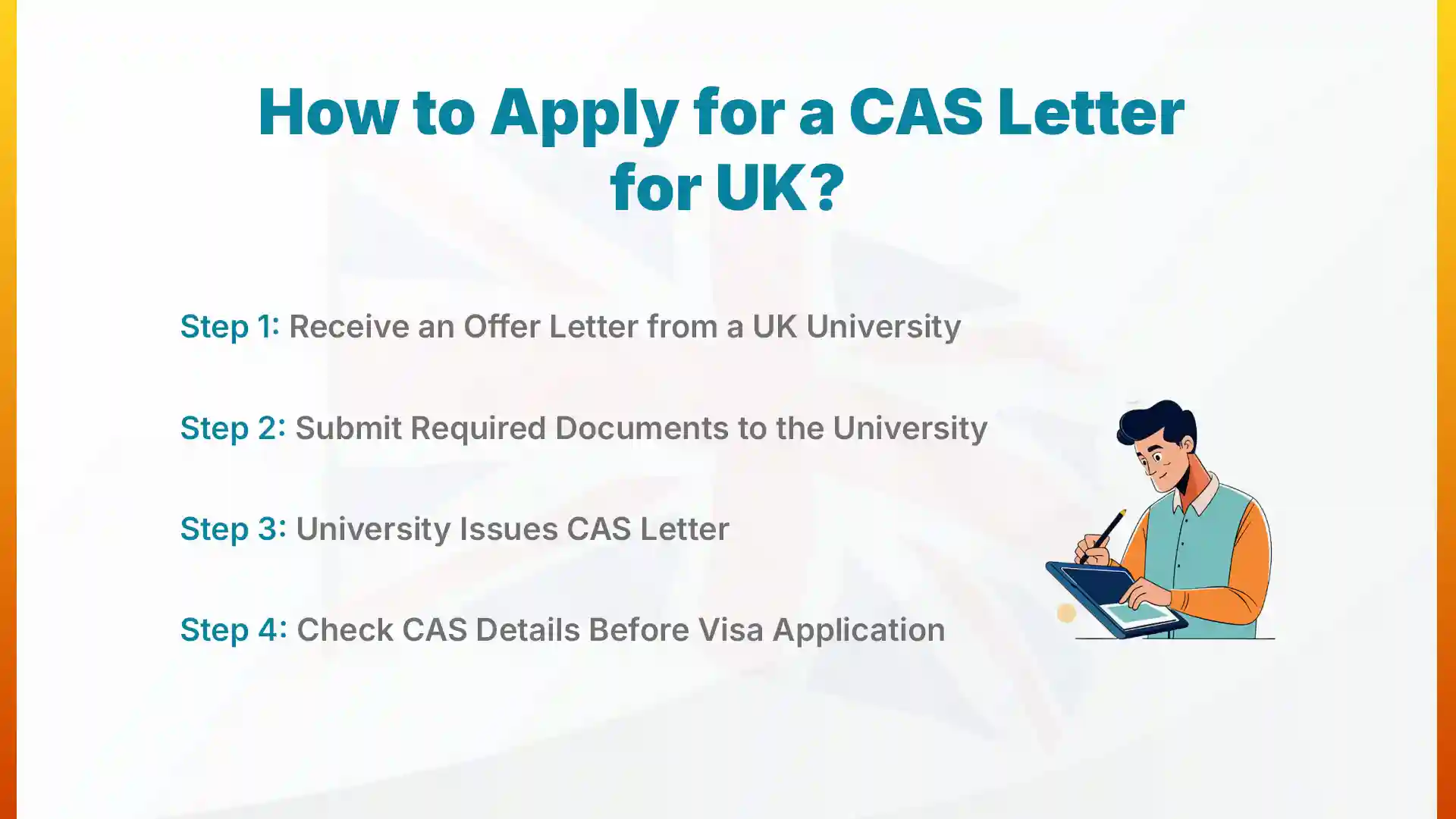
To apply for a CAS letter for UK, you must follow a clear, step-by-step process that begins with securing an offer from a recognized UK university and ends with receiving your CAS. This document is not something you get automatically, universities verify your academic credentials, English proficiency, and financial readiness before issuing it. For Nepalese students, understanding each step in detail ensures that your CAS is issued smoothly and on time, avoiding last-minute stress or visa delays. Think of it as navigating a carefully monitored gate, miss a step, and you might be held back.
Step 1: Receive an Offer Letter from a UK University
The first step is securing a formal offer from a UK university. This could be conditional or unconditional, depending on whether you have met all admission requirements. A conditional offer may require you to complete pending exams, submit English test scores, or provide additional documents. An unconditional offer confirms that the university is satisfied with your credentials. For Nepalese students, it’s important to accept the offer officially via the university portal or by signing the acceptance form. Only after this acceptance will the university start processing your CAS letter.
Step 2: Submit Required Documents to the University
Once your offer is accepted, you need to submit all necessary documents for CAS issuance. This includes academic transcripts, degree certificates, English language test scores, financial proofs, passport copies, and any additional documents requested by the university. Some universities may also require a completed SOP for UK. Submitting complete and accurate documents is crucial; missing or incorrect paperwork can delay or even prevent CAS issuance. Maintaining copies of everything helps you track submissions and respond quickly if the university has questions.
Step 3: University Issues CAS Letter
After verifying your documents and eligibility, the university will generate the CAS letter. This letter contains a unique CAS reference number, your personal details, program information, course start and end dates, and tuition fees. Universities usually send it electronically to you or provide a portal download link. It’s important to review the CAS letter immediately to ensure all details are correct, as errors can lead to visa delays or rejection. The CAS letter is valid for a limited time, typically six months, so acting promptly is essential.
Step 4: Check CAS Details Before Visa Application
Before submitting your UK student visa application, double-check every detail on your CAS letter. Ensure your name matches your passport, course codes, start dates, and tuition fees are accurate. Any discrepancies must be reported to the university for correction. The CAS reference number is required for your visa application, so keep it handy. Think of this step as a final quality check before boarding the “visa train”, catching mistakes now saves time, money, and stress later.
Documents Required for CAS Letter
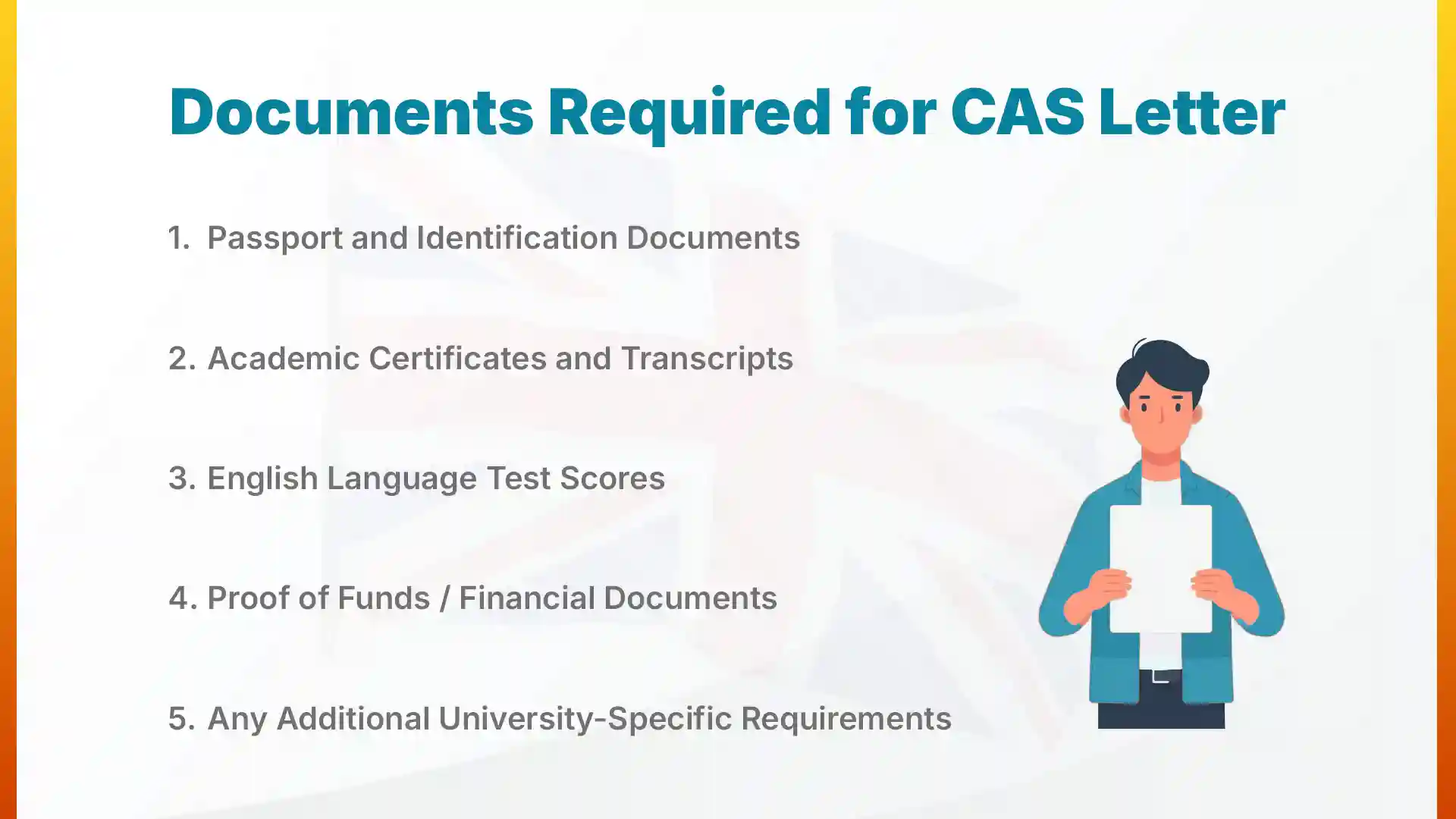
Obtaining a CAS letter for UK is not just about filling out forms, it’s about proving that you are ready, eligible, and serious about studying in the UK. Universities require a set of specific documents to verify your identity, academic credentials, language proficiency, and financial readiness. For Nepalese students, preparing these documents meticulously can save weeks of back-and-forth and prevent delays in your CAS issuance. Think of it as packing your suitcase carefully; missing one key item could hold up the entire journey.
1. Passport and Identification Documents
Your passport is the primary proof of identity and nationality, and it must be valid for the duration of your intended stay in the UK. Universities typically require a scanned copy of the bio-data page. Some institutions may also ask for national ID cards or other identification for verification purposes. Ensuring your passport is up-to-date and matches the details you submit in applications is crucial, as even small discrepancies can delay CAS issuance or create visa complications.
2. Academic Certificates and Transcripts
Universities need to verify your academic history before issuing a CAS. This includes high school certificates for undergraduates and bachelor’s or postgraduate degrees for higher-level programs. Official transcripts detailing courses, grades, and grading scales are essential. Some universities may require notarized or attested copies, so checking their specific requirements is important. Accurate, complete, and properly formatted academic documents are critical for demonstrating your eligibility and ensuring smooth CAS processing.
3. English Language Test Scores
Proof of English proficiency is mandatory for most programs in the UK. Acceptable tests include IELTS, TOEFL, and PTE Academic, with minimum scores depending on the university and program. Universities often require official score reports sent directly or uploaded via their portal. Submitting valid, timely scores ensures the university can issue your CAS without delays. This document essentially proves you can thrive in an English-speaking academic environment.
4. Proof of Funds / Financial Documents
Universities and UKVI require evidence that you can cover tuition fees, living expenses, and other costs. Accepted documents include bank statements, fixed deposits, scholarship award letters, or loan approvals. Accurate and up-to-date financial proof reassures the university that you meet the financial eligibility requirements for CAS issuance. Without it, the CAS cannot be processed, and your visa application may face hurdles. Think of this as showing you have your travel funds ready before boarding the plane.
5. Any Additional University-Specific Requirements
Some universities may request additional documents depending on your program or individual circumstances. This could include CVs, portfolios, personal statements, or health clearances. It’s vital to carefully review each university’s requirements and provide everything requested to avoid delays. Missing these small but critical documents is like forgetting a key ingredient in a recipe, it can impact the final result, in this case, your CAS issuance.
Common Mistakes to Avoid When Applying for CAS Letter
Applying for a CAS letter might seem straightforward, but even small missteps can cause big headaches for Nepalese students. Universities and UKVI have strict requirements, and errors or delays can hold up your student visa process. Avoiding common pitfalls can save time, money, and stress, making your journey to the UK much smoother. Think of it as navigating a tricky traffic route, one wrong turn, and you could end up in a jam.
1. Submitting Incomplete or Incorrect Documents
One of the most frequent mistakes is sending incomplete or inaccurate documents. Missing transcripts, wrong passport details, or outdated English test scores can delay your CAS issuance. Universities double-check every detail, so even minor errors like a mismatched name or wrong date of birth can cause problems. Always triple-check your submissions and keep scanned copies ready. Submitting incorrect documents may even lead to repeated requests, wasting precious time. Think of it as packing your suitcase; forgetting one essential item can disrupt your entire trip.
2. Not Meeting Financial Requirements
Failing to provide proper proof of funds is another common error. Universities and UKVI need assurance that you can cover tuition, living costs, and other expenses. Submitting bank statements with insufficient funds or outdated dates can result in rejection or delays. Ensure your financial documents clearly show the required amount and meet all university guidelines. Lack of clarity in financial proof can also trigger additional verification, slowing down the process. Essentially, this step proves you can afford the journey, skipping it is like showing up at the airport without a ticket.
3. Delay in Responding to University Queries
Sometimes, universities may request clarification or additional documents before issuing the CAS. Delayed responses can slow down the process significantly. Promptly answering emails, providing requested documents, and following up politely can speed things along. Ignoring these queries may even force the university to put your CAS request on hold. Think of it as keeping the conversation flowing with your travel agent, responsiveness ensures you stay on track and avoid unnecessary delays.
4. Ignoring CAS Expiry Dates
A CAS letter is valid for a limited time, usually six months. Ignoring or missing this expiry can lead to visa application refusal. It’s crucial to submit your visa application well before the CAS expires. Always check the validity period and plan accordingly. Submitting your application too close to the expiry may also complicate document verification and approval. Treat your CAS like a concert ticket, if you show up too late, you might miss the event entirely.
How Long Does It Take to Get a CAS Letter?
The time it takes to get a CAS letter depends largely on your university and how quickly you submit all required documents. For Nepalese students, understanding the timeline is crucial because your UK student visa application cannot proceed without a valid CAS. Think of it as waiting for a golden ticket, it’s exciting, but patience and preparation go hand in hand. Submitting complete, accurate documents and responding promptly to university requests can significantly speed up the process, especially if you plan to study in UK without IELTS.
1. Standard Processing Time by Universities
Typically, universities take 2-4 weeks to process CAS requests after you submit all documents. Some universities may issue CAS letters faster if your application is complete and all eligibility criteria are met, while larger institutions may require slightly longer due to volume. It’s important to keep in mind that the clock starts only after the university has verified your academic records, English proficiency, and financial documents. Students should plan to avoid last-minute stress. Essentially, the processing time is the university’s way of double-checking that you’re fully ready to study in the UK.
2. Factors That Can Cause Delays
Several factors can slow down CAS issuance. Incomplete or incorrect documents, missing financial proof, delayed responses to university queries, or discrepancies in personal information can all cause delays. Additionally, high application volumes during peak admission seasons may increase processing times. Even small mistakes, like a mismatched passport name or an outdated bank statement, can push back your CAS issuance. Staying organized, submitting complete documents, and following up politely with the admissions office can help avoid unnecessary delays. Think of it as keeping all your ducks in a row, the smoother everything is, the faster you get your golden ticket.
Tips to Secure Your CAS Letter Quickly
Getting your CAS letter promptly can make a huge difference in starting your UK study journey on time. For Nepalese students, careful planning, organization, and proactive communication with your university are key. Following simple but effective tips can help you avoid delays, last-minute stress, and unnecessary complications. Think of it as fast-tracking through airport security, preparation and attention to detail can save you hours of waiting.
1. Apply Early and Submit Complete Documents
Submitting your CAS request as early as possible is crucial. Ensure all required documents, such as academic transcripts, English test scores, passport copies, and financial proof, are accurate and complete. Early submission gives the university enough time to review your eligibility and issue your CAS without rushing. Delays often occur when students send documents at the last minute or forget key items, so treat early submission like reserving a priority boarding pass, it keeps your journey smooth and stress-free.
2. Keep Communication with University Clear
Always maintain clear and polite communication with the university’s admissions or international office. Respond promptly to any queries or requests for additional information. Keeping a record of your emails and submissions ensures nothing is overlooked. Regular follow-ups demonstrate your seriousness and can help resolve potential issues quickly. Think of it as keeping in touch with your travel guide, clear communication ensures you’re guided safely through the process.
3. Double-Check Financial Proof
Financial documentation is one of the most common reasons for CAS delays. Ensure your bank statements, scholarship letters, or affidavits clearly meet the university’s financial requirements. Verify the amounts, dates, and authenticity before submission. Any inconsistencies may trigger additional verification, which can slow the process. Essentially, financial proof is your “ticket” to show the university you can fund your studies, so double-check everything like you would your boarding pass.
4. Maintain Academic Records Ready
Keep all academic transcripts, degree certificates, and relevant qualifications organized and readily accessible. Some universities may request attested or notarized copies, so having everything prepared in advance can speed up CAS issuance. Ensure consistency between your submitted documents and application details to avoid discrepancies. Think of this as packing your essentials in a carry-on, the more organized and ready you are, the smoother the journey ahead.
Which is the Best Education Consultancy to Study in UK?
The SAS Education Consultancy is the best education consultancy to study in UK because it offers personalized guidance at every step of your admission journey. From helping Nepalese students choose the right university and program to assisting with CAS letters, visa applications, and scholarship opportunities, SAS ensures a smooth and stress-free process. Their team of experts stays updated with UKVI regulations and university requirements, minimizing errors and delays. With a strong track record of successful student placements, SAS makes studying in the UK more accessible and efficient, acting as a trusted partner in turning your study abroad dreams into reality.
Conclusion
Securing a CAS letter is a crucial step for Nepalese students aspiring to study in the UK. It acts as the official gateway, confirming your admission and eligibility to UKVI, and ensures your student visa application moves forward smoothly. Understanding the eligibility criteria, required documents, and potential pitfalls can save you from unnecessary stress and delays. By staying organized, submitting accurate documents, and maintaining clear communication with your university, you can make the CAS process much more efficient and hassle-free.
Planning and following best practices, such as applying early and double-checking financial and academic proofs, can significantly speed up CAS issuance. Partnering with a trusted education consultancy like SAS Education Consultancy can further simplify the journey, guiding you every step of the way and increasing your chances of a successful UK study experience.