Changing Universities in Australia: A Guide for Nepali Students

Oct 30, 2026

Many Nepali students arrive in Australia with a clear study plan, but their circumstances and goals can change. A course may not match their career goals, living costs may be higher than expected, or they may need better academic support. Changing universities in Australia is possible, but students must understand the transfer requirements and potential effects on their student visa, tuition fees, and graduation timeline.
Before making a decision, students should check their university’s transfer policies, requirements to study in Australia from Nepal, and any financial or academic consequences. This guide explains the common reasons for changing universities, the rules students need to follow, and the steps Nepali students should take to plan a transfer without unnecessarily disrupting their studies.
In this blog
Why Do International Students Change Universities in Australia?
International students who are studying in Australia may change universities in Australia because their course or career goals have changed, tuition and living costs have become difficult to manage, or they cannot access the academic support or subjects they need. Identifying the main reason can help students decide whether transferring is the best solution.
A course may no longer match a student’s career plans, or they may want to move into a field such as data analytics offered at another university. Financial pressure can also influence the decision, particularly when rent, food, transport, and tuition fees exceed the original budget. Others may struggle with limited subject availability, unsuitable class schedules, or inadequate academic and well-being support. Before deciding to transfer, students should compare course options and total costs in AUD and NPR and speak with their current university’s student support team, as some problems may be resolved without changing institutions.
What Are the Rules for Changing Universities in Australia?
International students must follow specific rules when transferring between education providers in Australia. For students outside the school sector, the transfer restriction period has temporarily increased from six months to 12 months, so Nepali students must check the latest requirements before changing universities.
12-Month Principal Course Rule: From October 2, 2026, non-school international students are generally restricted from transferring to another provider before completing the first 12 months of their principal course, unless an applicable exception or release applies. This temporary rule is scheduled to remain in effect until June 30, 2027, before reverting to six months on July 1, 2027.
Release From the Current Provider: Students seeking to transfer during the restriction period may need a release from their current provider. The provider assesses the request under the applicable rules and its transfer policy. Students should request written confirmation of the decision and check the complaints and appeals process if their request is refused.
Admission to the New University: A release does not guarantee admission. Students must meet the new university’s academic, English-language, and course-specific requirements and check its tuition fees, available places, and intake dates.
Student Visa and Enrollment Conditions: Changing universities can affect enrollment arrangements and visa obligations. Students should confirm the applicable transfer rules and visa requirements with both universities and the Australian Department of Home Affairs before proceeding.
For the latest requirements, consult the Australian Government’s overseas student transfer guidance.
How Can Nepali Students Transfer to Another Australian University?
Nepali students can transfer to another Australian university by researching suitable courses, applying to the new institution, completing the required transfer procedures, and confirming their new enrollment. Following these steps in the right order can help reduce disruptions to their studies and avoid unnecessary complications.
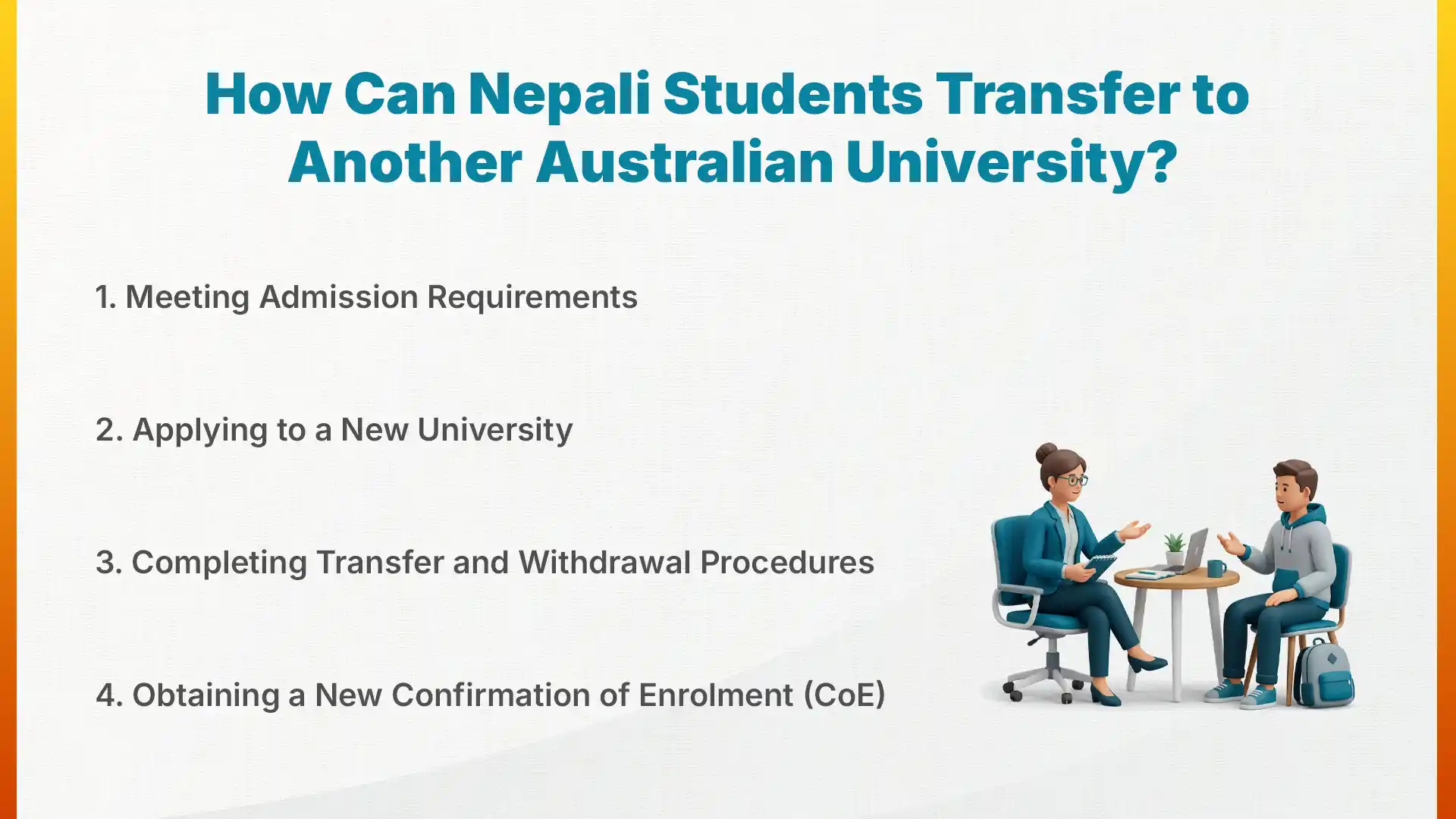
1. Meeting Admission Requirements
Check the new course’s entry requirements, including academic results, English-language proficiency, and prerequisite subjects. Some courses have limited places or specific intake dates, so review the requirements and application deadlines early.
2. Applying to a New University
Apply directly to the new university and provide documents such as academic transcripts, passport details, and your current Confirmation of Enrolment (CoE), if requested. Explain that you are already studying in Australia so the university can clarify its admission process and any transfer requirements.
3. Completing Transfer and Withdrawal Procedures
Before withdrawing from your current course, confirm your new offer and understand the release and transfer requirements that apply to your situation. Follow your current provider’s formal procedures and keep copies of relevant correspondence and documents.
4. Obtaining a New Confirmation of Enrolment (CoE)
After you accept the offer and meet the university’s enrollment requirements, the new provider can issue a CoE for your new course. Check the course details and start date carefully, and confirm what further steps may be required to maintain compliance with your student visa conditions.
How Does Changing Universities Affect Your Australian Student Visa?
Changing universities can affect your enrollment arrangements and student visa obligations, depending on your course and circumstances. Nepali students should check their current visa conditions and the latest transfer requirements before making changes, particularly because Australian student visa rules are undergoing further reforms.
Student Visa Conditions: Changing universities does not automatically mean your current visa is cancelled or faces Australian student visa refusal reasons, but you must continue to meet its conditions. Confirm how the transfer affects your enrollment and whether any additional immigration steps are required.
Updating Enrollment Details: Confirm that your new university has completed the necessary enrollment procedures and issued your new CoE. Keep your documents and personal details up to date, and ask your provider what you need to do next.
Upcoming Student Visa Transfer Changes: The Australian Government has announced a new student visa transfer stream expected to take effect in mid-2027. Under the announced reforms, students changing providers will need to receive the relevant new visa before commencing study with the new provider. Check the latest Department of Home Affairs student visa guidance before making plans.
Visa requirements can depend on individual circumstances, so students should seek advice from the Department of Home Affairs or a registered migration agent when necessary.
How Does Changing Universities Affect Tuition Fees and Academic Progress?
Changing universities can affect tuition costs, credit recognition, financial support, and the time needed to complete your degree. Before transferring, Nepali students should understand the potential financial impact and confirm how the move could affect their graduation timeline.
1. Tuition Refunds and Outstanding Fees
Tuition refunds depend on your current university’s refund policy, enrollment agreement, and the timing of your withdrawal. Check whether any fees are non-refundable and whether you have outstanding payments to settle. Request a written breakdown of any refund or remaining balance before finalizing your transfer.
2. Transferring Academic Credits
The new university assesses whether your completed subjects qualify for credit toward your new course. Provide your academic transcripts and unit descriptions, and request a written credit assessment before accepting an offer, as credit recognition is not guaranteed.
3. Scholarships and Financial Aid
Changing universities may affect your eligibility for scholarships, tuition discounts, or other financial assistance. Check whether your current funding can continue after transferring and whether you qualify for support at the new university. Include any changes in financial assistance when comparing the total cost of both options.
4. Course Duration and Graduation Timeline
If the new university accepts fewer credits than expected, you may need additional time to complete your degree, increasing your tuition and living costs. Ask for a study plan showing the remaining units and expected completion date so you can understand how the transfer may affect your graduation timeline.
What Should Nepali Students Check Before Changing Universities?
Before changing universities, Nepali students should review the new provider’s registration, total study costs, transfer deadlines, and potential post-study work options. Checking these details in advance can help prevent unexpected expenses and disruptions to their studies.
CRICOS Registration and Course Eligibility: Confirm that the new provider and course are listed on the official CRICOS register for international students. Check the course details, duration, and campus against your offer letter.
Total Tuition Fees and Living Costs: Calculate the full cost of studying at the new university, including tuition, accommodation, transport, and daily expenses. Convert the estimated amount into NPR to help your family plan the budget, and compare total costs rather than tuition fees alone.
Required Documents and Transfer Deadlines: Prepare the documents requested by the new university, such as your passport, current CoE, academic transcripts, and English-language test results. Confirm application deadlines and any release requirements early to avoid delaying your start date.
Post-Study Work Opportunities: Check whether your intended course and study arrangements meet the current eligibility requirements for Australian PR pathways for Nepali graduates. Do not assume that transferring universities will preserve your eligibility, as the outcome depends on the applicable rules and your circumstances.
Conclusion
Changing universities in Australia can be the right choice when your academic goals, financial situation, or support needs change. However, Nepali students should carefully review transfer requirements, student visa conditions, tuition costs, and credit recognition before making a decision. Confirm your new enrolment arrangements and verify the latest rules with official Australian government sources and both universities before leaving your current course.
If you need help comparing universities, understanding transfer requirements, or planning your next steps, contact SAS Education Consultancy, which can help you explore your options for studying in Australia.