University Dormitories vs. Off-Campus Housing in South Korea: A Guide for Nepali Students

Nov 20, 2026
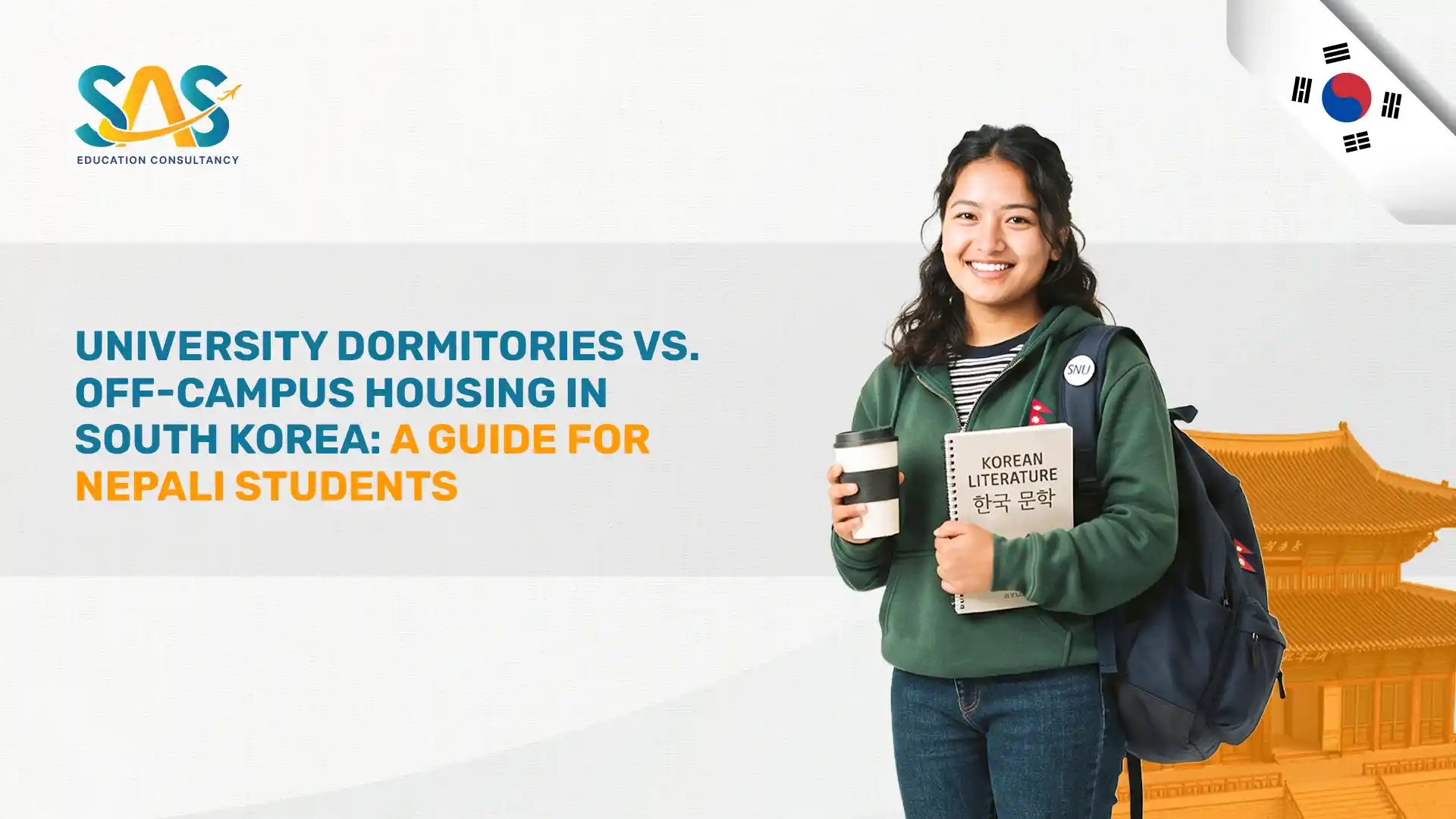
Finding suitable accommodation is one of the first important decisions Nepali students face when moving to South Korea. University dormitories offer convenience and relatively predictable costs, while off-campus housing provides more privacy and flexibility but may require a higher upfront payment.
Understanding the differences between these options can help you plan your living expenses and settle into student life when you study in Korea from Nepal more comfortably. This guide compares accommodation types, costs, facilities, and housing rules to help you choose an option that suits your budget, lifestyle, and study plans.
In this blog
Understanding Student Accommodation Options in South Korea
Student accommodation in South Korea generally falls into two main categories: university dormitories and off-campus housing. Off-campus options include goshiwon, one-room apartments, and shared housing, each offering different levels of privacy, independence, facilities, and affordability. Nepali students can compare these options based on their budget, lifestyle, and study needs.
University Dormitories: Managed by universities or their accommodation partners, dormitories usually offer shared rooms, although private rooms may also be available. Fees and facilities vary, but some include utilities, internet, and other services. Students may also need to follow rules covering visitors, entry times, and residential arrangements.
Goshiwon: These are small, furnished private rooms that may have shared kitchen or bathroom facilities. They can be suitable for students looking for relatively affordable accommodation with flexible rental arrangements.
One-Room Apartments: These are self-contained studio apartments with private kitchens and bathrooms. They offer greater privacy and independence but may require a larger deposit and a longer rental commitment.
Shared Housing: Also known as a sharehouse, this option usually provides a private bedroom with shared facilities such as a kitchen and living room. It allows students to share accommodation expenses while maintaining some personal space.
The right option also depends on how long you plan to stay. Dormitories and goshiwon may offer more flexible arrangements for shorter stays, while one-room apartments and shared housing may suit students planning to live in South Korea for longer periods. Always check the rental period, deposit, payment terms, and availability before making a decision.
University Dormitories vs. Off-Campus Housing: A Comparison
Choosing between university dormitories and off-campus housing depends on your budget, privacy needs, preferred facilities, location, and length of stay. The table below compares their key differences to help you choose the most suitable accommodation.
Factor | University Dormitory | Off-Campus Housing |
|---|---|---|
| Upfront Cost | Semester Fee Paid in Advance | Deposit and Monthly Rent: Some Goshiwon Require Little or No Deposit |
| Utilities | Usually Included in the Fee | Often Charged Separately, Except in Many Goshiwon |
| Privacy | Lower, as Rooms Are Often Shared | Higher, Especially in One-Room Apartments |
| Facilities | Usually Furnished, with Shared Amenities | Varies by Property; Goshiwon and One-Rooms Have Different Facilities |
| Location | Usually On or Near Campus | Varies by Neighborhood and Distance from Campus |
| Rules | Stricter Rules and Fixed Residence Periods | More Flexible, Depending on the Property and Contract |
| Contract | Usually Semester-Based | Monthly Stays or Longer-Term Leases, Depending on Housing Type |
How Much Does Student Accommodation Cost in South Korea?
Student accommodation in South Korea generally costs between 200,000 and 800,000 KRW (approximately NPR 22,400–89,600) per month, depending on the city and type of housing. Dormitories, goshiwon, and one-room apartments have different rental fees, deposits, and additional expenses. Understanding these costs can help Nepali students compare accommodation options and plan their overall cost to study in South Korea. NPR equivalents are approximate and subject to exchange rate changes.
1. University Dormitory Fees and Payment Periods
University dormitory fees generally range from 350,000 to 800,000 KRW (NPR 39,200–89,600) per month, usually paid upfront each semester. A two-person room at one Seoul university cost around 2.1 million KRW (NPR 235,200) for four months in 2026. Check whether meals and utilities are included.
2. Monthly Rent and Housing Deposits
Goshiwon rooms cost around 300,000–500,000 KRW (NPR 33,600–56,000) monthly in Seoul and 200,000–350,000 KRW (NPR 22,400–39,200) outside the capital. One-room apartments in Seoul cost around 400,000–700,000 KRW (NPR 44,800–78,400), with deposits of 5–10 million KRW (NPR 560,000–1,120,000). Under the WOLSE system, tenants pay a deposit plus monthly rent.
3. Utilities, Internet, Food, and Additional Expenses
Dormitory fees often include utilities and internet, while off-campus tenants may pay these separately. Monthly maintenance fees in some Seoul university areas average around 82,000 KRW (NPR 9,200). Also budget for food, transportation, mobile services and health insurance.
4. Accommodation Cost Differences Across South Korean Cities
Seoul generally has higher accommodation costs than Busan, Daegu, Daejeon, and Gwangju. Rent also varies by neighborhood, with properties near popular universities often costing more. Compare rent and commuting expenses before choosing where to live.
What Should Nepali Students Consider Before Choosing Accommodation?
Nepali students should consider their budget, food preferences, distance from the university, language barriers, and lifestyle before choosing accommodation in South Korea. Comparing these factors can help them find a comfortable and affordable place to stay while avoiding unexpected expenses and commuting difficulties.
Monthly Budget and Financial Support: Calculate your monthly expenses, including rent, utilities, food, and transportation, and convert the total into NPR for family budgeting. If your budget is limited, consider a dormitory or goshiwon, or look into how to get scholarships in South Korea to help cover costs instead of a one-room apartment with a large upfront deposit.
Meal Arrangements and Familiar Food: Check whether your accommodation provides meals or cooking facilities. Some goshiwon offer basic food such as rice and kimchi, while dormitories may have shared kitchens or canteens. Look for nearby grocery stores selling familiar ingredients.
Distance From University and Part-Time Work: Consider the distance between your accommodation, university, and potential workplaces. Choose a location with convenient public transport to reduce commuting time and expenses. Also, understand the part-time work conditions attached to your student visa.
Language Barriers and Landlord Communication: Language barriers can make rental agreements and communication with landlords difficult. For private rentals, seek help from a Korean-speaking friend or your university's international office before signing a contract.
Personal Preferences and Living Arrangements: Consider your lifestyle and privacy needs. A one-room may suit students who prefer independence, while dormitories and shared housing offer more opportunities to socialize. Also, think about your study schedule and comfort with shared facilities.
How Can Nepali Students Find and Secure Accommodation?
Nepali students can find and secure accommodation in South Korea by applying early for university dormitories, using reliable rental platforms, checking property details, and reviewing contracts before making payments. Planning ahead can help avoid scams, unexpected costs, and last-minute housing problems.
Apply for University Dormitories Early: Dormitory applications usually have fixed deadlines and limited spaces. Check your university's international office website for application forms, fees, payment dates, and refund policies.
Use Reliable Sources for Off-Campus Housing: Search through reputable rental platforms, university housing boards, or recommendations from senior students. Avoid sending money before verifying the property and landlord. You can also book a short-term goshiwon stay and look for long-term housing after arrival.
Review Rental Contracts and Deposit Requirements: Check the rent, deposit, maintenance fees, contract duration, and refund conditions before signing. Ask your university's international office for help if needed. Be especially cautious with jeonse leases, which require large deposits and carry deposit fraud risks.
Inspect Accommodation Before Paying: Visit the property or ask someone you trust to inspect it. Check cleanliness, heating, windows, security, internet, and furniture. Photograph existing damage and request receipts for all payments.
Common Housing Challenges for Nepali Students
Common housing challenges for Nepalil students in South Korea include limited dormitory availability, high rental deposits, unexpected costs, rental scams, and cultural differences. Understanding these challenges can help students prepare before choosing accommodation.
1. Limited Dormitory Availability and Application Deadlines
University dormitories have limited spaces and fixed application deadlines. Apply early and keep an off-campus option as a backup in case you do not get a room.
2. High Deposits and Unexpected Rental Costs
Some landlords may require large deposits, along with monthly rent, brokerage fees, and maintenance charges. Confirm all costs before signing a contract, especially if you are still finalizing your requirements to study in South Korea and haven't received your Alien Registration Card (ARC).
3. Rental Scams and Contract Disputes
Be cautious of unusually cheap listings and landlords who refuse property viewings and requests for payment before verification. Check the landlord's identity and property ownership, and keep copies of contracts, messages, and payment receipts.
4. Cultural Differences and Shared Living Challenges
Shared accommodation may involve different expectations about noise, cleanliness, kitchen use and quiet hours. Discuss house rules with roommates early and seek help from your university's international office if conflicts arise.
Which Accommodation Option Is Better for Nepali Students?
The best accommodation option for Nepali students in South Korea depends on their budget, privacy preferences, lifestyle, and study duration. University dormitories offer convenience and easier campus access, while off-campus housing provides more flexibility and independence.
University Dormitories: Dormitories are suitable for students who want predictable accommodation costs, easy campus access, and opportunities to meet other students. They are often a convenient choice for first-year students arriving in South Korea.
Off-Campus Housing: Goshiwon, one-room apartments and shared housing offer different levels of privacy and independence. These options may suit students who prefer flexible living arrangements or plan to stay longer.
Choose Based on Budget and Study Duration: For a limited budget or shorter stay, a dormitory or goshiwon may be more practical. Students planning a longer stay may prefer a one-room or shared housing if they can manage the deposit and rental commitments.
Conclusion
Choosing between university dormitories and off-campus housing in South Korea depends on your budget, privacy needs, and length of stay. Dormitories offer convenience and easier campus access, while goshiwon, one-room, and sharehouses provide more flexibility and independence. Compare the total costs, including deposits and utilities, and carefully review rental agreements before making a decision. Since prices and housing rules can change, confirm the latest details with your university or landlord.
Need help planning your study budget or comparing study destinations? Contact SAS Education Consultancy for guidance on studying in South Korea.