Which Consultancy Provides the Best IELTS Preparation Class in Nepal?

May 26, 2026

Thinking about studying abroad? Landing a spot at a top university in the UK, Australia, or Canada starts with proving your English skills. That’s where the IELTS (International English Language Testing System) comes in. This test isn’t just a formality; it’s your passport to study, work, and thrive in an English-speaking environment. But getting a high score requires more than luck; it demands the right guidance, focused practice, and smart strategies.
Understanding the test format to mastering each section and picking the best IELTS preparation classes, every step matters. In this guide, we’ve covered everything Nepali students need to know about IELTS in Nepal and its preparation, including how to plan your study, choose the right institute, and improve effectively for faster results.
In this blog
What is IELTS and Why is it Important?
IELTS is a globally recognized English language test designed to measure your ability in four key skills: listening, reading, writing, and speaking. Universities, employers, and immigration authorities across the world rely on IELTS scores to evaluate whether non-native English speakers can function effectively in English-speaking environments.
For Nepali students, IELTS Academic is particularly important if you’re aiming to study abroad. Most universities in the UK, Australia, Canada, and New Zealand require a minimum band score of 6.5 or above for undergraduate and postgraduate programs. A higher score can even improve your chances of getting scholarships or preferred courses.
Why You Need IELTS to Study Abroad?
You need IELTS to prove to universities abroad that you can study, communicate, and participate confidently in an English-speaking environment. Your score also affects visa approval, so a higher band can make your application smoother and expand your study options. With proper IELTS training, you learn the right strategies, get targeted feedback, and build the confidence you need to perform strongly in all four modules. This is why preparing for IELTS matters so much for Nepali students aiming to study abroad:
- Proves your English readiness
- Boosts university acceptance chances
- Supports visa approval
- Helps secure scholarships
- Strengthens job and internship prospects abroad
Join IELTS Preparation Classes Today!
Which is the Best IELTS Institute in Nepal?
Among the many options available, SAS Education Consultancy is one of the well-known top IELTS institutes in Kathmandu, Nepal. However, the best IELTS institute for you really depends on what you’re looking for. Generally, it is wise to look for small class sizes, experienced trainers, flexible schedules, or a focus on mock tests and personalised feedback. There are several other institutes and coaching centers, each with its own strengths, so it’s important to choose one that matches your learning style and preparation goals.
Why SAS Education Consultancy is the Best IELTS Class in Nepal
SAS Education Consultancy is one of the best IELTS preparation classes in Nepal because it offers training that truly understands the needs of Nepali learners. The teaching approach is practical, personalised, and built around real exam strategies that help students improve faster. With experienced tutors, focused batches, and consistent mock-test support, SAS creates an environment where you can prepare with clarity, confidence, and steady progress. Here’s why SAS is widely recognised:
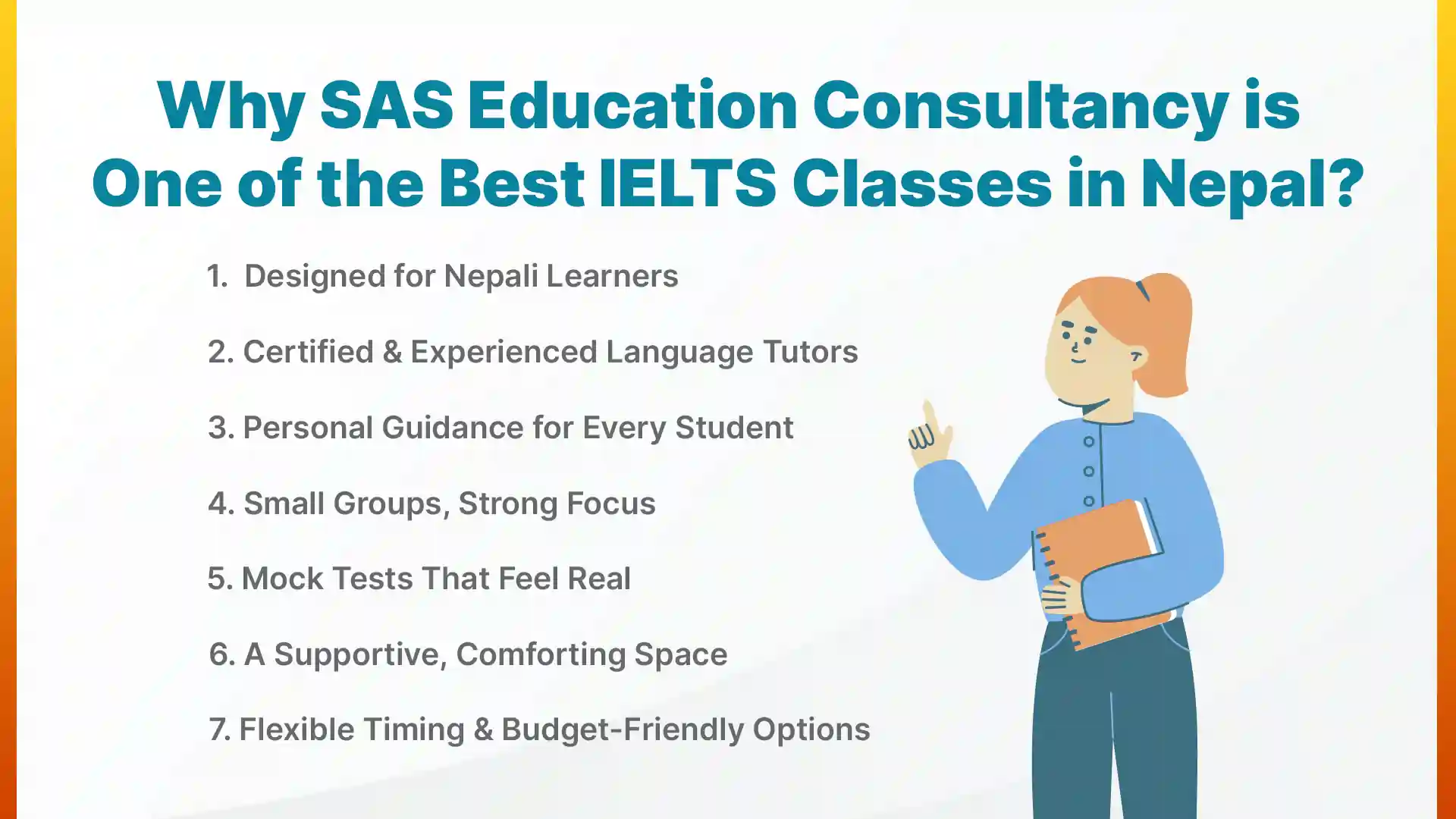
1. Certified & Experienced Language Tutors
SAS has certified IELTS trainers who understand both the test format and the common challenges of Nepali learners. They prioritise personalised lessons to meet your needs over generic guidance. You’ll get tips that actually make sense for someone preparing in Nepal.
2. Designed for Nepali Learners
Classes are organized to gradually build all four skills: reading, writing, listening, and speaking. Every module is covered with clear strategies, practical exercises, and real test simulations. This makes it easy to follow along without feeling overwhelmed.
3. Personal Guidance for Every Student
Trainers closely monitor each student’s progress. You don’t just attend lectures; you get feedback on weak areas, tips to improve, and encouragement to keep advancing. It’s like having a coach who really knows how to push you forward.
4. Mock Tests that Feel Real
SAS conducts regular mock tests under timed conditions to help students experience real exam pressure. After each test, detailed analysis identifies where you can improve and helps you refine your strategy. These tests prepare you mentally, so exam day feels much calmer.
5. Flexible Timing and Budget-Friendly Options
Whether you prefer morning, evening, or weekend classes, SAS offers flexibility to match your routine. Their fee structure is competitive and transparent, making quality IELTS coaching accessible without over-stretching your budget. It’s designed so that anyone serious about IELTS can join without worrying too much about money.
6. A Supportive, Comforting Space
Beyond teaching, SAS empowers students. Students here feel comfortable asking questions, practising speaking, and clarifying doubts, which can make a huge difference in exam performance. You’ll feel like you’re learning in a space that genuinely cares about your success.
Choosing the right institute, like SAS Education Consultancy, prepares students to achieve higher scores and build confidence. A reliable mentorship from experienced professionals reduces stress and creates a clear roadmap toward studying abroad. It’s about setting you up for success, not just teaching English.
Ready to Ace Your IELTS Examination?
Get expert guidance on IELTS preparation, test strategies, and top classes in Nepal. Take the first step toward your study abroad dream today!
How to Choose the Best IELTS Institute in Nepal?
Choosing the best IELTS institute in Kathmandu, Nepal, starts with understanding what you need. Your schedule, your target score, and the level of guidance you expect. The right institute should give you strong trainers, real exam practice, and a supportive environment that helps you improve quickly. When you compare these factors side by side, it becomes much easier to pick a class that truly matches your goals. Here’s a step-by-step guide to help Nepali students choose wisely:
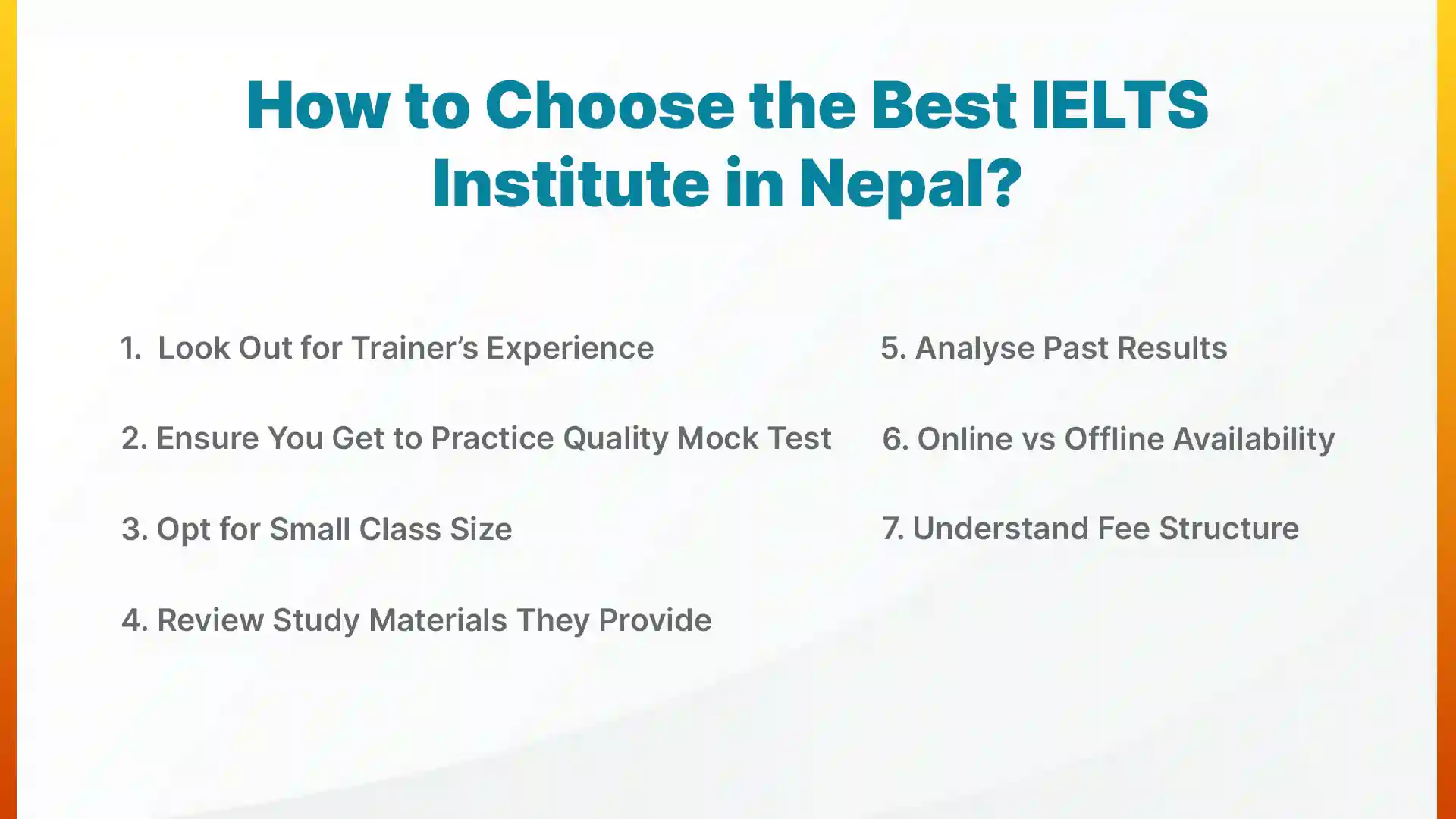
1. Look Out for Trainer’s Experience
Experienced trainers know the IELTS exam inside out and understand the common challenges Nepali students face. For example, many Nepali students struggle with speaking fluently under pressure. An experienced trainer understands this and provides practical exercises and tips to help students overcome their personal challenges. They also share proven strategies for reading, writing, and listening. Always check if the trainer has certificates and real teaching experience.
2. Ensure You Get to Practice Quality Mock Tests
Regular, realistic mock tests are crucial. Choose an institute that simulates real exam conditions and provides detailed feedback. In Nepal, some institutes only give small quizzes, but a good centre like SAS runs full-length mock tests with timing, scoring, and personalised guidance. Mock tests also help you identify weak areas early. The more you practice, the more confident you feel on test day.
3. Opt for Small Class Size
Smaller classes mean more attention from the teacher. For example, in a batch of 10–12 students, each student can get individual help with speaking and writing. In a big class of 40, it’s easy to get lost or miss key guidance. Small classes also allow more peer interaction and personalized tips for Nepali students, which can make learning faster and more effective.
4. Review the Study Materials They Provide
Check if the institute provides updated and comprehensive study materials, including practice books, sample tests, and online resources. Nepali students often rely on local reference books that may not reflect current IELTS standards. Good materials include tips for common mistakes, model answers, and recent exam patterns. Ask if the resources are included in the fee or if there are extra charges.
5. Analyse Past Results
Ask about past student performance. Institutes that regularly produce high band scores for Nepali students are more likely to offer effective teaching. For instance, seeing consistent 7+ scores in speaking or writing shows the training works. You can also ask for student testimonials or examples of score improvements. Or, read reviews and learn what students are saying in platforms like Google, Facebook reviews, Yellow pages, and Search Commercia. This helps you understand if the institute delivers real results.
6. Online vs Offline Availability
Depending on your location in Nepal, consider whether you need online or in-person classes. Students in Kathmandu may attend physical classes, while those in Pokhara or outside major cities might benefit from interactive online sessions. Some institutes offer hybrid options for flexibility. Online classes should also include live interaction, so you can ask questions and get feedback just like in a classroom.
7. Understand Fee Structure
Make sure the fee covers everything you need for your IELTS practice. Mock tests, study materials, personal feedback, and experienced tutors. Some institutes in Nepal advertise low fees but charge extra for tests or extra modules, so always clarify before enrolling. Compare fees with what’s included to avoid surprises. A clear fee structure also helps you plan your budget and time better.
Choosing wisely will save you time, reduce stress, and boost your chances of scoring higher on the IELTS exam. Combine these factors with your learning style, preparation speed, and schedule. This ensures you pick a class that really works for you and sets you up for success.
How Much Do IELTS Classes Cost in Nepal?
IELTS preparation fees in Nepal usually range from NPR 7,000 to NPR 15,000, depending on the institute, class duration, and the level of support they provide. Some institutes charge extra for mock tests, materials, or personalized sessions, while others offer everything in a single package. Understanding the fees helps Nepali students plan their budget and choose wisely without surprises. Here’s a clear breakdown for 2026:
1. IELTS Exam Fee in Nepal (Updated 2026)
The official IELTS Academic test fee in Nepal is NPR 33,000 for the Computer-based test and NPR 36,200 for the paper-based test. This fee is fixed, mandatory, and paid directly to the test provider (British Council or IDP). It covers your test registration, result processing, and TRF (Test Report Form).
If you plan to retake the exam, you’ll need to pay the full fee again, so preparing well the first time can save a lot of money and stress.
2. Average IELTS Class Fee Range
On average, a standard IELTS preparation course in Nepal can cost between NPR 6,000–15,000. The fee depends on the program duration, class sizes, and the teacher’s experience. Some consultancies, like SAS Education Consultancy, provide high-quality classes at an affordable price range.
What’s Usually Included in the Fee
Most reputable IELTS institutes include the following values:
- Live classes covering all four modules (reading, writing, listening, speaking).
- Study materials like books, practice papers, and tips.
- Mock tests to simulate real exam conditions.
- One-on-one feedback sessions
- Progress tracking and feedback from trainers.
- Access to speaking practice or clubs
These inclusions help Nepali students stay on track and improve systematically. For example, mock tests paired with trainer feedback can reveal weak areas that need extra attention.
Extra Charges for Materials or Mock Tests
Some institutes may charge separately for advanced mock tests, online resources, or personalised tutoring. Always check in advance if such extras are optional or mandatory. Knowing this prevents unexpected costs and ensures your preparation plan stays within budget. For instance, SAS includes most essentials in the main fee, making it simpler for students to focus on learning rather than worrying about extra costs.
By understanding average costs and inclusions, Nepali students can compare institutes effectively. Choose a program that balances quality, support, and affordability. Remember, investing wisely in preparation often pays off with higher IELTS scores and better chances for study abroad.
How Long Does IELTS Preparation Take?
IELTS preparation usually takes 4 to 8 weeks for most students in Nepal. The total duration, however, depends on your current English level, study habits, and target score. Some learners need a shorter, focused plan, while others benefit from a slower, more structured routine. The key is choosing a timeline that matches your current skills and your target score.
4 Weeks IELTS Preparation
If your English is already strong, you might manage a 4-week preparation course. This duration is suitable for students who are confident with grammar, vocabulary, and all four skills. Intensive practice, daily classes, and focused mock tests are key. For example, a student with prior experience in English-medium schools may complete prep in just a month if they practice regularly.
6 Weeks Preparation
Most Nepali students benefit from a 6-week course. This gives enough time to gradually strengthen reading, writing, listening, and speaking skills. Trainers can provide personalized feedback, and students have time to internalise strategies. This is ideal for those aiming for a band score between 6.5–7.5, which covers many university requirements abroad.
Fast-Track Classes
Some institutes offer fast-track or crash courses of 2–3 weeks. These are highly intensive and require full commitment. Students usually take these if the exam date is very close or if they need to improve only specific skills quickly.
Students who struggle with writing, speaking, or haven’t used English in a while often need more time to build confidence. The same goes for anyone aiming for a band 7 or higher on their very first attempt. On the other hand, students with a good English base or those retaking the test usually improve faster with consistent practice. A good institute will guide you toward the right duration based on your mock test score, so you can prepare confidently and score your best.
IELTS Preparation Tips for Faster Improvement
Preparing for IELTS efficiently is all about strategy, focus, and consistency. For Nepali students, using the right approach can make a huge difference in scores. Here are actionable tips that help you improve faster and smarter.
1. Build a Consistent Study Routine
Consistency is key. Set aside fixed hours each day for IELTS practice and stick to them. For example, spend 1 hour on reading, 1 hour on listening, and 30 minutes on vocabulary daily. Short, focused sessions are better than long, irregular ones. A daily routine also builds discipline and reduces last-minute stress.
2. Focus on All Four Modules Equally
Many students focus only on reading and writing, but speaking and listening are equally important. Practice speaking daily, record yourself, and listen critically. For listening, use podcasts, news clips, or IELTS practice recordings from different accents. Balanced preparation ensures you don’t lose marks in any section.
3. Do Real Test Practice, Not Just Random Exercises
Mock tests and past papers are more valuable than random exercises. Simulate real exam conditions: timed sessions, no pauses, and minimal distractions. This trains your mind for the actual test day and improves time management. After each mock, review mistakes carefully.
4. Review Your Mistakes With a Trainer
Understanding errors is essential. Work with a trainer to identify recurring mistakes in grammar, writing structure, or speaking fluency. Simple corrections can lead to big improvements. Trainers can also provide tips on time-saving strategies and exam techniques.
Conclusion
Choosing the right IELTS institute can feel overwhelming, but it ultimately depends on what matters most to you. Quality of teaching, personalized guidance, flexible schedules, and a supportive learning environment are all essentials. Visit a renowned IELTS institute like SAS Education Consultancy, which consistently stands out for its certified trainers, structured step-by-step classes, flexible schedule, and small batches.
The top study abroad consultants in Nepal, like SAS Education Consultancy, provide a complete, student-focused approach that makes exam preparation less stressful, more effective, and clearly directed toward achieving study abroad dreams.
Your IELTS journey starts with the right institute, and with careful planning, consistent practice, and the right guidance, a high score is absolutely within reach.