Top Universities in London For International Students In 2026

Apr 09, 2026
Dreaming of studying in one of the world’s most iconic cities while earning a globally recognized degree? London has long been a top choice for international students, but with so many universities, courses, and opportunities, choosing the right one can feel overwhelming. From world-class education to unmatched career exposure, the stakes are high, and making the right decision matters more than ever in 2026.
In this blog, we’ll explore the top universities in London for international students in 2026, helping you understand which institutions stand out, what they offer, and how to choose the best fit for your goals. We’ll also cover admission requirements, costs, scholarships, and practical tips to guide your study in UK journey with confidence.
In this blog
Overview of Higher Education System in London
London offers a globally respected higher education system known for academic excellence, research opportunities, and industry connections. Universities here follow a structured approach that combines theoretical knowledge with practical skills, making graduates highly employable worldwide. For international students, London provides not just quality education but also exposure to a diverse, multicultural environment. Understanding why study in UK can help you make smarter decisions about your study journey.
1. Structure of UK Universities and Degree Programs
The UK education system is well-structured and typically shorter compared to many countries. Undergraduate degrees usually take 3 years, while postgraduate programs can be completed in 1 year. Universities offer a mix of lectures, seminars, and independent study, encouraging critical thinking. Students are assessed through assignments, exams, and projects rather than just final tests. This flexible and efficient structure makes studying in London both time-saving and career-focused.
2. Why London Is a Top Study Destination for International Students
London is home to some of the world’s top-ranked universities and attracts students from over 200 countries. The city offers a unique blend of academic excellence, cultural diversity, and global networking opportunities. Students benefit from access to leading industries, internships, and career prospects after graduation. Additionally, London’s vibrant lifestyle, safety, and support systems make it a comfortable place for international students. It’s not just a study destination, it’s a gateway to global opportunities.
3. Popular Courses for International Students in London
London universities offer a wide range of courses, but some fields are especially popular among international students. Business and Management, Engineering, Computer Science, Law, and Finance are top choices due to strong career prospects. Creative fields like Media, Design, and Fashion are also in high demand because of London’s global influence in these industries. Many programs are designed in collaboration with industries, ensuring practical learning. Choosing the right course can significantly impact your future career path.
List of Top Universities in London For International Students
London is home to some of the most prestigious universities in the world, offering high-quality education, global recognition, and excellent career opportunities. Whether you are looking for research-focused institutions or career-oriented programs, the city has something for every student. These universities attract thousands of international students each year due to their academic excellence and diverse learning environment. Below are some of the best universities in UK you should consider in 2026.
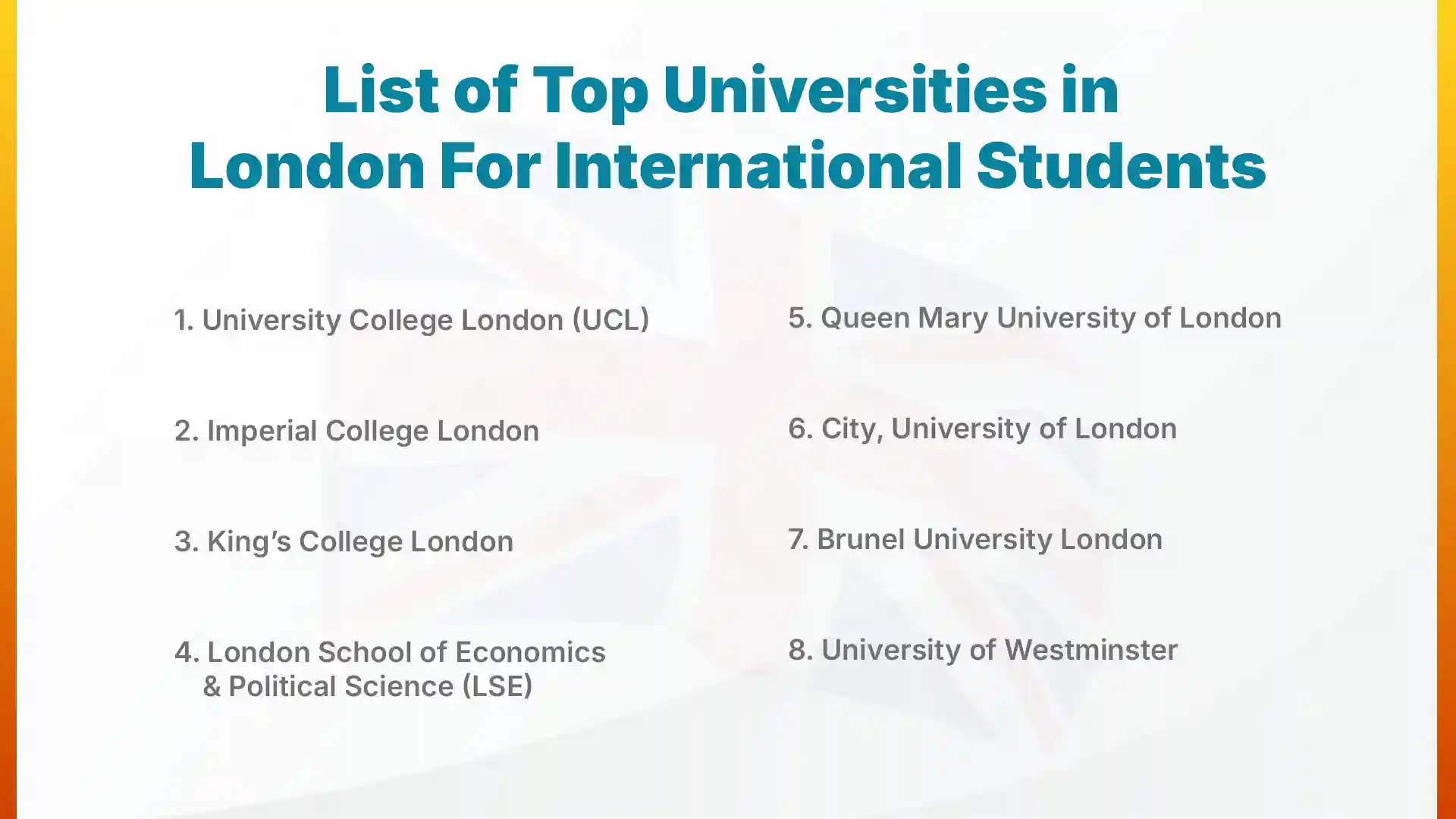
1. University College London (UCL)
University College London is one of the top-ranked universities globally, known for its strong emphasis on research and innovation. It offers a wide range of programs across disciplines such as engineering, medicine, business, and social sciences. UCL is especially popular among international students due to its inclusive environment and global reputation. The university encourages interdisciplinary learning, allowing students to explore multiple fields. Its central London location also provides access to leading industries and networking opportunities.
2. Imperial College London
Imperial College London is globally recognized for its excellence in science, engineering, medicine, and business. It is one of the best choices for students aiming for careers in technical and research-driven fields. The university focuses heavily on innovation, technology, and real-world problem-solving. Imperial has strong links with industries, offering students valuable internships and research opportunities. Its reputation for academic rigor makes it highly competitive but equally rewarding.
3. King’s College London
King’s College London is one of the oldest and most prestigious universities in the UK, known for its strong programs in humanities, law, health sciences, and social sciences. It offers a supportive environment for international students with a focus on research and academic excellence. The university has multiple campuses across London, giving students access to various facilities and resources. King’s also has strong global partnerships, enhancing career opportunities after graduation. Its central location adds to the overall student experience.
4. London School of Economics and Political Science (LSE)
The London School of Economics and Political Science is a world-leading institution specializing in social sciences, economics, politics, and finance. It is highly regarded for producing global leaders, policymakers, and business professionals. LSE has a highly international student body, making it a diverse and dynamic place to study. The university’s strong academic focus and research output make it one of the most competitive institutions in London. Its graduates are highly sought after by employers worldwide.
5. Queen Mary University of London
Queen Mary University of London is known for its strong academic programs and commitment to research excellence. It offers a wide range of courses in law, medicine, business, and engineering. The university is popular among international students due to its supportive campus environment and relatively affordable tuition compared to other top institutions. Queen Mary focuses on practical learning and industry collaboration. Its modern campus and diverse community make it an attractive choice for students.
6. City, University of London
City, University of London, is well-known for its business, finance, journalism, and law programs. It has strong connections with industries, especially through its business school, which is highly respected globally. The university focuses on career-oriented education, helping students gain practical skills and real-world experience. Many courses include internships or placement opportunities. Its location in London’s financial district gives students direct exposure to global business environments.
7. Brunel University London
Brunel University London is recognized for its focus on employability and hands-on learning. It offers a wide range of programs, particularly in engineering, business, and design. The university is known for its placement programs, allowing students to gain work experience during their studies. Brunel provides a modern campus environment with excellent facilities and student support services. It is a great option for students looking for a balance between academics and practical exposure.
8. University of Westminster
The University of Westminster is a popular choice among international students due to its diverse programs and strong industry connections. It offers courses in media, business, architecture, and creative arts. The university focuses on practical learning, helping students build skills relevant to current job markets. Westminster has multiple campuses across London, providing a vibrant student life experience. Its emphasis on employability and global exposure makes it a solid option for students in 2026.
Why Choose London for Higher Education in 2026?
London is one of the best destinations for higher education in 2026 because it offers world-class universities, global career opportunities, and a diverse learning environment. Students gain access to internationally recognized degrees, industry exposure, and strong academic support. The city combines high-quality education with real-world experience, making graduates more competitive globally. It’s not just about studying, it’s about building a future on an international stage.
1. Globally Ranked Universities and Degrees
London is home to some of the highest-ranked universities in the world, known for academic excellence and research output. Degrees from these institutions are recognized globally, increasing your chances of employment anywhere. Universities maintain high teaching standards and offer modern, industry-relevant curricula. Many programs are designed in collaboration with global companies, ensuring practical knowledge. Studying in such institutions adds strong credibility to your academic profile.
2. Multicultural Environment for International Students
London is one of the most diverse cities in the world, welcoming students from over 200 countries. This multicultural environment helps students feel more comfortable and accepted while studying abroad. It also allows you to learn from different cultures, perspectives, and ideas. Universities offer strong support services for international students, including counseling and career guidance. This diversity not only enriches your education but also prepares you for global workplaces.
3. Strong Career and Internship Opportunities
London is a global business hub, offering countless internship and job opportunities for students. Many universities have strong links with industries, allowing students to gain real-world experience during their studies. Part-time work opportunities are also widely available, helping students support themselves financially. Graduates from London universities are highly valued by employers worldwide. This strong connection between education and industry gives students a competitive career advantage.
4. Access to Global Networking and Industry Exposure
Studying in London gives you access to global networks, industry leaders, and professional events. Students can attend seminars, workshops, and networking events organized by universities and companies. Being in a major global city allows you to connect with professionals from various industries. These connections can lead to internships, mentorships, and job opportunities. Building a strong network during your studies can significantly impact your future career growth.
What Are the Admission Requirements for London Universities?
International students need academic qualifications, English language proficiency, supporting documents like SOP and recommendation letters, and sometimes work experience to get admission into London universities. Requirements may vary depending on the university and course, but most institutions follow a similar evaluation process. Meeting UK student visa requirements ensures that students are academically prepared and capable of studying in an English-speaking environment. Preparing early and carefully can significantly improve your chances of acceptance.
1. Academic Qualifications and GPA Requirements
Students must meet specific academic requirements based on the course they choose, such as a high school certificate for undergraduate programs or a bachelor’s degree for postgraduate courses. Universities often expect a strong GPA or percentage, especially for competitive programs. Some courses may require subject-specific backgrounds, like mathematics for engineering or business studies for management. Top universities usually have higher academic standards than others. Maintaining good academic performance is one of the most important factors in the admission process.
2. English Language Tests (IELTS, PTE, TOEFL)
Since courses are taught in English, international students must prove their language proficiency through tests like IELTS, PTE, or TOEFL. Each university sets a minimum score requirement depending on the program. For example, many universities require an IELTS score of 6.0 to 7.5 for admission. Higher scores may be needed for competitive courses like law or medicine. Preparing well for these tests is essential to meet the admission criteria and succeed academically.
3. Statement of Purpose (SOP) and Recommendation Letters
A Statement of Purpose (SOP) is a crucial document where you explain your academic background, career goals, and reasons for choosing the course and university. It helps universities understand your motivation and suitability for the program. Recommendation letters from teachers or employers add credibility to your application. These letters highlight your skills, achievements, and potential as a student. A strong SOP for UK and genuine recommendations can significantly boost your chances of admission.
4. Portfolio or Work Experience (if required)
Some courses, especially in creative fields like design, architecture, or media, require a portfolio showcasing your previous work. This helps universities assess your practical skills and creativity. For certain postgraduate or professional programs, relevant work experience may also be required or preferred. It demonstrates your industry exposure and readiness for advanced studies. Submitting a strong portfolio or having relevant experience can give you an edge over other applicants.
How to Apply to Top Universities in London? (Step-by-Step Guide)
You can apply to top universities in London by researching courses, checking eligibility, preparing documents, submitting applications through UCAS or university portals, accepting offers, and applying for a student visa. The process is straightforward if you follow each step carefully and stay organized. Planning early helps you avoid deadlines and improves your chances of acceptance. Below is a step-by-step guide to help you navigate the application process smoothly.
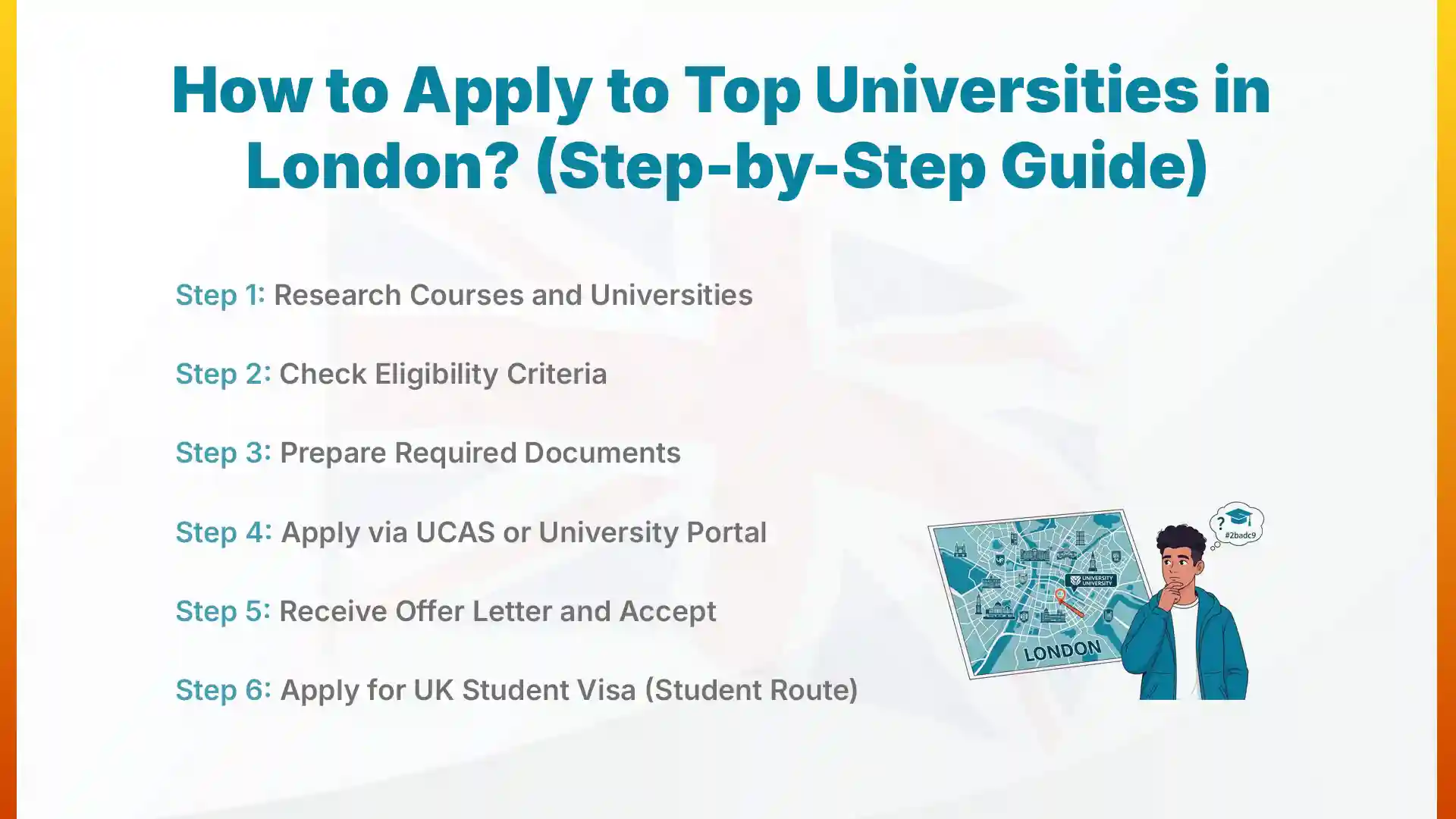
Step 1: Research Courses and Universities
Start by identifying the course you want to study and the universities that offer it. Compare factors like rankings, course content, tuition fees, and location. It’s important to choose a program that aligns with your career goals rather than just popularity. Visit official university websites to get accurate and updated information. You can also check student reviews and graduate outcomes for better insights. Taking time at this stage helps you make a well-informed decision. A clear shortlist will make the rest of the application process much easier.
Step 2: Check Eligibility Criteria
Once you shortlist universities, carefully review their admission requirements. This includes academic qualifications, minimum GPA, and English language test scores like IELTS or PTE. Some programs may have additional requirements such as entrance exams or interviews. Make sure you meet all criteria before applying to avoid rejection. Understanding eligibility early also gives you time to improve any gaps. This step is crucial for a successful application. Always double-check requirements directly from official university sources.
Step 3: Prepare Required Documents
Gather all necessary documents, including academic transcripts, certificates, English test results, SOP, and recommendation letters. Ensure that all documents are accurate and properly formatted according to university guidelines. Writing a strong SOP is especially important as it reflects your goals and motivation. Some universities may also require a CV or portfolio depending on the course. Preparing documents in advance helps you avoid last-minute stress. Keep both digital and physical copies ready. Organizing your documents properly can speed up the application process.
Step 4: Apply via UCAS or University Portal
Applications for undergraduate programs are usually submitted through UCAS, while postgraduate applications are often made directly through university websites. Fill out the application form carefully and double-check all details before submission. Pay attention to deadlines, as late applications may not be accepted. Some universities may charge an application fee. After submission, you will receive confirmation and updates via email or portal. Tracking your application status is important during this stage. Applying early can increase your chances of securing a place.
Step 5: Receive Offer Letter and Accept
If your application is successful, you will receive an offer letter from the university. Offers can be conditional or unconditional, depending on your qualifications. Read the terms carefully before accepting the offer. You may need to pay a deposit to secure your place. Once accepted, the university will provide further instructions for enrollment. This step confirms your admission and moves you closer to studying in London. Make sure to meet any conditions mentioned in your offer letter on time.
Step 6: Apply for UK Student Visa (Student Route)
After accepting your offer, you need to apply for a UK Student visa (Student Route). You will receive a Confirmation of Acceptance for Studies (CAS) from your university, which is required for the visa application. Prepare documents like financial proof, passport, and visa application form. You may also need to attend a biometric appointment. Apply well in advance to avoid delays. Once approved, you are ready to travel and begin your studies in London. Keeping track of visa timelines is essential for a smooth transition.
Tuition Fees and Cost of Living in London for Students
Studying in London requires careful financial planning, as it is one of the most expensive cities in the world. On average, international students should budget between £1,400 and £2,000 per month for living expenses. For visa purposes, students must show at least £1,334 per month (up to 9 months), excluding tuition fees. While costs are high, London also offers strong earning opportunities through part-time work and career exposure.
1. Average Tuition Fees by University and Course
Tuition fees in London vary depending on the university, course, and level of study. Undergraduate programs typically range from £11,400 to £38,000 per year, while specialized courses like Medicine or Dentistry can exceed £70,000 at top institutions. Postgraduate degrees usually cost between £15,000 and £30,000, with MBA programs going up to £60,000 or more. Lab-based and technical courses are generally more expensive than theoretical ones. Some universities also offer relatively affordable options depending on the course structure. Choosing the right university and program can help balance quality and cost.
2. Accommodation Costs in London
Accommodation is the largest expense for students, often taking up 50–60% of the total budget. University halls typically cost between £200 and £450 per week and often include utilities. Shared private housing is more affordable, ranging from £150 to £300 per week, though bills may not be included. Private student halls offer modern facilities but can cost £300 to £600 weekly. Renting a private studio or flat provides more privacy but is usually the most expensive option. Selecting the right type of accommodation can significantly impact your monthly expenses.
3. Daily Living Expenses and Budgeting Tips
Apart from rent, students usually spend around £500 to £800 per month on daily living expenses. Groceries typically cost between £150 and £250, and cooking at home can help save money. Transportation expenses range from £120 to £175, with student discounts available through travel cards. Utilities, if not included in rent, may cost £100 to £200 monthly. Personal expenses like entertainment and social activities can add another £100 to £250. Creating a monthly budget and tracking expenses is essential for managing finances effectively.
4. Part-Time Work Opportunities for International Students
International students on a UK Student visa can work up to 20 hours per week during term time and full-time during holidays. Common part-time jobs include roles in hospitality, retail, and on-campus positions like library assistants or student ambassadors. These jobs typically pay between £10 and £15 per hour, with higher-paying roles like tutoring offering up to £40 per hour. Working part-time helps students manage expenses and gain valuable work experience. Students must obtain a National Insurance number before starting work. However, certain roles like freelancing or self-employment may have restrictions under visa rules, especially when exploring part-time jobs in UK.
Scholarships and Financial Aid for International Students
Studying in London can be expensive, but a wide range of scholarships and financial aid options are available for international students. These scholarships can significantly reduce tuition fees and, in some cases, even cover living expenses. They are offered by the UK government, universities, and private organizations based on merit, need, or specific eligibility criteria. Applying for a scholarship in UK not only eases financial pressure but also strengthens your academic profile. Understanding the different types of funding options can help you plan your studies more effectively.
1. UK Government Scholarships (Chevening, Commonwealth)
The UK government offers prestigious scholarships like Chevening and Commonwealth Scholarships for international students. These programs are highly competitive and usually cover full tuition fees, living expenses, and travel costs. They are primarily awarded to students with strong academic backgrounds and leadership potential. Chevening is ideal for postgraduate students aiming for leadership roles, while Commonwealth Scholarships focus on students from eligible countries. Applying early and meeting all eligibility criteria is essential for success.
2. University-Specific Scholarships in London
Many universities in London offer their own scholarships for international students. These can be merit-based, need-based, or course-specific, depending on the institution. Some scholarships provide partial tuition fee waivers, while others may offer full funding. Universities like UCL, King’s College London, and others have dedicated scholarship programs for international applicants. Eligibility requirements and deadlines vary, so it’s important to check official university websites. Applying directly through the university increases your chances of receiving funding.
3. External and Private Scholarships
In addition to government and university funding, there are many external scholarships offered by private organizations, NGOs, and international bodies. These scholarships may focus on specific fields of study, countries, or student profiles. Some organizations provide financial support for tuition, accommodation, or research projects. Examples include scholarships from international foundations and education-focused institutions. Researching multiple sources can help you find suitable funding opportunities. Combining different scholarships can also help reduce overall expenses.
4. Tips to Increase Chances of Getting Scholarships
To improve your chances of securing a scholarship, start your application process early and stay organized. Maintain a strong academic record and actively participate in extracurricular activities. Writing a compelling personal statement or essay is crucial, as it highlights your goals and achievements. Ensure all required documents are accurate and submitted before deadlines. Applying to multiple scholarships increases your chances of success. Being consistent and well-prepared can make a significant difference in securing financial aid.
Student Life in London for International Students
Student life in London is dynamic, diverse, and full of opportunities beyond the classroom. The city offers a perfect mix of academic learning, cultural experiences, and career exposure. International students can explore global communities, attend events, and build meaningful connections. From world-class museums to vibrant nightlife, London provides a well-rounded lifestyle. While it can be fast-paced, students who manage their time well can enjoy both academic success and personal growth.
1. Cultural Diversity and Student Communities
London is one of the most multicultural cities in the world, with people from over 200 nationalities. This diversity makes it easier for international students to adapt and feel at home. Universities host various student societies, cultural groups, and events throughout the year. These communities help students build friendships, share experiences, and celebrate their traditions. Engaging in these activities also improves communication and networking skills. It’s a great way to experience different cultures while studying.
2. Transportation and Travel in London
London has one of the most efficient public transport systems, including buses, trains, and the Underground (Tube). Students can use an Oyster card or contactless payment for convenient travel across the city. Discounted travel options are available for students, making daily commuting more affordable. The city is well-connected, allowing easy access to universities, workplaces, and attractions. Cycling and walking are also popular options in certain areas. Understanding the transport system helps students save both time and money.
3. Safety, Healthcare, and Support Services
London is generally a safe city, especially in student-friendly areas, but it’s still important to stay aware of your surroundings. Universities provide strong support services, including counseling, academic guidance, and career support. International students also have access to the UK’s healthcare system (NHS) after paying the health surcharge as part of their visa. Emergency services are reliable and easily accessible. Most campuses have dedicated teams to help students with personal or academic challenges. This support ensures a safe and comfortable study experience.
4. Balancing Studies, Work, and Social Life
Managing studies along with part-time work and social activities can be challenging but rewarding. Students need to create a schedule that prioritizes academic responsibilities while allowing time for relaxation. Part-time jobs help cover expenses and provide valuable work experience. At the same time, social activities and networking are important for personal growth. Avoiding burnout by maintaining a healthy balance is key. Good time management can help students enjoy a productive and fulfilling life in London.
Common Mistakes International Students Should Avoid
Many international students make avoidable mistakes during their study abroad journey, which can affect both admission chances and overall experience. From poor planning to lack of research, these errors can lead to unnecessary stress and financial burden. Understanding these common pitfalls early can help you make smarter decisions. Being well-prepared ensures a smoother transition to studying in London. Avoiding these mistakes can save time, money, and missed opportunities.
1. Not Researching Universities Properly
One of the biggest mistakes students make is choosing universities without proper research. Many rely only on rankings or popularity instead of checking course content and career outcomes. It’s important to understand what each program offers and whether it aligns with your goals. Ignoring factors like location, facilities, and student support can lead to dissatisfaction later. Students should always explore official websites and compare multiple universities before applying. Making an informed choice ensures long-term benefits for your career.
2. Missing Application or Visa Deadlines
Missing deadlines can completely ruin your chances of studying in London. Universities have strict timelines for applications, document submissions, and fee payments. Similarly, visa applications also require timely processing and documentation. Delays can result in rejection or postponement to the next intake. Students should create a timeline and track all important dates carefully. Applying early not only reduces stress but also improves acceptance chances.
3. Ignoring Scholarship Opportunities
Many students overlook scholarships and financial aid options, assuming they are too difficult to secure. This can lead to unnecessary financial pressure during their studies. Scholarships are available from governments, universities, and private organizations. Not applying means missing out on opportunities to reduce tuition and living costs. Students should research and apply to multiple scholarships to increase their chances. Taking time to prepare strong applications can make a big difference.
4. Underestimating Cost of Living in London
London is one of the most expensive cities, and underestimating costs can create serious financial challenges. Many students plan only for tuition fees and forget about accommodation, food, and daily expenses. This can lead to budgeting issues and financial stress during studies. It’s important to calculate a realistic monthly budget before moving. Students should also consider part-time work opportunities to support their expenses. Proper financial planning ensures a more comfortable and stable student life.
Tips to Choose the Best University in London for You
Choosing the right university in London is a crucial decision that can shape your academic journey and future career. With so many options available, it’s important to evaluate universities based on your personal goals, budget, and preferences. A well-informed decision helps you get the best value from your education and overall experience. Taking time to compare different factors ensures you choose a university that truly fits your needs.
1. Align Course with Career Goals
Start by selecting a course that matches your long-term career plans rather than just following trends. Look at the subjects covered, specialization options, and practical exposure offered by the program. A course aligned with your goals increases your chances of success after graduation. It also helps you stay motivated throughout your studies. Research career outcomes and job roles related to the course before making a decision. Choosing the right course is the foundation of a successful career.
2. Compare Rankings and Course Content
While university rankings are important, they should not be the only deciding factor. Compare the course structure, modules, and teaching methods across different universities. Some universities may offer better practical learning or industry-focused programs. Rankings give a general idea of reputation, but course content determines what you actually learn. Always review detailed program information on official websites. A balanced approach helps you make a smarter choice.
3. Check Location and Campus Facilities
The location of the university can impact your daily life, travel time, and living costs. Some campuses are located in central London, while others are in quieter, more affordable areas. Check facilities like libraries, labs, accommodation, and student support services. A well-equipped campus enhances your learning experience. Accessibility to transport and nearby amenities also matters. Choosing the right location can improve both comfort and convenience.
4. Review Graduate Employability Rates
Graduate employability is a key factor when choosing a university. Check how many students secure jobs after completing their degree. Universities with strong industry connections often provide better internship and placement opportunities. Look for career support services like job fairs, mentorship, and training programs. High employability rates indicate the value of the degree in the job market. This ensures a better return on your investment in education.
Conclusion
Choosing to study in London in 2026 is more than just an academic decision, it’s a step toward building a global future. With world-class universities, diverse courses, and strong career opportunities, London offers everything an international student needs to succeed. From understanding admission requirements to managing costs and exploring scholarships, careful planning can make your journey smoother and more rewarding.
Ultimately, the key lies in selecting the right university and course that align with your goals. By avoiding common mistakes and making informed decisions, you can maximize both your academic and personal growth. SAS Education Consultancy can help guide you through the process, ensuring you make the best choices for your future. London not only provides quality education but also valuable life experiences that shape your career and perspective in the long run.