Master’s in Pharmacy in UK For International Students

Mar 26, 2026
Thinking about building a career in pharmacy but want global exposure, better research opportunities, and a degree that actually opens doors worldwide? The UK has become a top destination for pharmacy studies, but let’s be honest, figuring out universities, requirements, and costs can feel a bit like decoding a prescription without instructions.
In this blog, we’ll explore everything about Master’s in Pharmacy in UK For International Students, from top universities and specializations to admission requirements, costs, scholarships, and career opportunities. Whether you’re just exploring your options or planning to apply soon, this guide will help you make clear and confident decisions (without the usual confusion) to study in UK.
In this blog
What Is Master’s in Pharmacy in UK?
Master’s in Pharmacy in the UK is a postgraduate degree that focuses on advanced pharmaceutical sciences, drug development, and clinical pharmacy practices. It provides in-depth knowledge of medicines, their effects, and their safe use in healthcare systems. Students learn through a mix of theoretical study, laboratory work, and sometimes industry or clinical placements. The program is designed to build both scientific understanding and practical skills. In simple terms, it prepares you for professional roles in the pharmaceutical and healthcare industries globally.
Why Study Master’s in Pharmacy in UK?
Study masters in pharmacy in UK because it offers globally recognized degrees, advanced research opportunities, and strong career prospects in the healthcare and pharmaceutical industries. The UK is known for its high-quality education system, modern facilities, and industry-focused learning approach. Students gain both theoretical knowledge and practical experience, which is highly valued worldwide. It’s not just about studying, it’s about building a career with global credibility, why study in UK.
1. Globally Recognised UK Universities and Degrees
UK universities are consistently ranked among the top in the world for pharmacy and healthcare programs. A degree from the UK is widely respected and recognized globally, which gives graduates a strong advantage in the job market. Employers value the quality of education and training provided by UK institutions. This recognition makes it easier to find job opportunities not just in the UK, but in other countries as well. In simple terms, your degree carries weight wherever you go.
2. Advanced Research in Pharmaceutical Sciences and Drug Development
The UK is a global hub for pharmaceutical research and innovation, especially in drug development and clinical trials. Students get the opportunity to work on cutting-edge research projects and learn from experienced researchers. Universities often collaborate with pharmaceutical companies, giving students real industry exposure. This helps build strong technical and analytical skills. If you’re interested in research, the UK offers some of the best opportunities in this field.
3. Access to Modern Labs, Clinical Training, and Internships
UK universities provide access to state-of-the-art laboratories and advanced research facilities. Students also get hands-on clinical training and internship opportunities in hospitals or pharmaceutical companies. This practical exposure helps bridge the gap between theory and real-world application. You don’t just learn how medicines work, you see how they’re developed and used. That experience makes a big difference when entering the workforce.
4. High Demand for Pharmacists and Healthcare Professionals
There is a growing demand for pharmacists and healthcare professionals in the UK and globally. With increasing focus on healthcare systems and patient safety, skilled pharmacy graduates are needed more than ever. This demand creates better job opportunities and career stability. It also means graduates can explore roles in hospitals, research, and the pharmaceutical industry. Basically, it’s a field where demand isn’t slowing down anytime soon.
5. Strong Career Opportunities and Global Salary Potential
Graduates of pharmacy programs in the UK have access to strong career opportunities across various sectors. They can work in hospitals, pharmaceutical companies, research institutions, and regulatory bodies. The salary potential is competitive and increases with experience and specialization. International exposure and UK qualifications also help in securing high-paying roles globally. It’s one of those careers where your effort actually pays off, literally.
Master’s in Pharmacy in UK for International Students
Pursuing a Master’s in Pharmacy in the UK for international students involves meeting specific academic, language, and visa requirements. UK universities follow a structured admission process to ensure students are well-prepared for advanced pharmaceutical studies. While the process may seem a bit complex at first, it becomes manageable when broken into clear steps. With proper planning and guidance, studying in the UK is definitely achievable (even if it feels overwhelming in the beginning).
1. Eligibility Criteria for International Students
International students must meet basic eligibility criteria set by UK universities, including academic qualifications and language proficiency. Most universities require applicants to have completed a relevant undergraduate degree. Some programs may also expect prior knowledge of pharmaceutical or life science subjects. Additionally, students must meet visa and financial requirements. Overall, eligibility ensures that students are ready for the academic demands of the program.
2. Academic Background in Pharmacy or Life Sciences
A bachelor’s degree in pharmacy or related fields like biology, chemistry, or life sciences is usually required. Universities prefer applicants with a strong academic record and relevant coursework. Some programs may also consider work experience in healthcare or research settings. Having a solid academic foundation helps students understand advanced pharmaceutical concepts more easily. It also increases the chances of getting accepted into top universities.
3. English Language Requirements (IELTS, TOEFL, PTE)
Since courses are taught in English, international students must prove their language proficiency through tests like IELTS, TOEFL, or PTE. Each university has its own minimum score requirements that applicants must meet. These tests ensure students can understand lectures and communicate effectively in an academic environment. Preparing well for these exams is essential for admission success. It’s basically your proof that you can handle studying in English without struggling.
4. UK Student Visa (Tier 4 / Student Route) Process Overview
After receiving an offer from a UK university, students need to apply for a student visa under the Student Route (previously Tier 4). This involves submitting documents like the Confirmation of Acceptance for Studies (CAS), financial proof, and passport details. Students may also need to attend a visa interview. The process requires careful documentation and timely application. Once approved, you’re ready to begin your study journey in the UK.
Popular Specialisations in Master’s in Pharmacy in UK
Master’s in Pharmacy in the UK offers a variety of specialisations that allow students to focus on specific areas within the pharmaceutical field. These specialisations combine scientific knowledge with practical applications, making the degree more career-oriented. Whether you’re interested in clinical practice, research, or drug development, there’s a path that fits your goals. Choosing the right specialization is important, it basically shapes your future career direction in pharmacy.
1. Clinical Pharmacy and Pharmacy Practice
Clinical pharmacy focuses on the safe and effective use of medicines in patient care. Students learn about drug therapy, patient counseling, and healthcare systems. This specialization often includes practical training in hospitals or clinical settings. It prepares students for roles as clinical pharmacists working directly with patients and healthcare teams. It’s ideal for those who want a hands-on role in improving patient health outcomes.
2. Pharmacology and Drug Discovery
This specialization focuses on how drugs interact with the human body and how new medicines are developed. Students study drug mechanisms, testing methods, and the drug discovery process. It is highly research-oriented and often involves laboratory work and experiments. This field is suitable for those interested in innovation and developing new treatments. It’s where science meets real-world medical impact.
3. Pharmaceutical Biotechnology and Research
Pharmaceutical biotechnology combines biology and technology to develop new drugs and therapies. Students learn about genetic engineering, biopharmaceuticals, and advanced research techniques. This specialization is heavily focused on innovation and scientific research. It prepares students for roles in research labs and pharmaceutical companies. It’s a great choice if you’re interested in cutting-edge developments in medicine.
4. Pharmaceutical Analysis and Quality Control
This specialization focuses on testing and ensuring the quality and safety of pharmaceutical products. Students learn about analytical techniques, quality assurance, and regulatory standards. It plays a critical role in maintaining drug safety and effectiveness. Graduates can work in quality control labs and pharmaceutical manufacturing industries. It’s a field where precision and attention to detail are essential.
5. Regulatory Affairs and Drug Safety (Pharmacovigilance)
Regulatory affairs and pharmacovigilance focus on ensuring that medicines meet legal and safety standards. Students learn about drug approval processes, regulations, and monitoring adverse drug reactions. This specialization is important for maintaining public safety and compliance in the pharmaceutical industry. It prepares students for roles in regulatory agencies and pharmaceutical companies. Basically, it’s the field that makes sure medicines are safe before they reach patients.
Top Universities for Master’s in Pharmacy in UK
UK is home to some of the world’s top universities offering highly respected Master’s in Pharmacy programs. These institutions are known for their academic excellence, advanced research facilities, and strong industry connections. Students benefit from practical training, expert faculty, and global exposure. Choosing the right university can significantly impact your learning experience and future career. So yeah, this decision isn’t just important, it’s a game-changer, the best universities in UK.
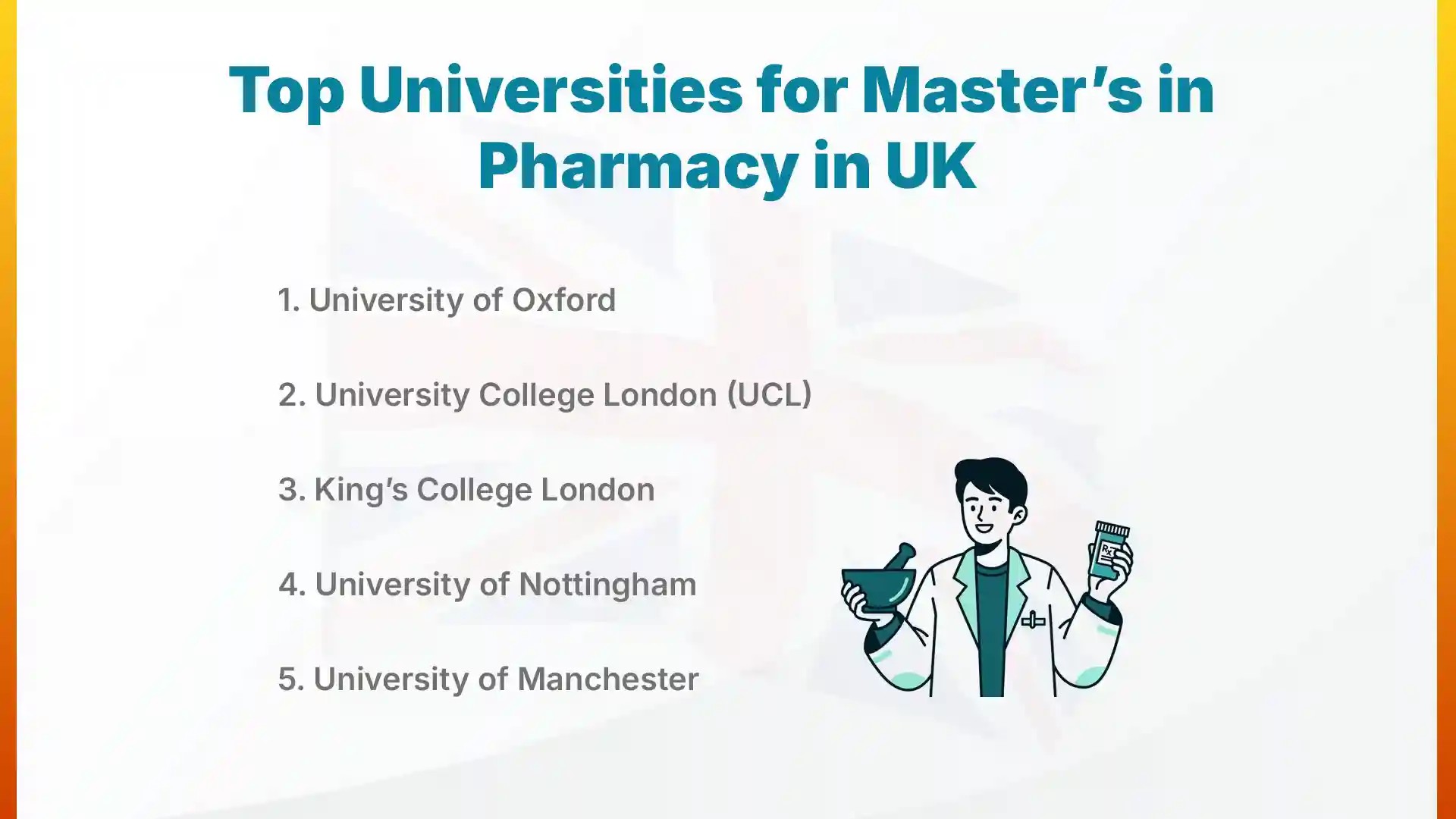
1. University of Oxford
The University of Oxford is one of the most prestigious universities in the world, known for its strong research focus in pharmaceutical sciences. It offers advanced programs with access to world-class laboratories and experienced faculty. Students get opportunities to work on innovative research projects and collaborate with leading experts. The learning environment is highly competitive but equally rewarding. A degree from Oxford carries global recognition and opens doors to top career opportunities.
2. University College London (UCL)
UCL is well-known for its cutting-edge research and modern approach to pharmacy education. The university offers a wide range of specializations and focuses on both theoretical and practical learning. Students benefit from strong industry links and access to advanced facilities. Its central London location provides excellent networking and internship opportunities. It’s a great choice for students looking for a balance between academics and real-world exposure.
3. King’s College London
King’s College London has a strong reputation in healthcare and pharmaceutical education. Its pharmacy programs emphasize clinical practice, research, and patient-focused care. Students gain hands-on experience through placements and practical training. The university is also closely connected with hospitals and healthcare institutions. This makes it an ideal option for students interested in clinical pharmacy careers.
4. University of Nottingham
The University of Nottingham is known for its high-quality pharmacy programs and research excellence. It offers modern facilities and a strong focus on practical learning and industry collaboration. Students can participate in research projects and gain valuable hands-on experience. The university also has strong links with pharmaceutical companies. It’s a solid choice for students aiming for both academic and industry careers.
5. University of Manchester
The University of Manchester offers comprehensive pharmacy programs with a strong emphasis on research and innovation. Students learn through a combination of lectures, lab work, and real-world applications. The university provides excellent resources and career support services. Its strong industry connections help students gain internships and job opportunities. Overall, it’s a well-rounded option for pharmacy students aiming for global careers.
Course Structure and Duration of Master’s in Pharmacy in UK
The course structure of a Master’s in Pharmacy in the UK is designed to combine theoretical knowledge with practical and research-based learning. Most programs are intensive and focus on developing both scientific understanding and industry-relevant skills. Students go through a mix of lectures, lab work, and research projects. Overall, the structure is well-balanced to prepare graduates for real-world pharmaceutical careers.
1. Typical Duration (1 Year Full-Time / 2 Years Part-Time)
Most Master’s in Pharmacy programs in the UK are completed within 1 year if studied full-time, making it a faster option compared to many other countries. For students who prefer flexibility, part-time options are available and usually take around 2 years. The shorter duration helps save both time and overall study costs. However, the course is intensive, so students need to be prepared for a fast-paced learning environment. It’s quick, but definitely not easy.
2. Core Subjects: Pharmacology, Pharmaceutics, Drug Design
The curriculum includes key subjects like pharmacology, pharmaceutics, and drug design, which form the foundation of pharmaceutical science. Students learn how drugs interact with the body, how medicines are formulated, and how new drugs are developed. These subjects are taught through lectures, case studies, and practical sessions. They help build the strong technical knowledge required in the pharmaceutical industry. Basically, this is where you learn the science behind medicines.
3. Laboratory Research, Dissertation, and Industry Projects
A major part of the course involves research work, including lab experiments, dissertation writing, and sometimes industry-based projects. Students get hands-on experience in conducting experiments and analyzing data. The dissertation allows them to explore a specific topic in depth. Some universities also offer opportunities to collaborate with pharmaceutical companies. This practical exposure is crucial for building research and problem-solving skills.
How to Apply for a Master’s in Pharmacy in UK?
To apply for master’s in pharmacy in UK you must research universities, meet eligibility criteria, prepare the required documents, and follow the application and visa process step by step. The process involves careful planning, timely submissions, and attention to detail. While it may seem a bit overwhelming at first, breaking it into clear steps makes it much easier to manage. Think of it like following a prescription, miss a step, and things get messy.
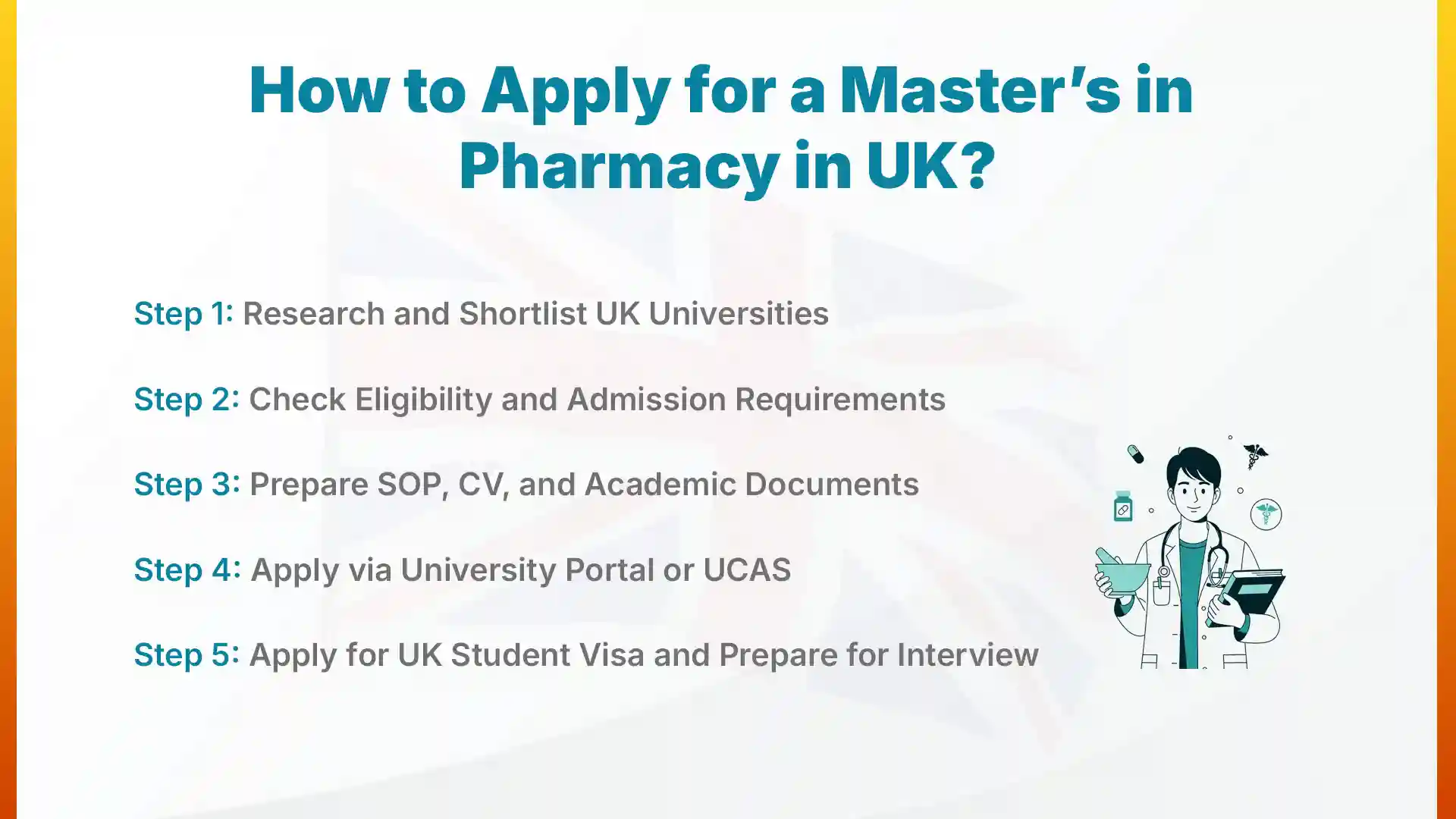
Step 1: Research and Shortlist UK Universities
Start by researching universities that offer pharmacy programs matching your interests and career goals. Look into course content, rankings, tuition fees, and location. Shortlist universities based on your academic profile and budget. It’s also smart to include a mix of safe and ambitious options. A well-planned shortlist increases your chances of getting accepted into a good university.
Step 2: Check Eligibility and Admission Requirements
Once you have your shortlist, check the specific eligibility criteria for each university. This includes academic qualifications, English language requirements, and any additional prerequisites. Requirements may vary slightly, so don’t assume they’re all the same. Understanding these early helps you avoid last-minute surprises. It also gives you time to prepare if anything is missing.
Step 3: Prepare SOP, CV, and Academic Documents
You’ll need to prepare important documents such as your Statement of Purpose (SOP), CV, academic transcripts, and certificates. The SOP is especially important as it explains your goals and motivation. Make sure your CV highlights relevant skills and experiences. All documents should be clear, accurate, and well-organized. This step plays a big role in how universities evaluate your profile, especially your SOP for UK.
Step 4: Apply via University Portal or UCAS
Applications are usually submitted through university portals or UCAS, depending on the program. You’ll need to fill out the application form, upload documents, and pay the application fee. Double-check all details before submitting to avoid errors. Some universities may also require interviews or additional information. Accuracy here is key, small mistakes can cause delays.
Step 5: Apply for UK Student Visa and Prepare for Interview
After receiving your offer letter, you need to apply for a UK student visa. This involves submitting documents like your CAS (Confirmation of Acceptance for Studies), financial proof, and passport details. You may also need to attend a visa interview. Preparing well ensures a smooth visa process. Once approved, you’re all set to begin your journey in the UK.
Admission Requirements for Master’s in Pharmacy in UK
The admission requirements for a Master’s in Pharmacy in the UK include academic qualifications, language proficiency, and supporting application documents. Universities assess both your academic background and overall profile to determine your suitability for the program. While requirements may vary slightly by institution, most follow a similar structure. Preparing these in advance makes the application process smoother and increases your chances of acceptance, including understanding UK student visa requirements.
1. Bachelor’s Degree in Pharmacy or Related Field
A bachelor’s degree in pharmacy or a related field, such as chemistry, biology, or life sciences, is usually required. Universities prefer applicants with a strong academic record and relevant coursework. Some programs may also consider applicants with closely related degrees if they meet specific subject requirements. A solid academic foundation helps students understand advanced pharmaceutical concepts more easily. It’s essentially the starting point of your eligibility.
2. English Language Proficiency (IELTS/TOEFL/PTE Scores)
International students must demonstrate English proficiency through tests like IELTS, TOEFL, or PTE. Each university sets minimum score requirements that applicants must meet. These tests ensure students can understand lectures, participate in discussions, and complete academic work effectively. Preparing well for these exams is crucial for admission. It’s basically proof that you can study and communicate confidently in English.
3. Statement of Purpose (SOP) and Letters of Recommendation
A strong Statement of Purpose (SOP) and letters of recommendation (LORs) are essential parts of your application. The SOP explains your academic background, career goals, and reasons for choosing the program. LORs provide insights into your abilities and character from professors or employers. Together, they help universities understand you beyond your grades. This is where your story really stands out.
4. Work Experience or Internship (Preferred but Optional)
While not always mandatory, having relevant work experience or internships can strengthen your application. Experience in healthcare, research labs, or pharmaceutical companies shows practical exposure and commitment to the field. It also gives you an advantage over other applicants. Some universities value hands-on experience as much as academic performance. Even a short internship can make a noticeable difference.
Cost of Studying Master’s in Pharmacy in UK
The cost of studying a Master’s in Pharmacy in the UK for international students typically ranges between £30,000 and £55,000 per year, including tuition, living expenses, and mandatory fees. The total cost varies depending on the university and city, with London being significantly more expensive than other regions. While the investment is high, proper budgeting, scholarships, and part-time work can help manage expenses. Planning is key because costs can add up quicker than expected.
1. Tuition Fees in UK Universities (Approx Range)
Tuition fees for pharmacy-related master’s programs in the UK generally range from £17,000 to £35,000 per year. Regional or non-Russell Group universities typically charge between £17,000 and £22,000 annually. Top-tier or Russell Group universities range from £25,000 to £35,000, while highly specialized programs can exceed £33,000. Pharmacy courses tend to be more expensive due to lab work and research components. So yes, where you study can make a big difference in your total cost.
2. Living Expenses for International Students in UK
Living expenses depend largely on your location, with London being 25–40% more expensive than other cities. Students in London should budget around £1,300 to £2,000 per month, while those outside London may spend £900 to £1,400 monthly. Accommodation costs range from £500–£850 outside London and £800–£1,400+ in London. Additional expenses include food (£150–£350), transport (£40–£160), and utilities (£60–£150). Choosing your city wisely can significantly reduce your overall expenses.
3. Total Cost Estimate and Budget Planning Tips
For a one-year master’s program, students should also consider upfront costs like visa fees (~£490–£558), Immigration Health Surcharge (£776 per year), and English test fees (£170–£220). For visa purposes, students must show proof of funds covering tuition and living expenses. Choosing affordable cities can save over £5,000 annually compared to London. Part-time work (up to 20 hours/week) can help cover monthly costs. Scholarships and student discounts also play a big role in managing expenses effectively.
Scholarships for Master’s in Pharmacy in UK
Scholarships for a Master’s in Pharmacy in the UK help international students reduce the financial burden of tuition and living expenses. These funding options are offered by the UK government, universities, and other organizations. While competition can be high, there are plenty of opportunities for deserving students. With proper preparation and timely applications, scholarships can make studying in the UK much more affordable.
1. UK Government Scholarships (Chevening Scholarship)
The Chevening Scholarship is one of the most prestigious UK government-funded programs for international students. It covers tuition fees, living expenses, travel costs, and other allowances. The scholarship focuses on academic excellence, leadership potential, and strong career goals. The application process is competitive and requires a well-prepared profile. If selected, it can fully fund your studies in the UK.
2. University-Specific Scholarships in UK
Many UK universities offer scholarships specifically for international students pursuing pharmacy and related programs. These may be merit-based or need-based and can cover partial or full tuition fees. Some universities automatically consider applicants, while others require separate applications. The amount and criteria vary depending on the institution. Checking university websites carefully is important to avoid missing opportunities.
3. Merit-Based and Need-Based Financial Aid Options
Apart from government and university scholarships, students can apply for merit-based and need-based financial aid. Merit-based scholarships reward academic excellence, while need-based aid supports students with financial constraints. These can come from private organizations, foundations, or international bodies. Applying to multiple funding sources increases your chances of receiving support. Sometimes, combining smaller scholarships can significantly reduce costs.
4. Tips to Increase Scholarship Approval Chances
To improve your chances of getting scholarships, focus on building a strong academic profile and preparing a compelling application. A well-written Statement of Purpose and strong recommendation letters are crucial. Apply early to multiple scholarships instead of relying on just one. Highlight your achievements, leadership skills, and future goals clearly. Consistency and preparation often matter more than luck here.
Scope and Job Demand After Master’s in Pharmacy in UK
The scope after a Master’s in Pharmacy in the UK is strong, with growing demand across healthcare, research, and pharmaceutical industries. The UK and Europe have well-established pharma sectors that continue to expand. Graduates can explore roles in drug development, clinical research, and regulatory affairs. Overall, the field offers stable career prospects and long-term growth opportunities (which is exactly what most students aim for), along with opportunities for Part-time jobs in UK.
1. Growing Pharmaceutical Industry in UK and Europe
The UK has a well-developed pharmaceutical industry, with strong connections to global healthcare markets across Europe. Many leading pharmaceutical companies and research organizations operate in the UK. This creates a steady demand for skilled pharmacy graduates. The industry continues to grow with advancements in medicine and technology. As a result, job opportunities in this sector remain strong and expanding.
2. High-Demand Skills in Drug Development and Clinical Research
There is a high demand for professionals with expertise in drug development, clinical trials, and pharmaceutical research. Employers look for candidates with strong analytical, research, and laboratory skills. Knowledge of regulatory standards and clinical practices is also highly valued. These skills are essential for developing safe and effective medicines. Having these competencies significantly increases employability in the pharmaceutical sector.
3. Average Salary After Master’s in Pharmacy in UK
The average salary after completing a Master’s in Pharmacy in the UK varies depending on the role and experience level. Entry-level positions may start around £25,000 to £35,000 per year, while experienced professionals can earn higher salaries. Roles in research, clinical pharmacy, and regulatory affairs offer competitive pay. Location and specialization also influence earnings. Overall, pharmacy offers a stable and rewarding income potential.
Is Master’s in Pharmacy in UK Worth It for International Students?
Yes, Master’s in Pharmacy in the UK is worth it for international students due to its global recognition, strong career prospects, and industry-focused education. It offers practical exposure and opens doors to opportunities in the healthcare and pharmaceutical sectors worldwide.
- Globally recognized degree with strong value in international job markets
- Access to advanced labs, research facilities, and clinical training
- High demand for pharmacy professionals in the UK and globally
- Opportunities in pharmaceutical companies, hospitals, and research sectors
- Competitive salary potential with long-term career growth
Which is the Best Education Consultancy to Study Master’s in UK?
SAS Education Consultancy is the best education consultancy to study master’s in UK because it offers expert guidance, personalized counseling, and complete support throughout the application process. From selecting the right universities to preparing SOPs and handling visa applications, they assist students at every step. Their experienced team understands UK admission requirements and ensures a smooth, hassle-free journey. With a student-focused approach and strong success record, they make studying in the UK much more achievable.
Conclusion
Pursuing a Master’s in Pharmacy in the UK for international students is a smart step toward building a global career in the pharmaceutical and healthcare industry. With top universities, advanced research opportunities, and strong industry connections, the UK provides both academic excellence and practical exposure. While the process, from applications to finances, may seem challenging at first, the long-term benefits make it worthwhile.
In the end, success depends on choosing the right university, preparing early, and making informed decisions at every stage. With the right planning and guidance, your journey becomes much smoother. And once you’re there, the experience, learning, growing, and building your career, makes all the effort worth it.