Study Bachelor of Nursing in UK from Nepal: Guide to BSc Nursing

Mar 11, 2026

Many students in Nepal dream of becoming nurses abroad. But the path can feel confusing. Which university should you choose? How much does it cost? And what kind of nurse salary in the UK can you actually expect after graduation?
The good news is that studying BSc Nursing in the UK is one of the most practical and respected pathways into a global healthcare career. UK universities offer strong academic training, hands-on clinical placements through the NHS, and clear routes to work as a registered nurse after graduation.
To assist you in beginning your UK nursing education, this article helps you learn about universities, fees, eligibility, career opportunities, and what life as a nurse in the UK can really look like.
In this blog
What is a Bachelor's Nursing Course in the UK?
A BSc in Nursing in the UK is an undergraduate degree that prepares students to become professional registered nurses. The program combines classroom learning with practical hospital training so students can build both medical knowledge and real patient-care skills.
Throughout the course, students study subjects such as human anatomy, patient care, pharmacology, and healthcare ethics. Moreover, universities place students in hospitals and healthcare centers where they gain hands-on clinical experience. This balance between theory and practice helps students understand how healthcare works in real settings.
By the end of the program, graduates develop the skills needed to care for patients, work in healthcare teams, and handle real medical situations with confidence. After completing the degree, students can apply to register with the Nursing and Midwifery Council (NMC) to work as a qualified nurse in the UK.
How Many Years is BSc Nursing in the UK?
A BSc Nursing degree in the UK usually takes three years to complete as a full-time undergraduate program. In some universities or pathways, the program may extend to four years, especially if it includes foundation studies or additional placement requirements.
BSc Nursing Specializations in the UK for International Students
When studying a Bachelor of Nursing in the UK, students usually choose a specialization that focuses on a specific area of patient care. Each pathway prepares students to work with different patient groups and healthcare needs.
Common BSc Nursing specializations in the UK include:
- Adult Nursing: Caring for adult patients with short-term or long-term health conditions.
- Mental Health Nursing: Supporting patients with mental health challenges and emotional wellbeing.
- Child Nursing: Providing healthcare for infants, children, and teenagers.
- Learning Disability Nursing: Helping people with learning disabilities live healthier and more independent lives.
Choosing the right specialization helps students develop focused expertise and prepares them for specific nursing roles after graduation.
Why Study BSc Nursing in the UK?
Studying BSc Nursing in the UK is a great choice because it offers high-quality education, strong clinical training, global career opportunities, and a clear pathway to work as a nurse after graduation. UK universities combine classroom learning with real hospital experience, which helps students build practical skills early. On top of that, the country has a strong demand for healthcare workers, creating promising career opportunities for graduates.
Let’s look at the main reasons why many international students choose the UK for their nursing degree.
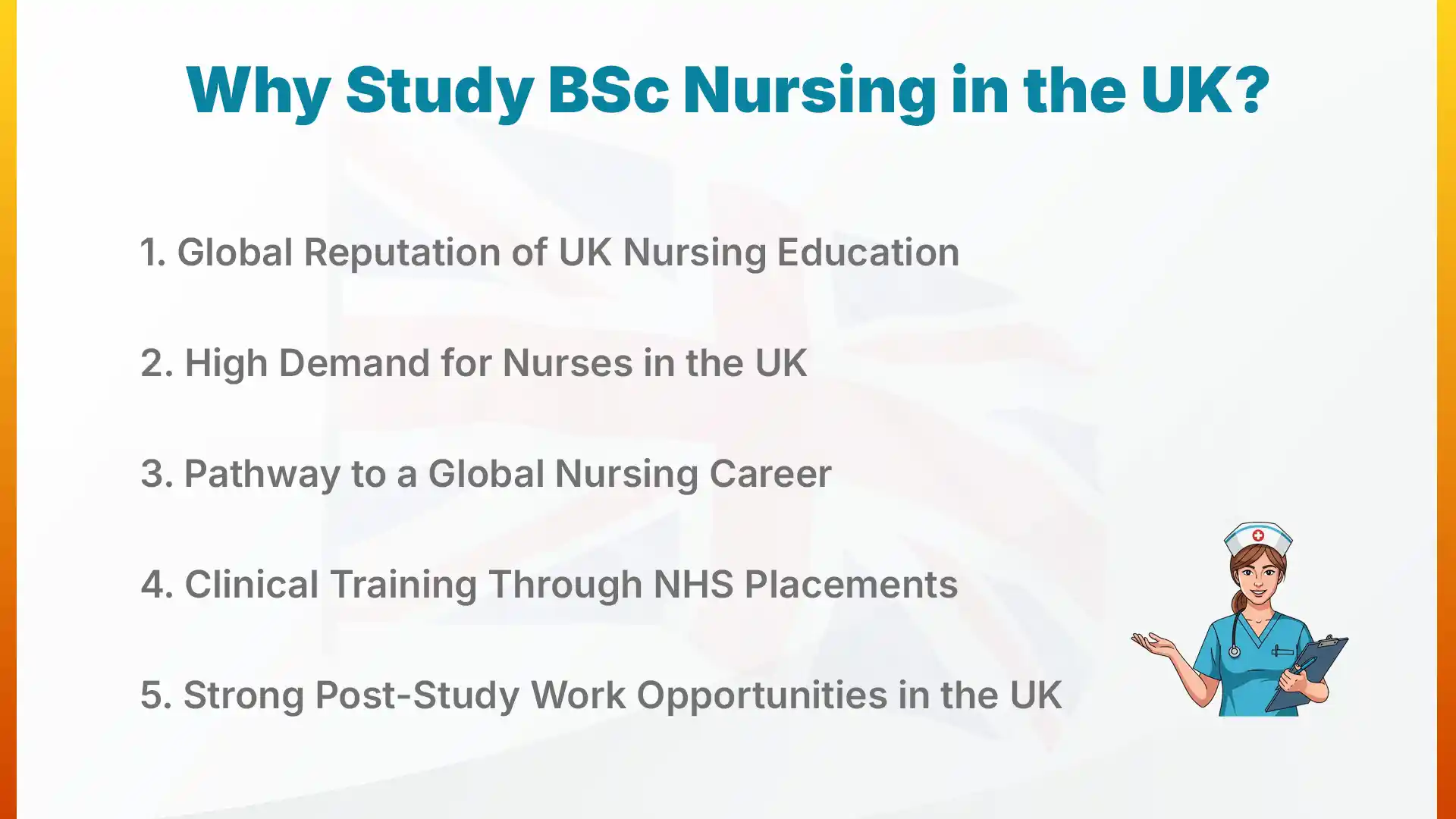
1. Global Reputation of UK Nursing Education
The UK is known worldwide for its strong healthcare education system. Many universities offering a Bachelor of Nursing in the UK are highly ranked and follow strict academic and clinical standards. This means students receive training that focuses on both theory and real patient care. Because of this strong reputation, a UK nursing degree is respected in many countries.
2. High Demand for Nurses in the UK
One of the biggest reasons to study nursing in the UK is the strong demand for healthcare workers. The National Health Service (NHS) continues to face a shortage of nurses, with over 40,000 nursing positions reported vacant in England alone. This shortage means hospitals and healthcare facilities constantly need trained professionals. As a result, nursing graduates often have strong job prospects after completing their studies.
3. Pathway to a Global Nursing Career
A BSc Nursing degree from the UK can become a strong foundation for a global healthcare career. The training follows international healthcare standards and focuses on patient safety, ethics, and modern medical practices. Because of this, many countries recognize the quality of UK nursing education. Graduates may pursue jobs in other healthcare systems or continue with specialized nursing studies.
4. Clinical Training Through NHS Placements
Another major advantage is the practical training students receive during the program. Nursing degrees in the UK include clinical placements in hospitals and healthcare centers connected to the NHS. During these placements, students work with real patients under the guidance of experienced nurses and doctors. By the time students graduate, they already understand how real healthcare environments work.
5. Strong Post-Study Work Opportunities in the UK
After completing a BSc in Nursing in the UK, many graduates can stay in the country through post-study work options. The UK’s Graduate Route visa allows international students to remain and work after finishing their degree.
For nursing graduates, this period can be used to gain professional experience or secure a full-time healthcare job. Because the UK continues to need skilled nurses, many employers are willing to sponsor qualified professionals. This makes the UK not only a great place to study nursing but also a promising place to begin a career.
Bachelor of Nursing in UK: Course Structure and Subjects
A Bachelor of Nursing in the UK is designed to balance classroom learning with real clinical experience. The program helps students understand how the human body works, how diseases are treated, and how nurses support patients every day. At the same time, students build practical skills through hospital placements and supervised training.
The course structure usually combines academic modules, clinical placements, and different types of assessments. This approach ensures that students graduate with both strong medical knowledge and real-world healthcare experience.
1. Academic Modules
During a BSc Nursing in the UK, students study a range of subjects that build the foundation of nursing practice. These modules help students understand patient care, medical science, and ethical decision-making in healthcare.
Common academic modules include:
- Human Anatomy and Physiology: Understanding how the human body functions
- Pharmacology: Learning about medicines, treatments, and safe drug administration
- Clinical Practice and Patient Care: Developing essential nursing skills for real healthcare settings
- Healthcare Ethics and Professional Practice: Understanding patient rights, ethics, and professional responsibilities
These subjects prepare students to handle real medical situations while maintaining safe and ethical patient care.
2. Clinical Placements
Clinical placements are one of the most important parts of studying nursing in the UK. Students spend a significant portion of their degree training in hospitals, clinics, and community healthcare centers.
Most nursing programs require around 2,300 hours of clinical practice during the degree. During this time, students work with experienced nurses and healthcare professionals, gaining hands-on experience with real patients. This practical training helps students build confidence and develop the skills needed for professional nursing roles.
3. Assessment Methods
Universities use different methods to evaluate students throughout the nursing program. These assessments ensure students understand both the theory and the practical side of healthcare.
Common assessment methods include written assignments, exams, and case studies. Students are also evaluated during clinical placements through practical assessments and supervisor feedback. This combination of academic and clinical evaluation ensures graduates are fully prepared for real nursing responsibilities.
Eligibility Requirements for BSc Nursing in UK
To study a BSc Nursing in the UK, international students need to meet certain academic, language, and additional requirements. These ensure that students are well-prepared for both the classroom and clinical training. Meeting these requirements for UK education also increases your chances of getting accepted into top universities.
1. Academic Requirements
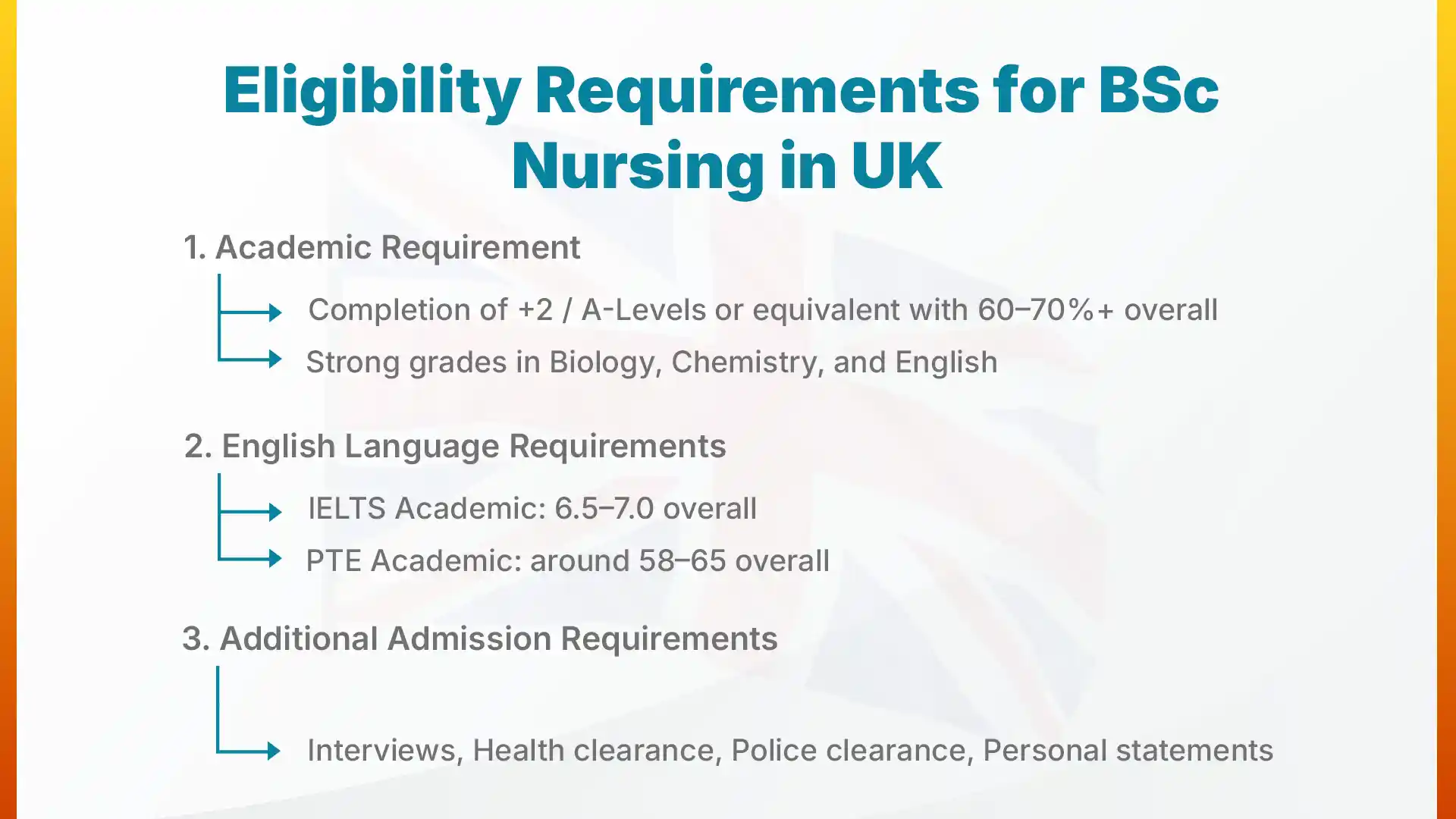
Students must have completed +2, A-Levels, or an equivalent qualification with an overall score of around 60–70% or higher. Strong grades in Biology, Chemistry, and English are especially important, as these subjects form the foundation of nursing knowledge. Universities look for students who are not only academically capable but also ready for the practical demands of nursing.
2. English Language Requirements
Since nursing programs are taught in English, international students must demonstrate proficiency. Most UK universities accept:
- IELTS Academic: Overall 6.5–7.0, with no section below 6.0
- PTE Academic: Around 58–65 overall
Having a good command of English ensures that students can communicate effectively with patients and healthcare teams during clinical placements.
3. Additional Admission Requirements
Apart from academic and language qualifications, students applying for a BSc Nursing in the UK usually need to complete several additional requirements. Universities often conduct interviews to assess motivation, understanding of nursing, and communication skills.
Students must also provide health clearance, including proof of vaccinations and general fitness to work in healthcare settings. A police clearance is required to ensure safety and trustworthiness when working with patients.
Additionally, applicants submit a personal statement, a short essay explaining why they want to pursue nursing in the UK and how they plan to contribute to the field. Meeting all these requirements sets a solid foundation for a successful application and helps ensure a smooth start to your nursing journey in the UK.
List of Universities for Bachelor of Nursing in UK
For international students, University of Manchester, King’s College London, and University of Glasgow, are some of the top universities to study BSc Nursing in the UK. Choosing the right university is one of the most important steps, as it determines not only your quality of education but also your clinical training opportunities, exposure to healthcare environments, and future career prospects. Luckily, the UK is home to many institutions with strong nursing programs designed for international students.
Top Universities Offering BSc Nursing in the UK
University | Approx. 2026 Tuition (GBP/Year) | 2026 Academic Highlights |
| University of Manchester | ~£31,000–£33,000 | Strong NHS partnerships and diverse hands-on clinical experience. |
| King’s College London | ~£33,850 | Ranked #1 for nursing in the UK; state-of-the-art facilities and London-wide placements. |
| University of Edinburgh | ~£34,000–£36,800 | Highly research-focused with a strong global reputation in healthcare. |
| University of Glasgow | ~£31,800 | Flexible 4-year Scottish curriculum with robust international student support. |
| University of Nottingham | ~£30,000–£32,000 | Strong hospital integration with placements at the major Queen's Medical Centre. |
| University of Birmingham | ~£28,000–£30,000 | Balances academic rigor with extensive practical training in major West Midlands hospitals. |
What are the Fees for BSc Nursing in UK?
For international students, tuition for a Bachelor of Nursing in the UK typically ranges between £15,000 and £30,000 per year. Top-ranked universities may charge higher fees, while some regional universities offer slightly lower rates. It’s important to compare programs carefully, considering both cost and quality of training.
1. Additional Study Costs
Apart from tuition, students need to budget for extra costs such as:
Additional Nursing Study Costs | Estimated Amount (2026/27) |
| Uniforms and medical equipment | £200–£400 for the entire course |
| Textbooks and study materials | £500–£1,000 per year |
| Lab fees or practical session costs | £100–£300 per year |
| Health and travel insurance | £300–£500 per year |
2. Living Costs in the UK for Nursing Students
Living expenses in the UK include accommodation, food, transportation, and personal costs. On average, international students spend £12,000 to £15,000 per year, depending on the city and lifestyle. Cities like London are more expensive, while smaller towns can be more affordable. Planning your budget for UK education carefully ensures a smooth and stress-free student life while pursuing your nursing degree.
Scholarships for Nursing Students in the UK
Studying BSc Nursing in the UK can be costly, but there are several scholarships and funding options in the UK, available to help international students, including those from Nepal. These opportunities can reduce financial pressure and make studying abroad more accessible.
1. Government Scholarships
While nursing-specific government scholarships are limited, programs like the Chevening Scholarship can support students pursuing postgraduate healthcare studies, and some NHS-linked initiatives may offer partial support for undergraduate pathways. Even if not fully covering tuition, these scholarships can help with living expenses or course-related costs.
2. University Scholarships for Nursing Students
Many UK universities offer scholarships specifically for international nursing students. These can include:
- Merit-based awards for academic excellence
- Partial tuition fee reductions
- Support for students from underrepresented countries or regions
Examples include the University of Manchester International Excellence Award and King’s College London Global Scholarship, which may apply to nursing programs. It’s always best to check each university’s official website for up-to-date details.
3. NHS Support Opportunities (Where Applicable)
Some nursing programs collaborate with the NHS to provide bursaries, allowances, or paid placements to help students during their studies. These opportunities not only reduce costs but also give early exposure to the UK healthcare system, making them highly valuable for future nurses.
By exploring these funding options early, you can make your UK nursing dream more affordable and manageable.
Career Opportunities After BSc Nursing in the UK
Completing a BSc Nursing in the UK opens the door to a wide range of rewarding careers in healthcare. Graduates are well-prepared to work in hospitals, community settings, and specialized care environments. The UK healthcare system offers diverse roles, allowing nurses to find positions that match their interests and skills.
1. Jobs You Can Get After Graduation
After completing your degree, common nursing roles include:
- Staff Nurse: Working in hospitals or clinics, providing direct patient care.
- Community Nurse: Supporting patients in local communities, including home visits and preventive care.
- Mental Health Nurse: Caring for patients with mental health conditions in hospitals or community centers.
- Pediatric Nurse: Specializing in healthcare for children and adolescents.
These roles often provide opportunities to gain specialized experience and grow within the healthcare system.
2. Registering with the Nursing and Midwifery Council (NMC)
To work legally as a nurse in the UK, graduates must register with the NMC. Registration ensures you meet professional standards and are qualified to provide safe care. International students need to meet English language requirements, submit academic transcripts, and sometimes complete a competence test or adaptation program. Once registered, you are fully licensed to work across NHS hospitals, private healthcare, or community services.
What is the Salary of BSc Nurse in the UK?
A BSc nurse (Registered Nurse) in the UK is approximately £29,970–£41,424 per year in 2026. Salaries increase with experience to £36,000–£45,000, with 3–5 years of practice, and can exceed £60,000–£100,000+ for senior/specialist roles.
One of the most important considerations for students is the potential nurse salary in the UK. Understanding the pay scale helps you plan your career and finances effectively.
1. Nurse Salary in the UK Per Month
On a monthly basis, this works out to roughly £2,300–£2,900, giving you a steady income while you gain experience and advance in your career.
2. Staff Nurse Salary in the UK
Most nurses start at NHS Band 5, which offers structured pay scales based on experience and working hours. Band 5 includes increments for extra shifts, on-call duties, and annual raises.
3. Salary Growth with Experience
With experience, nurses can progress to Band 6 or Band 7 roles, taking on leadership or specialized responsibilities. For example, senior staff nurses, nurse practitioners, or ward managers can earn £40,000–£50,000 per year, and those in highly specialized positions may earn even more. Career growth not only increases salary but also expands professional opportunities within the UK healthcare system.
Can International Students Work as Nurses in the UK After Graduation?
Yes, international students who complete a BSc Nursing in the UK have multiple pathways to work as nurses after graduation. The UK not only provides high-quality education but also offers options to stay and gain professional experience, making it an attractive choice for students from Nepal and other countries.
1. Post Study Work Visa (Graduate Route)
The UK’s Graduate Route visa allows international students to stay and work full-time for up to two years after completing their degree. This gives new graduates the opportunity to gain hands-on experience in NHS hospitals or private healthcare settings. During this period, you can apply for permanent roles and build your professional network while exploring different nursing specialties.
2. Employer Sponsorship for Nurses
After the Graduate Route period, many international nurses continue working in the UK through employer sponsorship. Hospitals and healthcare organizations can sponsor skilled nurses for a Skilled Worker visa, allowing long-term employment. The high demand for qualified nurses makes it easier for graduates to secure sponsorship and continue their careers in the UK.
3. Demand for Nurses in the UK Healthcare System
The NHS and other healthcare providers in the UK consistently report shortages of qualified nurses. For example, recent data shows over 40,000 nursing vacancies in England alone, highlighting the need for trained professionals. This demand means that international graduates with a BSc Nursing degree are in a strong position to find jobs quickly, gain experience, and grow their careers.
Overall, completing a Bachelor of Nursing in the UK not only equips you with valuable skills but also provides practical pathways to work and build a stable career in one of the world’s most respected healthcare systems.
How to Apply for BSc Nursing in the UK: Step-by-Step Process
To apply for a BSc Nursing in the UK, begin by choosing the right university, preparing all necessary documents, submitting your application through the official UCAS portal, attending interviews, and finally securing a UK student visa. Following each step carefully ensures a smooth application journey and increases your chances of admission. Here’s a concise guide for Nepali students to study in the UK:
- Research and shortlist universities offering BSc Nursing programs.
- Confirm you meet academic grades, subjects, and English language requirements.
- Collect transcripts, personal statement, reference letters, and certificates.
- Submit your application online via the UK’s centralized portal (UCAS).
- Attend university interviews or online assessments.
- Complete health checks and provide vaccination records and medical clearance as required.
- Apply for a UK student visa after receiving your university offer.
- Book student housing or private accommodation before arrival.
- Prepare for travel, orientation, and settling into the UK.
Following these steps carefully will guide you from initial research to stepping into your BSc Nursing program in the UK with confidence.
Advantages and Challenges of Studying Nursing in the UK
Studying BSc Nursing in the UK comes with many benefits, but it’s also important to be aware of the challenges. Understanding both sides helps you prepare better and make the most of your experience as an international student.
1. Key Benefits of Studying Bachelor of Nursing in UK
Studying BSc Nursing in the UK gives students strong academic knowledge paired with practical training in hospitals. Graduates gain international recognition, improving career opportunities both in the UK and abroad. The degree also allows students to access post-study work options and build professional networks early.
Benefits include:
- Globally recognized nursing degree
- Hands-on NHS clinical placements
- Strong post-study work opportunities
- Access to diverse healthcare roles
- Opportunity to work internationally
- Cultural exposure and improved communication skills
2. Possible Challenges for International Nursing Students
While studying in the UK is rewarding, international students may face challenges such as adapting to a new culture and lifestyle. Tuition and living costs can be high, and students need strong English skills for academics and clinical work. Managing studies, placements, and personal life requires careful planning and time management.
Challenges include:
- High tuition and living costs
- Adjusting to UK culture and lifestyle
- Maintaining English proficiency
- Balancing study and clinical placements
- Homesickness and social adjustments
- Managing time and workload effectively
Conclusion
Studying BSc Nursing in the UK is a smart choice for students from Nepal who want a strong and respected nursing career. The UK has a high demand for nurses, which means graduates often find jobs quickly after completing their degree. At the same time, a UK nursing degree is recognised worldwide, giving you the flexibility to work in other countries if you wish.
In addition to strong career prospects, nurses in the UK enjoy attractive salaries, with opportunities to grow as you gain experience and specialize in different areas. The combination of practical training, international recognition, and financial stability makes this path both rewarding and reliable.
Ready to take the first step? Start researching your top UK universities today, prepare your documents, and begin your journey toward a global nursing career!