Nursing in UK: Course, Universities, Requirement, Scope 2026

Dec 15, 2025
For many students, studying nursing in the UK is about building a respected career in one of the world’s strongest healthcare systems. Yet, the path can feel confusing at first. Questions about courses, costs, NHS training, and job opportunities often make students unsure where to begin. This confusion can slowly turn a clear dream into hesitation.
The UK offers globally recognized nursing education, hands-on training through the NHS, and clear career pathways after graduation. However, without the right information, it’s easy to miss important details or make costly mistakes.
This guide is designed to give you clarity. It breaks down nursing courses in the UK, entry requirements for UK universities, costs, scholarships, registration, and career options in simple terms. By the end, you’ll know exactly how to plan your journey and move forward to study nursing in the UK with confidence.
In this blog
Why Choose Nursing in UK?
Nursing in the UK is a strong choice if you want quality education, real clinical experience, and long-term career stability. The country offers a clear study-to-work pathway, especially for international students interested in healthcare careers. Below are the key reasons why students choose the UK for Nursing education:
1. Strong NHS Healthcare System and Global Demand for Nurses
The UK’s National Health Service (NHS) is one of the largest and most respected healthcare systems in the world. You train and work in real NHS hospitals, which gives you strong hands-on experience from the beginning. Because of an aging population and staff shortages, the UK has a high demand for nurses, especially in adult, mental health, and child nursing.
2. High-Quality Nursing Education with Practical NHS Training
Nursing education in the UK focuses heavily on practical learning, not just theory. You spend a large part of your course in clinical placements within NHS hospitals, guided by experienced professionals. This helps you build confidence, skills, and real workplace understanding before you graduate.
3. Stable Career Growth, Competitive Salaries, and PR Pathways
Nursing offers stable career growth in the UK, with clear salary progression as you gain experience. You can start working soon after graduation and later move to the Skilled Worker visa, which can lead to UK Permanent Residency (PR). This makes nursing a long-term and secure career option for international students.
4. Global Recognition of UK Nursing Degrees
UK nursing degrees are globally recognized and respected across many countries. This means you are not limited to working only in the UK. If you decide to move elsewhere in the future, your UK qualification will still hold strong value in the global healthcare market.
Nursing Courses in UK for International Students
Nursing courses in the UK for international students include BSc (undergraduate) and Master’s (postgraduate) programs. BSc programs usually take 3 years and include clinical placements in NHS hospitals, while Master’s programs focus on specializations like adult, child, or mental health nursing. The most common starting option is the undergraduate nursing degree.
1. BSc Nursing (Undergraduate)
The BSc Nursing in the UK usually takes 3 years to complete. The course is divided into classroom study and practical training, where you learn core subjects like patient care, anatomy, ethics, and clinical skills. This balance helps you understand both theory and real-life nursing work.
A major part of the program is clinical placement in NHS hospitals. You work under supervision in real healthcare settings, gaining hands-on experience with patients. This practical exposure is one of the biggest strengths of nursing education in the UK.
Eligibility for BSc Nursing in the UK
To apply, you typically need to complete 12 years of education, meet minimum academic grades, and show English proficiency (usually IELTS). Some universities may also require an interview or basic health checks.
This program is ideal if you want to start your nursing career from the foundation level. It suits students who are committed to patient care and want a direct path into the UK healthcare system
2. Master’s Degree in Nursing (Postgraduate)
A Master’s degree in nursing in the UK is meant for nurses who want to advance their skills or move into specialized and leadership roles. The program usually takes 1–2 years to complete, depending on the university and course structure. You focus on advanced clinical practice, research, or healthcare management within the UK system.
Popular specializations include Adult Nursing, Mental Health Nursing, Child Nursing, and Nursing Leadership & Advanced Practice. These specializations prepare you for higher-responsibility roles in NHS hospitals and healthcare organizations. Choosing a specialization helps you target better job roles and long-term career growth.
Eligibility for Master’s in Nursing UK
To apply, you need a bachelor’s degree in nursing or a related healthcare field from a recognized institution. Most universities require nursing registration in your home country and may ask for relevant work experience, especially for clinical courses. You must also meet English language requirements, usually IELTS 6.5 overall with no band below 6.0.
3. Nursing Specialization & Conversion Courses
Nursing specialization and conversion courses in the UK are designed for nurses who want to change their field or upgrade their skills. These courses allow you to move into areas like mental health nursing, adult nursing, or advanced clinical practice without starting from scratch. They are usually shorter than full degree programs and focus on targeted training.
Conversion or postgraduate courses are suitable if you already have a nursing or healthcare background but want to meet UK practice standards. Many of these programs include clinical placements within the NHS, helping you adapt quickly to the UK healthcare system. This option is ideal if you want faster career progression or a shift into high-demand nursing roles.
Nursing Universities in UK
The UK offers a wide range of universities providing nursing degrees, with nearly 90 institutions offering close to 500 programs, providing ample choice for students at various stages of their careers. Choosing the right nursing university in the UK is a key step in building a successful nursing career. The quality of education, clinical exposure, and accreditation directly affect your future registration and job options. Below are the main things you should understand when selecting a university.
Top UK Universities for Nursing Studies
According to the QS World University Rankings 2025, King’s College London ranks #1 in nursing worldwide, while the University of Manchester is ranked #10 and the University of Southampton #13 in the nursing rankings. These universities are known for strong academic teaching, modern facilities, and close ties with NHS hospitals. Here are the top Nursing universities in the UK for international students:
University | Annual Fee (GBP) |
| King's College London | £35,000–£39,000 |
| University of Manchester | £33,600 |
| University of Southampton | £23,400–£24,400 |
| University of Edinburgh | £30,500 |
| Queen’s University Belfast | £20,800 |
| University of Birmingham | £28,130 |
| University of Glasgow | £31,800 |
| University of Leeds | £24,500 |
| University of Liverpool | £27,200 |
| University of Nottingham | Not specified |
Public Universities and NHS-Linked Institutions
Most nursing programs in the UK are offered by public universities that work closely with the NHS. This partnership allows you to complete clinical placements in NHS hospitals as part of your degree. Studying at an NHS-linked institution helps you gain real work experience and improves your chances of employment after graduation.
Importance of NMC-Approved Programs
It is essential to choose a program that is approved by the Nursing and Midwifery Council (NMC). Only graduates from NMC-approved courses are eligible for UK nursing registration. Without NMC approval, you will not be able to work as a nurse in the UK, even after completing your degree.
What are the Requirements to Study Nursing in the UK?
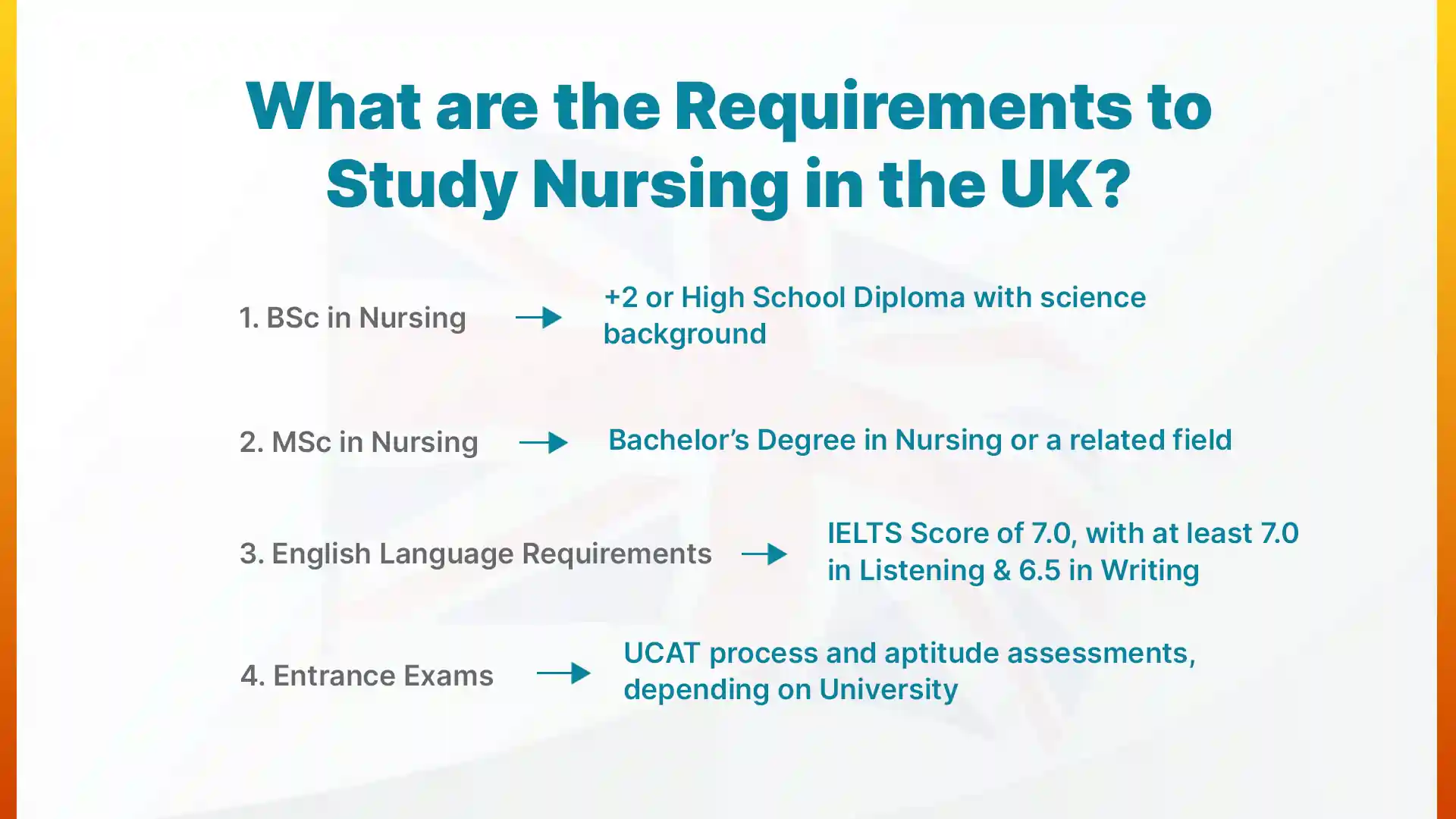
To study nursing in the UK, you must meet specific academic, language, and selection requirements set by universities and the NHS. These requirements ensure that you are ready for both academic study and clinical training. Below is a clear breakdown of what you need.
1. Academic Qualifications
For BSc Nursing, you must complete +2 or a high school diploma with a science background, usually including biology. For MSc Nursing, you need a bachelor’s degree in nursing or a related healthcare field from a recognized institution. Meeting the minimum academic criteria is essential for your application to be considered.
2. English Language Requirements
You must prove your English proficiency, as nursing involves direct patient communication. Most universities require an IELTS score of 7.0 overall, with at least 7.0 in Listening and 6.5 in Writing. Some institutions may also accept equivalent tests, but IELTS is the most widely accepted.
3. Entrance Exams (If Applicable)
Some universities may require you to go through the UCAT process or take part in aptitude assessments and interviews. These tests assess your problem-solving skills, communication ability, and suitability for a nursing career. Entrance exam requirements vary by university, so checking individual course details is important.
What is the Cost of Nursing in the UK?
The cost of studying nursing in the UK includes tuition fees, living expenses, and additional costs like books and NHS registration. Tuition for BSc programs ranges from £15,000–£25,000 per year, while Master’s programs cost £16,000–£30,000 per year, with living expenses around £12,000–£15,000 annually. Understanding these costs helps you plan your budget before exploring scholarships and funding options for nursing students.Let’s break it down step by step.
1. Tuition Fees for Nursing Courses
For BSc Nursing, international students usually pay between £15,000 and £25,000 per year. Fees vary depending on the university and city. Master’s Nursing programs cost around £16,000 to £30,000 per year, depending on your specialization and the school. Some top universities may charge more, so it’s important to check each program before applying.
2. Living Expenses in the UK
Living costs in the UK for international students include rent, food, transport, and personal spending. In big cities like London, you may need around £12,000–£15,000 per year, while smaller cities are slightly cheaper. Planning for everyday expenses ensures you can live comfortably without financial stress during your studies.
3. Additional Costs
You also need to pay the NHS student visa surcharge, about £776 per year. Other costs include books, uniforms, lab materials, and NMC registration fees, which can add up to £500–£1,000. These extra expenses are essential to complete your course and practice legally in the UK.
Scholarships for Nursing Students in UK
Studying nursing in the UK can be expensive, but there are several scholarships and funding options to help you manage costs. These include university-based scholarships that cover tuition or living costs, as well as government-funded programs like Chevening and Commonwealth Scholarships. Exploring the varied UK scholarships early can make your studies more affordable and open opportunities for financial support.
1. University-Based Scholarships
Many UK universities offer scholarships specifically for international nursing students. For example, King’s College London, University of Manchester, and University of Edinburgh provide partial or full tuition waivers for high-achieving students. Some universities also offer clinical excellence scholarships, which reward students who demonstrate exceptional practical skills during training. Each scholarship has its own eligibility criteria, so it’s important to check the university’s official website and apply before deadlines.
2. Chevening and UK Government Funding
The Chevening Scholarship is one of the most prestigious UK government-funded awards for international students, including nurses pursuing master’s degrees. It covers full tuition, living costs, travel, and other allowances, allowing you to focus entirely on your studies. Other UK government programs, such as the Commonwealth Scholarship or country-specific grants, also support nursing students with partial or full funding. These programs often consider academic excellence, leadership potential, and commitment to healthcare, so it’s important to tailor your application to highlight your achievements and future plans.
Nursing Registration in UK (NMC Explained)
To work as a nurse in the UK, you must register with the Nursing and Midwifery Council (NMC). Registration ensures you meet UK standards for safe and competent practice. This process is mandatory for all international and domestic nurses before starting work in NHS hospitals or other healthcare settings.
1. What is the NMC?
The Nursing and Midwifery Council (NMC) is the regulatory body that sets the professional standards for nurses and midwives in the UK. It ensures that all practicing nurses have the right skills, education, and ethics to provide safe patient care. Being NMC-registered is a legal requirement for employment in the UK healthcare system.
2. CBT and OSCE Exams
International nurses must pass the CBT (Computer-Based Test), which evaluates your nursing knowledge and decision-making skills. After the CBT, you must complete the OSCE (Objective Structured Clinical Examination) in the UK, which tests your hands-on clinical skills in a simulated hospital environment. Passing both exams demonstrates that you can safely practice nursing in the UK.
3. Registration Process for International Nurses
To register, first submit your application to the NMC, including your nursing qualification, work experience, English language proof (IELTS or OET), and identity documents. After approval, schedule the CBT from your home country and plan to complete the OSCE in the UK. Once you pass both, you receive full registration, allowing you to work as a professional nurse in the UK.
Career Opportunities After Studying Nursing in UK
Completing a nursing degree in the UK opens up numerous career paths in both public and private healthcare. You gain the skills and registration required to work in hospitals, clinics, and community health settings. The UK healthcare system also provides opportunities for professional growth and specialization.
1. Job Roles After Graduation
As a graduate, you can work as a registered nurse in NHS hospitals, taking care of patients in areas like adult, child, or mental health nursing. Private hospitals, clinics, and care homes also offer positions for nurses with specialized skills. With experience, you can move into nurse educator, clinical nurse specialist, or leadership roles, expanding your responsibilities and impact.
2. Salary of Nurses in the UK
Starting nurses in the NHS typically earn around £27,000–£32,000 per year, depending on location and experience. With additional experience or specialization, salaries can rise to £40,000–£50,000, and senior nurse roles may earn even more. Private healthcare roles often offer competitive pay and benefits, especially for specialized nurses.
3. Employment Outlook for International Graduates
There is a high demand for qualified nurses in the UK due to staff shortages and an aging population. International graduates have good job prospects, and with programs like the Skilled Worker visa, it’s easier to secure long-term employment. Nurses who continue to specialize or pursue advanced qualifications often find faster career progression and more leadership opportunities.
Nepali Nurse in UK: Career Path & Life
Many Nepali nurses choose the UK to gain advanced training, better career opportunities, and global experience. The journey typically starts with completing a BSc or Master’s in Nursing from a recognized UK university, followed by NMC registration. From there, nurses can start working in NHS hospitals or private healthcare settings, gaining practical exposure and improving their skills.
1. Journey from Nepal to the UK
Most Nepali nurses first secure admission to a UK nursing program or complete conversion courses if already qualified in Nepal. After graduation, they apply for NMC registration and a work visa, often using the Graduate Route or Skilled Worker visa. Careful planning and guidance from a trusted consultancy can make this process smoother.
2. Daily Work Life in NHS Hospitals
Once employed, Nepali nurses work in wards, clinics, or specialized units, managing patient care, administering treatments, and collaborating with doctors. Daily shifts can be demanding, but the exposure to modern healthcare practices enhances skills and confidence.
3. PR Strategies and Settlement Options
Nurses in the UK can eventually apply for permanent residency (PR) through visa pathways like the Skilled Worker visa after continuous employment. Specializing in high-demand areas or taking leadership courses improves both career prospects and eligibility for long-term settlement.
Can International Students Work in the UK After Nursing?
After completing your nursing degree in the UK, you can legally work while gaining experience and planning for long-term residency. The UK provides clear visa pathways for international graduates in healthcare, making it possible to transition from student life to professional work.
1. Graduate Route Visa
The Graduate Route visa allows you to stay and work in the UK for up to 2 years after completing your degree (3 years for doctoral graduates). This visa gives you the flexibility to gain practical experience in the NHS or private hospitals without needing employer sponsorship immediately.
2. Skilled Worker Visa
If you secure a job as a registered nurse with NMC approval, you can apply for the Skilled Worker visa. This visa allows long-term employment and can lead to permanent residency (PR) after continuous work, usually around 5 years.
3. PR and Settlement Pathway
Working as a nurse under the Skilled Worker visa not only provides a stable career but also a path to settle permanently in the UK. Specializing in high-demand areas or taking leadership roles can improve your chances of faster career growth and PR approval.
How to Apply for Nursing Courses in UK
Applying for nursing courses in the UK is simple if you follow the correct steps. A clear approach helps you avoid mistakes, missed deadlines, or unnecessary delays. Here’s a concise and practical guide for international students.
Step-by-Step Application Process to Study Nursing in the UK
- Choose between BSc, diploma, or Master’s programs, which academic level you want to pursue?
- Shortlist colleges/universities and their nursing programs based on specialization, fees, and NHS affiliation.
- Gather academic transcripts, English test scores, recommendation letters, and a personal statement.
- Submit Application. Use UCAS for undergraduate programs; master’s applications are usually submitted directly to universities.
- Attend Interviews/Assessments. Some universities require aptitude tests or interviews to evaluate your suitability.
- Accept your offer, complete enrollment, and apply for your student visa.
UCAS Timeline and Intakes
Applications for most undergraduate programs open 12–18 months before the September intake, which is the primary start date for nursing courses. You should begin preparing your documents well in advance to avoid last-minute stress. Some universities also offer January or February intakes in the UK, though these are less common. Applying early not only ensures you meet deadlines but also improves your chances of scholarships, funding, and securing interviews. Careful timing is essential to allow sufficient time for your visa application and to plan your move to the UK smoothly.
Common Mistakes to Avoid
- Submitting incomplete or late applications
- Ignoring English language requirements (IELTS/OET)
- Choosing a program not approved by the NMC
- Failing to check entry requirements for your specific specialization
- Missing interviews or aptitude assessment schedules
- Not planning for scholarship or funding deadlines
By carefully following these steps and avoiding common pitfalls, you can secure a smooth admission process and start your nursing journey in the UK confidently.
Conclusion
Choosing to study nursing in the UK can be a life-changing decision. From gaining a globally recognized degree and hands-on NHS experience to enjoying stable career growth and competitive salaries, the UK provides everything you need to build a successful nursing career. International students, including Nepali nurses, can follow clear pathways from education to work and even permanent residency, making it a secure long-term option.
Learn well about the nursing courses, universities, tuition, scholarships, and NMC registration to pursue your nursing journey confidently while steering clear of common mistakes. Whether your goal is a BSc, a Master’s, or a specialized conversion program, the UK provides well-organized guidance and hands-on experience to ensure your success.
Your dream of becoming a skilled nurse in the UK is within reach. Take the first step today. Research your preferred programs, prepare your documents carefully, and start your application under the guidance of trusted education counsellors in Nepal.