Master’s Of Cyber Security in UK For International Students

Mar 16, 2026
Cyber threats are rising faster than ever, like digital pickpockets getting smarter every day. From protecting banking systems to defending national infrastructure, the world urgently needs skilled cybersecurity professionals. It’s no surprise that many international students are now choosing advanced cybersecurity programs to build high-demand careers. Among global study destinations, the UK stands out with its world-class universities, strong research culture, and thriving tech industry.
In this blog, we will explore master's in cyber security in the UK, including the top universities offering the program, popular specialisations, admission requirements, tuition fees, scholarships, and career opportunities for international students. We will also explain how to apply, what skills students gain during the program, and why the UK is considered one of the best destinations to study in UK for cybersecurity.
In this blog
What Is a Master’s in Cyber Security?
Master’s in Cyber Security is a postgraduate degree that focuses on protecting computer systems, networks, and digital data from cyber threats, attacks, and unauthorised access. This program teaches students advanced techniques for securing information systems and managing cyber risks in organisations.
During the course, students learn topics such as network security, ethical hacking, digital forensics, cryptography, and risk management. The program combines theoretical knowledge with practical training using real-world cybersecurity tools and technologies. Graduates develop the skills needed to identify vulnerabilities, prevent cyber attacks, and respond to security incidents effectively. This makes the degree highly valuable in today’s digital and technology-driven world.
Why Study Masters in Cyber Security in UK?
Studying a master's in cyber security in the UK offers international students access to world-class education, strong career opportunities, and advanced technological research environments. The UK is home to some of the world’s leading universities and has a rapidly growing cybersecurity industry. With increasing digital threats across sectors, organisations are actively seeking skilled professionals who can protect sensitive data and systems. As a result, studying cybersecurity in the UK not only provides quality education but also opens doors to global career opportunities.
1. Globally Recognised Universities and Degrees
The UK is known for its internationally respected universities and academic excellence. Many UK institutions offering cybersecurity programs are ranked among the top universities in the world. Degrees from these universities are widely recognised by employers across the globe. Students also benefit from experienced faculty members and modern learning facilities. This global recognition gives graduates a strong advantage when applying for cybersecurity jobs internationally.
2. Strong Demand for Cyber Security Professionals
Cybersecurity has become one of the fastest-growing fields due to the increasing number of cyber attacks and digital threats. Organisations across industries such as finance, healthcare, government, and technology require experts who can protect their systems. The UK government and private companies are investing heavily in cybersecurity infrastructure. This has created strong demand for qualified professionals. Graduates with cybersecurity degrees often find excellent job opportunities both in the UK and globally.
3. Access to Advanced Research and Technology
Universities in the UK provide access to advanced laboratories, research centres, and cybersecurity technologies. Students get opportunities to work on real-world cybersecurity challenges and research projects. Many universities collaborate with government agencies and technology companies to conduct innovative research. This exposure helps students gain practical skills and stay updated with the latest developments in cybersecurity. Access to advanced technology enhances the overall learning experience.
4. Industry Collaboration with Tech Companies
Many cybersecurity programs in the UK collaborate closely with leading technology companies and industry experts. These partnerships provide students with internship opportunities, guest lectures, and industry projects. Working with industry professionals helps students understand real-world cybersecurity challenges. It also allows them to build valuable professional networks during their studies. Such industry connections can significantly improve job prospects after graduation.
5. Post-Study Work Opportunities in the UK
International students who complete a master’s degree in the UK can benefit from the Graduate Route visa, which allows them to stay and work in the UK after graduation. This visa provides graduates with time to gain professional work experience in their field. Having UK work experience can strengthen a graduate’s career prospects globally. It also helps students build professional connections and practical industry experience. This makes the UK an attractive destination for international students pursuing cybersecurity careers.
Top Universities Offering Master's in Cyber Security in UK
The UK is home to several globally recognised universities that offer high-quality cybersecurity programs for international students. These universities combine strong academic teaching with advanced research facilities and industry collaborations. Many programs include practical training, research projects, and opportunities to work with cybersecurity experts. Choosing one of the best universities in UK can greatly enhance career prospects after graduation. Below are some of the top universities in the UK known for their cybersecurity programs.
1. University of Oxford
The University of Oxford is one of the most prestigious universities in the world and is known for its cutting-edge research and academic excellence. Its cybersecurity-related programs focus on advanced topics such as cryptography, secure systems, and information security. Students benefit from world-class faculty and access to advanced research facilities. Oxford also collaborates with government and technology organisations on cybersecurity research. Graduates from Oxford often secure positions in leading global technology companies and research institutions.
2. University of Manchester
The University of Manchester is another top institution offering strong cybersecurity and information security programs. The university emphasises both theoretical knowledge and practical application in cyber defence and digital security. Students gain hands-on experience through research labs and industry projects. Manchester has strong partnerships with tech companies and government agencies. These collaborations help students develop industry-relevant skills and expand professional networks.
3. University of Birmingham
The University of Birmingham offers well-structured cyber security programs that focus on protecting modern digital infrastructures. Students learn about network security, cyber threat intelligence, and digital forensics. The university is also involved in several cyber security research initiatives and national security projects. Students have access to modern laboratories and expert faculty members. This combination of research and practical training prepares graduates for high-demand cybersecurity careers.
4. University of Southampton
The University of Southampton is highly respected for its cybersecurity research and technology programs. The university hosts one of the UK’s leading cyber security research groups and provides strong academic support to students. Its programs cover areas such as cryptography, secure communications, and data protection. Southampton also works closely with industry partners to address real-world cybersecurity challenges. This practical exposure helps students build strong technical skills.
5. Royal Holloway, University of London
Royal Holloway, University of London, is internationally recognised for its cybersecurity and information security programs. The university has a strong reputation in the field and has been a pioneer in cybersecurity education in the UK. Students benefit from specialised courses, research opportunities, and industry collaborations. The institution also hosts one of the largest cybersecurity research groups in the UK. Graduates from Royal Holloway are highly sought after by employers in the cybersecurity industry.
6. University of Warwick
The University of Warwick offers advanced cybersecurity programs that combine technical expertise with business and policy perspectives. Students study topics such as cyber risk management, network security, and data protection strategies. Warwick has strong connections with global technology firms and research organisations. These partnerships allow students to gain industry insights and participate in collaborative research projects. Graduates leave the program with strong analytical and technical skills needed for cybersecurity roles.
Popular Specialisations in Cyber Security Programs
Cybersecurity programs in the UK offer several specialised fields that allow students to focus on specific areas of digital security. These specialisations help students develop advanced technical and analytical skills needed to protect systems, networks, and sensitive information. Choosing the right specialisation can also shape future career paths in cybersecurity. Many universities design their programs to match current industry demands and emerging security threats.
1. Network and Information Security
Network and information security focuses on protecting computer networks and digital information from unauthorised access, cyber attacks, and data breaches. Students learn about firewall systems, intrusion detection, encryption technologies, and secure communication protocols. This specialisation teaches how to design secure network infrastructures and monitor potential threats. It is one of the most fundamental areas in cybersecurity. Graduates often work as network security engineers or information security analysts.
2. Ethical Hacking and Penetration Testing
Ethical hacking and penetration testing involve identifying vulnerabilities in computer systems before malicious hackers can exploit them. Students learn techniques used by cyber attackers to understand how to defend against them. This specialisation includes hands-on training in vulnerability assessment, penetration testing tools, and security auditing. Ethical hackers simulate cyber attacks to test system security. Professionals in this field are highly valued by organisations that want to strengthen their cyber defences.
3. Digital Forensics and Cyber Crime Investigation
Digital forensics focuses on investigating cyber crimes and analysing digital evidence after security breaches occur. Students learn how to recover and examine data from computers, mobile devices, and digital networks. This specialisation plays an important role in cybercrime investigations and legal proceedings. It also involves understanding cyber laws and investigative procedures. Graduates often work with law enforcement agencies, cybersecurity firms, or digital investigation units.
4. Cloud and Application Security
Cloud and application security focuses on protecting cloud computing platforms, web applications, and software systems from cyber threats. As more organisations move their operations to cloud environments, securing cloud infrastructure has become critical. Students learn how to identify vulnerabilities in applications and implement security measures to protect data. This specialisation also covers topics such as secure coding and cloud risk management. Professionals in this area help organisations maintain secure digital environments.
5. Cyber Risk Management and Governance
Cyber risk management and governance focus on the strategic and organisational aspects of cybersecurity. Students learn how organisations assess cyber risks, develop security policies, and implement compliance frameworks. This specialisation emphasises security leadership, risk analysis, and regulatory compliance. Professionals in this field help businesses manage cybersecurity risks at a strategic level. Graduates may work as security consultants, risk analysts, or cybersecurity managers.
Master's in Cyber Security in UK for International Students
Master’s in Cyber Security in UK for international students offers advanced education, global exposure, and strong career prospects in the rapidly growing field of digital security. UK universities welcome students from around the world and provide specialised programs designed to meet global industry standards. International applicants must meet certain academic, language, and documentation requirements before admission. Understanding these requirements helps students prepare strong applications and increase their chances of acceptance.
1. Eligibility Criteria for International Applicants
International students must meet the general eligibility criteria set by UK universities and immigration authorities. This usually includes holding a recognised bachelor’s degree, meeting English language requirements, and demonstrating the ability to finance their studies. Some universities may also require students to show a relevant academic or technical background related to cybersecurity. Applicants should carefully review each university’s admission criteria before applying. Meeting these requirements ensures that students are academically prepared for postgraduate studies.
2. Academic Background Requirements (Computer Science / IT / Engineering)
Most universities prefer applicants who have completed a bachelor’s degree in Computer Science, Information Technology, Software Engineering, or related technical fields. This background helps students understand the technical concepts taught in cybersecurity programs. Some universities may also accept graduates from mathematics or electronics backgrounds. A strong academic record improves the chances of admission. Relevant coursework in programming, networking, or security can also strengthen an application.
3. English Language Proficiency (IELTS / TOEFL / PTE)
International students whose first language is not English must demonstrate English language proficiency. Universities typically accept test scores from IELTS, TOEFL, or PTE Academic. The minimum required score varies by university, but most programs require an IELTS score of around 6.5 to 7.0 overall. Strong English skills are important because cybersecurity programs involve technical discussions, research, and academic writing. Meeting the language requirement is essential for both university admission and visa approval.
4. Required Documents for Admission
Students must submit several documents when applying for a cybersecurity master’s program in the UK. Common requirements include academic transcripts, a degree certificate, a statement of purpose, and letters of recommendation. Some universities may also request a detailed CV or resume highlighting technical skills and experience. These documents help universities evaluate the applicant’s academic background and motivation for the program. Preparing these materials carefully increases the chances of acceptance.
5. Application Process Through UCAS or University Portal
Applications for postgraduate programs in the UK are typically submitted through university online portals rather than UCAS, which is mainly used for undergraduate admissions. Students must select their desired universities, create an online application account, and upload required documents. After submitting the application, universities review the materials and may request additional information if needed. Once accepted, students receive an offer letter, which is required for the UK student visa application. Following the correct application steps ensures a smooth admission process.
How to Apply for Masters in Cyber Security in UK?
Applying for a master's in cyber security in UK involves researching suitable universities, preparing academic documents, submitting applications, and obtaining a student visa. International students should begin the process several months before the intake period to allow enough time for document preparation and visa processing. Most universities have online application portals where students can submit their applications directly. Planning each step carefully increases the chances of securing admission to a reputable cybersecurity program.
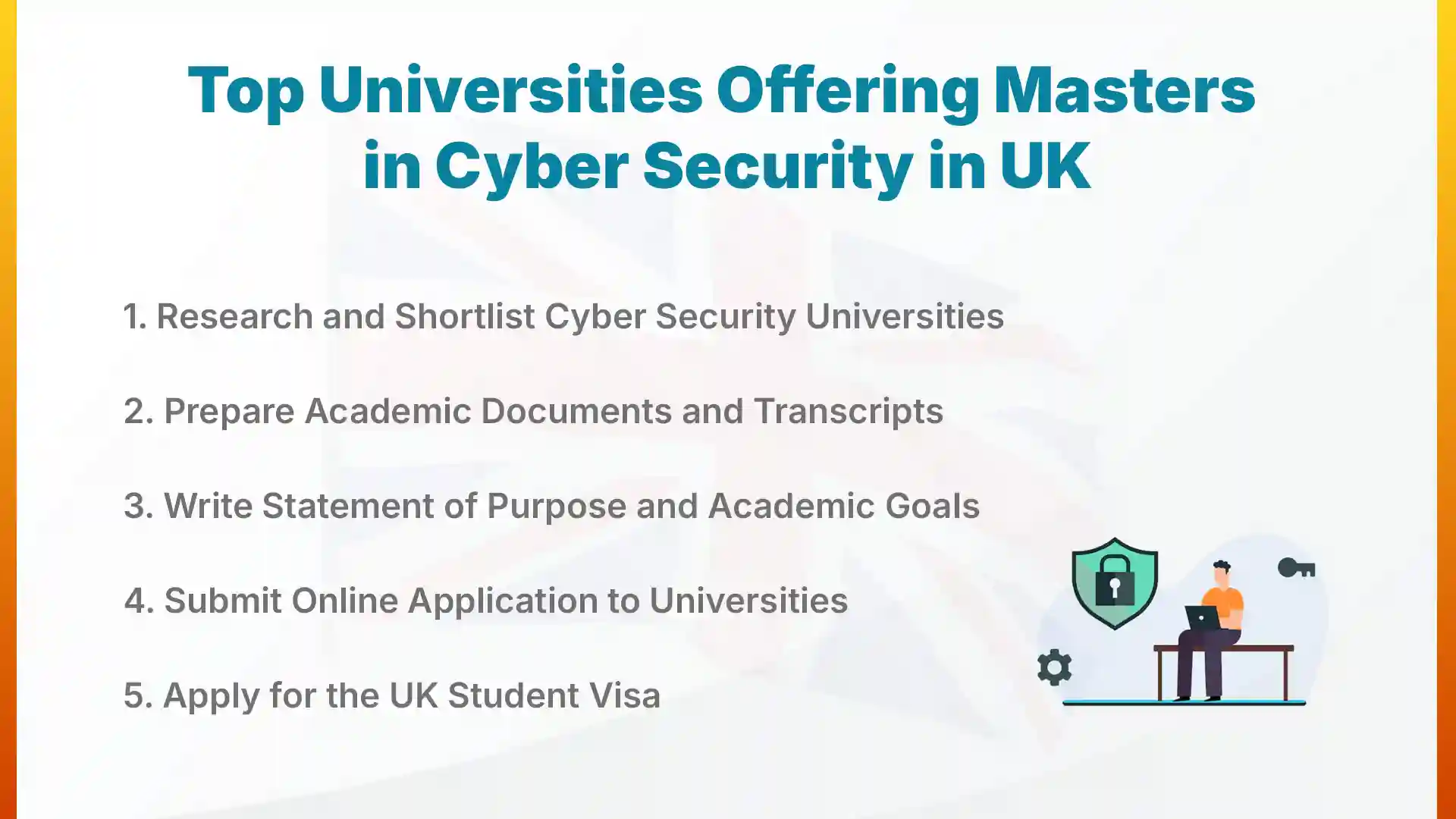
1. Research and Shortlist Cyber Security Universities
The first step is researching universities that offer cybersecurity master’s programs aligned with your academic interests and career goals. Students should compare course content, university rankings, tuition fees, and available specialisations. It is also important to check the entry requirements and English language requirements for each university. Shortlisting universities helps students focus on programs that best match their qualifications. Choosing the right university can significantly impact career opportunities after graduation.
2. Prepare Academic Documents and Transcripts
Once universities are shortlisted, students need to prepare their academic documents. This usually includes official transcripts, degree certificates, and academic records from previous studies. Some universities may also require a detailed CV or resume highlighting technical skills and relevant experience. Ensuring that all documents are accurate and properly formatted is essential. Well-prepared academic documents strengthen the application and demonstrate the applicant’s academic readiness.
3. Write Statement of Purpose and Academic Goals
The statement of purpose (SOP) is an important part of the application process. In this document, students explain their motivation for studying cybersecurity and their long-term career goals. Universities use the SOP to understand the applicant’s academic interests and commitment to the field. A strong statement should highlight relevant academic background, technical skills, and career aspirations. Writing a clear and compelling SOP can significantly improve admission chances.
4. Submit Online Application to Universities
After preparing all documents, students must submit their applications through the university’s online application portal. The application form typically requires personal information, academic history, and supporting documents. Some universities may also charge an application fee. Once submitted, the university reviews the application and may request additional documents if necessary. Successful applicants receive either a conditional or unconditional offer letter.
5. Apply for the UK Student Visa
After receiving an offer from a university, students must apply for the UK Student Visa (Tier 4 / Student Route) to study in the UK. The visa application requires documents such as the Confirmation of Acceptance for Studies (CAS), proof of financial support, a passport, and English language test results. Students may also need to complete a biometric appointment and health insurance requirements. Submitting the visa application early helps avoid delays before the program start date. Proper preparation ensures a smooth transition to studying in the UK.
What Are the Admission Requirements for Cyber Security Master’s in the UK?
The admission requirements for a cybersecurity master’s in the UK generally include a relevant bachelor’s degree, strong academic performance, proof of English language proficiency, and supporting application documents. UK universities evaluate applicants based on their academic background, technical skills, and readiness for postgraduate study. Meeting these requirements ensures that students have the foundational knowledge needed to succeed in advanced cybersecurity programs. Although requirements may vary slightly by university, most institutions follow similar admission criteria for international students.
1. Bachelor’s Degree in IT, Computer Science, or Related Field
Most UK universities require applicants to hold a bachelor’s degree in Computer Science, Information Technology, Cyber Security, Software Engineering, or a closely related technical field. This academic background helps students understand advanced cybersecurity concepts such as network security, cryptography, and digital forensics. Some universities may also accept degrees in mathematics, electronics, or engineering if the applicant has relevant technical skills. A strong academic foundation in computing or programming increases the chances of admission. Universities often review coursework and technical knowledge during the evaluation process.
2. Minimum GPA or Academic Score Requirements
Universities in the UK typically require a minimum academic score or GPA from previous studies. Most institutions expect the equivalent of a second-class honours degree (2:1 or 2:2) in the UK grading system. International students must provide transcripts that demonstrate satisfactory academic performance. Some highly ranked universities may require higher grades or additional qualifications. Meeting the minimum GPA requirement helps demonstrate academic capability and readiness for postgraduate-level coursework.
3. English Language Test Scores
International students must prove their English language proficiency to study in the UK. Universities usually accept test results from IELTS, TOEFL, or PTE Academic. The required score varies by institution, but most cybersecurity programs require an IELTS score between 6.5 and 7.0 overall. Strong English skills are essential because students will need to participate in lectures, research projects, and technical discussions. Meeting the language requirement is also necessary for obtaining a UK student visa.
4. Recommendation Letters and Personal Statement
Many universities request letters of recommendation from professors or employers who can evaluate the applicant’s academic or professional abilities. These letters help universities understand the applicant’s potential for success in a cybersecurity program. In addition, students must submit a personal statement explaining their motivation for studying cybersecurity and their long-term career goals. A well-written personal statement highlights relevant academic experiences and technical interests. Strong supporting documents can significantly strengthen an application.
5. Proof of Financial Support and Visa Documents
International students must demonstrate that they have sufficient financial resources to cover tuition fees and living expenses in the UK. This may include bank statements, scholarship letters, or financial sponsorship documents. Proof of financial support is also required during the UK Student Visa application process. In addition, students must provide valid identification documents such as passports and visa-related paperwork. Proper financial documentation ensures that students meet immigration requirements for studying in the UK.
Cost of Studying Master’s in Cyber Security in UK
The cost of studying a master’s in cyber security in UK for international students generally ranges between £30,000 and £50,000 for the entire one-year program, depending on the university, location, and lifestyle. Tuition fees make up the largest portion of the expense, while living costs and other mandatory fees also contribute significantly. Students studying in cities like London may face higher living expenses compared to other UK cities. Planning a proper budget before applying helps students manage their finances more effectively during their studies.
1. Tuition Fees for International Students
Tuition fees for a cybersecurity master’s program vary depending on the university and its global ranking. Affordable or mid-range universities may charge around £15,000 to £20,000 per year, while standard public universities usually charge between £18,000 and £28,000 annually. Top-ranked institutions such as UCL, Imperial College London, or other Russell Group universities may charge £25,000 to £41,000 per year for international students. The fee often reflects the quality of teaching, research opportunities, and facilities offered by the university. Students should compare tuition costs when selecting universities.
2. Living Expenses in the UK
Living expenses depend heavily on the city where the student studies. In London, international students typically spend around £1,300 to £1,800 per month, while students studying outside London may spend approximately £900 to £1,300 per month. Monthly expenses usually include accommodation, food, transportation, and personal spending. On average, students spend £150-£250 on food, £40-£100 on transport, and £100-200 on personal expenses each month. Careful budgeting helps students manage these costs effectively throughout the academic year.
3. Additional Costs (Accommodation, Insurance, Visa)
In addition to tuition and living expenses, students must also plan for several one-time or additional costs. The UK student visa application fee is typically around £490 to £524, while the Immigration Health Surcharge (IHS) costs approximately £776 per year. Accommodation deposits for private housing can range from £500 to £1,000 or more, depending on the location. Students should also budget around £300 to £800 per year for study materials such as textbooks and software tools. These additional expenses are important to consider when planning the overall cost of studying in the UK.
Career Opportunities After Masters in Cyber Security in UK
Master’s in cyber security in the UK opens the door to a wide range of career opportunities in the technology and security sectors. As cyber threats continue to increase globally, organisations are actively looking for professionals who can protect their systems, networks, and sensitive data. Graduates with cybersecurity expertise are highly valued in industries such as finance, healthcare, government, and technology. With the UK being a global technology hub, students can access strong employment opportunities after completing their studies.
1. Cyber Security Analyst
Cybersecurity analysts are responsible for protecting an organisation’s digital infrastructure from cyber threats and security breaches. They monitor networks, detect suspicious activities, and implement security measures to safeguard sensitive information. This role often involves analysing security systems, identifying vulnerabilities, and responding to potential cyber attacks. Cybersecurity analysts play a critical role in preventing data breaches and protecting business operations. Many graduates start their careers in this role because it provides strong foundational experience in cybersecurity.
2. Ethical Hacker / Penetration Tester
Ethical hackers, also known as penetration testers, are professionals who test computer systems to identify security vulnerabilities. They simulate cyber attacks to discover weaknesses before malicious hackers can exploit them. This role requires strong technical knowledge of hacking tools, network security, and system vulnerabilities. Ethical hackers help organisations strengthen their security systems by identifying potential threats. It is one of the most exciting and high-demand careers in cybersecurity.
3. Information Security Consultant
Information security consultants help organisations develop strategies to protect their digital assets and manage cyber risks. They analyse security systems, recommend improvements, and design security policies for businesses. Consultants often work with multiple organisations, helping them improve their cybersecurity infrastructure. This role requires both technical expertise and strategic thinking. Professionals in this field help businesses stay compliant with security regulations and industry standards.
4. Cyber Security Engineer
Cyber security engineers design and implement secure systems that protect organisations from cyber threats. Their work includes building secure networks, developing security protocols, and monitoring systems for vulnerabilities. These professionals often work with advanced technologies such as encryption tools, firewalls, and intrusion detection systems. Cybersecurity engineers play a key role in maintaining a company’s digital security infrastructure. Their technical expertise is essential for preventing cyber attacks.
5. Digital Forensics Investigator
Digital forensics investigators specialise in analysing digital evidence after cyber crimes or security breaches occur. They examine computers, networks, and digital devices to identify how a cyber attack happened. This role often involves working with law enforcement agencies, cybersecurity firms, or legal teams. Digital forensics experts help uncover cyber criminals and provide evidence for legal investigations. Their work is critical in combating cybercrime and protecting digital environments.
Scope and Job Demand for Cyber Security Professionals in UK
The scope for cybersecurity professionals in the UK is growing rapidly due to the increasing number of cyber threats and the global demand for digital security experts. Businesses, government organisations, and financial institutions are investing heavily in cybersecurity to protect their data and systems. As a result, qualified professionals with advanced cybersecurity skills are highly sought after. Graduates with a master’s in cyber security in the UK can also explore part-time jobs in UK while studying and find strong career opportunities both in the UK and internationally.
1. Growing Global Demand for Cyber Security Experts
The demand for cybersecurity professionals continues to increase worldwide as organisations rely more on digital technologies. Companies require skilled experts to protect their systems from cyber attacks, data breaches, and online fraud. Governments and technology firms are also investing heavily in cybersecurity infrastructure. This growing demand means that cybersecurity graduates have strong job prospects across multiple industries. Skilled professionals in this field are becoming essential for modern businesses.
2. Average Salary After Masters in Cyber Security in UK
Cybersecurity professionals in the UK earn competitive salaries due to the high demand for their expertise. Entry-level cyber security roles typically offer salaries ranging from £35,000 to £45,000 per year. With experience and advanced skills, professionals can earn £60,000 to £90,000 or more annually, depending on their role and organisation. Senior positions, such as cyber security consultants or security architects, can earn even higher salaries. These attractive salary prospects make cybersecurity a highly rewarding career choice.
3. Graduate Route Visa for International Students
International students who complete a master’s degree in the UK can benefit from the Graduate Route visa, which allows them to stay and work in the UK after graduation. This visa typically allows graduates to remain in the UK for up to two years to gain professional work experience. During this period, students can work in various cybersecurity roles and build their careers. Gaining UK work experience can also improve eligibility for skilled worker visas. This pathway provides valuable opportunities for international graduates.
4. Global Career Opportunities in Cyber Security
A degree in cyber security from a UK university is recognised globally and can open doors to international career opportunities. Cybersecurity professionals are needed in industries such as banking, healthcare, technology, defence, and e-commerce. Graduates may work for multinational corporations, government agencies, or cybersecurity consulting firms. The skills gained in this field are transferable across countries and industries. This global demand makes cybersecurity one of the most future-proof career paths.
Is Masters in Cyber Security in UK Worth It for International Students?
Yes, a master’s in cybersecurity in the UK is worth it for international students. The program provides high-quality education, strong career opportunities, and global recognition. With the growing demand for cybersecurity professionals, graduates can access excellent job prospects and competitive salaries worldwide.
Key reasons why it is worth studying cybersecurity in the UK:
- Globally recognised universities and degrees valued by employers worldwide
- High demand for cybersecurity professionals across multiple industries
- Access to advanced research facilities and modern cybersecurity technologies
- Opportunity to gain work experience through the UK Graduate Route visa
- Strong career prospects with competitive salaries and global job opportunities
Which Is the Best Education Consultancy to Study in UK?
SAS Education Consultancy is one of the best education consultancies to study a master’s in the UK because it provides expert guidance and personalised support throughout the entire study abroad process. The consultancy helps students choose the right universities and programs based on their academic background, career goals, and budget. Their experienced counsellors also assist with application preparation, documentation, and visa processing.
SAS Education Consultancy supports students at every stage, from university selection and statement of purpose preparation to visa application and pre-departure guidance. Their strong partnerships with UK universities and deep knowledge of admission requirements help students increase their chances of acceptance. With professional counselling and reliable support, SAS Education Consultancy makes the journey to studying in the UK smoother and more successful for international students.
Conclusion
Pursuing a master’s in cyber security in UK is an excellent opportunity for international students who want to build a strong career in one of the fastest-growing technology fields. With globally recognised universities, advanced research facilities, and strong industry connections, the UK provides an ideal learning environment for cybersecurity studies. Students gain practical knowledge, technical skills, and exposure to real-world cybersecurity challenges during their programs.
In addition to quality education, the UK also offers strong career prospects through the growing demand for cybersecurity professionals and post-study work opportunities. Graduates can work in roles such as cyber security analysts, ethical hackers, and security consultants across various industries. With proper planning and the right guidance, studying cybersecurity in the UK can open doors to rewarding global career opportunities.