Master's of Culinary Arts in France for International Students

Feb 26, 2026
Ever imagined learning to cook where food isn’t just food, it’s culture, art, and sometimes a national obsession? France doesn’t just teach culinary arts; it lives it. From buttery croissants at sunrise to Michelin-star dinners that look like paintings, the country turns cooking into poetry. And if you’re an international student dreaming of mastering this craft at its source, you’re not just choosing a degree, you’re choosing an experience that smells like fresh baguettes and ambition.
In this blog, we’ll explore everything you need to know about a Master’s of Culinary Arts in France for international students, from top culinary schools and specialisations to admission requirements, costs, scholarships, and career opportunities. If you’re planning to study in France, this guide will give you a clear understanding of what to expect and how to prepare. Whether you dream of becoming an executive chef, a pastry artist, or launching your own restaurant someday, studying in France can open doors to a global culinary career. Let’s step into the kitchen and begin your journey.
In this blog
What Is a Master’s of Culinary Arts?
A Master’s of Culinary Arts is an advanced postgraduate program that combines professional cooking techniques with food innovation, kitchen leadership, and hospitality management. It goes beyond basic chef training and focuses on refining technical mastery, creativity, menu development, and global gastronomy knowledge. Students learn everything from classical culinary foundations to modern trends like molecular gastronomy and sustainable cuisine. In short, it prepares you not just to cook beautifully, but to lead kitchens, design culinary concepts, and build a long-term career in the food industry.
Why Study Masters of Culinary Arts in France?
France is the global epicentre of gastronomy and professional culinary training. Studying a Master's of Culinary Arts in France means learning in the country that shaped modern cooking techniques, fine dining standards, and pastry excellence. It offers a perfect blend of tradition and innovation, giving students hands-on exposure to world-class kitchens and hospitality networks. For international students, it’s not just about earning a degree, it’s about absorbing a culture where food is serious business (and serious pleasure).
1. Globally Recognised Culinary Schools and Institutes
Yes, France is home to some of the most respected culinary institutes in the world. Schools like Le Cordon Bleu and Ferrandi Paris have built reputations that travel far beyond Europe. A degree from a French culinary school carries global recognition and industry credibility. Employers across luxury hotels, Michelin-star restaurants, and international hospitality groups value this training. The curriculum is rigorous, practical, and designed to shape professionals — not hobby cooks. That prestige alone can open doors you didn’t even know existed.
2. France’s Rich Gastronomy and Michelin-Star Culture
Direct exposure to Michelin-star culture is one of the biggest advantages of studying here. France has one of the highest numbers of Michelin-starred restaurants in the world, making it a living classroom for fine dining excellence. Students witness first-hand how precision, presentation, and passion come together on a plate. Culinary traditions are deeply rooted, yet constantly evolving. Being surrounded by such heritage pushes you to aim higher, sometimes much higher than you thought possible.
3. Strong Focus on Classic and Modern French Techniques
France teaches both the rules and how to creatively bend them. Students master foundational techniques like sauce preparation, pastry craftsmanship, and knife skills before exploring contemporary methods like molecular gastronomy. The training emphasises discipline, detail, and consistency, qualities every great chef needs. At the same time, innovation is encouraged, allowing students to experiment and develop a personal culinary style. Its structure with space for creativity a rare but powerful combination.
4. Exposure to Luxury Hospitality and Fine Dining
France is synonymous with luxury hospitality, and culinary students benefit directly from this ecosystem. Many programs integrate internships in fine dining restaurants, boutique hotels, and luxury resorts. You don’t just learn recipes, you understand service standards, kitchen hierarchy, and guest expectations at the highest level. This kind of exposure builds confidence and professionalism. And honestly, working in a high-end French kitchen is an experience that reshapes your understanding of excellence.
5. Access to the European Culinary Job Market
Studying in France gives you strategic access to the broader European job market. Graduates often find opportunities across EU countries in restaurants, hotels, cruise lines, and food enterprises. France’s strong hospitality network and internship culture help students build industry connections early. Additionally, post-study work opportunities make it easier for international graduates to gain valuable experience. In many ways, France becomes a gateway to a global culinary career, not just a destination.
Top Universities Offering Master's of Culinary Arts in France
France is home to some of the most prestigious culinary institutions in the world. Many of the best universities in France and specialised culinary schools combine hands-on kitchen mastery with academic depth, innovation, and strong global industry connections. If you're planning to pursue a Master's of Culinary Arts in France, selecting the right institute can shape your entire career trajectory. From traditional French gastronomy to modern culinary entrepreneurship, these institutions offer programs that go far beyond basic chef training. Below are some of the top culinary schools international students consistently aim for.
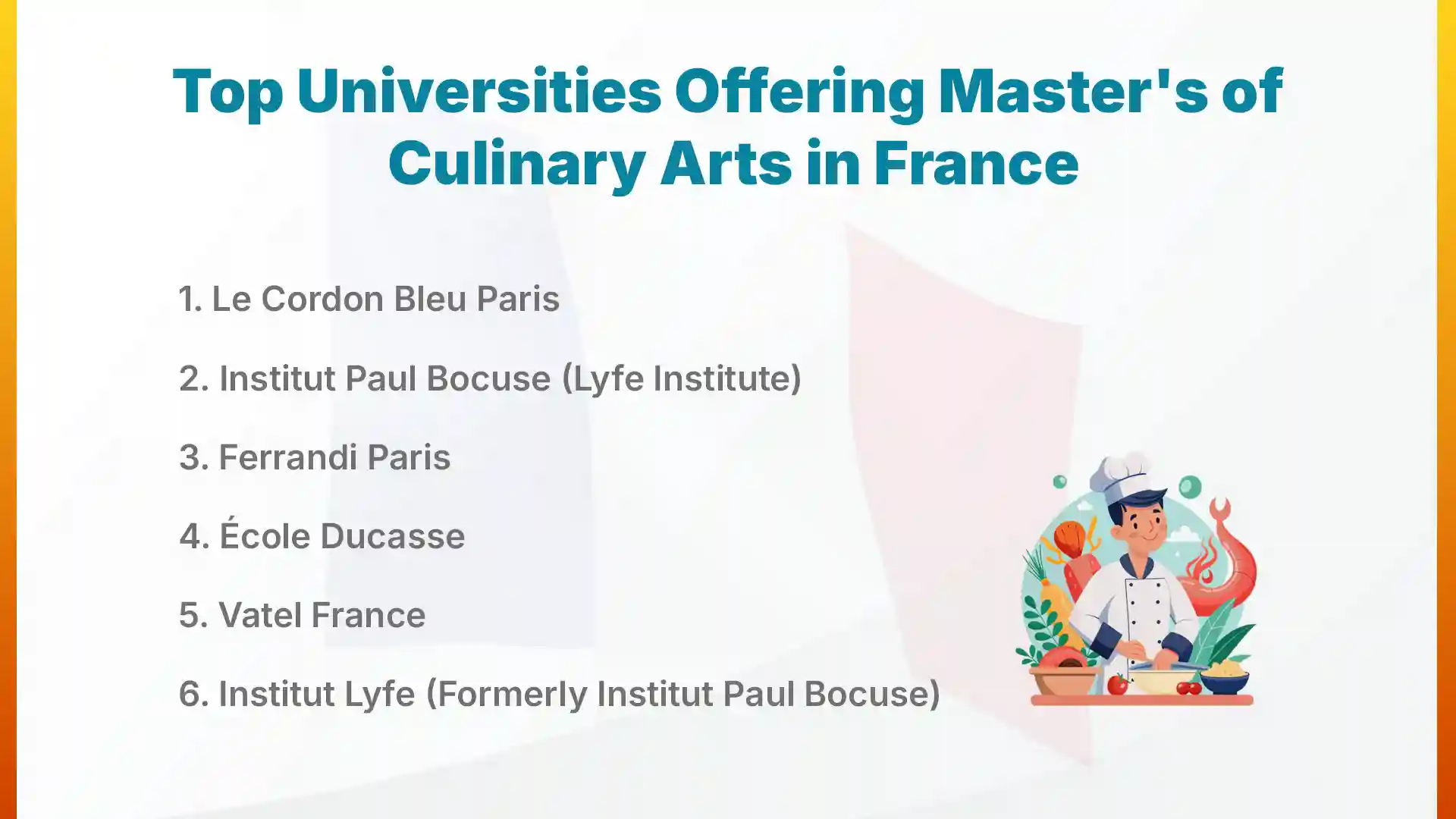
1. Le Cordon Bleu Paris
Le Cordon Bleu Paris is one of the most globally recognised culinary schools in the world. Established in 1895, it has trained generations of chefs who now lead Michelin-starred restaurants and luxury hospitality brands. The institute offers advanced diplomas and master-level programs blending classical French techniques with culinary management. Students benefit from structured, hands-on kitchen training and exposure to Paris’s dynamic food culture. A qualification from here carries strong international credibility in the culinary industry.
2. Institut Paul Bocuse (Lyfe Institute)
Named after legendary chef Paul Bocuse, this institute reflects excellence in gastronomy and hospitality education. Now operating as Institut Lyfe, it offers postgraduate programs combining culinary expertise with leadership and innovation. The curriculum integrates practical training in on-campus restaurants and hospitality labs. Students learn not just cooking techniques, but also entrepreneurship and food business strategy. It’s an excellent choice for those aiming for leadership roles in global hospitality.
3. Ferrandi Paris
Often referred to as the “Harvard of Gastronomy,” Ferrandi Paris is known for its rigorous and highly professional training standards. The school offers advanced culinary and hospitality programs tailored to international students. Its partnerships with luxury hotels and fine dining establishments provide valuable internship opportunities. The emphasis is on precision, discipline, and industry readiness. Graduates are well-positioned for careers in high-end restaurants worldwide.
4. École Ducasse
Founded by renowned chef Alain Ducasse, École Ducasse represents refined culinary craftsmanship. The institution focuses on haute cuisine, pastry arts, and sustainable gastronomy practices. Students receive intensive hands-on training in small class settings, ensuring personalised mentorship. The programs combine traditional techniques with contemporary culinary innovation. It’s particularly suited for students aiming to build careers in luxury dining and global fine cuisine.
5. Vatel France
Vatel France is internationally recognised for combining culinary arts with hospitality and hotel management education. Its master-level programs are designed for students who want to move into leadership roles within restaurants, hotels, and luxury resorts. The curriculum integrates internships and real-world industry exposure as core components. For students interested in both culinary creativity and business strategy, Vatel offers a balanced and career-focused pathway. It’s a strong foundation for future restaurateurs and hospitality entrepreneurs.
6. Institut Lyfe (Formerly Institut Paul Bocuse)
Institut Lyfe continues the legacy of excellence previously associated with Institut Paul Bocuse. The school places strong emphasis on sustainability, culinary research, and global hospitality trends. Its programs integrate innovation with practical culinary training, preparing students for evolving food industries. International students benefit from multicultural exposure and strong global networking opportunities. For those pursuing a Master's of Culinary Arts in France with a forward-thinking approach, this institute remains a top contender.
Popular Specialisations in Master's of Culinary Arts in France
A Master’s of Culinary Arts in France offers more than just general chef training — it allows students to specialise in areas aligned with their career goals. Whether you’re passionate about haute cuisine, pastry perfection, or hospitality leadership, French culinary schools provide focused pathways. These specialisations combine technical mastery with innovation and industry exposure. Choosing the right concentration can define whether you become a Michelin-level chef, a pastry artist, or a culinary entrepreneur. Let’s explore the most popular options international students pursue.
1. French Gastronomy and Haute Cuisine
This specialisation focuses on mastering classical French cooking techniques and fine dining artistry. Students learn advanced sauce preparation, meat and seafood techniques, plating aesthetics, and menu design. The training is intense, detail-oriented, and rooted in tradition. Emphasis is placed on precision, presentation, and consistency — qualities essential in Michelin-star kitchens. It’s ideal for students aiming to work in luxury restaurants or pursue executive chef roles.
2. Pastry and Pâtisserie Arts
Pastry and pâtisserie arts centre on the science and creativity of desserts, breads, and confections. Students master techniques in chocolate work, sugar art, viennoiseries, and plated desserts. French pastry training is globally respected for its precision and elegance. The curriculum balances artistic design with technical accuracy. This path is perfect for aspiring pastry chefs, chocolatiers, or boutique bakery entrepreneurs.
3. Culinary Innovation and Food Technology
This specialisation blends gastronomy with modern food science and innovation. Students explore molecular gastronomy, sustainable ingredient sourcing, and contemporary cooking techniques. The focus is on experimentation, product development, and evolving culinary trends. It prepares graduates to work in food research labs, product development roles, or high-end experimental kitchens. For those who like pushing boundaries in the kitchen, this is an exciting pathway.
4. Hospitality and Restaurant Management
Hospitality and restaurant management combine culinary expertise with business leadership skills. Students learn operations management, customer service standards, financial planning, and brand development. The program prepares graduates to manage restaurants, hotels, and hospitality ventures effectively. Practical internships often form a core part of this specialisation. It’s well-suited for those who dream of owning or managing successful culinary establishments.
5. Wine Studies and Food Pairing
Wine studies focus on understanding viticulture, wine production, tasting techniques, and pairing principles. Students develop sensory evaluation skills and learn how wines complement different cuisines. France’s rich wine regions provide an unmatched learning environment. This specialisation is valuable for aspiring sommeliers and fine dining professionals. It enhances the ability to design holistic dining experiences that go beyond the plate.
6. Sustainable Culinary Practices
Sustainable culinary practices emphasise environmentally responsible cooking methods and sourcing. Students learn about seasonal ingredients, waste reduction strategies, and ethical supply chains. The curriculum reflects growing global demand for eco-conscious gastronomy. It prepares chefs to design menus that are both innovative and environmentally mindful. For students passionate about sustainability and future-focused cuisine, this specialisation aligns perfectly with evolving industry trends.
Master's of Culinary Arts in France for International Students
Yes, international students can absolutely pursue a Master's of Culinary Arts in France, and many do every year. French culinary schools actively welcome applicants from Asia, Africa, the Middle East, and beyond. The programs are designed to blend global culinary perspectives with traditional French training. However, admission is competitive and structured, so understanding the eligibility process is crucial. Let’s break down what international applicants typically need.
1. Eligibility Criteria for International Applicants
International applicants must meet academic and language standards set by the institution. Most schools require a recognised bachelor’s degree in hospitality, culinary arts, or a related field. Some programs also consider applicants with strong professional culinary experience. Age requirements are usually flexible, but maturity and commitment to the profession matter. In short, schools look for serious candidates who see cooking as a career, not a hobby phase.
2. Academic Background Requirements (Hospitality or Related Fields)
A relevant academic background strengthens your application significantly. Most institutions prefer students who have completed undergraduate studies in culinary arts, hospitality management, tourism, or food science. However, some programs may accept graduates from other disciplines if they demonstrate culinary training or experience. Academic transcripts must often be translated and officially recognised. Strong academic performance shows discipline, something French kitchens deeply respect.
3. Work Experience in the Culinary or Hospitality Sector
Many master’s programs value practical experience as much as academic qualifications. Applicants with prior work experience in restaurants, hotels, bakeries, or catering services stand out. Internships, apprenticeships, and part-time kitchen roles add credibility to your profile. Experience proves that you understand the realities of professional kitchens, long hours included. Even six months of hands-on exposure can significantly strengthen your application.
4. English or French Language Proficiency Requirements
Language requirements depend on the medium of instruction. Programs taught in English typically require IELTS or TOEFL scores. French-taught programs may require DELF or DALF certification. Some schools offer bilingual programs, but basic French knowledge is always beneficial for daily life and internships. Strong communication skills are essential, especially in kitchen environments where clarity matters.
5. Campus France Application Process Overview
Most international students apply through the Campus France platform, which centralises applications for French institutions. The process involves creating an online profile, submitting academic documents, and attending an interview if required. After receiving an admission offer, students proceed with the French student visa application. The system may seem detailed at first, but it ensures transparency and organised evaluation. Starting early and keeping documents ready makes the process much smoother.
How to Apply for Master’s of Culinary Arts in France?
To apply for masters of Culinary Arts in France, you must carefully research programs, prepare your documents, submit your application through the proper platform, and complete the student visa process. The application journey is structured but manageable if approached step by step. French institutions value preparation, clarity, and genuine passion for the culinary field. Starting early and organising your paperwork properly can make the process much smoother. Let’s break it down into practical steps.
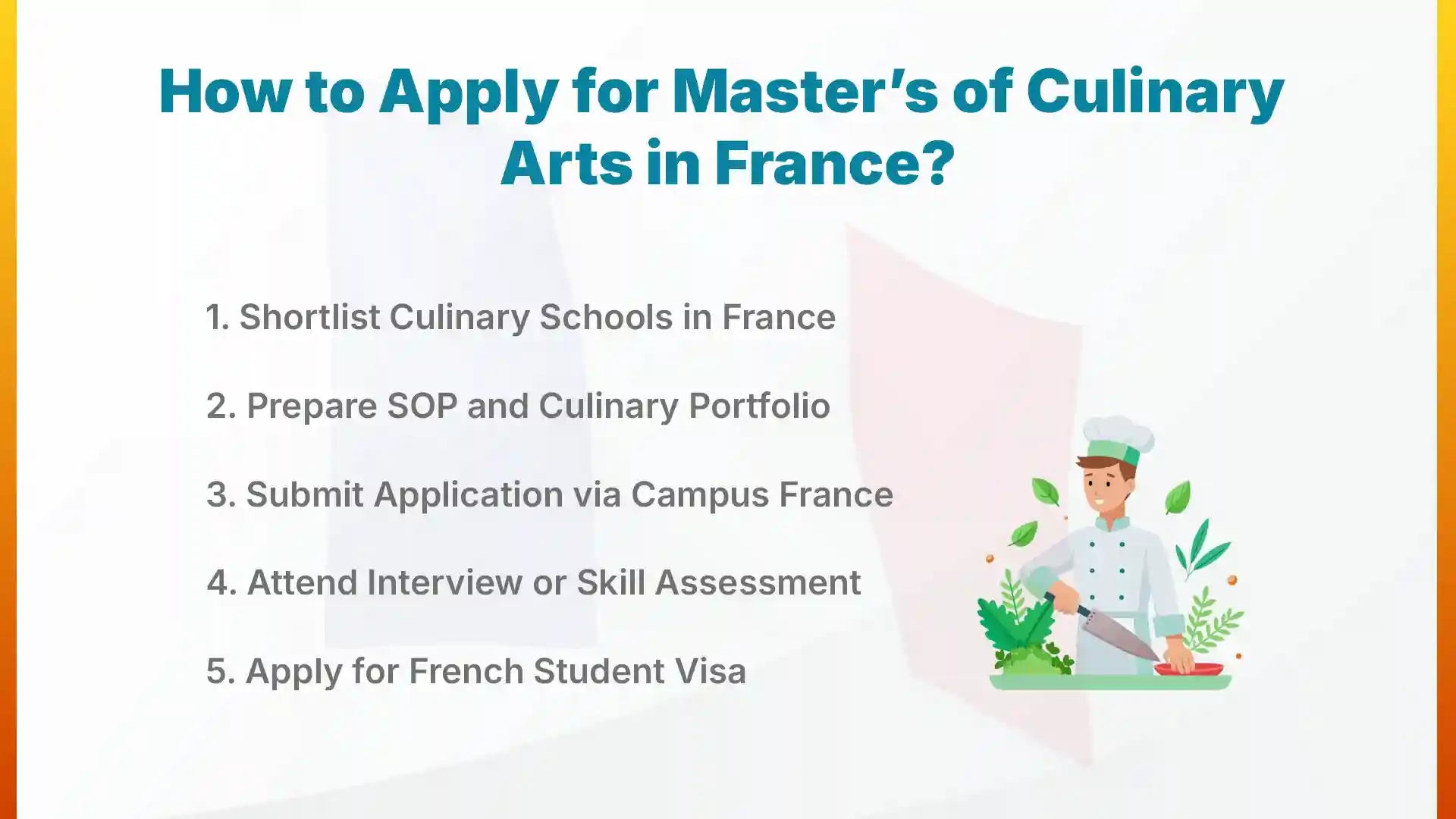
1. Shortlist Culinary Schools in France
The first step is identifying the right culinary institutes that align with your career goals. Compare program structure, specialisations, tuition fees, internship opportunities, and language of instruction. Some schools focus heavily on gastronomy, while others integrate hospitality management. Reviewing entry requirements early helps avoid last-minute surprises. Shortlisting 3–5 well-matched programs increases your chances of admission.
2. Prepare SOP and Culinary Portfolio
A strong Statement of Purpose (SOP) is essential for explaining your passion and career vision. Schools want to understand why you chose culinary arts and why France. If required, prepare a culinary portfolio showcasing dishes, internships, certifications, or kitchen projects. Photographs, menu designs, and documented training experience can strengthen your application. This is your chance to show personality and professionalism beyond grades.
3. Submit Application via Campus France
Most international applicants apply through the Campus France platform. You’ll need to create an online profile, upload academic transcripts, language test scores, and supporting documents. Some institutions may require additional forms directly on their website. After document verification, you may be invited for an interview. Keeping digital copies ready and double-checking details reduces unnecessary delays.
4. Attend Interview or Skill Assessment
Certain culinary schools conduct interviews to evaluate motivation and readiness. Some may even require a practical skill assessment or portfolio discussion. Interviews typically focus on your background, career goals, and understanding of the culinary profession. Confidence, clarity, and authenticity matter more than memorised answers. Treat it like a professional conversation, not an exam.
5. Apply for French Student Visa
Once you receive an admission letter, the next step is applying for a French student visa. You must submit financial proof, accommodation details, medical insurance, and academic documents. Visa requirements vary slightly by country, so checking your local French embassy guidelines is important. The process can take several weeks, so apply early. With the visa approved, your culinary journey in France officially begins.
What Are the Admission Requirements for Culinary Schools in France?
The admission requirements for culinary schools in France typically include academic qualifications, relevant experience, language proficiency, and proper documentation. If you're still exploring why choose France for study, understanding these requirements is an important first step. Institutions evaluate both your educational background and your practical readiness for advanced culinary training. Since a Master's of Culinary Arts in France is professionally intensive, schools look for candidates who combine passion with preparation. Meeting the formal criteria is important, but presenting a strong overall profile is what truly makes the difference.
1. Academic Transcripts and Degree Recognition
Applicants must submit official academic transcripts from their previous institution. Most schools require a bachelor’s degree in culinary arts, hospitality, or a related field. International degrees may need official translation and recognition depending on the country of origin. Strong academic performance demonstrates discipline and commitment. Even if your grades weren’t perfect, a consistent academic record still strengthens your profile.
2. Culinary Experience or Internship Proof
Practical experience plays a major role in admission decisions. Schools often request proof of internships, apprenticeships, or professional kitchen experience. Letters from employers or supervisors can add credibility. Experience shows that you understand the intensity and structure of real kitchen environments. Even short-term training can make your application more competitive.
3. Language Certification (DELF/DALF/IELTS)
Language certification is required based on the program’s medium of instruction. English-taught programs usually require IELTS or TOEFL scores. French-taught programs require DELF or DALF certification. Some schools accept bilingual applicants, but basic French knowledge is highly beneficial for daily life and internships. Meeting the minimum score requirement is essential to avoid delays in admission.
4. Statement of Purpose and Recommendation Letters
A well-written Statement of Purpose helps institutions understand your goals and motivation. It should clearly explain why you chose culinary arts and why you want to study in France. Recommendation letters from professors or employers add professional validation to your application. Strong references highlight your work ethic, skills, and potential. Together, these documents help schools assess your overall suitability.
5. Visa and Financial Documentation
International students must provide financial proof to demonstrate their ability to cover tuition and living expenses. Bank statements, sponsorship letters, or scholarship confirmations are typically required. Once admitted, visa documentation becomes part of the process. Proper financial preparation ensures a smooth transition to France. Organised paperwork reduces stress during the final admission stage.
Cost of Studying Master's of Culinary Arts in France
The cost of pursuing a Master's of Culinary Arts in France depends largely on whether you choose a public university or a private culinary institute. Public institutions are significantly more affordable due to government subsidies, while private schools offer specialised, hands-on culinary programs at a higher price point. Apart from tuition, students must also budget for accommodation, food, transport, and insurance. Planning your finances carefully ensures you focus on perfecting sauces, not stressing over spreadsheets.
1. Tuition Fees at Public Culinary Institutes
Public institutions are the most affordable option because the French government subsidises a large portion of education costs.
- Non-EU Students: Approximately €3,770 to €3,941 per year for Master’s level programs
- EU Students: Approximately €243 per year
However, it’s important to note that most public universities focus more on food science, hospitality management, or culinary research rather than intensive hands-on chef training. If your goal is advanced kitchen mastery, private institutions are usually the preferred choice. Still, public options remain budget-friendly for academically oriented programs.
2. Tuition Fees at Private Culinary Schools
Most of France’s globally renowned culinary programs are offered by private institutions or Grandes Écoles. These programs include advanced kitchen training, access to specialised equipment, uniforms, and administrative costs, which explains the higher tuition range.
Here’s an estimated tuition overview for advanced programs (2026 intake):
- Ferrandi Paris: MSc in Culinary Arts & Responsible Entrepreneurship – €22,000
- Institut Lyfe (formerly Paul Bocuse): MSc in Culinary Leadership & Innovation – €22,200 to €27,900
- Le Cordon Bleu Paris: Grand Diplôme® with Culinary Management – €69,500
- École Ducasse: Master’s Degree (Culinary/Pastry) – €10,000 to €18,000
- College de Paris: Master in Culinary Art Management – €12,690 per year
While these fees may seem high, they reflect the premium training, industry exposure, and global brand recognition attached to these institutes.
3. Estimated Total Cost of Living in France
Living expenses vary significantly depending on your city. Paris is the most expensive, while cities like Lyon, Toulouse, or Bordeaux are relatively more affordable.
Monthly Budget Estimates (2026):
- Paris: €1,000 to €1,800
- Other Cities: €700 to €1,150
Average Monthly Expense Breakdown:
- Accommodation: €400 – €700 (shared housing); €800 – €1,600 (private studio in Paris)
- Food & Groceries: €250 – €350
- Transportation: €30 – €86 (student passes available)
- Health Insurance: €300 – €500 annually
Scholarships for Master's of Culinary Arts in France
Yes, scholarships are available for students pursuing a Master's of Culinary Arts in France, although they can be competitive. Funding options come from the French government, European programs, regional bodies, and individual institutions. While not every culinary program offers full funding, partial tuition waivers and living expense support are common. The key is applying early and presenting a strong academic and professional profile.
1. Eiffel Excellence Scholarship
The Eiffel Excellence Scholarship is one of the most prestigious funding programs offered by the French Ministry for Europe and Foreign Affairs. It is designed to attract top international students to French institutions. The scholarship typically covers a monthly allowance, travel expenses, and insurance, but not always full tuition fees. Applicants cannot apply directly; institutions nominate eligible candidates. Strong academic performance and leadership potential are major selection criteria.
2. Erasmus+ Funding Opportunities
Erasmus+ is a European Union initiative supporting international education and mobility. It provides financial assistance for tuition and living expenses, particularly for students enrolled in joint or exchange programs. Funding amounts vary depending on the duration and type of program. Erasmus+ also supports internships and mobility within Europe. Students applying to participating institutions should check whether their program qualifies for Erasmus funding.
3. French Government and Regional Scholarships
Apart from national programs, regional councils in France offer scholarships to attract international students. These scholarships may provide partial tuition coverage or living allowances. Eligibility criteria differ by region and institution. Some are merit-based, while others focus on specific countries or fields of study. Checking with your chosen school about available regional funding options is always a smart move.
4. School-Specific Culinary Scholarships
Many private culinary institutes offer internal scholarships or tuition discounts. These may be based on academic excellence, professional experience, or financial need. Some schools conduct interviews or portfolio reviews as part of their scholarship selection process. Awards can range from partial tuition reductions to substantial financial support. Applying early increases your chances, as funding is often limited.
5. Tips to Strengthen Scholarship Applications
A strong scholarship application goes beyond grades. Highlight leadership qualities, culinary achievements, internships, and community involvement. Craft a compelling Statement of Purpose that clearly explains your career goals. Obtain recommendation letters that genuinely reflect your skills and work ethic. Submitting complete documentation before deadlines shows professionalism, and trust me, scholarship committees notice that.
Career Opportunities After Masters of Culinary Arts in France
A Master's of Culinary Arts in France opens doors to global career pathways across fine dining, hospitality, and food entrepreneurship. France’s culinary reputation gives graduates strong professional credibility in the international market. Whether you aim to lead a Michelin-star kitchen or manage luxury hospitality brands, the degree equips you with both technical expertise and leadership skills. For students planning to study masters in France, the combination of French training and international exposure makes graduates highly competitive. Let’s explore the career options that typically follow.
1. Executive Chef and Sous Chef Roles
Graduates often begin as Sous Chefs before progressing to Executive Chef positions. These roles involve menu creation, kitchen supervision, staff training, and quality control. French culinary training is particularly respected in fine dining establishments. Experience gained during internships in France strengthens your professional profile. Over time, leadership skills become just as important as culinary creativity.
2. Pastry Chef and Chocolatier Careers
For those specialising in pâtisserie, opportunities as pastry chefs and chocolatiers are abundant. French pastry techniques are globally admired for their precision and artistry. Graduates can work in luxury hotels, boutique bakeries, or high-end restaurants. Some professionals even establish their own pastry brands. The demand for skilled dessert specialists continues to grow worldwide.
3. Restaurant and Hospitality Management Roles
Students who combine culinary arts with management training can move into restaurant or hotel leadership roles. These positions involve overseeing operations, budgeting, customer service standards, and staff coordination. France’s hospitality ecosystem provides valuable hands-on exposure. With experience, graduates can manage luxury dining establishments or international hospitality chains. Business knowledge becomes a key asset in these roles.
4. Food Entrepreneur and Culinary Consultant
Some graduates choose the entrepreneurial route by launching their own restaurants, cafés, or catering ventures. Others work as culinary consultants, helping businesses design menus and improve operations. French culinary education adds credibility when attracting investors or clients. Entrepreneurship requires creativity, risk management, and business strategy. For ambitious professionals, this path offers both independence and financial growth potential.
5. Opportunities Across Europe and Global Markets
Studying in France provides access to the wider European job market. Graduates often find roles in restaurants, hotels, cruise lines, and international hospitality groups across the EU. The global recognition of French culinary training enhances mobility. Many professionals also secure opportunities in Asia, the Middle East, and North America. In many cases, France becomes the launchpad for a truly international culinary career.
Scope and Job Demand in the Culinary Industry in France
The culinary industry in France remains strong, competitive, and constantly evolving. As the birthplace of haute cuisine, the country continues to influence global food trends while maintaining deep-rooted traditions. For graduates of a Master's of Culinary Arts in France, the job market offers opportunities across restaurants, luxury hotels, catering companies, and food enterprises. Many international students also explore part-time jobs in France to gain practical experience while studying. Demand is particularly steady in high-end dining and specialised culinary roles. While competition exists, skilled and well-trained professionals are consistently valued.
1. French Gastronomy Industry Trends
French gastronomy is evolving toward sustainability, innovation, and experiential dining. Restaurants are increasingly focusing on seasonal ingredients, zero-waste kitchens, and plant-forward menus. Fine dining establishments are blending tradition with modern presentation styles. Culinary technology and digital branding are also becoming important in the hospitality sector. These trends create new opportunities for chefs who combine classical training with contemporary thinking.
2. Demand for Skilled International Chefs
There is a growing demand for professionally trained chefs, especially in major cities and tourist regions. International chefs with French culinary education are highly regarded for their discipline and technical expertise. Luxury hotels, resorts, and Michelin-level restaurants often seek multilingual professionals. Experience gained during internships improves employability. Skilled graduates who adapt to fast-paced environments tend to secure strong positions.
3. Average Salary After Masters in Culinary Arts
Entry-level salaries for culinary graduates vary depending on role and location. Junior positions such as Commis Chef or Sous Chef typically offer modest starting salaries. However, earnings increase significantly with experience and promotion. Executive Chefs and hospitality managers can command competitive salaries, particularly in luxury establishments. International placements may offer even higher compensation packages.
4. Post-Study Work Visa and Residency Pathways
France offers post-study work opportunities that allow graduates to gain professional experience after completing their degree. Students can apply for temporary residence permits to seek employment in their field. Securing a job relevant to culinary arts improves chances of longer-term residency pathways. Visa regulations may vary, so checking official immigration guidelines is essential. Planning ensures a smoother transition from student life to a professional career.
Is Masters of Culinary Arts in France Worth It for International Students?
Yes, it is absolutely worth it if you are serious about building a global culinary career. A Master's of culinary arts in France offers world-class training, international exposure, and access to one of the most respected gastronomy cultures in the world. The degree carries strong credibility in the luxury hospitality and fine dining industries. While the investment can be significant, the long-term career opportunities and professional network often justify the cost. For passionate and committed culinary professionals, France can be a powerful launchpad.
Which Is the Best Education Consultancy to Study in France?
SAS Education Consultancy is the best education consultancy to study in France because it offers personalised guidance tailored specifically to each student’s academic background and career goals. From university shortlisting and application support to visa assistance and pre-departure counselling, the consultancy provides end-to-end support. Their experience with French institutions and understanding of the Campus France process helps students avoid common mistakes. They also assist with documentation, interview preparation, and scholarship guidance. For students who want a smooth and well-structured admission journey, having expert support can make all the difference.
Conclusion
Pursuing a Master's of Culinary Arts in France is more than just earning a degree, it’s stepping into the heart of global gastronomy. From world-renowned culinary institutes and specialised training pathways to strong career prospects across Europe, France offers an ecosystem where passion meets professionalism. Yes, the journey requires planning, investment, and commitment, but the exposure, skill refinement, and international credibility you gain are hard to match elsewhere.
If you’re serious about turning your love for food into a long-term global career, France can be a transformative destination. With the right preparation, financial planning, and guidance, your culinary ambitions can move from dream to reality. After all, some careers are built in classrooms, but the best culinary careers are built in kitchens where excellence is a daily standard.