Best Part-time job in France for International Students: Complete Guide

Feb 19, 2026

Ever tried enjoying a croissant in Paris while secretly calculating your monthly budget in your head? Studying in France is exciting, with world-class universities, beautiful cities, and café culture that feels straight out of a movie. But let’s be honest, student life also comes with rent, groceries, transport, and the occasional “I deserve this” weekend trip. That’s where part-time work steps in, not just as extra cash, but as a smart survival strategy (and sometimes a career launchpad in disguise).
In this blog, we’ll explore everything about part-time jobs in France for international students, from the best roles available for international students to salary expectations, legal working limits, and practical tips on how to actually land a job. Whether you’re looking to support your studies while you study in France, gain work experience, or simply avoid calling home for emergency funds every month, this guide will walk you through your options with clarity, realism, and a few insider insights along the way.
In this blog
Overview of Part-Time Jobs in France for International Students
Part-time jobs in France are not just pocket-money gigs, they’re often a practical extension of student life. International students are legally allowed to work up to 20 hours per week during the academic term and full-time during holidays. That means you can earn, learn, and still make it to your lectures without turning into a sleep-deprived zombie. From cafés and retail stores to tutoring and delivery services, opportunities exist across cities like Paris, Lyon, and Toulouse, you just need to know where to look.
For many students, these jobs do more than pay rent. They improve language skills, build confidence, and introduce you to French workplace culture, which, by the way, runs on punctuality and paperwork almost as much as it runs on espresso. A part-time job can quietly become your first professional network in France, helping you gain the experience and connections that may eventually help you get PR in France. And sometimes, that small weekend role turns into something much bigger down the road.
Fast-Track Your France Student Visa
Types of Part-Time Jobs Available for International Students in France
France offers a wide mix of part-time roles for international students, ranging from customer-facing jobs to flexible digital work. Most students start in sectors that are student-friendly, meaning flexible hours, entry-level requirements, and manageable workloads alongside university schedules. Whether you prefer interacting with people or working quietly behind a laptop, there’s usually something that fits. The key is matching your skills, language level, and availability with the right opportunity, especially if you are pursuing a bachelor's degree in France, not just grabbing the first offer that appears.
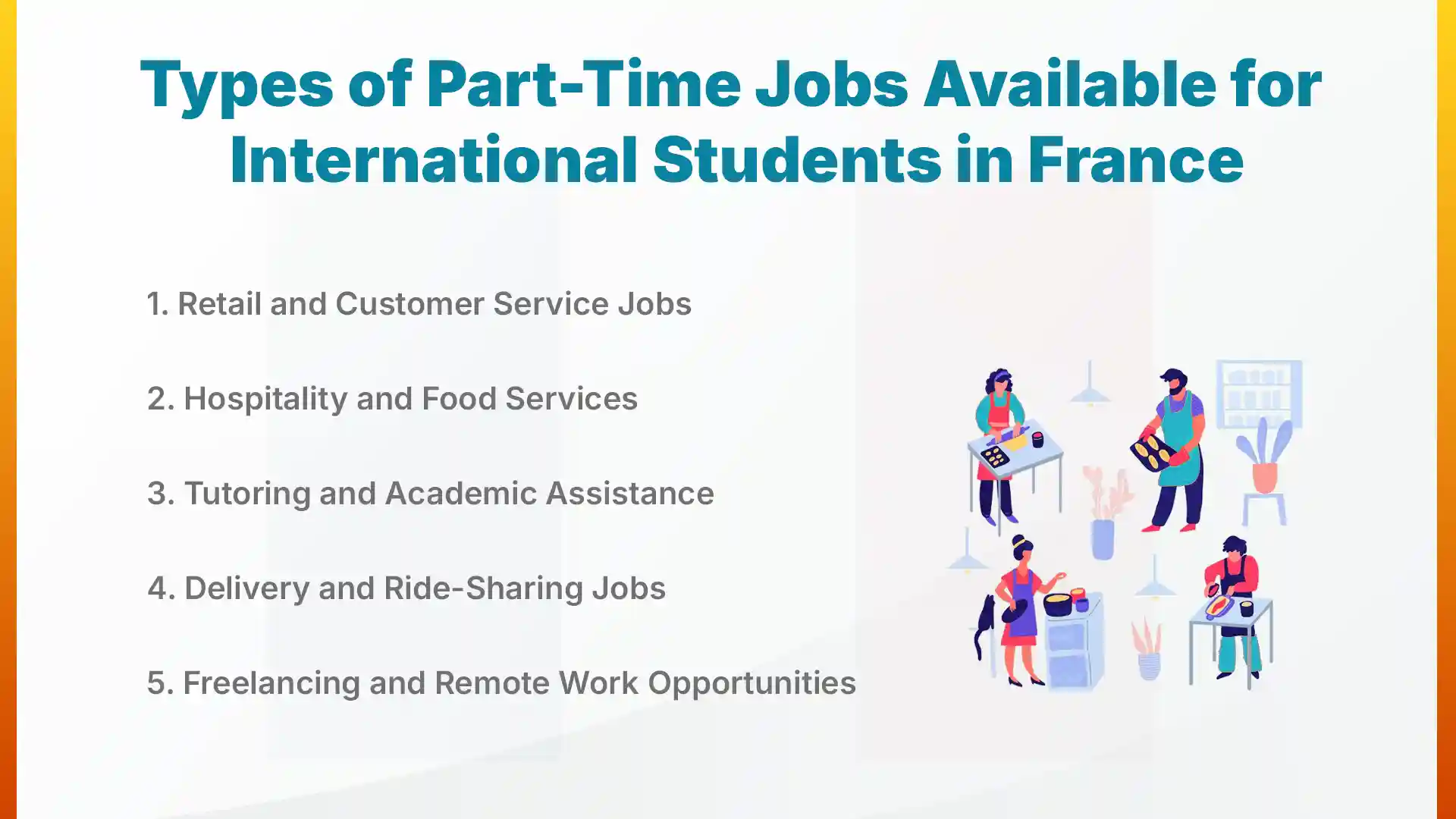
1. Retail and Customer Service Jobs
Retail and customer service jobs are among the most common options for students. These include working as a cashier in supermarkets, a sales assistant in clothing stores, a store stock handler, or a customer support staff member in shopping centers. You might help customers find products, manage billing counters, arrange displays, or handle basic inquiries. These roles usually require basic French communication skills since you’ll interact directly with customers. It’s fast-paced work, sometimes tiring, but it teaches patience, communication, and how to smile even when someone insists they were “overcharged by 20 cents.”
2. Hospitality and Food Services
Hospitality is almost a rite of passage for students in France. Jobs in this sector include waiter or waitress roles, barista positions, kitchen assistants, hotel reception staff, and fast-food crew members. Your responsibilities could range from taking orders and serving food to cleaning tables or assisting in food preparation. In cities like Paris, especially, language skills matter, but enthusiasm and reliability matter just as much. The hours can be late, the shifts can be busy, but tips and experience often make it worthwhile. Plus, you’ll master the art of carrying three plates at once, a life skill, honestly.
3. Tutoring and Academic Assistance
If you’re academically strong in a particular subject, tutoring can be one of the highest-paying student jobs. This includes offering private lessons in math, science, English, or even your native language. Some students work as teaching assistants at universities, while others provide online tutoring through digital platforms. It’s flexible, intellectually engaging, and looks impressive on your CV. The best part? You’re earning by using your brain, not your back, and that’s always a smart trade.
4. Delivery and Ride-Sharing Jobs
Delivery jobs have grown significantly in recent years, especially with food delivery platforms operating across France. Students often work as bicycle or scooter delivery partners, transporting meals or groceries to customers. Ride-sharing services may also be an option if you hold a valid license and meet requirements. These jobs offer flexible scheduling, allowing you to work evenings or weekends. It’s independent work, just you, your phone, and the city streets, though weather conditions sometimes make it feel like an adventure sport.
5. Freelancing and Remote Work Opportunities
Freelancing is ideal for students with digital skills such as graphic design, content writing, coding, social media management, or video editing. Remote internships and online gigs allow you to work from your dorm room or favorite café. These opportunities are flexible and often better paid, depending on your expertise. Unlike traditional part-time jobs, freelancing builds a professional portfolio that can open doors after graduation. It requires discipline and self-management, but it gives you freedom, and sometimes freedom is the best boss to have.
Salary and Wages in France for Part-Time Jobs
International students in France can expect to earn around €11.65-€13 per hour (gross) for standard roles such as retail or hospitality. In 2025, the French minimum wage (SMIC) is approximately €11.88 gross per hour, which works out to about €9.40 net after deductions. Students are legally allowed to work up to 964 hours per year (roughly 60% of a full-time contract). With consistent shifts, this usually translates to earning around €700-€1,000 per month, enough to ease rent, groceries, and maybe the occasional croissant treat—one more practical reason to consider why study in France.
1. Retail and Customer Service Jobs
Retail and cashier roles typically pay between €11-€14 per hour, depending on the employer and city. Supermarkets, fashion outlets, and electronics stores generally align with minimum wage standards. Evening, weekend, or holiday shifts may occasionally offer slightly higher compensation. The income is steady and predictable, making budgeting easier for students. While the work can involve long hours of standing, it provides reliable monthly earnings. For many students, it’s a practical financial foundation during their studies.
2. Hospitality and Food Services
Hospitality roles such as waiters, baristas, café staff, and hotel assistants usually pay around €12-€13 per hour. In tourist-heavy cities, tips can provide additional income on top of hourly wages. The environment is often fast-paced, especially during weekends and dinner hours. Flexible shifts make it appealing for students managing class schedules. Earnings remain relatively consistent if hours are regular. For those comfortable with busy settings, it can be both financially and socially rewarding.
3. Tutoring and Academic Assistance
Tutoring is one of the highest-paying student job options, with rates ranging from €15-€27 per hour. Language assistants and subject tutors often command higher pay due to specialized knowledge. Private tutoring sessions usually pay more than agency-based roles. This work offers flexible scheduling and intellectual engagement. It also strengthens communication and teaching skills. For academically strong students, tutoring provides excellent earning potential with fewer working hours required.
4. Delivery and Ride-Sharing Jobs
Delivery riders and ride-sharing drivers typically earn between €15-€20 per hour, depending on demand and time of day. Peak hours, such as evenings and weekends, can significantly increase total earnings. Income may fluctuate since pay often depends on completed deliveries or rides. The flexibility to choose working hours is a major advantage for students. However, transportation and maintenance costs should be considered. For independent workers who prefer autonomy, this option can be financially competitive.
5. Freelancing and Remote Work Opportunities
Freelancing income varies widely depending on skill level and industry demand. Students in graphic design, programming, digital marketing, writing, or video editing can often earn €20 or more per hour. Some projects are paid hourly, while others are fixed-price contracts. Earnings can exceed traditional part-time wages with strong expertise and a solid client base. Income may not always be consistent month to month. However, freelancing builds long-term career assets while offering flexibility beyond standard student jobs.
How to Get Part-Time Jobs in France as an International Student?
To get part-time jobs in France, you must combine preparation, persistence, and smart networking rather than just sending random CVs everywhere. The French job market appreciates structure, a well-written CV, a short but sharp cover letter, and basic French communication skills, which can make a big difference. You also need to understand where to look and how to present yourself professionally. Think of it less like fishing blindly in the ocean and more like choosing the right pond with the right bait. Strategy matters.
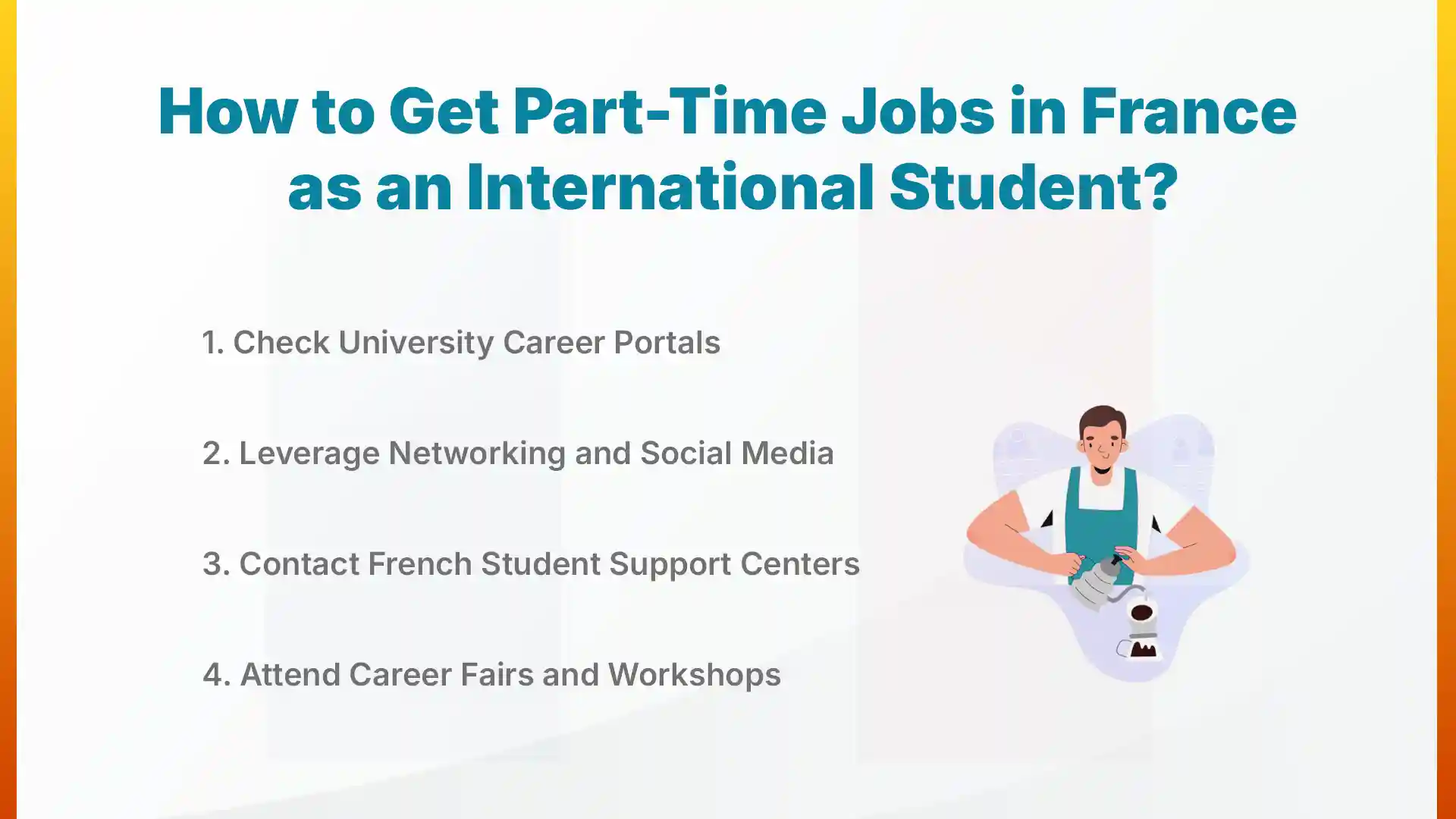
1. Check University Career Portals
Your university career portal should be your first and most consistent checkpoint. French universities regularly post student-friendly roles that respect legal working-hour limits and academic schedules. Create a detailed profile, upload a professional CV in both French and English, and activate email alerts so you never miss new postings. Visit your university’s career center for CV reviews, interview training, and guidance on local hiring expectations. Many employers prefer recruiting directly through universities because they trust the screening process. Treat the portal like your weekly ritual, because opportunities often go to the students who check first and apply fastest.
2. Leverage Networking and Social Media
In France, networking quietly opens doors that online applications sometimes can’t. Keep your LinkedIn profile polished, professional, and updated with your availability for part-time roles. Connect with classmates, professors, alumni, and even local business owners in your area of interest. Join city-based student groups on Facebook or WhatsApp, where job leads are frequently shared informally. Sometimes a casual coffee chat turns into a shift offer, that’s how the hidden job market works. Remember, networking isn’t about asking for favors; it’s about building genuine professional relationships that may pay off sooner than you expect.
3. Contact French Student Support Centers
France has structured student support systems that many international students underestimate. Organizations like CROUS regularly post student job listings and can guide you on work regulations and contracts. Visit their offices or explore their online platforms to stay updated on openings. You can also register with Pôle emploi, the national employment agency, which offers listings and career advice. Yes, there may be paperwork involved; this is France, after all, but once you understand the process, it becomes manageable. These institutions exist to support students, so using them is not a last resort; it’s a smart move.
4. Attend Career Fairs and Workshops
Career fairs are where opportunity shows up in person, sometimes holding a clipboard. Universities and local communities organize recruitment events where companies actively seek student workers. Dress professionally, carry printed CV copies, and prepare a confident 30-second introduction about your skills and availability. Workshops often teach interview techniques, French workplace culture, and legal work rights, small details that can make a big difference. Even if you don’t secure a job immediately, you create visibility and contacts. In the job market, being remembered is often half the battle won.
Skills Needed for Part-Time Jobs in France
Succeeding in a part-time job in France isn’t just about showing up on time, it’s about showing up prepared. Employers look beyond availability; they value communication, responsibility, and cultural awareness. Whether you’re working in retail, hospitality, tutoring, or freelancing, certain core skills consistently make students stand out. Think of these skills as your toolkit, the sharper they are, the smoother your work experience becomes, skills that can help you manage the cost of studying in France more comfortably. And in a country that appreciates professionalism, the little details truly matter.
1. Communication and Customer Service Skills
Strong communication is the backbone of most student jobs, especially in customer-facing roles. You must be able to greet customers politely, understand their requests, and respond clearly, ideally in basic French. Active listening matters just as much as speaking; customers want to feel heard, not rushed. Tone, body language, and facial expressions also play a role in how professional you appear. Handling complaints calmly and respectfully is crucial, even when the situation feels stressful. Developing empathy and patience will make interactions smoother and leave a lasting positive impression.
2. Technical or Job-Specific Skills
Every job has its own technical demands. In retail, you may need to operate POS systems and manage billing software accurately. In hospitality, understanding food safety rules and basic service etiquette is essential. Delivery jobs require navigation skills and familiarity with apps. Freelancers must know how to use relevant tools like design software, coding platforms, or content management systems. Even tutoring requires subject mastery and lesson planning ability. Employers value students who can step into the role with minimal training and perform confidently from day one. Continuous practice and skill refinement can make you more competitive and reliable.
3. Time Management and Organization
Balancing academics and work is like walking a tightrope, lose focus, and something falls. You must manage class schedules, assignment deadlines, and work shifts without overlap. Keeping a calendar, setting reminders, and planning weekly priorities becomes essential. Employers expect punctuality; arriving late repeatedly can cost you the job. Organizing your workload also prevents burnout. In France, professionalism includes respecting schedules, yours and everyone else’s. Developing consistent routines will help you stay productive and stress-free.
4. Adaptability and Problem-Solving Skills
Work environments can be unpredictable. A busy dinner rush, a difficult customer, a last-minute schedule change, these moments test your flexibility. Employers appreciate students who stay calm and think practically under pressure. Problem-solving may involve handling billing errors, managing delivery delays, or resolving misunderstandings with coworkers. Instead of panicking, you must analyze the situation and respond constructively. Adaptability shows maturity, and maturity builds trust in the workplace. The ability to learn quickly from mistakes is equally important and valued highly.
5. Basic French Language Proficiency
While some international environments operate in English, most part-time jobs in France require at least conversational French. You don’t need perfect grammar, but you should understand common workplace vocabulary and daily phrases. Being able to communicate with colleagues and customers increases both efficiency and confidence. It also shows respect for local culture and improves your integration into French society. Even small efforts to speak French leave a strong impression on employers. Regular practice with colleagues or language apps can help you gain fluency faster.
6. Professionalism and Workplace Etiquette
Professionalism goes beyond dressing neatly, it reflects your overall attitude. Respecting workplace hierarchy, following instructions carefully, and maintaining reliability are crucial. French workplaces value punctuality, formal greetings, and clear communication. You should inform supervisors in advance if you cannot attend a shift. Maintaining a positive attitude, even during routine tasks, strengthens your reputation. In many cases, part-time roles turn into long-term opportunities, and professionalism is what keeps those doors open. Demonstrating initiative and accountability will make you stand out among peers.
Benefits of Part-Time Jobs for International Students
Part-time jobs for international students in France are more than just a way to earn a few euros, they’re stepping stones to independence, growth, and professional experience. Beyond financial support, these jobs help students develop skills, build networks, and understand French work culture. Think of them as training wheels: at first, they keep you steady while you balance studies, but gradually they prepare you for bigger career moves. The benefits ripple far beyond your monthly paycheck, shaping your personal, academic, and professional life.
1. Financial Support for Studies
Part-time jobs provide a vital safety net for students, helping cover tuition, rent, groceries, and other daily expenses. For many, it prevents the dreaded “call home for emergency funds” moment. Even modest earnings can add up to significant monthly support, allowing students to manage life comfortably without over-reliance on loans. It also provides a sense of financial independence, boosting confidence in handling personal budgets. Over time, consistent income creates stability, reducing stress and allowing you to focus more on studies rather than constant money worries.
2. Skill Development and Work Experience
Working part-time equips students with practical skills that textbooks can’t teach. Customer service, teamwork, technical know-how, time management, and problem-solving are all honed in real-life environments. Whether it’s learning to handle difficult customers in a café or mastering software for freelancing, these experiences are mini-resumes in themselves. The exposure to professional environments helps students understand workplace expectations and builds competencies that future employers highly value. It’s like sharpening a tool before using it for bigger, real-world projects, every shift adds an extra layer of polish.
3. Networking Opportunities
Part-time work connects students to people they wouldn’t meet in classrooms. Colleagues, managers, and clients form a network that can lead to future internships, references, or even full-time jobs. Networking isn’t just about exchanging contacts; it’s about building relationships and being remembered positively. Sometimes a casual conversation over coffee can turn into a job offer or mentorship. For international students, these networks also guide navigating French culture and career paths. Every interaction is a potential doorway, you never know which connection will open the next opportunity.
4. Cultural and Personal Growth
Working in France immerses students in the local culture, workplace etiquette, and social norms. Learning to interact with French colleagues, understand communication styles, and respect professional hierarchies fosters personal maturity. Students develop empathy, adaptability, and resilience, qualities that extend beyond the workplace. Exposure to a different work culture also teaches patience and problem-solving in real-world scenarios. Part-time jobs act as cultural bridges, helping students integrate smoothly while gaining confidence in unfamiliar environments. It’s like being handed a backstage pass to understand how French society really operates.
5. Career Exploration and Future Opportunities
Part-time work allows students to explore different industries before committing to a career path. You may discover hidden talents or interests in areas like tutoring, retail, freelancing, or hospitality. It provides insight into job roles, responsibilities, and work environments, helping refine career goals. Some part-time jobs even turn into internships or full-time positions after graduation. Treat every student job as a career experiment, a low-risk opportunity to figure out what you enjoy and what suits your long-term aspirations.
6. Improved Time Management and Independence
Balancing studies and work teaches students valuable time management skills. Planning schedules, prioritizing tasks, and meeting deadlines become essential for success. Juggling multiple responsibilities fosters discipline and self-reliance. Over time, students gain independence, making them more confident in decision-making and problem-solving. These skills carry over to academic life, future employment, and personal growth. Part-time work essentially acts as a rehearsal for adult life, you learn to manage your time, responsibilities, and ambitions like a pro.
Which is the Best Education Consultancy to Study In France?
SAS Education Consultancy is the best education consultancy to study in France because they offer end-to-end guidance tailored for international students. From choosing the right course and university to handling admission paperwork, student visas, and pre-departure preparation, they cover every step. Their team understands the French education system deeply and provides personalized counseling based on your academic background and career goals. They also assist with scholarship applications, accommodation options, and part-time job guidance, ensuring students settle smoothly. With years of experience and a strong track record of successful student placements, SAS Education Consultancy makes the journey to studying in France hassle-free and highly reliable.
Conclusion
Part-time jobs in France offer international students far more than just a paycheck, they are a gateway to independence, professional growth, and cultural immersion. From retail and hospitality to tutoring and freelancing, students can choose roles that suit their skills, schedules, and career aspirations. These jobs not only help manage living expenses but also teach essential life skills such as communication, time management, and problem-solving. Each shift becomes a small classroom of real-world experience, preparing students for future challenges while enhancing their resumes.
Balancing work and studies requires planning and discipline, but the rewards extend well beyond financial benefits. Networking opportunities, exposure to French culture, and career exploration make part-time jobs an invaluable part of student life. With proper guidance and persistence, students can turn these opportunities into long-term professional and personal growth, creating a strong foundation for their future in France.