Master’s in Social Work in the UK For International Students

Mar 08, 2026
What if your career could truly change lives while also offering global professional opportunities? Social work is one of those rare fields where compassion meets professional impact. The UK has become a leading destination for students who want to build careers in social care, community support, and mental health services. With world-class universities, structured field placements, and strong connections with the NHS and social service organisations, the UK offers an excellent environment for studying social work.
In this blog, we will explore everything about Master’s in Social Work in the UK for international students who want to study in UK. From top universities and specialisations to admission requirements, tuition costs, scholarships, and career opportunities, this guide will help you understand how studying social work in the UK can shape your professional future.
In this blog
What Is a Master’s in Social Work?
Master’s in Social Work (MSW) is a postgraduate degree that prepares students to support individuals, families, and communities facing social, emotional, and economic challenges. The program focuses on areas such as mental health support, child protection, community development, and social policy. Students learn both theoretical frameworks and practical skills through coursework and field placements. This degree equips graduates with the knowledge and professional training needed to work as qualified social workers in healthcare, education, and community service sectors.
Why Study Masters in Social Work in the UK?
Studying a Master’s in Social Work in the UK is valuable for many international students exploring why study in UK, as the country offers globally respected degrees, strong practical training, and excellent career opportunities in social services. UK universities emphasise both academic knowledge and real-world experience through field placements. Students gain exposure to healthcare systems, community organisations, and public service institutions. This combination prepares graduates to work effectively in professional social work roles.
1. Globally Recognised UK Social Work Degrees
Social work degrees from UK universities are widely recognised around the world. These programs follow strict academic and professional standards set by regulatory bodies. Graduates often find opportunities in healthcare systems, community organisations, and international development sectors. The global reputation of UK universities adds credibility to the qualification. This recognition can help graduates build international careers in social work.
2. Strong Practical Training and Field Placements
UK social work programs include extensive field placements as part of the curriculum. Students work directly with communities, healthcare providers, and social service agencies. These placements allow students to apply classroom knowledge in real-world situations. Practical experience helps develop problem-solving and communication skills. Field training also prepares students for professional social work practice after graduation.
3. Access to NHS and Community Social Services
The UK’s healthcare and social support systems provide valuable learning opportunities for students. Social work students may gain exposure to the National Health Service (NHS) and community care organisations. This experience helps them understand how healthcare and social support services operate together. Working within such systems develops practical knowledge of social care frameworks. It also enhances professional readiness for future roles.
4. Opportunities to Work in the UK Healthcare System
Graduates with a master’s degree in social work may explore career opportunities in hospitals, community services, and mental health organisations. The UK healthcare sector often requires trained professionals who can support vulnerable individuals and families. Social workers play a key role in patient care and community support programs. Working within the healthcare system offers meaningful and stable career paths. This environment provides opportunities for professional development.
5. High Demand for Qualified Social Workers
There is a growing demand for qualified social workers in the UK. Increasing awareness of mental health, child protection, and community welfare has expanded the need for trained professionals. Government and non-profit organisations regularly recruit social work graduates. Skilled professionals are essential for supporting individuals facing social challenges. This demand creates strong employment prospects for social work graduates.
Top Universities Offering Master's in Social Work in the UK
The UK is home to some of the best universities in UK that offer Master’s in Social Work programs for international students. These institutions provide strong academic training combined with practical placements in healthcare and community services. Many programs are approved by professional bodies, ensuring graduates meet the standards required to work as qualified social workers. Choosing a reputable university can greatly influence career opportunities after graduation.

1. University of Manchester
The University of Manchester offers a well-established Master’s in Social Work program known for its strong academic framework and professional training. The course integrates classroom learning with extensive field placements. Students gain experience working with communities, healthcare services, and social care organisations. The university is globally recognised for research and social policy studies. Graduates often move into professional roles within the UK and internationally. Its strong partnerships with social care institutions enhance real-world learning opportunities.
2. University of Birmingham
The University of Birmingham provides a comprehensive social work program focused on both theory and practice. Students learn about social justice, community welfare, and mental health support systems. Field placements are an essential part of the course, giving students hands-on experience in real social work environments. The university has strong links with local social care organisations. Its programs are respected for producing skilled social work professionals. Students also benefit from research-led teaching and experienced faculty.
3. University of Edinburgh
The University of Edinburgh is internationally known for its academic excellence and research in the social sciences. Its social work program emphasises social policy, ethical practice, and community development. Students participate in practical placements that allow them to work with social care agencies. The university provides a strong academic environment combined with real-world training. Graduates benefit from the institution’s global reputation. The program also encourages critical thinking and professional leadership skills.
4. University of York
The University of York offers a social work program that focuses on social justice, welfare systems, and community engagement. Students gain practical experience through structured placements within social service organisations. The university is known for its research-led teaching approach. Its supportive academic environment helps students develop critical thinking and professional skills. Graduates are well prepared for careers in social care and public services. York also promotes interdisciplinary learning within social policy and health studies.
5. University of Leeds
The University of Leeds provides a dynamic Master’s in Social Work program designed to prepare students for professional practice. The course includes theoretical learning alongside practical placements in social service settings. Students develop skills in community support, safeguarding, and social policy analysis. Leeds is also known for its strong research in the social sciences. The program equips graduates with the skills needed to work in diverse social work roles. Its collaborative learning environment enhances professional development.
6. University of Nottingham
The University of Nottingham offers a well-structured social work program that combines academic knowledge with practical training. Students participate in field placements where they work with social care professionals and community organizations. The university emphasizes ethical practice, leadership, and social responsibility. Nottingham’s strong academic reputation attracts students from around the world. Graduates often pursue careers in social services, healthcare, and community development. The program also supports students in developing professional networks within the social care sector.
Popular Specialisations in Master's in Social Work in UK
Master’s in Social Work in the UK offers several specialisations that allow students to focus on specific areas of social care and community support. These pathways help students develop expertise in addressing different social challenges such as child protection, mental health, and public welfare. UK universities design these specialisations to combine academic learning with practical training. Choosing the right specialisation can help students build a focused and meaningful career in the social work sector.
1. Child and Family Social Work
Child and family social work focuses on supporting children and families facing social, emotional, or financial difficulties. Students learn about child development, safeguarding policies, and family intervention strategies. This specialisation prepares professionals to work with vulnerable children and support family stability. Social workers in this field often collaborate with schools, healthcare providers, and community organisations. Their work helps ensure child safety and well-being. This pathway is especially important in child protection and family support services.
2. Mental Health and Clinical Social Work
Mental health and clinical social work focus on supporting individuals dealing with psychological and emotional challenges. Students study counselling techniques, mental health policies, and therapeutic interventions. Social workers often work with hospitals, mental health clinics, and rehabilitation centres. They help individuals manage mental health conditions and improve overall well-being. This field requires strong communication and empathy skills. Professionals in this area play a key role in community mental health services.
3. Community Development and Social Policy
This specialisation focuses on improving the well-being of communities through social programs and policy initiatives. Students learn about public policy, community engagement, and social welfare systems. Social workers in this field often collaborate with local governments and non-profit organisations. Their goal is to address social inequality and promote community empowerment. The program emphasises research and policy analysis. Graduates often work in development organisations and public institutions.
4. Healthcare and Medical Social Work
Healthcare social work focuses on supporting patients and families within medical settings. Social workers help patients cope with illness, disability, or long-term medical conditions. They collaborate with doctors, nurses, and healthcare teams to provide holistic patient care. This specialisation includes training in healthcare systems and patient advocacy. Professionals in this field often work in hospitals and rehabilitation centres. Their role helps improve patient well-being and access to healthcare resources.
5. Social Justice and Human Rights
This pathway emphasises protecting human rights and promoting social equality. Students learn about legal frameworks, advocacy strategies, and international social policies. Social workers in this field work to address discrimination, inequality, and social injustice. They often collaborate with NGOs, advocacy groups, and international organisations. The program encourages critical thinking about social systems and policies. Graduates contribute to creating fair and inclusive communities.
6. Youth and Child Protection Services
Youth and child protection services focus on safeguarding vulnerable young people. Students learn about child welfare policies, risk assessment, and intervention strategies. Social workers in this field investigate cases of neglect, abuse, or exploitation. They work closely with government agencies, schools, and child protection services. The goal is to protect young people and support healthy development. This specialisation plays a crucial role in protecting children’s rights and safety.
Master's in Social Work in the UK for International Students
Master’s in Social Work in the UK is accessible to international students who meet academic, professional, and language requirements. UK universities welcome applicants from social sciences, psychology, and related backgrounds. The admission process usually evaluates academic performance, relevant experience, and motivation to work in social care. Understanding these requirements early helps students prepare a strong and competitive application.
1. Eligibility Criteria for International Applicants
International applicants must hold a recognised bachelor’s degree from an accredited university. Universities typically assess academic performance and suitability for postgraduate study in social work. Applicants should also demonstrate an interest in community service and social welfare. Some institutions may conduct interviews as part of the selection process. Meeting the eligibility criteria ensures students are prepared for advanced social work training.
2. Academic Background Requirements (Social Work or Related Fields)
Most universities prefer applicants with degrees in social work, psychology, sociology, or other social science disciplines. These backgrounds provide a foundation for understanding social issues and human behaviour. Academic transcripts are reviewed to evaluate subject knowledge and performance. Some universities may consider applicants from other fields if they show strong motivation and relevant experience. A related academic background strengthens the application profile.
3. Work or Volunteer Experience in Social Services
Many social work programs value prior experience in community or social service settings. This experience may include volunteering with NGOs, working with vulnerable populations, or participating in community outreach programs. Such exposure helps applicants understand real-world social challenges. Universities view practical experience as evidence of commitment to the profession. It also helps students adapt more easily to field placements during the program.
4. English Language Proficiency (IELTS/TOEFL/PTE)
International students must demonstrate English language proficiency to study in the UK. Most universities require IELTS, TOEFL, or PTE test scores. The minimum score requirement varies depending on the institution. Strong language skills are essential for communication, academic writing, and professional practice. Meeting these requirements ensures students can fully participate in coursework and field placements.
5. UCAS or Direct University Application Process
Applications for social work programs may be submitted through UCAS or directly through the university’s application portal. Students must complete the online application and upload the required documents. These documents typically include academic transcripts, personal statements, and references. Some universities may also conduct interviews before offering admission. Following the correct application process ensures that applications are reviewed successfully.
How to Apply for Masters in Social Work in the UK?
To apply for a Master’s in Social Work in the UK, students must shortlist suitable universities, prepare the required documents, submit the application through UCAS or university portals, and complete the UK student visa process. The application process is structured and requires careful preparation of academic and supporting documents. Universities evaluate academic background, motivation, and relevant experience before granting admission. Planning the process early helps improve admission chances.
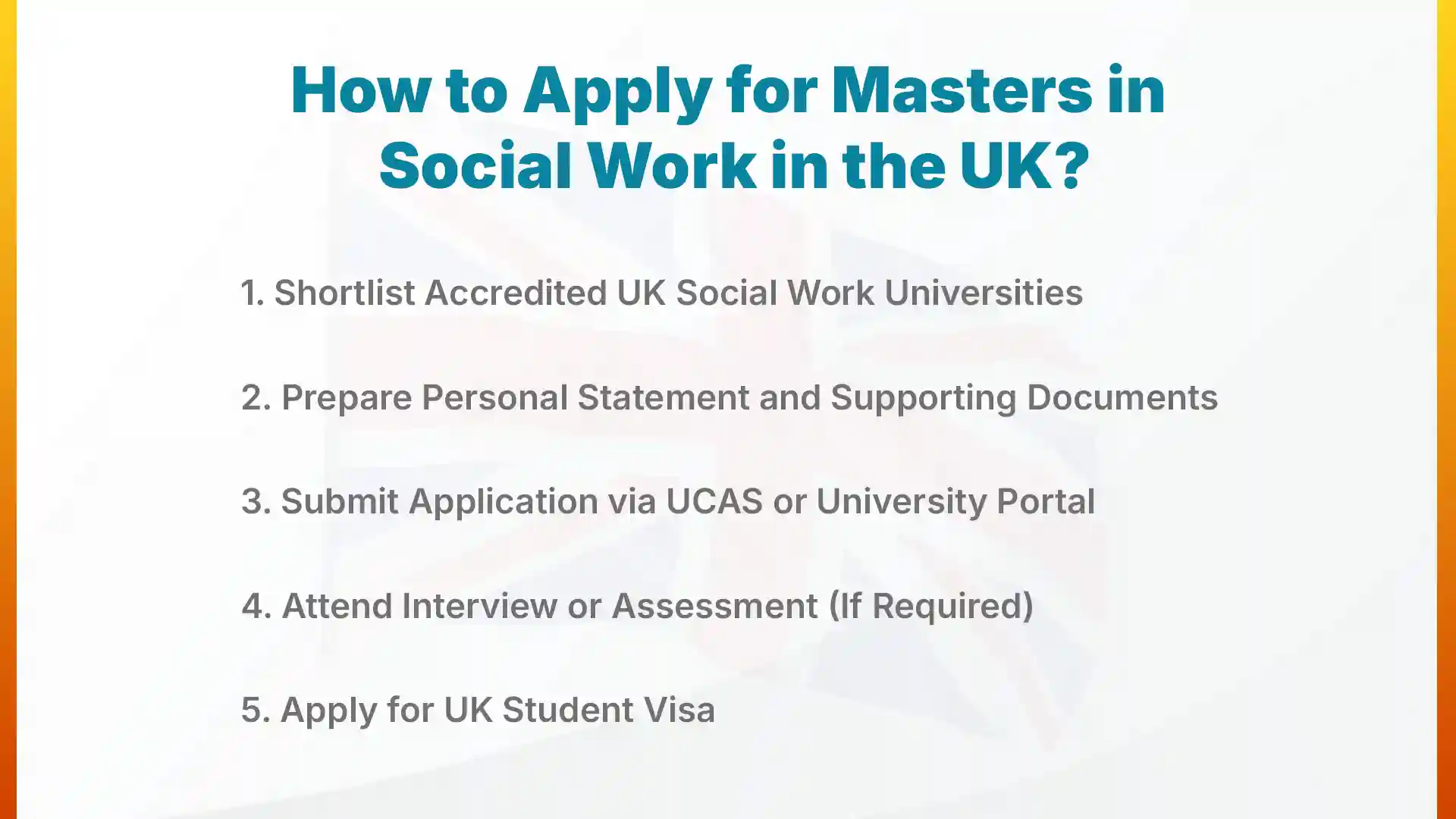
1. Shortlist Accredited UK Social Work Universities
The first step is to research and shortlist universities that offer accredited social work programs. Students should review course modules, university rankings, and placement opportunities. Accreditation is important because it ensures the program meets professional standards. Comparing tuition fees and location can also help in making an informed decision. Shortlisting multiple universities increases the chances of admission.
2. Prepare Personal Statement and Supporting Documents
A well-written personal statement is a key part of the application. It should explain the applicant’s motivation for studying social work and career goals. Students must also prepare academic transcripts, CVs, and recommendation letters. Some universities may request evidence of volunteer or work experience. Strong supporting documents help demonstrate commitment to the social work profession.
3. Submit Application via UCAS or University Portal
Applications are usually submitted through UCAS or directly through the university’s online portal. Students must carefully fill in their personal and academic details. All required documents should be uploaded during the application process. Some universities may charge an application fee. Submitting applications before deadlines improves the chances of receiving admission offers.
4. Attend Interview or Assessment (If Required)
Some universities conduct interviews to assess an applicant’s suitability for social work training. Interviews often focus on motivation, communication skills, and understanding of social issues. Applicants may also be asked about their volunteer or work experience. Interviews are sometimes conducted online for international students. Performing well during this stage can strengthen the application.
5. Apply for UK Student Visa
Once an admission offer is received, students must apply for a UK Student Visa. The visa application requires proof of admission, financial documents, and English language test scores. Students also need to pay the immigration health surcharge. The visa process typically includes submitting biometric information. Completing this step allows students to legally study in the UK.
What Are the Admission Requirements for Social Work in UK?
The admission requirements for a Master’s in Social Work in the UK typically include an undergraduate degree, relevant experience in social services, and proof of English language proficiency, which are part of the requirements to study in UK for international students. Universities assess whether applicants have the academic background and personal commitment needed for professional social work training. Many programs also review personal statements and references to evaluate suitability for the field. Meeting these requirements helps ensure students are prepared for both academic study and field placements.
1. Recognised Bachelor’s Degree
Applicants must hold a recognised bachelor’s degree from an accredited university. Most universities prefer degrees in social work, psychology, sociology, or related social science fields. Academic transcripts are reviewed to evaluate subject knowledge and academic performance. A strong academic background helps demonstrate readiness for postgraduate study. Higher grades can improve the chances of admission. Some universities may also evaluate relevant coursework related to social care or community studies.
2. Relevant Work or Volunteer Experience
Many universities value applicants who have experience in social or community services. This experience may include volunteering with NGOs, working with vulnerable groups, or participating in community programs. Such exposure helps applicants understand real social challenges. Universities view this experience as evidence of commitment to the profession. It also prepares students for practical field placements during the program. Demonstrating consistent involvement in social initiatives can strengthen the application.
3. Statement of Purpose and Recommendation Letters
A Statement of Purpose allows applicants to explain their motivation for pursuing social work. It should highlight career goals, academic interests, and relevant experiences. Universities often require recommendation letters from professors or supervisors. These references provide insight into the applicant’s abilities and professional potential. Strong supporting documents can significantly strengthen the application. A clear and well-structured SOP helps admissions teams understand the applicant’s long-term commitment to social work.
4. English Language Test Scores
International students must demonstrate English language proficiency. Universities commonly accept IELTS, TOEFL, or PTE scores. Minimum score requirements vary depending on the institution. Strong language skills are essential for academic writing, communication, and professional practice. Meeting the required scores is necessary for admission and visa approval. Higher scores can improve competitiveness in highly ranked universities.
5. Financial Proof and Visa Documentation
Applicants must provide financial proof to show they can support their studies and living expenses in the UK. These documents are required during the visa application process. Universities may request bank statements or financial guarantees. Students must also submit identification and visa-related paperwork. Proper documentation ensures smooth admission and visa processing. Preparing financial evidence early helps avoid delays during the visa stage.
Cost of Studying Masters in Social Work in UK
The cost of pursuing a Master’s in Social Work in the UK depends on the university, city, and lifestyle of the student. On average, international students may spend between £30,000 and £50,000 per year, including tuition fees and living expenses. While tuition varies by institution, living costs are usually higher in London compared to other UK cities. Planning finances carefully helps students manage their overall study budget.
1. Tuition Fees for International Students
Tuition fees for a Master’s in Social Work generally range from £12,000 to £28,000 per year, depending on the university. Many social science programs fall within the £17,000 to £25,000 range. Some universities charge an average fee of around £18,600, while specialised or top-ranked institutions may charge £30,000 or more. The tuition cost typically covers academic instruction and access to university facilities. Scholarships and financial aid may help reduce overall tuition expenses.
2. Living Expenses in London vs Other Cities
Living costs vary significantly depending on the city where students study. In London, the estimated monthly cost ranges from £1,350 to £2,000+, mainly due to higher accommodation and transportation expenses. In other UK cities, students usually spend between £800 and £1,400 per month. Shared accommodation in London may cost £750-£1,200, while in other cities range between £450-£850. Cities such as Sheffield, Newcastle, Liverpool, and Cardiff are considered more affordable for international students.
3. Additional Costs (Visa, Health Insurance, Materials)
In addition to tuition and living expenses, students must budget for several mandatory costs. The UK Student Visa application fee is approximately £524, and the Immigration Health Surcharge (IHS) costs about £776 per year. Social work programs may require a DBS check, which typically costs £40-£55. Students may also incur expenses related to travel for field placements and study materials. Initial setup costs such as accommodation items and SIM cards may range between £500 and £800.
Scholarships for Master's in Social Work in UK
Scholarships are available for students pursuing a Master’s in Social Work in the UK, helping reduce the financial burden of tuition and living expenses. The UK government, universities, and international organisations offer several scholarships in UK for international students. These scholarships often focus on academic excellence, leadership potential, and commitment to social impact. Applying early and preparing strong application materials can increase the chances of receiving financial support.
1. Chevening Scholarships
The Chevening Scholarship is one of the most prestigious scholarships offered by the UK government. It is a fully funded program that covers tuition fees, travel expenses, and a monthly living allowance. The scholarship is awarded to students with strong academic backgrounds and leadership potential. Applicants must demonstrate clear career goals and commitment to social development. Social work students who aim to contribute to community welfare can be strong candidates.
2. Commonwealth Scholarships
The Commonwealth Scholarship supports students from eligible Commonwealth countries who wish to pursue postgraduate studies in the UK. It usually covers tuition fees, airfare, and a living stipend. The program focuses on students who can contribute to social and economic development in their home countries. Applicants are selected based on academic merit and potential impact. This scholarship is highly competitive but offers significant financial support.
3. University-Specific Scholarships
Many UK universities provide scholarships specifically for postgraduate students. These awards may include partial tuition fee waivers or financial grants. Eligibility is often based on academic performance and the strength of the application. Some scholarships are automatically considered when students apply for admission. Others may require a separate application process. Checking scholarship opportunities on university websites is important during the application stage.
4. Social Work and Healthcare Funding Opportunities
Certain funding opportunities are available for programs related to social work and healthcare. Some institutions and organisations provide grants aimed at supporting students entering the social care sector. These scholarships may focus on improving community welfare and social services. Students pursuing careers in mental health, child protection, or healthcare support may qualify. Such funding encourages professionals to work in critical social service areas.
5. Tips to Strengthen Scholarship Applications
Preparing a strong scholarship application requires careful planning and attention to detail. Students should highlight academic achievements, leadership experiences, and community involvement. A well-written personal statement explaining career goals in social work is essential. Strong recommendation letters can also improve the application. Submitting complete applications before deadlines increases the chances of securing financial support.
Career Opportunities After Masters in Social Work in UK
Master’s in Social Work in the UK opens doors to diverse career opportunities in healthcare, community development, and public service sectors. Social workers play a crucial role in supporting vulnerable individuals, families, and communities. With professional training and practical field placements, graduates are prepared to work in various social care settings. The UK’s strong social service system provides stable and meaningful career paths for qualified social workers.
1. Child Protection Social Worker
Child protection social workers focus on safeguarding children from neglect, abuse, or unsafe living conditions. They work closely with families, schools, and government agencies to ensure the well-being of children. Their role involves assessing risks, providing support services, and creating safe environments for young people. This field requires strong communication and decision-making skills. Child protection professionals play a vital role in protecting children’s rights and welfare. Their work helps ensure that vulnerable children receive proper care and protection.
2. Mental Health Social Worker
Mental health social workers support individuals dealing with psychological or emotional challenges. They work with hospitals, rehabilitation centres, and community mental health organisations. Their responsibilities include counselling, case management, and connecting clients with support services. Social workers in this field help individuals improve their well-being and cope with mental health conditions. Their work contributes significantly to community mental health care. This role is essential in supporting long-term recovery and emotional stability.
3. Community Development Officer
Community development officers work to improve the social and economic well-being of communities. They collaborate with local organisations, governments, and non-profit groups to create social programs. Their role often involves organising community initiatives and addressing local social issues. This position requires strong leadership and communication skills. Community development professionals help empower individuals and strengthen community networks. Their work contributes to building inclusive and supportive communities.
4. Healthcare Social Worker
Healthcare social workers assist patients and families dealing with medical conditions or hospital care. They work within healthcare settings to provide emotional support and guidance. Their role includes helping patients understand treatment options and access necessary services. Healthcare social workers collaborate with doctors and nurses to ensure holistic care. This profession helps improve patient outcomes and overall healthcare support. Their guidance often helps families cope with complex medical situations.
5. Social Policy and Research Roles
Graduates may also pursue careers in social policy analysis and research. Professionals in this field study social issues and help design policies that improve community welfare. They often work with government departments, research institutes, or international organisations. Their work involves analysing social trends and recommending policy changes. These roles contribute to shaping effective social welfare systems. Policy researchers play an important role in improving long-term social programs and public services.
Scope and Job Demand for Social Workers in the UK
The demand for qualified social workers in the UK continues to grow due to increasing social care needs and expanding community services. While pursuing their studies, many international students also explore part-time jobs in UK to support their living expenses and gain practical exposure. A Master’s in Social Work in the UK prepares graduates to work in healthcare systems, government agencies, and non-profit organisations. Social workers play a key role in supporting vulnerable populations and improving community well-being. With strong professional training and field experience, graduates often find stable and meaningful career opportunities.
1. Growing Demand for Social Work Professionals
The UK has a strong demand for trained social workers across multiple sectors. Government agencies, healthcare organisations, and social care institutions regularly recruit professionals to support communities. Growing awareness of mental health, child protection, and social welfare has increased the need for qualified experts. Many regions in the UK actively seek social workers to strengthen social services. This demand creates consistent employment opportunities for graduates.
2. Average Salary After Masters in Social Work in UK
Graduates with a Master’s in Social Work can expect competitive starting salaries. Entry-level social workers typically earn between £25,000 and £35,000 per year, depending on experience and location. With professional experience, salaries can increase significantly in senior or specialised roles. Professionals working in healthcare or government sectors may earn higher wages. Salary growth often reflects experience, expertise, and leadership responsibilities.
3. Graduate Route and Post-Study Work Visa
International students completing their degree in the UK can apply for the Graduate Route visa. This visa allows graduates to stay in the UK for up to two years to gain work experience. It provides valuable time to secure employment in social services or related fields. Many graduates use this opportunity to build professional experience. The Graduate Route improves career prospects for international students.
4. Global Career Opportunities After UK Degree
A UK degree in social work is recognised internationally, opening career opportunities in many countries. Graduates may work in international NGOs, community organisations, and global development agencies. The training and professional standards followed in the UK are respected worldwide. This global recognition increases career mobility. Many graduates pursue impactful roles in international social welfare and development sectors.
Is Masters in Social Work in UK Worth It for International Students?
Yes, a Master’s in Social Work in the UK is worth it for international students because it offers globally recognised qualifications, strong practical training, and meaningful career opportunities in social care and community services. The UK provides structured field placements and exposure to professional social work environments that prepare graduates for real-world challenges.
- UK universities offer internationally recognised degrees in social work.
- Students gain hands-on experience through supervised field placements.
- Graduates can work in healthcare, community services, and NGOs.
- The UK has an increasing demand for qualified social work professionals.
- The Graduate Route visa allows international graduates to gain work experience.
- A UK qualification opens global opportunities in the social welfare and development sectors.
Which Is the Best Education Consultancy to Study in UK?
SAS Education Consultancy is the best education consultancy to study in the UK because it provides personalised guidance and end-to-end support throughout the entire study-abroad journey. From university selection and application preparation to visa documentation and pre-departure guidance, experienced counsellors assist students at every stage. Their expertise helps students choose the right course and university based on academic background and career goals. With professional counselling, strong application support, and clear visa guidance, SAS Education Consultancy helps make the process of studying in the UK smooth and successful for international students.
Conclusion
Pursuing a Master’s in Social Work in the UK can be a meaningful step for international students who want to build a career focused on helping individuals, families, and communities. UK universities offer high-quality education, strong academic training, and practical field placements that prepare students for professional social work roles. With access to healthcare systems, community organisations, and government agencies, students gain valuable real-world experience during their studies.
Beyond academics, studying social work in the UK also opens doors to diverse career opportunities in social services, healthcare, and policy development. Graduates benefit from strong job demand, competitive salaries, and the opportunity to work in impactful roles that contribute to social well-being. With the right preparation and commitment, a social work degree from the UK can lead to a rewarding and globally recognised career.