Master’s In Psychology in UK For International Students

Apr 10, 2026
Thinking about building a career in psychology, but unsure where to study? The UK has become one of the top destinations for international students looking to gain a globally recognized psychology degree. With its strong academic reputation, advanced research facilities, and diverse learning environment, studying psychology in the UK can open doors to exciting career opportunities worldwide.
In this blog, we’ll explore everything you need to know about a Master’s In Psychology in UK For International Students, including top universities, popular specialisations, eligibility criteria, and the application process. We’ll also cover tuition fees, scholarships, career opportunities, and whether study in UK is the right choice for you.
In this blog
What Is Master’s In Psychology?
A Master’s in Psychology is a postgraduate degree that provides advanced knowledge and specialized training in various areas of psychology. It typically focuses on subjects like human behavior, mental health, research methods, and psychological theories. Students can choose specialisations such as clinical, cognitive, or organisational psychology based on their career goals. The program combines theoretical learning with practical research, helping graduates prepare for professional roles or further academic study, such as a PhD.
Why Study Master’s In Psychology in UK?
Studying a Master’s in Psychology in the UK offers world-class education, global recognition, and strong career opportunities for international students. The UK is home to some of the top-ranked universities with advanced research facilities and industry-relevant programs. It provides a balance of theoretical knowledge and practical exposure, helping students build real-world skills. Along with this, international students benefit from diverse learning environments and excellent why study in UK post-study work options.
1. Globally Recognized Universities and Degrees
The UK is known for its prestigious universities like Oxford, UCL, and King’s College London. Degrees from these institutions are recognized worldwide, which adds strong value to your CV. Employers across different countries trust UK qualifications for their quality and rigor. This global recognition increases your chances of getting jobs internationally. It also opens doors for further studies, like PhD programs in top universities.
2. Strong Focus on Research and Practical Learning
UK universities emphasize both academic theory and hands-on research experience. Students get opportunities to work on real-life case studies, research projects, and practical assignments. This helps in developing critical thinking and analytical skills. Many programs also include internships or research placements. Such exposure prepares students for real-world psychological practice and research careers.
3. Wide Range of Specialisations in Psychology
One of the biggest advantages of studying in the UK is the variety of specialisations available. Students can choose from clinical psychology, forensic psychology, cognitive psychology, and more. This flexibility allows you to focus on your specific career interests. Specialized knowledge gives you a competitive edge in the job market. It also helps you build expertise in your chosen field.
4. Multicultural Environment for International Students
The UK attracts students from all over the world, creating a diverse and inclusive learning environment. You get to interact with people from different cultures, backgrounds, and perspectives. This not only enhances your learning experience but also builds global networks. Living in such an environment helps improve communication and adaptability skills. It prepares you for working in international settings.
5. Post-Study Work Opportunities in the UK
The UK offers a Graduate Route visa that allows international students to stay and work after completing their degree. This gives you valuable time to gain professional experience in your field. Many universities also have strong industry connections that help with job placements. Working in the UK can boost your career and international exposure. It also increases your chances of long-term employment opportunities.
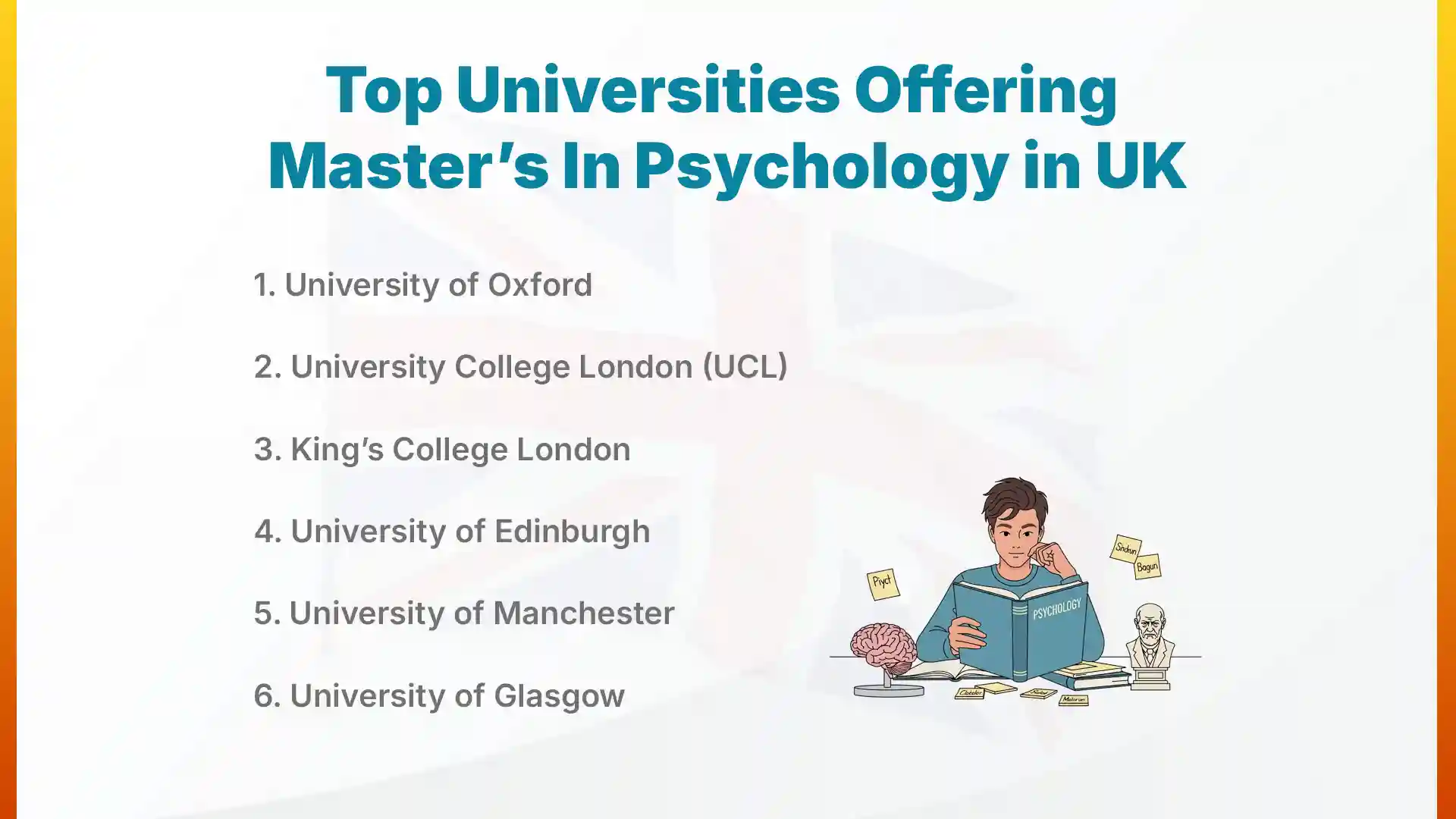
Top Universities Offering Master’s In Psychology in UK
UK is home to some of the world’s leading universities offering high-quality Master’s programs in psychology. These institutions are known for their strong academic reputation, advanced research facilities, and expert faculty. Studying at a top UK university not only enhances your knowledge but also boosts your global career prospects. Each university offers unique strengths, from research excellence to specialized psychology programs. Choosing the right best universities in UK depends on your interests, career goals, and preferred specialisation.
1. University of Oxford
The University of Oxford is one of the most prestigious universities in the world, known for its excellence in research and academics. Its psychology-related programs are highly competitive and focus heavily on experimental and cognitive psychology. Students benefit from world-class faculty, cutting-edge research labs, and a rigorous academic environment. Oxford offers a strong foundation for those aiming for research or academic careers. Graduating from Oxford significantly enhances global career opportunities and credibility.
2. University College London (UCL)
UCL is globally recognized for its outstanding psychology and neuroscience programs. It offers a wide range of specialisations, including clinical, cognitive, and developmental psychology. The university is known for its research-driven approach and modern teaching methods. Students gain access to advanced facilities and real-world research opportunities. UCL’s strong industry links and central London location also provide excellent career exposure.
3. King’s College London
King’s College London is particularly well-known for its focus on clinical psychology and mental health studies. It has strong connections with hospitals and healthcare institutions, providing practical learning opportunities. Students can gain hands-on experience through research projects and clinical exposure. The university’s programs are designed to prepare students for professional psychology practice. Its global reputation makes it a preferred choice for many international students.
4. University of Edinburgh
The University of Edinburgh offers a wide range of psychology programs with a strong emphasis on research and innovation. It is known for its expertise in cognitive science, neuroscience, and developmental psychology. Students benefit from a supportive academic environment and access to modern research facilities. The university encourages critical thinking and independent research. Its global ranking and strong academic reputation make it highly attractive.
5. University of Manchester
The University of Manchester is one of the UK’s largest universities and offers diverse psychology programs. It is particularly strong in areas like clinical psychology, health psychology, and social sciences. The university focuses on both theoretical learning and practical application. Students get opportunities to engage in real-world research and collaborative projects. Its strong industry connections help improve employability after graduation.
6. University of Glasgow
The University of Glasgow is known for its high-quality teaching and research in psychology. It offers various specialised programs and emphasizes both academic and practical learning. Students gain valuable skills through research projects and coursework. The university provides a supportive learning environment for international students. Its strong reputation and career-focused approach make it a great option for psychology students.
Popular Specialisations in Master’s In Psychology in UK
One of the biggest advantages of pursuing a Master’s in Psychology in the UK is the wide range of specialisations available. These programs allow students to focus on specific areas based on their career goals and interests. Whether you want to work in healthcare, corporate settings, research, or criminal justice, there’s a suitable path for you. UK universities design these specialisations with a balance of theory, research, and practical application. Choosing the right specialisation can significantly impact your future career direction.
1. Clinical Psychology and Mental Health
Clinical psychology is one of the most popular specialisations, focusing on diagnosing and treating mental health disorders. Students learn about psychological therapies, mental health conditions, and patient care. The program often includes practical training and case studies. It prepares graduates for careers in hospitals, clinics, or private practice. Many students also pursue further qualifications to become licensed clinical psychologists. This field is in high demand globally due to increasing awareness of mental health.
2. Cognitive and Behavioral Psychology
This specialisation focuses on understanding how people think, learn, and behave. Students study areas like memory, perception, decision-making, and behavior patterns. It combines theoretical knowledge with research-based approaches. This field is ideal for those interested in research, education, or therapy. Graduates can work in academic institutions or research organizations. It also provides a strong foundation for further studies like a PhD.
3. Forensic Psychology
Forensic psychology connects psychology with the legal and criminal justice system. Students learn how psychological principles are applied in criminal investigations and legal cases. The program covers criminal behavior, offender profiling, and courtroom procedures. Graduates can work with law enforcement agencies, prisons, or legal institutions. It’s a great choice for those interested in crime and justice. This field is growing as the need for psychological insights in legal matters increases.
4. Child and Developmental Psychology
This specialisation focuses on the psychological development of children from infancy to adolescence. Students learn about emotional, cognitive, and social development. It is ideal for those who want to work in education, childcare, or child mental health services. The program often includes research and practical observations. Graduates can work as child psychologists, counselors, or educators. It’s a rewarding field that focuses on shaping young lives.
5. Organizational and Industrial Psychology
This field applies psychology to workplace environments and organizational behavior. Students learn about employee motivation, leadership, performance management, and workplace culture. It is ideal for careers in human resources, corporate consulting, and business management. The program focuses on improving productivity and employee well-being. Graduates are in demand across various industries. It’s a great option for those interested in business and psychology combined.
6. Health and Counseling Psychology
Health and counseling psychology focus on improving mental and emotional well-being. Students learn counseling techniques, therapy methods, and communication skills. This specialisation prepares graduates to work in healthcare settings, schools, or private counseling practices. It emphasizes patient interaction and support. Many graduates go on to become professional counselors or therapists. This field is highly impactful as it directly helps individuals manage life challenges.
Master’s In Psychology in UK For International Students
Pursuing a Master’s in Psychology in the UK for international students involves meeting specific academic, language, and application requirements set by universities. UK welcomes students from across the world, but you must fulfill certain criteria to secure admission. These include having the right educational background, meeting English proficiency standards, and submitting complete application documents. Understanding these requirements in advance makes the process smoother and increases your chances of acceptance. With proper planning, international students can easily navigate the application journey.
1. Eligibility Criteria for International Students
International students must meet general eligibility requirements set by UK universities, which usually include a recognized undergraduate degree and meeting minimum academic standards. Some universities may also require relevant coursework in psychology or related subjects. In addition, students must meet visa and financial requirements to study in the UK. Each university may have slightly different criteria, so it’s important to check specific program details. Meeting these requirements is the first step toward securing admission.
2. Academic Background Requirements (Psychology or Related Fields)
Most universities require a bachelor’s degree in psychology or a closely related field such as social sciences or behavioral sciences. A strong academic record is important, as top universities are highly competitive. Some programs may accept students from non-psychology backgrounds if they have relevant experience or coursework. Bridging or conversion courses are also available in some cases. Having a solid academic foundation improves your chances of admission significantly.
3. English Language Requirements (IELTS/TOEFL)
Since courses are taught in English, international students must prove their language proficiency. Most universities require IELTS scores between 6.5 and 7.5 or equivalent TOEFL scores. The exact requirement may vary depending on the university and program. Strong English skills are essential for academic success and communication. Preparing well for these tests is an important part of the application process.
4. Required Documents for Applications
Applicants need to submit several important documents as part of their application. These typically include academic transcripts, degree certificates, a statement of purpose (SOP for UK), letters of recommendation, and a CV or resume. Some universities may also ask for a research proposal or portfolio. All documents must be accurate and properly formatted. A well-prepared application increases your chances of getting selected.
5. Application Process Through University Portals or UCAS
The application process for UK universities is usually done through official university websites or platforms like UCAS (for some programs). Students need to fill out application forms, upload documents, and pay application fees. It’s important to apply before deadlines and track your application status regularly. Some universities may conduct interviews as part of the process. Following each step carefully ensures a smooth and successful application experience.
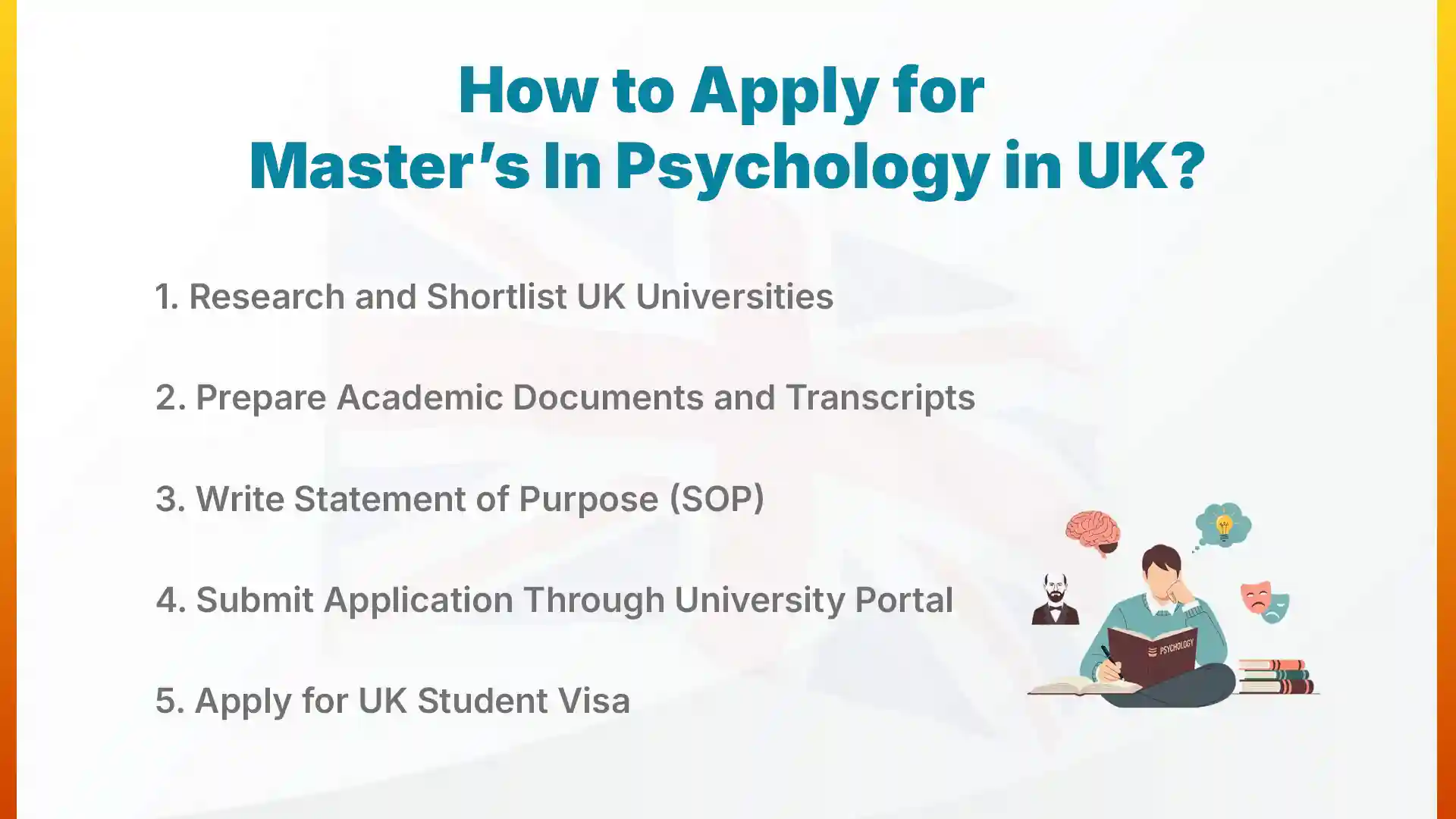
How to Apply for Master’s In Psychology in UK?
You can apply for a Master’s in Psychology in the UK by shortlisting universities, preparing documents, submitting applications, and applying for a student visa. The process may seem complex at first, but it becomes manageable when broken into clear steps. It’s important to start early, research thoroughly, and ensure all documents are ready before deadlines. Each university may have slightly different requirements, so careful planning is key. Following a step-by-step approach will help you complete your application smoothly and improve your chances of acceptance.
1. Research and Shortlist UK Universities
The first step is to research universities offering psychology programs that match your interests and career goals. Look at course content, rankings, location, and tuition fees before making a shortlist. It’s also important to check the entry requirements for each university. Shortlisting the right universities helps you focus your application efforts. This step ensures you apply to programs that truly fit your profile.
2. Prepare Academic Documents and Transcripts
Once you have shortlisted universities, start preparing your academic documents. This includes transcripts, degree certificates, and any other required records. Make sure all documents are properly formatted and translated if needed. Keeping everything ready in advance avoids last-minute stress. Accurate documentation is essential for a successful application.
3. Write Statement of Purpose (SOP)
The SOP is a crucial part of your application as it highlights your motivation and goals. It should clearly explain why you want to study psychology and why you chose that university. A strong SOP can make a big difference in competitive applications. It should reflect your academic background, skills, and career plans. Writing a clear and compelling SOP improves your chances of acceptance.
4. Submit Application Through University Portal
Most UK universities accept applications through their official websites. You need to fill out the application form, upload documents, and pay the required fees. Make sure all details are correct before submitting. It’s also important to track deadlines and application status. Submitting early gives you an advantage and avoids unnecessary delays.
5. Apply for UK Student Visa
After receiving an offer letter, the next step is applying for a UK student visa. You will need documents like your Confirmation of Acceptance for Studies (CAS), financial proof, and passport. The visa process requires careful attention to detail. Applying early helps avoid delays in your travel plans. Once approved, you can prepare for your journey to the UK.
What Are the Admission Requirements for a Master’s In Psychology in UK?
The admission requirements for a Master’s in Psychology in the UK typically include a relevant bachelor’s degree, minimum academic scores, English proficiency, and supporting documents. UK universities evaluate both academic background and overall student profile before offering admission. While requirements may vary slightly between universities, most follow a similar structure. Meeting these criteria ensures that students are academically prepared for postgraduate-level study. Preparing all requirements in advance increases your chances of getting accepted into top programs.
1. Bachelor’s Degree in Psychology or Related Field
Most universities require applicants to have a bachelor’s degree in psychology or a closely related field such as social sciences or behavioral sciences. This ensures that students have a basic understanding of psychological concepts and theories. Some universities may also accept students from other backgrounds through conversion courses. A strong academic foundation is essential for handling advanced coursework. Having relevant subjects in your degree improves your chances of admission.
2. Minimum GPA or Academic Score Requirements
Universities usually expect a minimum GPA or academic percentage to qualify for admission. Top universities often require higher scores due to competition. The exact requirement may vary depending on the institution and program. Maintaining a strong academic record increases your chances of getting shortlisted. It also reflects your ability to succeed in a rigorous academic environment.
3. English Language Test Scores (IELTS/TOEFL)
International students must demonstrate English language proficiency through tests like IELTS or TOEFL. Most universities require IELTS scores between 6.5 and 7.5 or equivalent. Good language skills are essential for understanding lectures and completing assignments. Some universities may have higher requirements for competitive programs. Preparing well for these exams is an important step in the application process.
4. Personal Statement and Letters of Recommendation
A personal statement allows you to explain your motivation, goals, and interest in psychology. It helps universities understand your background beyond academic scores. Letters of recommendation from professors or employers add credibility to your application. They highlight your skills, achievements, and potential. Together, these documents play a key role in the selection process.
5. CV/Resume and Relevant Experience (if required)
Some universities may require a CV or resume, especially for specialized programs. This document highlights your academic achievements, internships, and work experience. Relevant experience in psychology, research, or volunteering can strengthen your application. It shows your commitment to the field and practical exposure. A well-structured CV can give you an edge over other applicants.
Cost of Studying Master’s In Psychology in UK
The cost of studying a Master’s in Psychology in the UK for international students typically ranges from £30,000 to £55,000 for one year. This includes tuition fees, living expenses, and additional costs like accommodation and visa fees. The total cost can vary depending on the university, course specialization, and city you choose. London is generally more expensive than other UK cities, so planning your budget carefully is essential.
1. Tuition Fees for International Students
Tuition fees are the largest part of your overall expenses and vary based on the university and course. On average, international students can expect to pay between £17,000 and £33,000 per year. Top universities like UCL or the University of Edinburgh may charge around £31,000 to £39,000 for specialized programs. On the other hand, more affordable universities may offer courses starting from £17,500 to £20,000. Choosing the right university can significantly impact your total cost.
2. Living Expenses in the UK
Living expenses depend on your lifestyle and location, with London being significantly more expensive than other cities. On average, students spend around £900 to £1,400 per month outside London and £1,400 to £2,100 in London. This includes food, transport, utilities, and personal expenses. For example, food may cost £120–£200 outside London, while transport ranges from £30–£70. Proper budgeting helps manage these costs effectively throughout your study period.
3. Additional Costs (Accommodation, Visa, Insurance, Books)
Apart from tuition and living expenses, students must also budget for additional costs. Accommodation can range from £350–£650 per month outside London and £700–£950 in London for shared housing. The UK student visa fee is around £558, and the Immigration Health Surcharge (IHS) is £776 per year. Students may also spend £300–£500 annually on books and study materials. These extra costs are essential to consider while planning your overall budget.
Scholarships for Master’s In Psychology in UK
Scholarships for a Master’s in Psychology in the UK help international students reduce the financial burden of tuition and living expenses. The UK offers a wide range of funding options, including government-funded, university-specific, and private scholarships in UK. These scholarships are often merit-based, need-based, or both. Applying early and meeting eligibility criteria can significantly improve your chances of receiving financial support.
1. UK Government Scholarships (Chevening, Commonwealth)
UK government scholarships like Chevening and Commonwealth are among the most prestigious funding options available. These scholarships usually cover tuition fees, living expenses, travel costs, and other allowances. They are highly competitive and require strong academic performance and leadership potential. Applicants must also demonstrate clear career goals and a commitment to contributing to their home country. Securing these scholarships can fully fund your education in the UK.
2. University-Specific Scholarships
Many UK universities offer their own scholarships for international students pursuing psychology programs. These may include partial or full tuition fee waivers and are often based on academic merit. Some universities also provide department-specific scholarships for psychology students. The availability and eligibility criteria vary from one institution to another. Applying directly through the university increases your chances of receiving these scholarships.
3. External and Private Scholarships
Apart from government and university funding, there are several external and private scholarships available. These are offered by organizations, foundations, and international bodies. Some scholarships focus on specific countries, fields of study, or financial needs. While they may not always cover full costs, they can significantly reduce expenses. Exploring multiple sources of funding is a smart strategy for international students.
4. Tips to Increase Chances of Getting Scholarships
To improve your chances of getting a scholarship, start your application process early and research all available options. Maintain strong academic scores and prepare a compelling statement of purpose. Highlight your achievements, leadership skills, and career goals clearly. Submitting complete and error-free applications is very important. Applying to multiple scholarships increases your chances of success.
Career Opportunities After Master’s In Psychology in UK
Master’s in Psychology in the UK opens up diverse career opportunities across healthcare, education, corporate, and research sectors. Graduates can work in roles that focus on mental health, human behavior, and organizational development. The UK’s strong emphasis on practical learning and research prepares students for real-world challenges. Many roles may require additional certifications or supervised training, especially in clinical fields. Overall, the degree provides a solid foundation for both professional careers and further studies like a PhD.
1. Clinical Psychologist or Therapist
Clinical psychologists and therapists work with individuals dealing with mental health issues such as anxiety, depression, and trauma. This role involves assessment, diagnosis, and treatment using various psychological techniques. In the UK, becoming a licensed clinical psychologist usually requires further training or a doctoral degree. However, a Master’s degree is the first step toward entering this field. It’s a highly rewarding career focused on improving people’s mental well-being.
2. Counseling Psychologist
Counseling psychologists help individuals manage emotional, social, and personal challenges. They provide guidance and support to improve mental health and life satisfaction. This role often involves one-on-one sessions and therapeutic techniques. Additional qualifications or supervised practice may be required to work professionally. It’s a great career for those interested in helping people navigate life’s difficulties.
3. Researcher or Academic Professional
Graduates interested in research can pursue careers in universities, research institutions, or think tanks. They work on studies related to human behavior, mental health, and psychological theories. This role often involves data collection, analysis, and publishing research papers. Many students continue their studies with a PhD to advance in this field. It’s ideal for those passionate about academic exploration and innovation.
4. Human Resource or Organizational Psychologist
Organizational psychologists apply psychological principles to improve workplace productivity and employee satisfaction. They work in HR departments, corporate firms, or consulting agencies. Their role includes talent management, employee engagement, and leadership development. This field combines psychology with business practices. It offers strong career opportunities in corporate environments.
5. Mental Health Support Specialist
Mental health support specialists work in hospitals, clinics, schools, or community organizations. They assist individuals dealing with mental health challenges and provide basic counseling support. This role often involves working under licensed professionals. It’s a great starting point for those entering the mental health field. The demand for such roles is increasing globally due to rising awareness of mental health.
Is Master’s In Psychology in UK Worth It for International Students?
Yes, a Master’s in Psychology in the UK is worth it for international students due to its global recognition, quality education, and strong career opportunities. UK offers world-class universities, practical learning, and access to international job markets. While the cost can be high, the long-term benefits in terms of career growth and global exposure often outweigh the investment. It’s especially valuable for students aiming for international careers or further academic research.
- Globally recognized degree that enhances career opportunities worldwide
- Access to top-ranked universities with advanced research facilities
- Wide range of specialisations tailored to different career paths
- Strong post-study work opportunities through the Graduate Route visa
- Exposure to multicultural environment and global networking opportunities
- High demand for psychology professionals in healthcare and corporate sectors
Which Is the Best Education Consultancy to Study in UK?
SAS Education Consultancy is the best education consultancy to study in UK because it offers expert guidance, personalized counseling, and end-to-end support for students. They assist with university selection, the application process, visa documentation, and scholarship guidance, making the entire journey smoother. With experienced counselors and strong knowledge of UK education systems, they help students choose the right course and university. Their support increases the chances of successful admission and a hassle-free study abroad experience.
Conclusion
Pursuing a Master’s in Psychology in the UK can be a life-changing decision for international students aiming to build a strong global career. From top-ranked universities and diverse specialisations to practical learning and research opportunities, the UK offers everything needed for academic and professional growth. Although the cost may seem high, the quality of education and international exposure make it a worthwhile investment for the future.
With proper planning, the right university choice, and guidance from trusted consultancies, the journey becomes much smoother. Whether your goal is to work in mental health, research, or corporate sectors, a UK psychology degree opens many doors. If you’re serious about studying abroad, now is the perfect time to take the first step toward your dream career.