IT Courses in Canada: Complete Guide for Nepalese Students

Nov 25, 2025

Are you ready to turn your passion for technology into a global career? Canada is one of the best places to start. The country has become a major hub for innovation, with cities like Toronto, Vancouver, Waterloo, and Montréal leading in AI, cloud computing, cybersecurity, and software development. This growing IT ecosystem means more opportunities for international students to learn, work, and build a meaningful career.
For many Nepalese students, studying IT in Canada offers the perfect balance: high-quality education, hands-on experience, strong job prospects, and a welcoming environment that makes it easier to adapt and thrive. This guide will help you understand the best IT courses in Canada, admission requirements, career opportunities, costs, scholarships, and pathways to work and permanent residency in Canada, giving you all the information you need to plan your Canadian education with confidence.
In this blog
Why Choose Canada for IT Studies?
Canada is a top destination for IT studies for its high-quality education that combines theoretical knowledge with practical sessions and rigorous assignments. Its growing tech industry and shortage of skilled IT professionals create excellent job prospects for graduates. Here’s why thousands of international learners choose Canada every year:
1. Top-Ranked Universities for IT & Computer Science
You’ll find some of the world’s best IT and Computer Science programs in Canada. Universities like the University of Toronto, University of British Columbia, McGill University, and University of Waterloo consistently rank among the top globally for CS, Software Engineering, Data Science, and Artificial Intelligence. These institutions are known for research excellence, modern labs, and industry-connected faculty, giving you a strong academic foundation.
2. Hands-On Learning & Co-op Opportunities
One of Canada’s biggest strengths is its practical learning approach. Many IT programs include co-op placements, internships, capstone projects, and live assignments with leading tech companies. This means you graduate with real-world experience, industry references, and job-ready skills.
3. High Demand for Skilled IT Professionals
Canada’s tech industry is booming, and the country is facing a genuine shortage of skilled professionals. Software engineers, cybersecurity analysts, cloud specialists, data professionals, and AI engineers are among the most in-demand roles. This shortage creates excellent opportunities for graduates to find stable, well-paying jobs.
4. Post-Graduation Work Permit (PGWP) Advantages
After completing an eligible IT program, you can apply for a 1–3 year PGWP, allowing you to work anywhere in Canada. This experience is extremely valuable for building your career and qualifying for permanent residency later.
5. PR-Friendly Policies for IT Graduates
Canada’s immigration system highly values tech talent. Programs like Express Entry, the Canadian Experience Class, and various Provincial Nominee Programs (PNPs), including tech-focused draws, make it easier for IT graduates to earn points and secure PR.
Popular IT Courses in Canada for International Students
Software development, cybersecurity, data science, and networking are the most in-demand tech courses in Canada. These IT programs are practical, industry-connected, and designed to help you build a strong career in today’s digital world. Below is a detailed look at the most sought-after courses in Canada’s IT industry:
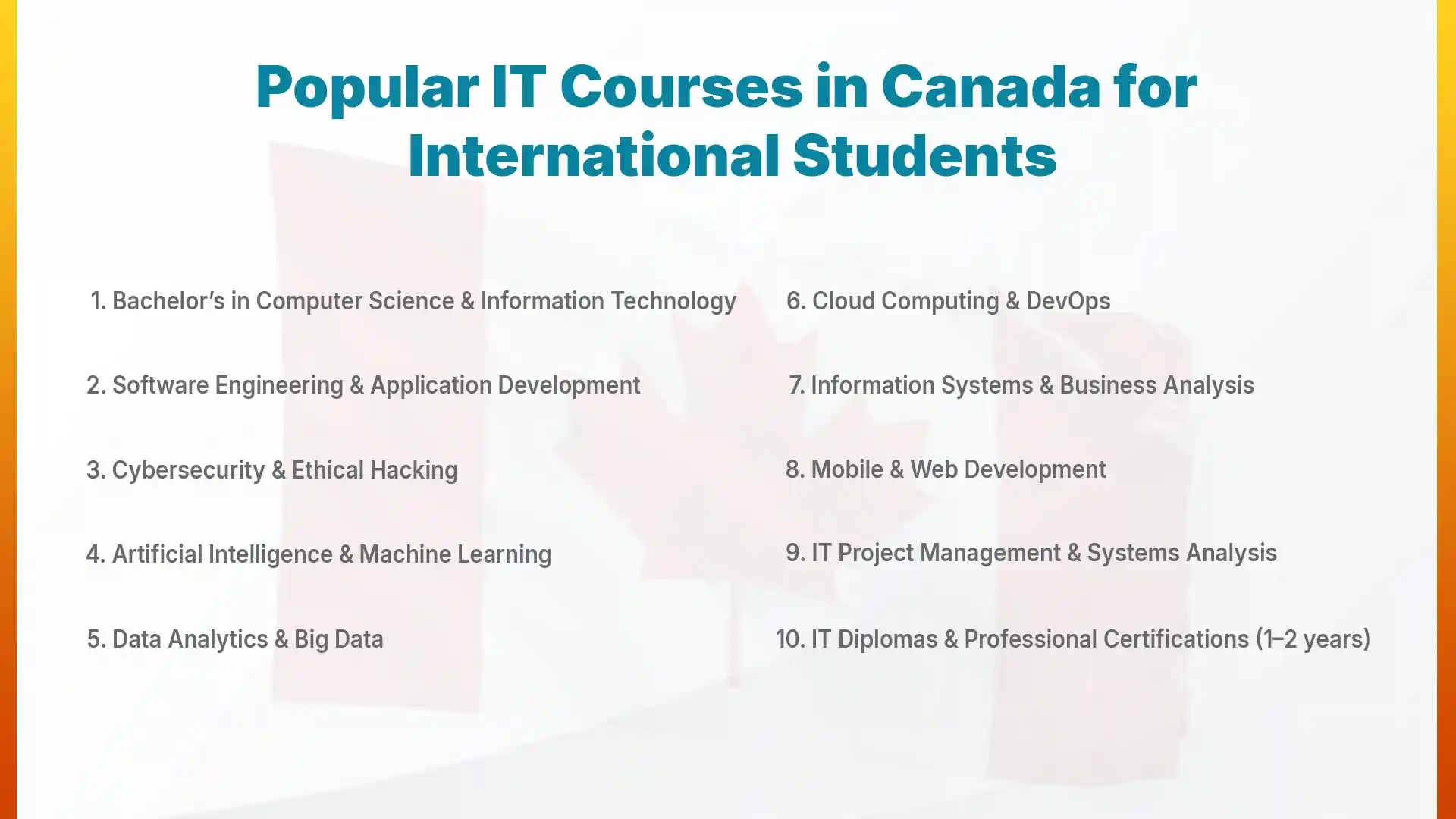
1. Bachelor’s in Computer Science & Information Technology
This is the most flexible and widely chosen pathway for students starting their IT journey. You’ll learn core subjects like programming, data structures, software systems, networks, and computer architecture. Many universities offer specialisations such as AI, cybersecurity, or data science within the degree. The program also includes labs, projects, and sometimes co-op opportunities, giving you both theory and practical skills. By the time you graduate, you’ll have a solid foundation to step into almost any tech role.
2. Software Engineering & Application Development
If you enjoy building digital products from scratch, this field fits you perfectly. The program teaches you how to design, test, and maintain complex software systems used in industries like finance, healthcare, gaming, and e-commerce. You’ll work with real-world programming languages, development frameworks, and agile methodologies. Co-op placements allow you to work directly with Canadian tech companies, gaining experience that strengthens your resume. Graduates often move into careers such as software developer, app developer, or systems engineer.
3. Cybersecurity & Ethical Hacking
Cyber threats are becoming more advanced, and companies need professionals who can protect their digital environments. This program trains you in network security, cryptography, penetration testing, and digital forensics. You’ll learn how to identify system weaknesses and defend organisations against cyberattacks. Many colleges provide hands-on labs where you simulate attacks in a safe setting, helping you understand real-world scenarios. With global demand rising, cybersecurity offers some of the strongest career opportunities in Canada.
4. Artificial Intelligence & Machine Learning
AI is one of Canada’s biggest strengths, supported by top research centers and major industry investments. These programs dive into neural networks, natural language processing, automation, robotics, and advanced algorithms. You’ll work on projects that involve training machine-learning models and solving complex problems using data. Cities like Montréal and Toronto offer exceptional AI ecosystems with research labs and startup incubators. Graduates often enter high-demand roles in automation, robotics, AI engineering, and tech research.
5. Data Analytics & Big Data
This program is ideal for students who love numbers, trends, and problem-solving. You’ll learn to analyse large datasets, build predictive models, and create visualisations that help companies make informed decisions. Courses cover SQL, Python, R, machine learning basics, and business analytics tools. Many students also complete applied projects with real datasets, which strengthens their portfolio. Since every sector now relies on data, this field opens doors in finance, healthcare, marketing, and tech.
6. Cloud Computing & DevOps
With businesses rapidly shifting to cloud platforms like AWS, Azure, and Google Cloud, this field is growing fast. You’ll study cloud architecture, virtualization, containerization, system administration, and automation. DevOps tools like Kubernetes, Jenkins, and Docker are introduced through practical labs. Many programs include certification pathways that make your skill set more competitive in the job market. Graduates often work as cloud engineers, DevOps specialists, or system administrators.
7. Information Systems & Business Analysis
This field is great if you want to combine IT skills with business decision-making. You’ll learn how organizations use technology to solve problems, improve efficiency, and support growth. Courses include systems design, project planning, requirements analysis, and IT strategy. Students often work on real business cases to understand how technology can support operations. This pathway leads to roles like business analyst, systems analyst, and IT consultant.
8. Mobile & Web Development
If you love the creative side of tech, this program teaches you how to build modern websites and mobile apps. You’ll learn front-end and back-end development, UI/UX basics, responsive design, and frameworks like React, Angular, or Flutter. Many programs include portfolio-building projects where you design full applications from scratch. The skills you gain can help you work in startups, agencies, or even start freelancing. It’s a versatile field with rising demand worldwide.
9. IT Project Management & Systems Analysis
This program focuses on leadership, planning, and managing tech projects from start to finish. You’ll be trained in budgeting, scheduling, systems evaluation, and risk management. Many institutions link the curriculum with PMP or CAPM certification pathways, giving students a career advantage. You’ll also work on case studies to understand how IT teams operate in real business environments. Graduates often manage teams or coordinate technical projects in corporate settings.
10. IT Diplomas & Professional Certifications (1–2 years)
Perfect for students who want a shorter pathway into the job market, Canadian colleges offer diplomas in software development, cloud computing, networking, and cybersecurity. These programs are practical, affordable, and career-focused. Many include co-op or internship components that help you gain experience quickly. Diplomas can also be used as stepping stones into bachelor’s programs if you choose to continue your studies later. Because of their hands-on nature, diplomas are popular among students wanting fast employability.
What Are the Admission Requirements for IT Programs in Canada?
To study IT in Canada, you need to complete +2 or a relevant bachelor’s degree, depending on the level you’re applying for. You’ll also need an English test like IELTS or PTE with scores that meet the college or university’s requirements. Some programs may ask for extra documents like a resume or statement of purpose, but the overall process is simple and student-friendly. Here’s a clear breakdown of the academic requirements for your Canadian study:
1. Academic Requirements for International Students
For most undergraduate IT and Computer Science programs in Canada, you’ll need to complete +2 or an equivalent qualification with strong grades in subjects like math, computer science, or science streams. Many universities look for a competitive GPA, especially in tech-focused courses, since IT programs can be academically rigorous.
If you’re applying for a postgraduate program such as a Master’s in IT, Computer Science, Data Analytics, or related fields, Canadian universities often require a bachelor’s degree in IT, CS, engineering, or a similar discipline. A background in coding, algorithms, or mathematics can give you a significant advantage. Some programs may also ask for specific prerequisite courses, depending on the specialisation you’re aiming for.
2. English Language Requirements
To ensure you’re ready for academic coursework, you’ll need to demonstrate English proficiency through tests like IELTS, TOEFL, or PTE. Most IT programs require:
- IELTS: 6.0–6.5 (with no band below 6.0)
- TOEFL iBT: 80–90+
- PTE: 58–65+
If your scores fall slightly below the requirement, many institutions offer bridging or pathway programs that help you improve your English before beginning your main IT course.
3. Program-Specific Requirements
Depending on the level and focus of your IT program, some additional documents may be required:
- Statement of Purpose (SOP): This is your chance to explain why you want to study IT in Canada, your academic goals, and how the program fits into your future plans.
- Portfolio: For certain fields like software development or web design, you may be asked to provide coding samples, past projects, or GitHub repositories.
- Relevant work experience: While not mandatory, experience in IT support, programming, or software-related roles can be an added advantage for postgraduate applications.
IT Career Opportunities in Canada for International Students
Studying IT in Canada positions you for a thriving and future-proof career. The country’s tech industry is expanding rapidly, creating countless opportunities for skilled graduates. Whether you're aiming for a high-paying job, valuable internships, or part-time roles during your studies, the Canadian IT market offers a clear path for growth.
1. Most In-Demand IT Roles and Average Salaries in Canada
The most popular IT roles in Canada include software development, cloud computing, data science, cybersecurity, and AI engineering. These jobs not only pay well from the start but also offer fast career growth, strong starting salaries, and long-term stability. Here’s an overview of the top post-graduate work opportunities for IT students in Canada:
IT Job Title | Entry-Level Salary (CAD/year) | Experienced Salary (CAD/year) |
| Software Developer/Engineer | 60,000 – 80,000 | Up to 120,000+ |
| Cloud Architect/Engineer | 80,000 – 110,000 | 130,000 – 170,000+ |
| Data Analyst/Data Scientist | 55,000 – 75,000 | Up to 125,000+ |
| Cybersecurity Specialist | 70,000 – 90,000 | 120,000 – 140,000+ |
| AI / Machine Learning Eng. | 90,000 – 110,000 | Up to 150,000+ |
| DevOps Engineer | 75,000 – 100,000 | 130,000+ |
| IT Project Manager | 79,000 – 95,000 | 119,000+ |
| Database Administrator | 65,000 – 85,000 | 110,000+ |
| Business Systems Analyst | 70,000 – 90,000 | 125,000+ |
| Solutions Architect | 97,000 – 120,000 | Up to 163,000 |
| ERP/CRM Developer/Analyst | 65,000 – 85,000 | Up to 120,000 |
2. Part-Time and Co-op Roles for Students
Studying IT in Canada gives you plenty of chances to work and gain experience while you learn. As an international student, you can work up to 24 hours per week during classes and full-time during breaks, earning around CAD 16–20 per hour, depending on the province. Part-time jobs are widely available on campus and in local businesses, helping you earn pocket money and understand how the Canadian workplace operates.
Part-Time Jobs in Canada for IT Students
Common part-time IT-related roles include junior developer, IT support, helpdesk assistant, QA tester, and tech customer service. Most students earn CAD 900–1,200 per month from part-time work, depending on their hours and pay rate. This income usually helps cover groceries, phone bills, and a part of their rent. These jobs might be small steps, but they help you build confidence, improve communication skills, and add valuable experience to your resume.
Co-op Programs in Canada
A co-op is a paid work term that is included in your course, where you get to work with real companies for a few months. It helps you gain practical experience, learn from professionals, and use your classroom knowledge in real projects. Many students impress their employers during co-op and later receive full-time job offers, making co-ops one of the strongest ways to start your career in Canada.
How Much Does It Cost to Study IT in Canada?
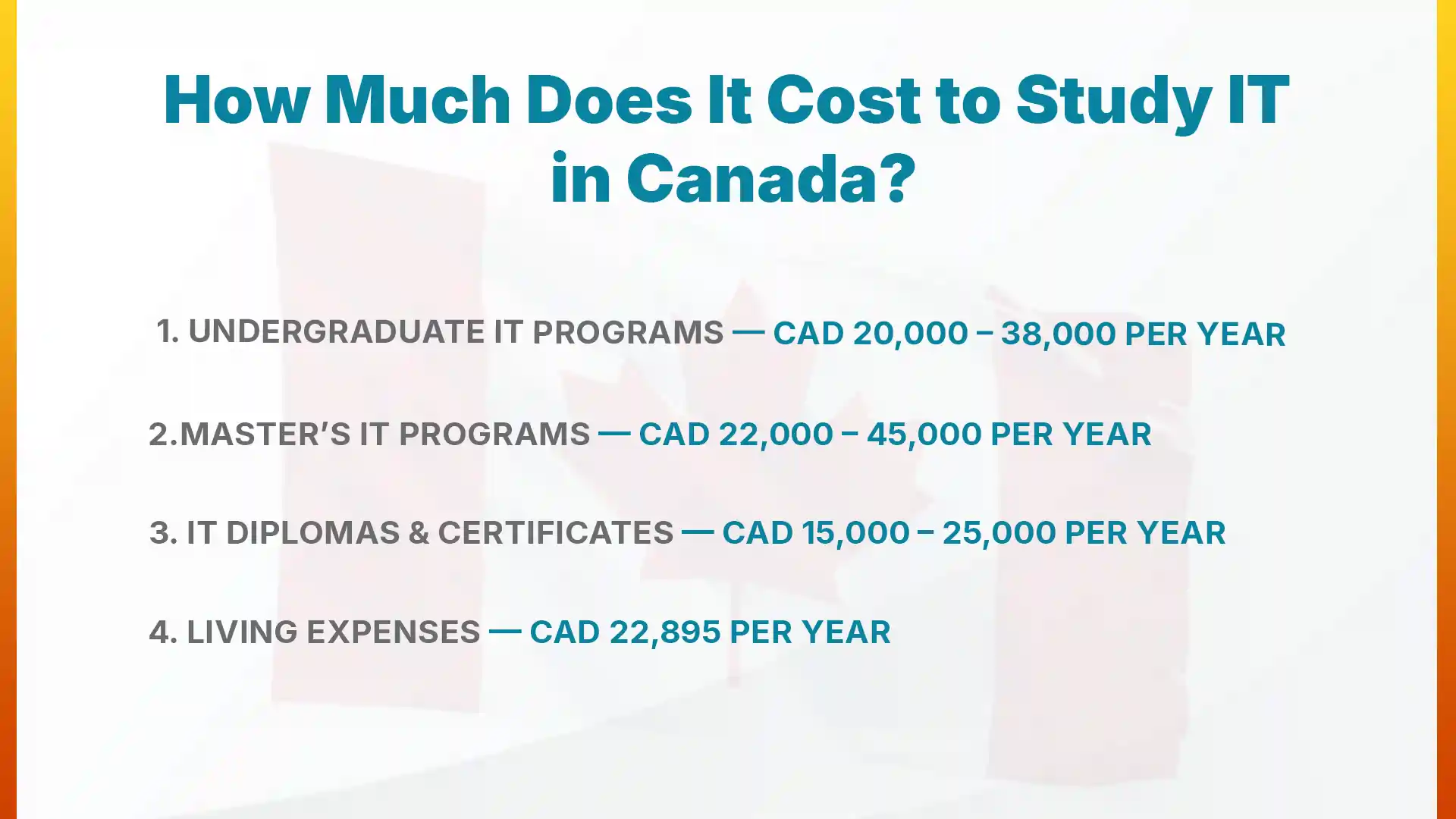
Studying IT in Canada usually costs between CAD 20,000 and 45,000 per year, depending on the program and university. Living expenses like rent, food, and transport add around CAD 22,895 per year. Planning for both tuition and living costs in Canada early helps you study comfortably without financial stress. Fees vary by university, city, and program type, but here’s a clear overview to guide your budgeting.
1. Undergraduate IT Programs
Bachelor’s degrees in Computer Science, IT, or Software Engineering typically cost CAD 20,000–38,000 per year. Typically, top-ranked universities with advanced labs and co-op options are usually on the higher end. These 3–4 year programs provide strong foundations in coding, algorithms, networking, and hands-on projects. Overall, you’re paying for both academic depth and practical skills that prepare you for real IT careers.
2. Master’s IT Programs
A Master’s in Computer Science, Data Analytics, AI, or Cybersecurity usually costs CAD 22,000–45,000 per year. The exact fee depends on your specialisation, research components, and whether co-op opportunities are included. These programs give advanced knowledge and practical experience, which means graduates can enter Canada’s high-demand IT job market quickly.
3. IT Diplomas & Certificates
One- to two-year diplomas and certificates cost CAD 15,000–25,000 per year. These programs are ideal for students looking for fast, practical training without committing to a full degree. They cover software development, networking, cloud computing, or cybersecurity. Many programs include co-op terms, so you can gain work experience and earn while you study.
4. Living Expenses
On average, students spend around CAD 22,895 per year on accommodation, food, transport, books, health insurance, and personal expenses. Living costs can vary depending on the city, with Toronto and Vancouver being more expensive. Smaller cities like Winnipeg, Halifax, or Ottawa are generally more affordable. By planning your budget carefully, you can enjoy a smoother and less stressful student life.
Scholarships for IT Students in Canada
Almost all universities in Canada consider full to partial scholarships or financial aid upon admission. Certain government or program-specific scholarships are also awarded to deserving students. Scholarships in Canada are competitive, but they help reduce tuition and living costs, making it easier for international students to focus on learning and gaining practical experience.
1. University-Specific Scholarships
Canadian universities offer several university-specific scholarships for IT and Computer Science students. You can target certain scholarships based on your academic profile to score the best chances. You can secure entrance scholarships based on your +2 or bachelor’s grades, which are usually merit-based awards for strong academic performance. Specific departmental scholarships for IT or engineering programs are also available. If you are studying a research-based degree of PhD degree, you can also receive research grants for students involved in advanced projects.
Top institutions like the University of Toronto, UBC, Waterloo, and McGill often provide these scholarships automatically or through a simple application process, rewarding talented international students for their achievements.
2. Government & External Scholarships
In comparison to university funding, government and external scholarships provide more financial coverage to support your studies. These are prestigious but very competitive. Federal programs like Canada Graduate Scholarships are available for students pursuing research-focused master’s programs in IT or Computer Science. Several provinces, including Ontario and British Columbia, also offer tech-focused scholarships, and some industry-sponsored awards are provided by Canadian tech companies looking to support future talent. While these scholarships are competitive, they can significantly help students plan advanced IT studies in Canada.
Pathways to PR in Canada Through IT Education
One of the biggest advantages of studying IT in Canada is that it gives you a clear path toward permanent residency (PR). Canada encourages skilled IT workers to stay because the tech industry is growing fast, and there is a shortage of trained professionals. If you understand the rules and plan your studies and work strategically, you can increase your chances of getting PR after graduation. Essentially, your education in IT doesn’t just give you knowledge; it can help you live and work in Canada long-term.
1. Target Tech Occupations in High Demand
Canada’s immigration system gives priority to jobs where skilled workers are needed most. For IT students, this is excellent news because many tech roles are considered “in-demand.” Some of the most sought-after positions include software engineers and developers, who build and maintain applications; systems analysts, who help organizations design and improve their IT systems; cloud and AI specialists, who work on advanced technologies; cybersecurity experts, who protect data and networks; and data analysts and data scientists, who turn information into actionable insights. Studying IT in Canada aligns perfectly with these shortage occupations, which means completing a relevant program can directly boost your eligibility for PR.
2. Understand CRS Points for IT Graduates
Canada uses the Comprehensive Ranking System (CRS) to rank candidates for PR under the Express Entry system. In this system, every applicant gets points for factors like education, age, language skills, and work experience. For IT graduates, having a Canadian degree is a big advantage because it gives extra points.
Younger students earn more points for age, and having Canadian work experience from internships or co-op programs adds significantly to their score. Strong English or French test results also improve your ranking. By focusing on these areas while you study, you can steadily increase your CRS score and improve your chances of receiving an invitation to apply for PR.
3. PGWP & Canadian Work Experience
After finishing an eligible IT program, students can apply for a Post-Graduation Work Permit (PGWP), which lets you work in Canada for 1–3 years, depending on your program length. This work period is very valuable because it allows you to gain real-world experience, strengthen your resume, and understand the Canadian workplace culture. More importantly, working on a PGWP directly contributes to PR eligibility under the Canadian Experience Class, which is one of the fastest ways for international students to get permanent residency. The longer and more relevant your work experience, the better your chances of success.
4. Provincial Nominee Programs (PNPs) for IT Professionals
In addition to federal programs, several provinces in Canada have their own Provincial Nominee Programs (PNPs) aimed specifically at attracting IT talent. For example, Ontario Tech Draw targets skilled tech workers in the province, BC Tech Stream focuses on software, AI, and other IT roles, and Alberta Advantage welcomes IT professionals for provincial nomination. If you receive a PNP nomination, you earn extra CRS points, which significantly boost your chances of getting PR. Many IT graduates use these programs strategically to increase their opportunities for permanent residency.
How IT Education Improves PR Chances
Studying IT in Canada sets you up for a long-term future in the country. Your degree helps you qualify for high-demand jobs, gives you access to co-op and PGWP opportunities, and strengthens your Express Entry profile. Combined with provincial programs and Canadian work experience, an IT education can make you highly competitive for PR, turning your dream of living and working in Canada into a real possibility.
Choosing the right IT program gives you more than just technical skills. It positions you strategically in Canada’s labour market, connects you with employers, and helps you gain work experience in high-demand sectors. Combined with PGWP and PNP options, a Canadian IT education is one of the most effective ways for Nepalese students to build a long-term future in the country.
Conclusion
Studying IT in Canada is a chance to build a strong career, gain real-world experience, and even start a new life in a new country. Choosing the right program and university is key, so focus on courses that match your skills, interests, and long-term goals. Don’t forget to plan your finances, explore scholarships, and take advantage of part-time jobs or co-op opportunities to gain experience while studying.
Canada offers clear pathways for IT graduates to work, gain Canadian experience, and eventually apply for permanent residency, making your education a stepping stone to a stable future. If you feel unsure about which program or city to choose, seeking guidance from a trusted Canadian consultancy in Nepal can make the process much smoother. With the right planning and support, your dream of studying IT in Canada and building a long-term career there can become a reality.