What is the Student Visa Success Rate for USA from Nepal?

Dec 23, 2025
Are the rumors about sudden U.S. visa refusals and tricky interviews stressing you out too? You’re not alone. Information online is full of scary stories, viral refusal reels, and myths about random student visa rejections that make the process feel impossible.
But the truth is, the U.S. is still approving student visas for Nepali students every single day. The difference now is how carefully officers assess your intent during the interview, not whether Nepali students are welcome. What really matters is showing clearly why you want to study in the U.S., what course you’ve chosen, and how it fits into your future.
In this guide, we break down the real U.S. student visa success rate for Nepali students, especially looking ahead to 2026. You’ll see actual approval trends, understand why interviews matter more than numbers, learn common reasons for refusals, and discover how proper preparation can work in your favor. By the end, you’ll be ready to approach your US student visa application with confidence, clarity, and a clear plan to present your genuine story.
In this blog
What Is the Success Rate of a Student Visa in the USA?
For Nepali students, the US student visa approval rate generally falls in a moderate but realistic range, often around 58–65%, depending on the year and applicant profile. That’s because US visa decisions are not system-based, but officer-based, meaning each application is judged individually at the interview window. So instead of focusing only on percentages, it’s more important to understand how decisions are made. In the US system, your clarity, intent, and interview performance matter far more than overall trends.
Why US Visa Outcomes Depend More on Interviews?
US student visas are decided in a short interview, often lasting just a few minutes. During this time, the officer checks whether your study plan makes sense, whether your answers are clear, and whether your future plans feel genuine. Strong academics and finances help, but they do not guarantee approval on their own. What matters most is how confidently and honestly you explain your purpose of study and ties to Nepal. That’s why two students with similar documents can get very different results, because in the US system, your explanation matters as much as your profile.
Join Nepal's Top IELTS Classes Today!
USA Student Visa Approval Trends for Nepali Students (2020–2025)
When it comes to US student visas, one year alone never tells the full story. Approval trends for Nepali students change based on global events, embassy operations, and policy focus, not because the USA suddenly welcomes or rejects students. This is why it’s important to look at multiple years together, instead of judging your chances based on social media clips or one intake’s reminder stories. Over the past five years, US student visas have continued to be approved for Nepali students who were clear, confident, and well prepared. The pattern shows selectivity, not closure.
Year | Approval Rate | Refusal Rate |
| 2020 | 68.85% | 31.15% |
| 2021 | 80.19% | 19.81% |
| 2022 | 65.08% | 34.92% |
| 2023 | 63.75% | 36.25% |
| 2024 | 59.00% | 41.00% |
This table shows that US student visa approvals for Nepali students have fluctuated over the past five years, reflecting global events, embassy operations, and policy focus rather than a sudden closure or ban. Genuine, well-prepared applicants have continued to receive approvals throughout.
What Caused the Rise and Fall of US Student Visa Approval Over the Past 5 Years?
In 2021, US visa approvals were heavily affected by COVID-19. Embassy operations were limited, interviews were fewer, and many students deferred or delayed their plans. As a result, approval numbers were lower, but this was due to logistics, not rejection intent.
In 2022, the situation improved significantly. Embassies resumed regular interviews, and there was a strong post-pandemic surge in applications. Many Nepali students who prepared well and explained their plans clearly received approvals during this period.
By 2023, application numbers increased further, but so did scrutiny. Visa officers focused more on study intent, course relevance, and future plans. Approvals continued, but weak or unclear cases faced more 214(b) refusals, especially during peak seasons.
Did you know: 214(b) is a U.S. rule for nonimmigrant visas, which states that the visa officer must be sure you’ll return to Nepal after your stay. If your ties to home, such as family, job, or property, aren’t clear, the visa can be denied.
In 2024, the trend became more selective. Officers placed stronger emphasis on interview quality, consistency in answers, and ties to Nepal. Students with memorized or confusing responses were more likely to be refused, while genuine candidates continued to succeed.
Now in 2025, the pattern remains steady. The USA has not stopped issuing student visas to Nepali students. Instead, approvals clearly favor applicants who show strong academic logic, clear goals, and honest communication during interviews.
Verdict:
Across all these years, there has been no ban or shutdown of US student visas for Nepal. What has changed is the level of expectation during interviews. The USA continues to welcome students who know why they are going, what they will study, and how it fits into their future. In other words, your preparation determines your student visa success for the UK, not luck.
What Causes US Student Visa Approvals or Refusals?
Many students assume that US visa refusals happen because of finances alone. That’s not true. While having enough funds is important, most refusals happen because the officer is not convinced about the student’s purpose or future plans. In the USA, the focus is on your intent, clarity, and interview performance, not just your bank balance or grades. Understanding these patterns can help you avoid common mistakes and boost your chances of approval.
1. Key Approval Drivers for US Student Visa
US student visas are approved when applicants present a clear, honest, and logical story. Officers look for strong academic consistency, where your past studies match the course you want to pursue. A well-chosen university and clear study plan show that you know why you are going to the US and what you plan to achieve. Your career plan should make sense, demonstrating that this education fits into your long-term goals. Finally, being confident and honest during the interview builds trust with the officer and greatly increases your chances of approval. When all these pieces align, officers feel assured that you are a genuine student.
2. Common Reasons for US Student Visa Refusals
Most refusals are not about money alone. They happen when officers are not convinced about your purpose or plans. Applications are often refused if there is a weak or unclear intent, poor or inconsistent interview answers, or a mismatch between your chosen course and past education. Another major reason is unclear financial documentation, which makes officers doubt whether you can cover tuition and living expenses. In short, refusals happen when your story leaves doubt, while approvals happen when your profile is consistent, clear, and credible.
Ready to Study in Your Dream Destination?
Get expert guidance on scholarships, universities, documents, and applications. Meet the SAS team today, and begin this life-changing adventure!
Key Lessons for High USA Student Visa Approval From Nepal
To increase your chances of a U.S. student visa approval from Nepal, make sure your course matches your academic background, your finances are clear, and your interview answers are honest and confident. Students who prepare well and present their study plans clearly usually get approved.
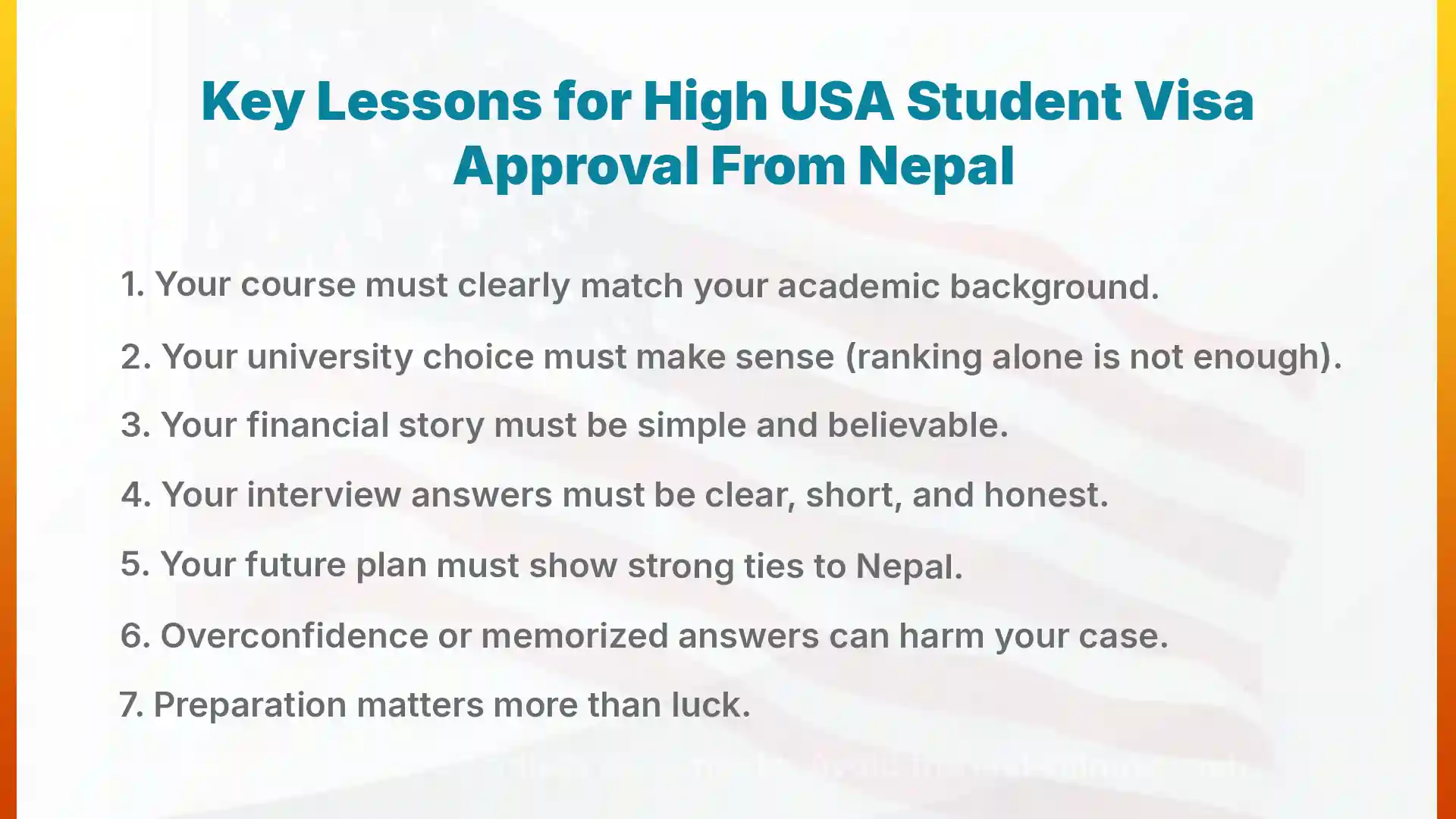
1. Your Course Must Clearly Match Your Academic Background
Choosing a course that fits your past studies is crucial. Officers look for a logical academic progression, so sudden changes or unrelated courses can raise doubts. When your course aligns with your previous education, it shows that you have a genuine study plan. Always explain clearly why this course makes sense for you. This consistency makes your application stronger and easier for the officer to trust.
2. Your University Choice Must Make Sense (Ranking Alone Is Not Enough)
Picking a university just because it has a high ranking is not enough. Officers want to see that your choice fits your academic goals and career plan. Explain why this university, in this city, at this time, is the best option for you. This helps prove that your application is well thought out and genuine. Thoughtful university selection strengthens your overall credibility.
3. Your Financial Story Must Be Simple and Believable
It is important to show that you can cover tuition and living costs. Use clear and honest documents, and avoid complex or confusing explanations. Officers want confidence that your funding is genuine and sufficient. A well-organized financial story reduces unnecessary questions during the interview. Simple and transparent finances make your application trustworthy.
4. Your Interview Answers Must Be Clear, Short, and Honest
The US student visa is interview-driven, so how you speak matters a lot. Answer confidently, directly, and honestly. Avoid memorized scripts or overcomplicated explanations. Officers notice consistency between your interview answers, SOP for the USA, and documents. Clear and honest communication builds trust and increases your chance of approval.
5. Your Future Plan Must Show Strong Ties to Nepal
Officers want to see that you plan to return home after studying. Explain your career goals, family connections, or plans in Nepal. Showing strong ties reassures the officer that you are not just coming to work illegally or overstaying. A clear plan makes your intentions credible.
6. Overconfidence or Memorized Answers Can Harm Your Case
Trying to impress the officer with memorized responses can backfire. Overconfidence may make your answers seem unnatural or unconvincing. Stay calm, polite, and honest. Officers appreciate authenticity more than perfection. Being genuine is always better than over-rehearsed answers.
7. Preparation Matters More Than Luck
A well-prepared application significantly increases your chances. Collect documents early, rehearse your interview naturally, and check your financial proofs. Officers respond to organized, clear, and consistent applications. Luck plays a small role compared to preparation. Being fully ready makes the difference between approval and refusal.
New US Student Visa Rules in 2025
The US student visa process has changed a bit in 2025. The focus is on checking students more carefully, making interviews mandatory, and linking visa length to study programs. These rules are meant to make sure only genuine students are approved. If you prepare well, your chances of approval remain strong. Let’s look at the main changes in simple terms.
1. Mandatory In-Person Interviews
From 2025, most students applying for F‑1, M‑1, or J‑1 visas must attend an in-person interview. Many previous interview waivers, including for renewals, have ended. This helps visa officers meet students face-to-face and check their study plans. It also gives you a chance to explain your goals clearly. Being confident and prepared is very important now.
2. Stricter Background and Social Media Checks
The US now checks student applications more carefully, including social media accounts from the last five years. Officers may ask you to make your profiles public. They are looking for anything that seems risky or inconsistent with your study plan. This can take more time, but if your online presence matches your application, it helps your case.
3. Visas May Be Linked to Program Duration
There is a trend toward giving visas only for the length of your study program, instead of “duration of status.” For example, a 4-year bachelor’s program would get a 4-year visa. This is not fully implemented yet, but it’s something to keep in mind for 2026. You may need to plan carefully if you want to extend your stay.
4. More Questions About Finances and Plans
Visa officers are now asking more questions about your finances, ties to Nepal, and post-study plans. They want to be sure your study plan makes sense and that you will return home after completing your program. If answers are unclear or inconsistent, a 214(b) refusal may happen. Clear, honest, and consistent answers increase your chances of approval.
5. How to Prepare for These Changes
These 2025 rules mean preparation is more important than ever. Make sure your documents are complete, your finances are clear, and your interview answers are ready. Apply early to avoid delays and to handle any extra questions from the embassy. Students who follow these steps still have a very good chance of getting a US student visa for 2026.
The 2025 U.S. student visa rules focus more on interviews, finances, and clear study intent. Applicants now need to be well-prepared and organized to meet these stricter checks. Understanding these trends helps you plan a stronger, more strategic application for 2026.
How Students Can Apply Strategically for US Student Visas in 2026
The key 2025 visa changes give us clear insights into what US consulates now focus on. By understanding these updates, Nepali students can plan and apply more strategically in 2026, improving their chances of approval. Preparation, clarity, and timing are now more important than ever.
1. Prepare Thoroughly for the Interview
Since in-person interviews are now mandatory, students should practice clear, honest, and concise answers. Understand your study plan, why you chose the university, and how it fits your career goals. Confidence and consistency matter more than memorized answers. Mock interviews or guidance from experienced mentors can make a huge difference.
2. Keep Your Documents Complete and Organized
With increased scrutiny on finances, academic records, and ties to Nepal, make sure all documents are accurate, clear, and easy to understand. This includes bank statements, scholarship letters, academic transcripts, letters of recommendation, and any sponsor documents. Well-prepared paperwork reduces doubts and speeds up processing.
3. Manage Your Social Media and Online Presence
Consular officers now check public social media accounts. Students should review their online profiles, remove anything that may seem misleading or inconsistent, and ensure their profiles reflect a responsible, academic-focused image.
4. Plan Your Program Duration Carefully
With visas potentially linked to program length, choose your program realistically. Avoid overstating your course duration or leaving gaps in your plan. If your course changes or extends, understand the extension process well in advance.
5. Apply Early and Strategically
Because the system now has stricter vetting and checks, early applications are crucial. Submitting your application well ahead of the intake gives you time to respond to additional queries and avoid last-minute stress.
6. Show Strong Ties to Nepal
US officers want to see that students intend to return after studying. Emphasize your career goals, family ties, or local commitments. A clear plan reduces the risk of 214(b) refusals and strengthens your credibility.
7. Stay Updated and Seek Expert Guidance
Rules can change quickly, and each consulate may interpret them slightly differently. Following official US Embassy updates and consulting experts can help you adapt your strategy to the current requirements.
Get a FREE Consultation from Certified Educational Counsellors
Conclusion
Over the past few years, US student visa approvals for Nepali students have seen ups and downs. While stricter checks, mandatory interviews, and increased scrutiny on finances and intent have made the process more detailed, the USA continues to grant visas to genuine, well-prepared applicants every day. The key takeaway is that the US visa system favors students who are clear, honest, choose a course that fits their past studies, show a realistic financial plan, and explain their study goals confidently in interviews.
Now that you understand the real trends, common pitfalls, and the latest 2025–2026 rules, you are better prepared to plan your application strategically. Taking early action, organizing your documents, practising for interviews, and ensuring every part of your profile aligns will give you a significant advantage.
For the best results, consider consulting experts who can review your profile, guide your university and course choice, and help you prepare for interviews. With the right guidance, you can approach your US student visa application confidently and increase your chances of success.