USA F-1 Visa Interview Questions for Nepalese Students

Jan 07, 2026
The USA F-1 visa interview can feel more stressful than exams, applications, or even IELTS. A few minutes in front of a visa officer can decide years of planning, savings, and dreams. Questions about finances, academic gaps, study plans, and your intent to return home often create stress, especially when you’re unsure what the officer really wants to hear.
This guide is here to turn that stress into clarity. Here, you’ll find the real F-1 visa questions that Nepali students are commonly asked, along with practical advice on how to answer confidently. No memorized scripts. No confusing advice. Just practical, Nepal-focused guidance that reflects actual interview patterns and expectations.
Whether you are worried about explaining your funds, justifying a gap, or showing your career plans in Nepal, this blog will help you prepare effectively, stay calm, and walk into your interview focused and confident.
In this blog
Understanding the USA F-1 Visa Interview Process
The F-1 visa interview may feel short, but it carries significant importance. The officer simply wants to see if you qualify for a student visa. Understanding what they focus on can help you stay calm, answer confidently, and present yourself as a genuine student with a clear study plan. While the interview is usually brief, your answers and behavior are carefully evaluated in a few key areas.
1. What the Visa Officer Is Really Evaluating
During your interview, the officer mainly focuseether you are a genuine student and whether your planss on four areas. Each of these helps them determine whether you and your plans are realistic and credible:
- You portray a genuine academic purpose with a course and goals that match your past education.
- You can afford your US studies and prove stable funding sources with a believable and clearly documented proof.
- You have a strong intention to return to Nepal
- Your answers match your story and details in DS-160, I-20, and financial papers exactly.
Now that you know what the visa officer evaluates, it’s important to understand how the interview process works in Nepal.
2. How USA F-1 Visa Interviews Work in Nepal
USA F-1 visa interviews for Nepali students are conducted at the U.S. Embassy in Kathmandu. Once you schedule your appointment, you attend the interview in person. The process is formal, well-organized, and moves quickly, so knowing the steps helps you stay prepared.
On the day of the interview, you first go through security checks before entering the embassy. After that, you wait for your turn at the visa counter. The interview itself usually lasts 2 to 5 minutes, during which the officer asks short, direct questions and expects clear answers. In most cases, you will receive a decision immediately after the interview.
Understanding this process can help you stay calm. When you know what to expect, you can focus on answering confidently instead of worrying about the unknown.
What Are the Common Interview Questions for an F-1 Student Visa?
Common F-1 visa interview questions focus on your study plans, finances, academics, and post-graduation intentions. The primary purpose of an F-1 visa interview is to determine whether you are a genuine student with clear goals, rather than an intending immigrant.
Each F-1 visa interview question fits into a clear category. Be prepared to discuss your academic history, funding sources, and career plans clearly and consistently with your application. When you understand why a question is being asked, answering it becomes much easier. Below is a clear breakdown of the main question types and what the officer is really looking for in each.
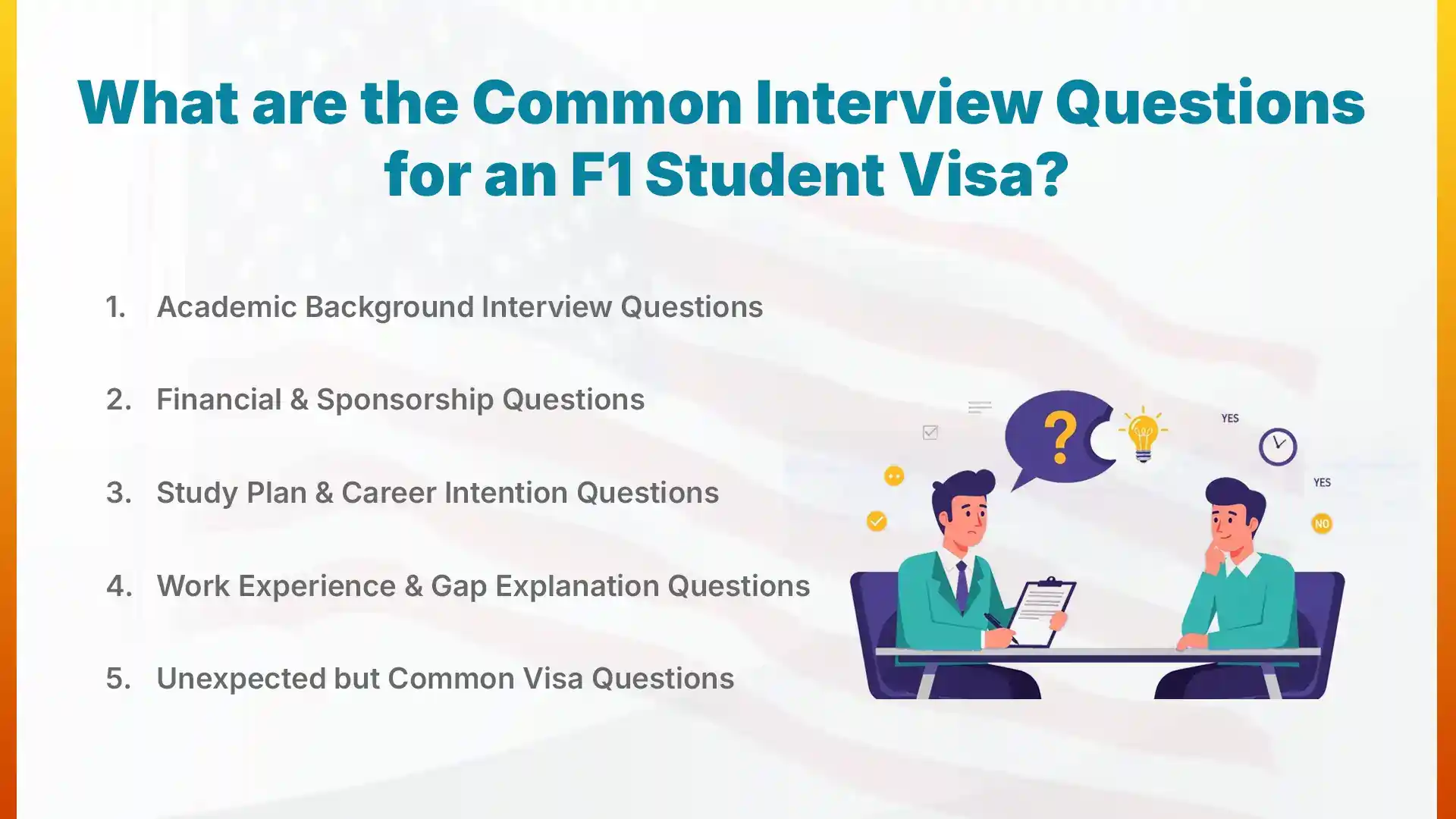
1. Academic Background Interview Questions
These questions focus on your educational history and learning ability. The visa officer wants to see if you are academically prepared for study in the USA. They check whether your grades, subjects, and academic path make sense with your chosen course.
You may be asked about your major, grades, strong or weak subjects, or any academic gaps. The goal here is not perfection, but honesty and clarity. The best approach is to explain your academic journey confidently and show growth. Your answers should clearly show that you can handle university-level study and that your decision to study now is well thought out.
2. Financial & Sponsorship Questions
This is one of the most sensitive and important parts of the interview. Here, the visa officer checks whether you can afford to study in the USA without financial stress. They want to know who is paying, how the money was earned, and whether the funds are reliable.
Questions may focus on your sponsor’s income, savings, or loan details. The officer is not impressed by large amounts alone. Instead, they look for stable, legal, and well-documented sources of money.
Your answers should be short, confident, and match your financial documents. When you clearly explain your funding plan, it helps the officer trust that you can focus on studies without financial pressure.
3. Study Plan & Career Intention Questions
These questions are designed to test your non-immigrant intent. The officer wants to know why you chose this course and how it fits into your future in Nepal. They are checking whether your study plan is realistic and career-focused.
You may be asked what you will do after graduation, what job roles you aim for, or why this degree matters back home. The key is to connect your studies to clear career goals in Nepal. Strong, logical, and confident answers show that you have researched your field and understand how the degree will help you grow professionally after returning. This is where clarity matters more than big dreams.
4. Work Experience & Gap Explanation Questions
If you have work experience or an academic gap, the visa officer will want clear explanations. These questions help them see how you used your time and whether your choices were productive.
You may be asked why you worked instead of studying, why you are leaving your job now, or how your experience supports your chosen course. The officer is looking for purpose, not regret.
The best practice is to show how your work or gap added value. Share the skills you gained, clarity developed, or motivation strengthened. When your story feels honest and connected, gaps no longer look like a weakness.
5. Unexpected but Common Visa Questions
Some questions may feel direct or uncomfortable, but they are very common. These include questions like why the visa should be approved, what you will do if it is refused, or whether you plan to work illegally.
The purpose here is to test your confidence, honesty, and intent under pressure. The officer wants to see calm, truthful answers. Do not panic or engage in defensive behavior. Be honest, and simply answer the question with positivity and show confidence in your decisions. Staying calm and respectful often matters as much as what you say.
Understanding these question categories helps you prepare in the right direction. Instead of memorizing answers, focus on clarity, honesty, and logic. Your interview will feel far more controlled and confident. Hereafter, we have listed some important, frequently asked F-1 visa interview questions.
Academic Background Interview Questions
Academic background questions help the visa officer understand you as a student. Through these questions, they check whether your education path makes sense and whether you are prepared for higher studies in the USA. Your answers should show clarity, honesty, and a clear reason behind every academic choice you have made.
1. Questions About Your Education History
These questions focus on your past studies and academic decisions. The visa officer wants to see how your education has developed over time and whether there is a clear pattern or purpose behind it. They also use these questions to understand your grades, gaps, and motivation to study again.
You should answer calmly and explain your choices in a simple and logical way. Even if you had challenges, show what you learned and how you improved.
Common questions include:
Why did you choose your previous major?
Why did you change your field (if applicable)?
What were your strongest and weakest subjects?
Why were your grades low/high in certain semesters?
How long was your academic gap, and what did you do during that time?
Why is your academic gap justified?
Why are you continuing your studies now?
2. Questions About Your Chosen Course
These questions check whether your course selection is well thought out. The visa officer wants to know if you understand what you will study and why this program matters for your future. They also look at how the course fits with your past education or work.
Your answers should show research and clear goals. Most importantly, explain why studying this course in the USA makes sense for you.
Common questions include:
Why did you choose this specific course?
How is this course different from similar programs in Nepal?
What subjects will you study in the first semester?
Which subject interests you the most and why?
How is this course related to your previous education or work?
Why not choose a cheaper or shorter course?
Why did you choose STEM / non-STEM?
3. Questions About Your Chosen University
Here, the visa officer checks whether your university choice is realistic and genuine. They want to see if you know basic details about the university and why it fits your academic goals. Ranking matters, but it is not the only factor.
Your answers should show that you selected the university for valid academic reasons, not randomly or only for visa approval.
Common questions include:
Why did you choose this university?
What do you know about your university?
Where is your university located?
What is the ranking of your university?
Why not choose a higher-ranked university?
How many universities did you apply to?
Why were you rejected/accepted by others?
Why this university instead of a community college?
Answering these questions with clarity and confidence helps the officer see you as a serious and prepared student.
Financial & Sponsorship Questions
Financial questions are one of the most important parts of the F-1 visa interview. Here, the visa officer checks whether you can afford to study in the USA without financial risk. They are not just looking at numbers, but also at how real, stable, and reliable your funding plan is.
1. Questions About Funding Sources
These questions focus on who is paying for your education and how strong that support is. The visa officer wants to understand your sponsor’s background and financial stability. They are checking whether the income source is legal, regular, and believable.
You should explain your sponsor’s role clearly and keep your answers short. A strong and simple explanation helps the officer trust your financial plan.
Common questions include:
- Who is sponsoring your education?
- What is your sponsor’s relationship to you?
- What is your sponsor’s occupation?
- What is their monthly/annual income?
- How long have they been in this profession?
- Who will pay if your expenses increase?
2. Questions About Financial Documents
These questions are asked to verify the numbers shown in your financial papers. The visa officer checks whether you understand your own costs and funds. They also want to confirm that the money is real and available for use.
You should know your tuition, living expenses, and first-year costs clearly. Always answer with facts that match your documents.
Common questions include:
- How much is your total cost of studying in the USA?
- What are your living expenses in the USA?
- How much funding do you have for the first year?
- Are these funds liquid and readily available?
- Do you have fixed deposits or savings accounts?
3. Education Loan Questions
If you are using an education loan, the visa officer will check its details. They want to know whether the loan is approved and whether repayment is realistic. This helps them judge long-term financial stability.
You should answer confidently and show that the loan is part of a planned funding strategy.
Common questions include:
- Do you have an education loan?
- From which bank?
- How much is the loan amount?
- Who will repay the loan after graduation?
Clear and honest answers in this section play a major role in building trust during your visa interview.
Study Plan & Career Intention Questions
Study plan and career intention questions help the visa officer understand your long-term goals. They want to see that your decision to study in the USA is meaningful and connected to your career in Nepal. Your answers should show clear planning, realistic goals, and a strong link between your degree and your future.
The officer also uses these questions to judge your non-immigrant intent. They want to know whether or not you genuinely plan to return home after completing your studies. Honest, confident, and concise answers work best.
1. Questions About Your Future Plans
These questions focus on your career goals after graduation. The visa officer wants to see that your chosen course will improve your skills and career prospects in Nepal. They also check whether you have thought realistically about jobs, industries, and salaries back home.
Your answers should clearly connect your degree to career opportunities in Nepal. Show that you know the local job market, and explain why returning home is part of your plan.
Common questions include:
- What will you do after completing your degree?
- How will this degree help your career in Nepal?
- What job roles do you plan to pursue after returning?
- What companies in Nepal match your career goals?
- What salary do you expect after returning?
- Why shouldn’t you stay in the USA after graduation?
- What if you don’t get a job after completing OPT?
2. Questions About English Proficiency & Classroom Readiness
The visa officer asks these questions to see if you can manage studying in English. They want to know about your language skills, ability to follow lectures, participate in discussions, and complete assignments. Your past experience in English-medium education or language test scores helps support your answers.
Answer confidently and provide simple examples of how you can handle classroom activities in English. This shows that you are prepared to succeed academically in the USA.
Common questions include:
- How will you manage studying in English?
- What was your IELTS/TOEFL/Duolingo score?
- Why is your English score low/high?
- Have you studied in English-medium institutions before?
- How will you handle presentations and group work?
Work Experience & Gap Explanation Questions
If you have work experience or academic gaps, the visa officer will ask questions about them. They want to know why you are leaving your job, what you learned, and how your experience supports your chosen course. They also check whether gaps were used productively and do not indicate weak planning.
Your answers should show that the work or gaps added value to your education or career goals. Keep explanations simple, honest, and connected to your future plans.
Common questions include:
- Are you currently working?
- What is your job role?
- How is your work experience related to your chosen course?
- Why are you leaving your job to study now?
- Why didn’t you study earlier?
- How has your work experience prepared you for this program?
Family & Personal Background Questions
Family and personal background questions help the visa officer understand your roots and responsibilities in Nepal. They check your family ties, property ownership, marital status, and other connections that show you have reasons to return home. Clear and honest answers here reinforce your non-immigrant intent and make your profile stronger.
These questions also help the officer see if there are any potential risks of staying in the USA illegally. Being calm, confident, and consistent is key when answering.
1. Questions Testing Ties to Nepal
These questions focus on your family, personal responsibilities, and life in Nepal. The officer wants to know that you have strong reasons to come back after your studies. Showing ties through family, property, and personal commitments strengthens your case.
Common questions include:
- What do your parents do?
- Where does your family live?
- Do you own property in Nepal?
- Are you married or engaged?
- Who depends financially on you?
- Do you plan to settle in Nepal?
2. Questions About Relatives & Immigration History
Here, the officer checks if you have relatives in the USA and whether you have a history of travel or visa issues. They also want to know if you have applied to other countries, which helps them assess your travel intentions. Honest and simple answers are crucial.
Common questions include:
- Do you have relatives in the USA?
- What is their visa status?
- Have you visited the USA before?
- Have you ever been refused a visa?
- Have you applied to any other countries?
Unexpected but Common Questions
Some questions may feel sudden or personal, but they are very common. The officer is testing your confidence, honesty, and clarity. How you respond shows whether you can handle pressure and stay consistent with your earlier answers.
Common questions include:
- Why should we give you a visa?
- What will you do if your visa is refused?
- Are you sure you will return to Nepal?
- Why should we trust you?
- Do you plan to work illegally in the USA?
Answer these questions calmly and confidently. Short, honest, and consistent responses often work better than long explanations.
Do’s and Don’ts for USA F-1 Student Visa Interview
A well-prepared student not only knows what to say but also how to behave during the F-1 visa interview. Your body language, tone, and overall conduct play a big role in creating a positive impression. The table below presents the key dos and don’ts to help you stay confident and avoid common mistakes:
Do’s | Don’ts |
| Arrive on time and be well-groomed | Don’t be late or casually dressed |
| Maintain a polite and respectful tone | Don’t interrupt or argue with the officer |
| Make steady eye contact | Don’t avoid eye contact or look distracted |
| Sit upright and stay attentive | Don’t slouch, fidget, or appear restless |
| Speak calmly and confidently | Don’t rush answers or sound panicked |
| Keep your documents organized and ready | Don’t shuffle papers or seem unprepared |
Your behavior communicates as much as your words. Calm, polite, and confident conduct helps the officer see you as a serious student. Avoid overdoing gestures or speaking too quickly. Let your presence reflect focus and honesty.
Common Mistakes Nepalese Students Make During an F1 Visa Interview
Nepali students often make key mistakes in F-1 visa interviews, such as providing unclear financial details or giving vague or memorized answers about their studies and career goals. Even well-prepared students can make mistakes that hurt their chances of approval. However, many of these errors are avoidable if you understand what the visa officer is really looking for. Below are the most common mistakes Nepali students make and how they affect the interview.
1. Weak Explanation of Funds
One of the biggest mistakes is not explaining funding clearly. Some students show bank statements but cannot explain the source, stability, or availability of the money. Officers want to know who is sponsoring you, how long they have had the funds, and whether the money is reliable. Weak or unclear explanations create doubt about your ability to afford studies in the USA. Always connect your documents to your verbal answers and keep it simple and confident.
2. Poor Gap Justification
If you have an academic gap or work experience, failing to explain it properly can raise red flags. Officers want to see that your gap was purposeful—used for work, skills development, or personal growth. Saying simply “I took a break” without context is risky. Instead, show how the gap strengthened your skills, clarified your goals, or motivated your decision to study now. Clear and logical explanations turn gaps into strengths, not weaknesses.
3. Overconfidence or Nervousness
Both extremes can hurt your interview. Overconfidence may make you seem arrogant or dishonest, while nervousness can make your answers unclear or inconsistent. Officers are trained to notice tone, body language, and attitude, not just your words. The key is calm, confident delivery: short answers, eye contact, and steady voice. Practice beforehand to reduce nerves, but avoid sounding rehearsed.
4. Mismatch Between Answers and DS-160
Inconsistent answers are a major red flag. If what you say during the interview doesn’t match your DS-160, I-20, or financial documents, the officer may doubt your honesty. This includes differences in personal information, funding sources, academic plans, or travel history. Always review your DS-160 carefully before the interview. Make sure your verbal answers match exactly what is on your forms to maintain credibility.
Avoiding these mistakes can significantly increase your chances of approval. Preparation, honesty, and consistency are always more effective than memorized answers or overthinking.
Conclusion
The F-1 visa interview may feel intimidating, but with the right preparation, it becomes a manageable and confident conversation. Officers are interested in understanding your academic background, funding, study plan, career goals, work or gap history, family ties, and overall intent to return to Nepal. The key is to stay honest, clear, and consistent while answering. Don’t stress, maintain calm and behave respectfully throughout.
Nervousness is natural, but preparation helps you tackle the interview with better confidence. Review your documents, understand common questions, and follow proper interview etiquette.
Remember, the interview is not a test to trick you; it’s a conversation to show that you are a genuine student with a clear plan. Take your time, answer with confidence, and stay consistent. If you want guidance tailored to Nepali students, exploring a trusted consultancy for the US can help you prepare strategically and feel fully ready for your interview.