Why Healthcare Courses Are Booming in Australia Among Nepali Students

Aug 06, 2026
A few years ago, most Nepali students in Australia were chasing IT, business, or engineering degrees. Today, healthcare is one of the fastest-growing choices, and it isn't hard to see why. Australia has a persistent, well-documented shortage of nurses and care workers, and that shortage translates directly into job security, competitive wages, and some of the strongest permanent residency pathways available to international students.
This blog breaks down exactly why healthcare courses are booming among Nepali students, which programs are leading the surge, and what to check before committing to one for anyone deciding to study in Australia.
In this blog
What Are the Most Popular Healthcare Courses Among Nepali Students?
The most popular healthcare courses among Nepali students in Australia include nursing (Diploma and Bachelor level), aged care, disability support, community services, and allied health assistance programs, chosen for their strong job demand and clear migration pathways.
1. Nursing Courses
Nursing courses in Australia are offered at both diploma and bachelor levels, covering clinical skills, patient care, and healthcare procedures, and remain one of the most sought-after study options among Nepali students entering the healthcare sector.
2. Aged Care and Disability Support Courses
These are among the fastest and most accessible entry points into Australia's healthcare sector, typically completed in six months to a year at the certificate level, and they lead directly into roles supporting Australia's rapidly aging population.
3. Community Services and Allied Health Assistance
These courses train students to support allied health professionals physiotherapists, occupational therapists, and similar roles and to work within broader community and social support settings, offering another accessible pathway into the sector.
Why Is Healthcare Education Gaining Popularity Among Nepali Students?
Healthcare education is gaining popularity among Nepali students because it offers strong job security, consistent demand across Australia, competitive wages, and some of the clearest permanent residency pathways compared to many other study fields.
1. Consistent Job Demand Across Regional and Metro Areas
Unlike many other sectors where demand is concentrated in major cities, healthcare and aged care roles are needed everywhere, including regional areas, where the shortage is often even more acute. That means graduates frequently have more location flexibility when job hunting than students in city-concentrated fields.
2. Competitive Wages and Career Progression
Healthcare roles in Australia generally offer stable, award-regulated wages with clear progression from certificate-level care roles up to enrolled and registered nursing and eventually into specialized or supervisory positions. This structured progression gives students a visible long-term career path rather than a single entry-level ceiling.
3. Emotional and Social Motivation Behind Choosing Care Work
Beyond the practical incentives, many students are drawn to healthcare because it's meaningful, hands-on work with a direct, visible impact on people's lives a motivation that keeps many graduates in the sector long after their initial visa or course goals are met.
What Healthcare Roles Can Nepali Students Pursue After Graduating?
After graduating, Nepali students can pursue healthcare roles such as registered nurses, enrolled nurses, aged care workers, disability support workers, personal care assistants, and community support workers across hospitals, aged care facilities, and community health services.
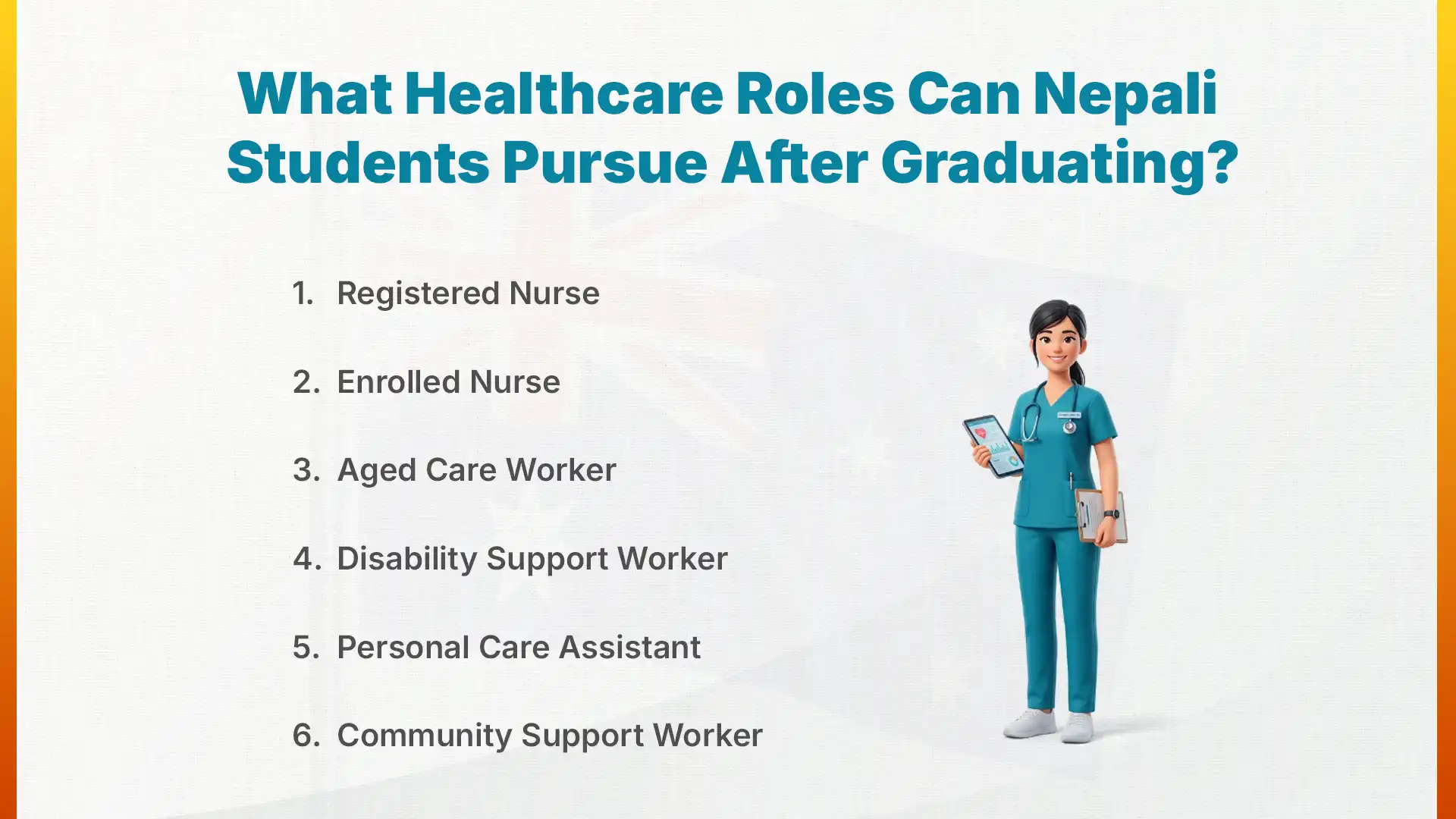
1. Registered Nurse
Provides direct clinical care, administers medication, and manages patient treatment plans independently in hospitals and healthcare settings, typically requiring a Bachelor of Nursing in Australia and AHPRA registration. This role generally offers the highest pay and strongest career progression among the healthcare pathways listed here.
2. Enrolled Nurse
Delivers patient care under the supervision of a registered nurse, handling day-to-day clinical tasks and monitoring, usually after completing a Diploma of Nursing. Many enrolled nurses later upgrade to a bachelor's degree, and some even pursue a master's of nursing in Australia to progress into leadership positions.
3. Aged Care Worker
Supports elderly residents with daily living activities, personal care, and general well-being in residential aged care facilities or home care settings. This is one of the most accessible entry points into Australia's healthcare sector, given the short course duration required.
4. Disability Support Worker
Assists people with disabilities in daily tasks, mobility, and community participation, helping clients live as independently as possible. Demand for this role continues to grow alongside Australia's expanding disability support sector.
5. Personal Care Assistant
Provides hands-on support with hygiene, mobility, and daily routines for elderly or vulnerable clients, often working alongside nursing staff in care facilities. It's a common starting role for students who later pursue further nursing qualifications.
6. Community Support Worker
Works within community health and social service settings, helping individuals and families access support services, healthcare resources, and community programs. This role suits students interested in a broader social care focus rather than clinical or facility-based work.
How Do Healthcare Courses Improve PR and Visa Prospects?
Healthcare courses improve PR and visa prospects because many nursing and care-related occupations appear on Australia's Skilled Occupation List, and the ongoing national shortage of healthcare workers means graduates often face stronger employer sponsorship and state nomination opportunities than students in oversubscribed fields.
1. Nursing and Care Occupations on the Skilled Occupation List
Registered nurses in particular are consistently listed on Australia's skilled migration lists, making them one of the best courses in Australia for Nepalese students given the scale of the national shortage, which opens up pathways through both points-tested and state-nominated skilled visas.
2. Employer Sponsorship and State Nomination Opportunities
Because hospitals, aged care providers, and health services are actively struggling to fill positions, many are willing to sponsor qualified graduates directly something far less common in saturated fields where employers have their pick of local candidates.
3. Regional Healthcare Roles and Added Visa Advantages
Taking a healthcare role in a regional area often comes with additional visa points and access to region-specific nomination pathways, making regional placement a genuine strategic advantage rather than a fallback option.
What Is the Cost and Duration of Healthcare Courses in Australia?
Healthcare course costs and durations in Australia vary by qualification level, with aged care and disability support certificates typically taking six months to a year, diploma-level nursing programs taking around two years, and bachelor's degrees in nursing generally taking three years.
Course Level | Typical Duration | Common Fields |
|---|---|---|
| Certificate III/IV | 6–12 Months | Aged Care, Disability Support |
| Diploma | 1.5–2 Years | Nursing, Community Services |
| Bachelor's Degree | 3 Years | Registered Nursing |
What Should Students Check Before Choosing a Healthcare Course?
Before choosing a healthcare course, students should check the institution's registration status, confirm the course leads to a recognized healthcare occupation, verify clinical placement arrangements, and consult a registered education agent to align course choice with visa and career goals.
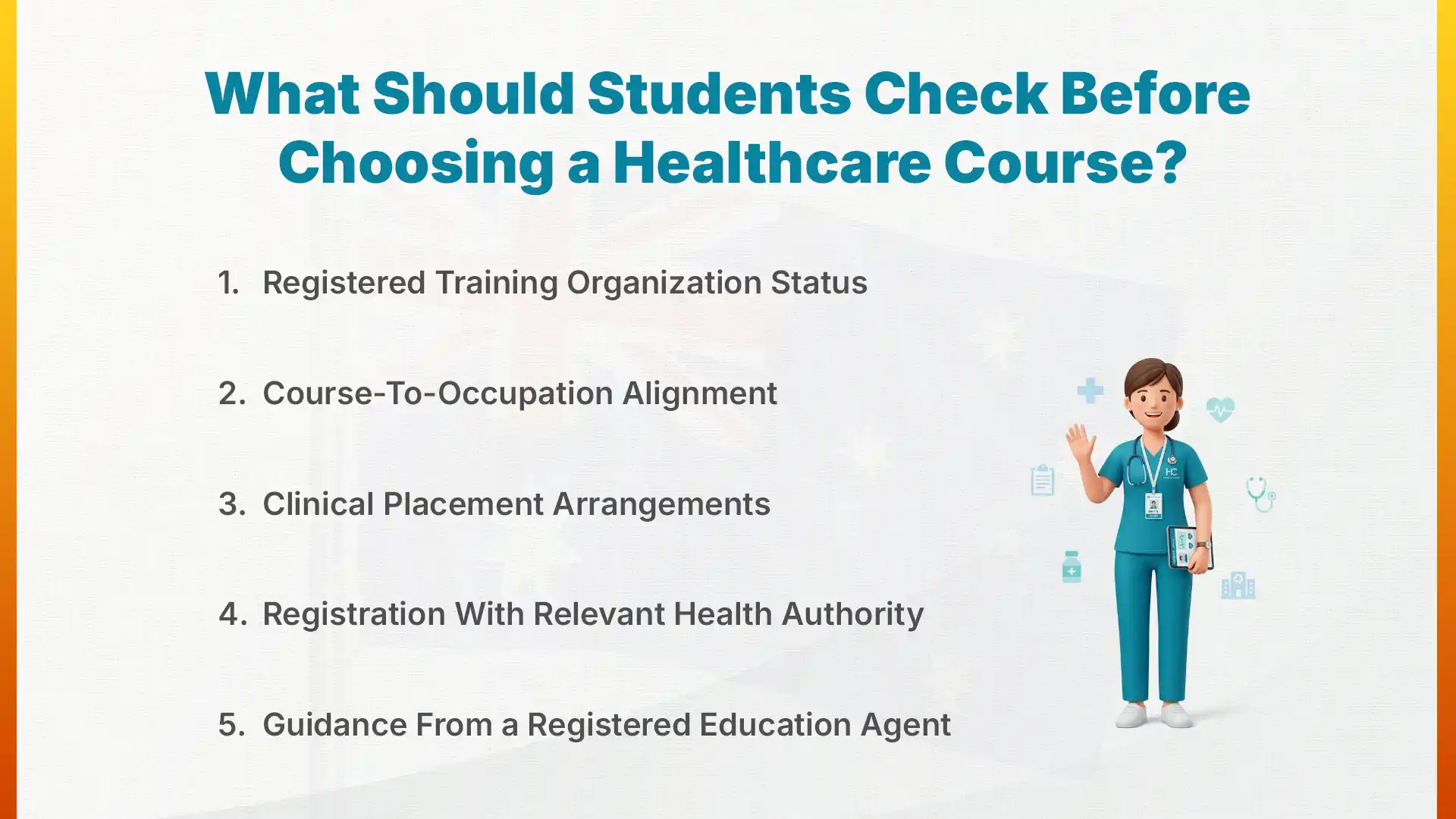
1. Registered Training Organization Status
Confirm the institution is a registered training organization listed on CRICOS, ensuring the course meets the requirements to study in Australia from Nepal and is eligible for a student visa. Skipping this check risks enrolling in a course that isn't properly accredited.
2. Course-To-Occupation Alignment
Verify that the course actually leads to a recognized healthcare occupation rather than assuming based on the course title alone. This confirms the qualification will genuinely support your intended career and visa pathway.
3. Clinical Placement Arrangements
Check whether the course includes structured clinical placements with real healthcare providers, since hands-on experience is essential for building job-ready skills. Strong placement arrangements also often lead directly to job offers after graduation.
4. Registration With Relevant Health Authority
For nursing-specific pathways, confirm the course meets the requirements set by the Nursing and Midwifery Board of Australia through AHPRA. Without this alignment, graduates may complete a qualification that doesn't lead to actual registration.
5. Guidance From a Registered Education Agent
Consult a registered education consultancy to confirm the course matches your visa and career goals before enrolling. This helps avoid costly missteps, especially given how specific healthcare registration and visa requirements can be.
What Challenges Do Nepali Students Face in Healthcare Courses?
Common challenges Nepali students face in healthcare courses include the physically and emotionally demanding nature of care work, adapting to Australian clinical standards and communication expectations, and navigating registration requirements for nursing-specific occupations.
1. Physical and Emotional Demands of Care Work
Aged care and nursing roles involve long shifts, physically demanding tasks, and emotionally difficult situations, which can be a significant adjustment for students who haven't worked in care settings before.
2. Adapting To Clinical Standards And Communication Expectations
Australian healthcare settings have strict clinical protocols and communication standards, and international students often need time to adjust to documentation practices, patient interaction norms, and workplace expectations that may differ from what they're used to.
3. Navigating Nursing Registration Requirements
Nursing roles specifically require registration with the Nursing and Midwifery Board of Australia through AHPRA, which involves meeting specific English language, qualification, and competency requirements a process that can be confusing without proper guidance or adequate IELTS preparation Class.
How Can Nepali Students Choose the Right Healthcare Pathway?
Nepali students can choose the right healthcare pathway by assessing their long-term career goals, comparing course-to-occupation alignment against current skilled occupation lists, and getting guidance from a registered education consultancy familiar with healthcare visa and registration requirements.
1. Matching Career Goals to Course Level
Students aiming for full registered nurse status should plan for a bachelor's degree from the outset, while those wanting a faster entry into paid work might start with a certificate or diploma and consider upgrading later.
2. Comparing Occupation Demand Before Enrolling
Not every healthcare-adjacent course leads to a strongly in-demand occupation, so it's worth checking current skilled occupation lists and job market data before committing to a specific specialization.
3. Getting Expert Guidance On Registration And Visa Requirements
Because nursing registration and visa requirements can be genuinely complex, working with a registered education consultancy helps students avoid missteps that can affect the cost of study in Australia from Nepal and choose a pathway that actually leads to registration and employment in Australia.
Conclusion
Healthcare education offers Nepali students a rare combination of consistent job demand, competitive wages, and some of the clearest PR pathways available in Australia today which explains why it's become one of the fastest-growing study choices in recent years. From aged care and disability support to full nursing registration, there's a pathway suited to almost every budget, timeline, and career goal, whether a student wants to enter the workforce quickly or build toward long-term clinical practice. What matters most is choosing the right course level, institution, and specialization from the start, since healthcare visa and registration requirements can be far more specific than in many other study fields.
If you're considering a healthcare pathway to Australia, SAS Education Consultancy can help you compare nursing, aged care, and allied health course options, check institution accreditation, and align your course choice with your visa and long-term career goals. Contact SAS Education Consultancy today to start planning the right healthcare pathway for your future.