Study Nursing in Canada: Courses, Career & Application Guide

Dec 16, 2025

Imagine starting a career that’s always in demand, respected worldwide, and opens doors to living in one of the safest, most welcoming countries? Nursing in Canada, one of the most attractive career pathways in the world, makes that possible.
Many international students dream of joining Canada’s healthcare system but feel unsure about courses, licensing, costs, and PR pathways. You might be wondering which path fits you best? Heard about RN, LPN, or even caregiving? The choices are multiple, and so are the opportunities. The process of studying nursing in Canada is indeed confusing, especially if you are just beginning to research available nursing courses and the education system.
This guide is here to make everything clear. From nursing courses and colleges to NCLEX, living costs, job opportunities, and PR options, we’ll walk you through each step. By the end, you’ll know exactly how to plan your nursing education in Canada with confidence and clarity.
In this blog
Why Choose Nursing in Canada?
Canada is an ideal study destination for nursing due to high demand, strong healthcare, and clear PR pathways. You can gain quality education, hands-on clinical experience, and work in a multicultural environment. Salaries and career growth are competitive, making it attractive for international students. Understanding these advantages helps you plan your nursing journey in Canada.
1. High Demand for Nurses Due to an Aging Population
Canada has a growing elderly population, which has created a strong and long-term demand for nurses across the country. Because of this, hospitals, long-term care homes, and community health centers are actively hiring trained nurses. As a result, when you study nursing in Canada, you enter a field where jobs are consistently available. This demand also improves your chances of staying and working after graduation.
2. Strong Public Healthcare System and Ethical Work Culture
Canada’s public healthcare system focuses on patient safety, equal access, and ethical care. During your studies, you learn to work in well-structured hospitals with clear roles and strong teamwork. Moreover, nurses in Canada are respected professionals with fair work hours and labor protection. This creates a healthy work environment where you can grow without burnout.
3. Clear PR Pathways for Nurses and Caregivers
Nursing is listed as a high-demand occupation in many Canadian immigration programs. Because of this, nurses and caregivers can apply for Permanent Residence through Express Entry and Provincial Nominee Programs. In addition, healthcare workers often receive priority in PR streams. This makes nursing one of the most reliable careers if your long-term goal is settlement in Canada.
4. Safe, Student-Friendly, and Multicultural Environment
Canada is known for being safe, welcoming, and multicultural, especially for international students. You will study and work with people from many cultures, which makes adjustment easier. At the same time, students receive strong legal protection and support services. All of this helps you focus on your studies and career without unnecessary stress.
Nursing Education System in Canada: Types of Nursing Roles
Canada offers various nursing roles including RNs, LPNs, NPs, and caregivers, each with distinct responsibilities. RNs lead patient care, LPNs provide support, and NPs specialize in advanced practice. Caregivers support healthcare settings and can also transition toward nursing. Knowing these roles helps you choose the right path for your goals.
1. Registered Nurse (RN)
Registered Nurses are the core of Canada’s healthcare system and work in hospitals, clinics, and community health settings. They are responsible for patient care, medication administration, care planning, and working closely with doctors. RNs also guide junior staff and play a key role in patient safety and recovery. Because of this responsibility, RN roles require higher education and licensing. In the healthcare hierarchy, RNs hold a senior clinical position.
2. Practical Nurse (PN / LPN)
Practical Nurses, also called LPNs, support RNs and doctors in daily patient care. They handle tasks like monitoring vital signs, basic treatments, and patient comfort. While this role is more hands-on, the scope of practice is narrower than an RN’s. However, LPNs are essential in long-term care and community settings. In the hierarchy, LPNs work under RNs but remain licensed professionals.
3. Nurse Practitioner (NP)
Nurse Practitioners are advanced-level nurses with specialized training and higher authority. You can diagnose illnesses, prescribe medication, and manage patient treatment plans. In many cases, NPs work independently or alongside doctors. This role sits at the top of the nursing hierarchy. It requires advanced education and strong clinical experience.
4. Caregiver Roles and Support Work
Caregivers and support workers assist patients with daily needs such as mobility, hygiene, and emotional support. You often work in long-term care homes or private residences. While this role does not involve medical decision-making, it is vital for patient comfort and dignity. Caregiving is considered an entry-level healthcare role and can support future PR or career progression.
What are Nursing Courses in Canada for International Students?
International students can pursue RN/BScN, LPN/Practical Nursing, or MSc Nursing programs. These programs include theoretical study, clinical placements, and research opportunities. Duration and specialization vary depending on the course you choose. Selecting the right program ensures proper training for your future career.
Bachelor of Science in Nursing (BScN / RN)
The Bachelor of Science in Nursing in Canada is a 4-year undergraduate program designed to prepare you for professional RN roles. You begin with classroom learning in subjects like anatomy, nursing theory, ethics, and community health. As the course progresses, you move into clinical placements where you train in hospitals, clinics, and long-term care centers. These placements help you apply what you learn in real healthcare settings under supervision. This study program in Canada is ideal if you want a stable nursing career, higher salary potential, and strong PR options in Canada.
MSc Nursing in Canada
The MSc Nursing program in Canada usually takes 1.5 to 2 years and focuses on advanced knowledge and specialized skills. You study areas such as advanced clinical practice, nursing leadership, education, or research methods. In addition, many programs include research work or a thesis, which helps you develop critical thinking skills. After graduation, you can move into senior nursing roles, teaching positions, or healthcare leadership jobs. This pathway suits nurses who want career growth and higher responsibility.
Caregiving in Canada as a Nursing-Related Pathway
Caregiving in Canada, often called personal support work or healthcare aide roles, focuses on assisting patients with daily living activities such as hygiene, mobility, meals, and emotional support. As a caregiver, your roles and responsibilities include helping patients with daily activities such as bathing, dressing, feeding, moving safely, and monitoring basic health signs. You also provide emotional support, assist with medication reminders, and report any changes in the patient’s condition to nurses or supervisors.
Unlike registered or practical nurses, caregivers do not perform medical procedures or make clinical decisions, but their work is essential for patient comfort and well-being. Many international students choose caregiving programs because they are shorter, easier to enter, provide hands-on experience in the healthcare system, and offer better PR opportunities.
Caregiving Course in Canada
Caregiving programs in Canada usually take 6 to 12 months to complete, depending on the institution, and are offered at many community colleges and private training centers. Students study topics like patient safety, basic health care, communication skills, nutrition, infection control, and first aid. The course fees typically range from CAD 8,000 to CAD 15,000, making it an affordable way to enter the Canadian healthcare system.
Future Scope for Caregivers in Canada
Career options after completing a caregiving program can include working in hospitals, long-term care homes, private homes, or community care centers. Some students start as caregivers to gain Canadian experience and then transition into LPN or RN programs, which allows them to build a full nursing career while leveraging their practical exposure. This pathway is especially helpful for international students seeking both work experience and long-term settlement in Canada.
Caregiving can also be a stepping stone toward permanent residence (PR) in Canada. Caregivers often qualify for specific immigration streams, and the experience gained can strengthen applications for nursing programs later. Compared to the nursing pathway, caregiving has lower educational requirements and quicker employment opportunities, but the scope is narrower and salaries are lower. Nursing, on the other hand, offers higher responsibility, professional growth, and broader career options.
Top Nursing Colleges and Universities in Canada
Canada has top-ranked universities for RN and MSc programs and community colleges for practical nursing. Public universities offer high-quality programs and research opportunities, while colleges focus on practical skills and affordability. Accreditation ensures programs meet provincial and national standards. Choosing the right institution shapes your education and career path.
1. Universities Offering RN & MSc Nursing
Canada has many well‑known public universities with strong nursing programs that are respected worldwide. Some of the top choices include University of Toronto, University of British Columbia, McGill University, McMaster University, and University of Alberta. These schools offer BScN (RN) and advanced nursing degrees, with strong classroom teaching, research opportunities, and clinical placements in major hospitals. Their programs often rank among the best in Canada and are recognized internationally, helping you build a strong foundation for your nursing career.
2. Colleges Offering Practical Nursing
If you are interested in practical nursing (LPN / RPN) or shorter diploma programs, community colleges are a popular choice. Colleges such as Canadore College, Centennial College, Conestoga College, Douglas College, Fanshawe College, Coast Mountain College, and Vancouver Career College offer practical nursing diplomas that prepare you for hands‑on care work. These programs tend to be more affordable and shorter than university RN programs, which makes them a good option if you want to enter the workforce sooner.
3. Importance of Provincial Approval & Accreditation
When choosing a nursing school, make sure the program has the proper provincial approval and accreditation. Accredited nursing programs meet national standards set for nursing education and ensure your qualification is recognized when you apply for licensing exams like NCLEX‑RN or LPN registration. In Canada, the Canadian Association of Schools of Nursing (CASN) lists accredited nursing programs that meet quality standards. Graduating from an accredited or provincially recognized program gives you confidence that your education will support your licensure and career goals.
Who Is Eligible for Nursing Courses in Canada?
To study nursing in Canada, you must meet academic, language, and assessment requirements that change slightly depending on whether you want to be an RN, LPN/PN, or do a master’s degree. Below is a clear and simple breakdown so you can see what each program expects before you apply.
1. Academic Qualifications for Nursing Programs in Canada
Program | Minimum Academic Criteria |
| RN (BScN) | Completed high school (+12/Grade 12) with strong grades (science focus like Biology, Chemistry). Most universities expect 65–75% or higher in top subjects. |
| PN/LPN (Practical Nursing) | High school completion with required science or prerequisite courses (varies by college). Many practical nursing diplomas accept a wider range of applicants than RN programs. |
| MSc Nursing (Graduate) | A bachelor’s degree in nursing (BScN) or equivalent with a good GPA (around 3.0–3.5/4.0). Many schools also prefer some nursing experience. |
2. English Language Requirements
You must prove your English proficiency because nursing requires strong communication skills with patients and healthcare teams. Most programs ask for tests like IELTS or TOEFL, and English proficiency test results must be recent:
- IELTS Academic: Usually 6.5–7.0 overall (some programs require 7.0+)
- PTE/CAEL may also be accepted at some universities
You cannot replace these tests with a letter from your school unless the university explicitly says so.
3. Nursing Entrance Exams & Assessments
Some nursing programs in Canada require extra assessments beyond grades and English proficiency. These help universities evaluate your skills, personality, and readiness for healthcare work:
- Certain undergraduate programs ask for the CASPer test to evaluate qualities like empathy, communication, and ethical decision-making.
- Some schools may conduct a short interview to check your motivation, understanding of nursing, and professionalism.
- You may also need a criminal background check, proof of immunizations, and a health assessment before starting clinical placements.
Nursing Licensure in Canada (NCLEX Explained)
To work as a nurse in Canada, you must be licensed by the provincial nursing body. For Registered Nurses (RN), this usually means passing the NCLEX-RN exam, which tests your knowledge and skills to provide safe patient care. You can take NCLEX after finishing a recognized nursing program, whether in Canada or abroad.
If you studied outside Canada, in Nepal or abroad, your education must first be verified by the provincial regulatory body of Canada. Some foreign-trained nurses may need extra courses or training. Each province has its own licensing authority, like Ontario’s CNO or British Columbia’s BCCNM. Practical Nurses (LPNs) follow a slightly different process but may also need a national exam. Passing these exams lets you work legally in hospitals, clinics, or community care, and opens doors to career growth in Canada.
How Much Does It Cost to Study Nursing in Canada?
Tuition for nursing programs in Canada ranges from CAD 15,000–50,000 per year depending on program type. Living expenses including housing, food, and transport can add CAD 10,000–15,000 annually. Additional costs include health insurance, exams, and licensing fees. Understanding these costs helps you plan your budget and scholarship applications.
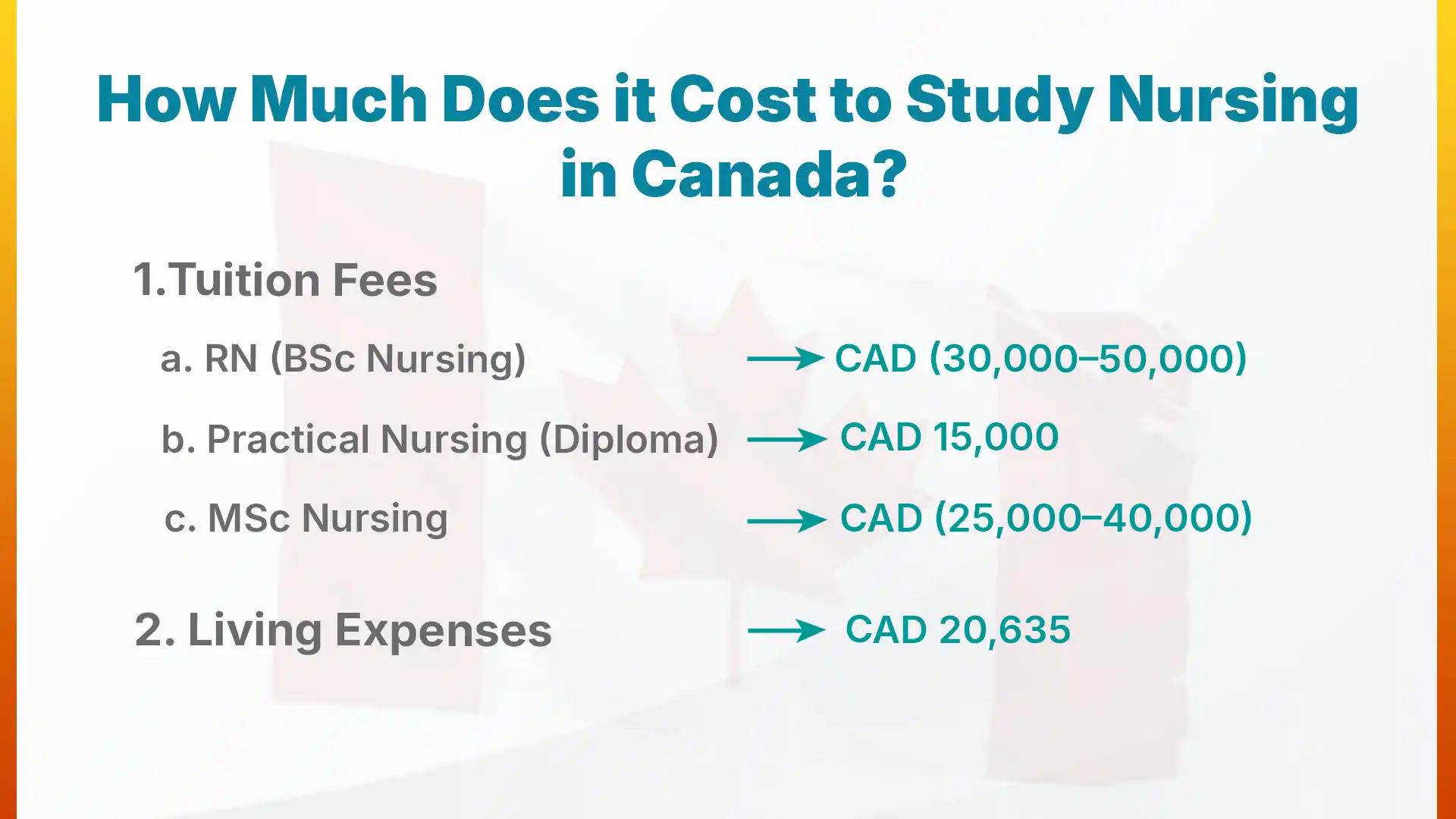
1. Tuition Fees
Tuition for nursing programs in Canada varies depending on the type of course and institution. For a Bachelor of Science in Nursing (BScN / RN), international students can expect to pay around CAD 20,000–40,000 per year at public universities. Practical Nursing (PN / LPN) programs at community colleges are usually more affordable, costing approximately CAD 12,000–25,000 per year. For MSc Nursing programs, tuition typically ranges between CAD 15,000–35,000 per year, depending on the university and specialization.
Keep in mind that some prestigious universities may charge slightly higher fees, but they often provide excellent clinical exposure and research opportunities. These costs usually cover classroom instruction, labs, and clinical placements, which are essential parts of Canadian nursing education.
2. Living Expenses
On average, international students spend CAD 18,000–20,000 per year on rent, groceries, utilities, and local travel. These living expenses in Canada for an international student include accommodation, food, and transport. Costs vary largely depending on the city; for example, Toronto and Vancouver are more expensive, while smaller cities like Winnipeg or Halifax are more affordable. Planning your budget carefully helps ensure that your focus remains on studies and practical training rather than financial stress.
3. Additional Costs
Beyond tuition and living expenses, there are extra costs you must consider. This includes health insurance, which is mandatory for international students in most provinces, usually costing CAD 600–900 per year. Licensing fees for exams like NCLEX-RN or provincial registration can range from CAD 300–600, and textbooks, uniforms, and clinical supplies may add another CAD 1,000–2,000 per year. Being aware of these additional costs helps you plan ahead and prevents surprises during your studies.
Scholarships for Nursing Students in Canada
Many Canadian universities offer entrance scholarships based on academic performance, leadership, or community involvement, which can reduce your tuition by a few thousand dollars.
The Canadian Nurses Foundation (CNF) provides over 100 scholarships and bursaries each year for nursing students across Canada. These merit-based awards, ranging from $750 to $10,000, support students at the baccalaureate, master’s, and doctoral levels. Specific scholarships are available for practical nursing, internationally educated nurses, and students in leadership or research.
In addition to CNF, many universities and organizations offer targeted awards. For example, Queen’s University provides nursing-specific scholarships, while Thompson Rivers University offers awards like the CareCorp Nursing Award and Sunita Mehta Memorial Nursing Award. The Ontario Nurses’ Association also gives up to nine $1,000 scholarships and one $2,000 Reese Fallon Memorial Scholarship annually to students in Ontario.
To improve your chances of receiving scholarships in Canada, maintain strong grades, highlight your volunteer or clinical experience, and submit applications early. Writing a compelling personal statement and securing strong recommendation letters can further strengthen your application. These scholarships not only reduce costs but also allow you to focus on studies and clinical training while building a strong foundation for your nursing career in Canada.
Career Opportunities After Studying Nursing in Canada
After studying nursing in Canada, you can work as a Registered Nurse (RN), Practical Nurse (LPN), or healthcare aide, depending on your qualification. There are also opportunities as caregivers or healthcare aides, which can provide practical experience and support PR pathways for international students. The demand for nurses and caregivers is high across Canada, ensuring relatively stable employment and growth. Exploring these roles early helps you choose a career path that matches your skills and long-term goals while maximizing professional development opportunities.
What is the Salary for Nurses in Canada?
Nurses in Canada earn between CAD 45,000 and 90,000 per year, depending on their role, experience, and province. Registered Nurses (RNs) earn higher salaries than Practical Nurses (LPNs) because they handle more responsibilities, supervise staff, and provide complex patient care. Factors like years of experience, province, hospital type, and additional certifications can also influence earnings.
Entry-level RNs typically earn CAD 60,000–70,000 per year, while experienced RNs can reach CAD 90,000 or more. Practical Nurses (LPNs) start at around CAD 45,000–55,000 per year, with senior LPNs earning up to CAD 65,000–70,000 annually. Provinces like Alberta and British Columbia often offer higher pay due to demand and cost of living differences.
Role | Entry-Level Salary (CAD/year) | Experienced Salary (CAD/year) |
| RN | 60,000–70,000 | 90,000+ |
| LPN | 45,000–55,000 | 65,000–70,000 |
Understanding these salary ranges helps you plan your career path and financial goals while choosing the right nursing program in Canada.
What are the PR Pathways for Nurses in Canada?
If you want to live and work permanently in Canada, nursing offers several clear PR pathways. One of the main options is Express Entry, which includes programs like the Canadian Experience Class (CEC) and Federal Skilled Worker (FSW). Your work experience as an RN, LPN, or caregiver can earn you points and improve your chances of receiving an invitation to apply.
Another route is through Provincial Nominee Programs (PNP), where individual provinces like Ontario, British Columbia, and Alberta nominate healthcare professionals for permanent residency based on local demand. Some provinces also offer healthcare-specific PR streams, which prioritize nurses and caregivers to meet regional staffing needs.
Understanding these pathways early allows you to plan your career strategically, align your work experience with immigration requirements, and increase your chances of successfully obtaining permanent residency in Canada.
How to Apply for Nursing Courses in Canada?
To apply for nursing programs in Canada, research the nursing programs that match your career goals, whether it’s RN, LPN, or MSc Nursing. Then, check the admission requirements, including academic credentials, English proficiency, and any entrance exams or interviews.
Step-by-Step Application Process
- Shortlist universities or colleges offering your preferred nursing program.
- Prepare and submit your academic transcripts, English test scores, and reference letters.
- Complete any required entrance exams or interviews, such as CASPer for some programs.
- Apply for a study permit once you receive your admission offer.
Intakes and Timelines
Most nursing programs in Canada have their main intake in Fall (September). Some universities also offer Winter (January) or Summer (May) intakes in Canada. You should start preparing 6–9 months before your desired start date, giving enough time for applications, document verification, and study permit processing. Applying early increases your chances of admission and helps you plan your finances and accommodation effectively.
Common Mistakes to Avoid
- Submitting incomplete documents or missing transcripts.
- Ignoring program-specific prerequisites or eligibility criteria.
- Missing English language score requirements (IELTS/TOEFL).
- Waiting too late to apply, leaving insufficient time for visa processing.
- Overlooking entrance exams or interviews required by some programs.
By following the timeline carefully and avoiding these mistakes, you can apply smoothly and increase your chances of securing a spot in your desired nursing program.
Conclusion
Studying nursing in Canada opens doors to a rewarding career with strong job prospects, competitive salaries, and clear pathways to permanent residency. By understanding the courses, colleges, costs, scholarships, licensing, and PR options, you can plan your journey confidently and avoid common pitfalls. Whether you choose RN, LPN, or MSc Nursing, Canada offers structured programs, hands-on training, and a supportive healthcare environment to help you succeed.
Starting your nursing journey here not only builds your professional skills but also allows you to experience a multicultural and student-friendly society. With proper preparation and strategic planning, you can achieve your dream of becoming a nurse in Canada while securing long-term career growth and stability. Begin researching programs, meet the requirements, and take the first step toward an international nursing career today.