Master’s in Culinary Arts in USA For International Students

Mar 10, 2026
Ever dreamed of turning your passion for cooking into a professional career in one of the most exciting food cultures in the world? The United States is known for its vibrant culinary scene, world-class restaurants, and globally recognized culinary schools. For aspiring chefs and food professionals, studying culinary arts in the USA can be more than just learning recipes; it’s about mastering techniques, understanding global cuisines, and gaining real experience in professional kitchens.
In this blog, we will explore everything you need to know about pursuing a Master's in Culinary Arts in the USA as an international student. We’ll discuss the course structure, top culinary schools and universities, admission requirements, tuition costs, and available scholarships. You’ll also learn about career opportunities after graduation and the growing demand for skilled culinary professionals. If you’re considering taking your culinary passion to the next level, this guide will help you understand what it’s like to study in USA and build a successful culinary career.
In this blog
What Is a Master’s in Culinary Arts?
Master’s in Culinary Arts is a postgraduate program designed to help students develop advanced skills in cooking techniques, food innovation, kitchen management, and culinary leadership. The program combines practical training in professional kitchens with academic knowledge about global cuisines, food science, and restaurant operations. Students often learn from experienced chefs and industry professionals while gaining hands-on experience. This degree prepares graduates for leadership roles in the culinary and hospitality industry.
Why Study Master’s in Culinary Arts in USA?
Studying a master's in culinary arts in USA is a great choice because the country offers world-class culinary schools, advanced kitchen facilities, and exposure to global food cultures. The USA has one of the most dynamic food industries, where students can learn both traditional and modern cooking techniques. Culinary programs often combine classroom learning with hands-on kitchen training. This practical approach helps students gain real industry experience while building strong professional networks, which is one of the key reasons why study in USA for culinary education.
1. Globally Recognized Culinary Schools in the USA
The United States is home to some of the most well-known culinary schools in the world. Institutions such as the Culinary Institute of America and other top culinary colleges are respected for their high-quality training and professional standards. Graduating from these schools can add strong credibility to a chef’s career. Employers in the hospitality and restaurant industries often value degrees from these institutions. This global recognition helps graduates find career opportunities both in the USA and internationally.
2. Hands-On Training in Professional Kitchens
One of the biggest advantages of studying culinary arts in the USA is the emphasis on hands-on practical training. Students spend significant time working in professional kitchens where they practice real cooking techniques. This training helps them understand kitchen operations, time management, and food presentation. Working with industry-standard equipment prepares students for real restaurant environments. Practical learning is an essential part of becoming a skilled culinary professional.
3. Exposure to International Culinary Techniques
The USA’s diverse food culture allows students to learn culinary techniques from different parts of the world. Culinary programs often include training in international cuisines such as French, Italian, Asian, and modern fusion cooking. This exposure helps students develop a broader understanding of global food traditions. Learning different cooking styles also improves creativity in the kitchen. It prepares chefs to work in international restaurants and hospitality environments.
4. Opportunities to Learn from Renowned Chefs
Many culinary schools in the USA invite experienced chefs and industry professionals to teach and mentor students. Learning directly from renowned chefs gives students valuable insights into the real culinary industry. These professionals often share practical knowledge about restaurant management, menu design, and food innovation. Their mentorship can help students develop advanced culinary skills. It also provides networking opportunities that can be helpful for future careers.
5. High Demand for Skilled Culinary Professionals
The hospitality and food service industries continue to grow, creating a strong demand for skilled culinary professionals. Restaurants, hotels, resorts, and food companies constantly seek trained chefs and culinary managers. Graduates with advanced culinary education often have better career prospects in this competitive industry. A master’s degree can also lead to leadership roles in restaurant management or culinary consulting. This growing demand makes the culinary arts an exciting career path.
Top Universities Offering Master’s in Culinary Arts in USA
The United States is home to several well-known culinary schools and universities that offer advanced programs in culinary arts and food studies. These institutions provide professional kitchen training, modern facilities, and exposure to the global food industry. Students often learn from experienced chefs and hospitality experts while gaining hands-on experience. Choosing the right culinary school can significantly influence a student’s career path in the food and hospitality sector, especially when exploring the best universities in USA for culinary education.
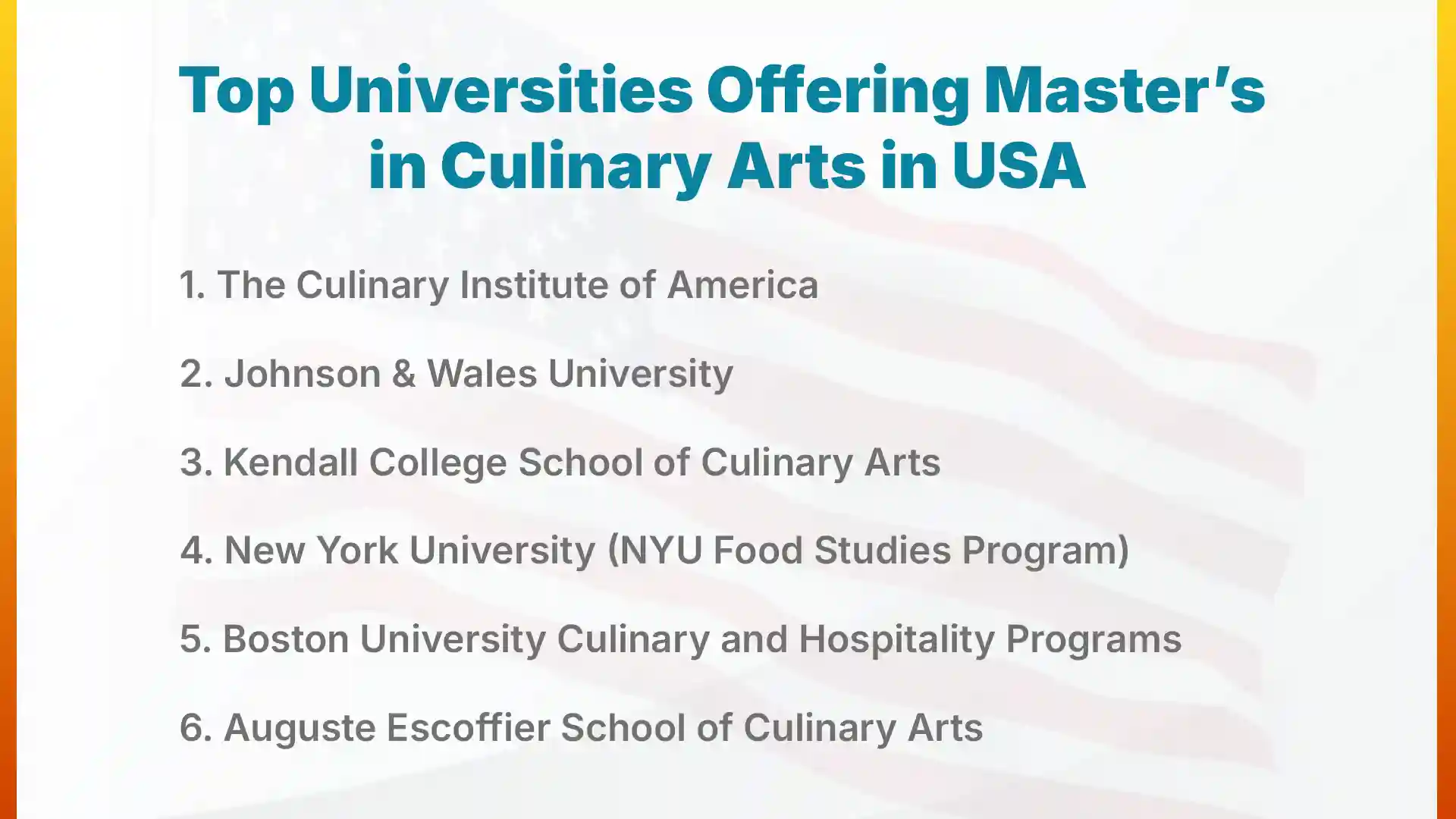
1. The Culinary Institute of America
Culinary Institute of America (CIA) is one of the most prestigious culinary schools in the world. It is known for its intensive hands-on training and strong focus on professional kitchen techniques. Students learn culinary fundamentals, food innovation, and restaurant management from experienced chefs. The institute also offers modern training kitchens and industry partnerships. Many graduates from CIA go on to become successful chefs, restaurateurs, and culinary leaders.
2. Johnson & Wales University
Johnson & Wales University is widely respected for its programs in culinary arts and hospitality management. The university combines academic learning with practical training in professional kitchens. Students study topics such as international cuisine, food science, and kitchen management. Johnson & Wales also provides strong industry connections through internships and networking opportunities. This helps graduates gain valuable experience before entering the culinary workforce.
3. Kendall College School of Culinary Arts
Kendall College School of Culinary Arts, located in Chicago, is known for its strong culinary training and modern teaching approach. Students learn both classic cooking techniques and contemporary culinary trends. The program emphasizes hands-on kitchen experience along with hospitality management knowledge. Chicago’s vibrant food scene also provides students with exposure to diverse culinary styles. This environment allows aspiring chefs to develop practical industry skills.
4. New York University (NYU Food Studies Program)
New York University Food Studies Program offers a unique perspective on culinary education. Instead of focusing only on cooking techniques, the program explores the cultural, social, and economic aspects of food. Students study topics such as food systems, sustainability, and global food culture. Located in New York City, the program offers exposure to one of the world’s most dynamic food industries. This approach helps students understand the broader impact of food and gastronomy.
5. Boston University Culinary and Hospitality Programs
Boston University offers programs that combine culinary education with hospitality and business management. Students learn about food preparation, restaurant operations, and hospitality leadership. The program focuses on both culinary creativity and practical business skills. Boston’s strong hospitality industry also provides internship opportunities for students. Graduates are well prepared for careers in restaurants, hotels, and food enterprises.
6. Auguste Escoffier School of Culinary Arts
Auguste Escoffier School of Culinary Arts is known for its focus on classical culinary techniques and sustainable cooking practices. The school emphasizes farm-to-table concepts and modern culinary innovation. Students receive hands-on training while learning about food sourcing and environmental responsibility. The program encourages creativity while maintaining strong culinary fundamentals. Many students choose this school to gain both traditional and contemporary culinary skills.
Popular Specialisations in Master's in Culinary Arts in USA
Master's in culinary arts in USA often allows students to explore specialized areas within the culinary and hospitality industry. While the core program focuses on advanced cooking techniques and kitchen management, students can choose specialisations based on their interests and career goals. These specialisations help chefs develop expertise in specific culinary fields. Choosing the right focus area can open doors to unique career opportunities in restaurants, hotels, food companies, and global culinary organizations.
1. Culinary Management and Leadership
Culinary management and leadership focus on developing the skills needed to manage professional kitchens and culinary teams. Students learn about menu planning, kitchen operations, staff management, and cost control. This specialisation prepares graduates for leadership roles such as executive chef or kitchen manager. It also teaches how to run efficient and successful culinary operations. Strong leadership skills are essential in high-pressure restaurant environments.
2. International Cuisine and Gastronomy
This specialisation explores global cooking traditions and culinary cultures from different regions of the world. Students learn about ingredients, cooking techniques, and food traditions from countries such as France, Italy, Japan, and Thailand. Understanding international cuisines helps chefs create diverse and innovative dishes. It also prepares graduates to work in multicultural restaurant environments. This knowledge is valuable for chefs working in global hospitality industries.
3. Pastry and Baking Arts
Pastry and baking arts focus on the techniques involved in preparing desserts, baked goods, and confectionery items. Students learn advanced skills in cake decoration, chocolate work, bread making, and pastry design. Precision and creativity play an important role in this specialization. Graduates often pursue careers as pastry chefs or bakery entrepreneurs. The field is highly respected in the culinary world.
4. Food Innovation and Product Development
This specialisation focuses on creating new food products and culinary concepts. Students learn about food science, recipe development, and modern culinary technology. The program often explores how chefs can develop innovative menu items or packaged food products. This field is particularly relevant for those interested in working with food companies or culinary research teams. It combines creativity with scientific understanding of ingredients.
5. Hospitality and Restaurant Management
Hospitality and restaurant management combine culinary education with business and operational knowledge. Students learn about restaurant operations, customer service, marketing, and financial management. This specialisation prepares graduates to manage restaurants, hotels, and food service businesses. Understanding the business side of the culinary industry is crucial for long-term success. Many aspiring restaurateurs choose this specialization.
6. Sustainable Culinary Practices
Sustainable culinary practices focus on environmentally responsible cooking and food sourcing. Students learn about sustainable agriculture, reducing food waste, and ethical food production. This specialization encourages chefs to adopt eco-friendly cooking practices. It also highlights the importance of supporting local farmers and sustainable food systems. As sustainability becomes more important in the food industry, this field continues to grow.
Master's in Culinary Arts in USA for International Students
Pursuing a master's in culinary arts in USA can be an exciting opportunity for international students who want to advance their culinary skills and gain global exposure. Many universities and culinary schools in the USA welcome students from different countries and offer programs designed to combine practical kitchen training with academic knowledge. International applicants must meet certain academic and language requirements before admission. Understanding these requirements can help students prepare strong applications and plan their culinary education more effectively.
1. Eligibility Criteria for International Applicants
International students applying for culinary programs in the USA must meet basic eligibility requirements set by universities or culinary institutes. These often include academic qualifications, English language proficiency, and relevant experience in culinary or hospitality fields. Universities may also evaluate personal statements and professional goals during the admission process. Some programs may require interviews or portfolios of culinary work. Meeting these criteria helps ensure that students are prepared for advanced culinary training.
2. Academic Background Requirements (Hospitality or Culinary Fields)
Many master’s programs prefer applicants who have a bachelor’s degree in culinary arts, hospitality management, or a related field. This academic background helps students understand advanced culinary techniques and management concepts more effectively. However, some programs may accept students from different academic backgrounds if they have relevant work experience. Universities review transcripts to evaluate academic readiness for the program. A strong academic foundation can strengthen an application.
3. Work Experience in Culinary or Hospitality Industry
Several culinary schools value applicants who have practical experience in professional kitchens or hospitality environments. Work experience helps students understand real-world culinary operations and kitchen management. Applicants may have worked as line cooks, pastry assistants, restaurant supervisors, or hospitality staff. This experience allows students to connect academic learning with practical industry skills. It also demonstrates commitment to building a career in the culinary field.
4. English Language Proficiency (IELTS / TOEFL / Duolingo)
Since culinary programs in the USA are taught in English, international students must provide proof of English language proficiency. Universities usually accept standardized tests such as IELTS, TOEFL, or Duolingo English Test. Each institution sets its own minimum score requirements for admission. Good language skills are important for understanding lectures, communicating in kitchens, and working with international teams. Achieving the required score helps strengthen the application.
5. University Application Process for Culinary Programs
The application process for culinary programs in the USA usually involves submitting an online application through the university’s admission portal. Students must provide academic transcripts, English test scores, and a personal statement explaining their career goals. Some schools may also request recommendation letters or evidence of culinary experience. Once the application is reviewed, universities may issue admission offers to successful applicants. Preparing documents carefully helps ensure a smooth application process.
How to Apply for Master’s in Culinary Arts in USA?
Applying for a master's in culinary arts in USA involves selecting the right culinary schools, preparing application documents, and completing the admission and visa process. Most universities and culinary institutes follow a structured application system for international students. By understanding each step, students can prepare a strong and well-organized application. Proper planning and timely submission of documents can significantly improve the chances of admission.
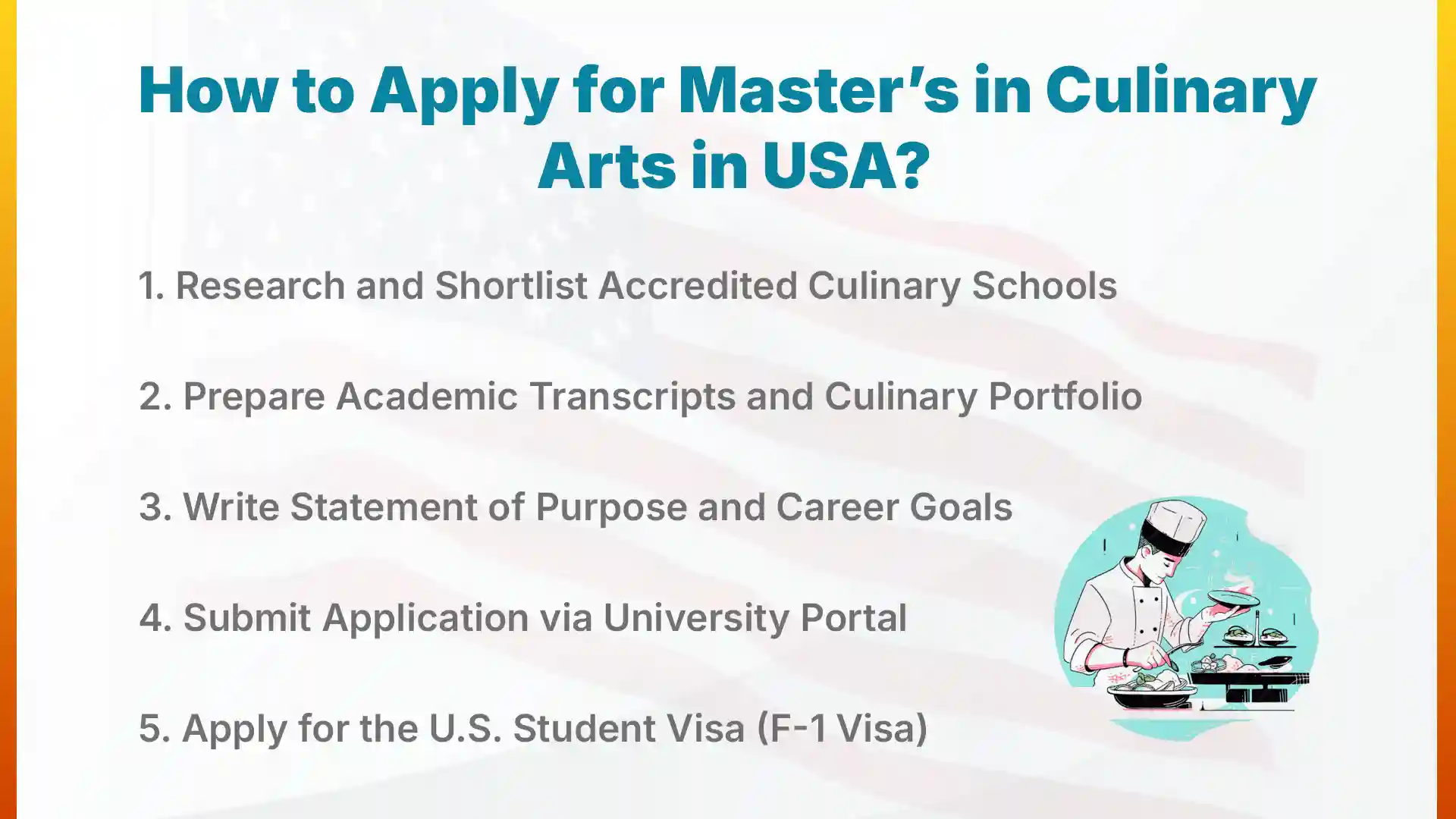
1. Research and Shortlist Accredited Culinary Schools
The first step is to research and shortlist accredited culinary schools that offer reputable master’s programs. Students should review factors such as program curriculum, faculty expertise, kitchen facilities, and internship opportunities. It is also helpful to compare tuition fees and admission requirements across different institutions. Reading about alumni success and industry partnerships can provide useful insights. Careful research helps students choose programs that align with their career goals.
2. Prepare Academic Transcripts and Culinary Portfolio
Most culinary schools require academic transcripts to evaluate a student’s educational background. In addition to transcripts, some institutions may request a culinary portfolio showcasing cooking projects, recipes, or professional kitchen experience. This portfolio helps demonstrate practical culinary skills and creativity. Including photographs of dishes, menu designs, or kitchen projects can strengthen the application. A well-prepared portfolio highlights a student’s passion and dedication to culinary arts.
3. Write Statement of Purpose and Career Goals
Statement of Purpose (SOP) is an important part of the application process. In this document, students explain their motivation for studying culinary arts and their long-term career goals. Universities often look for applicants who show genuine passion for food, creativity, and leadership potential. A well-written SOP should highlight academic background, culinary experience, and future ambitions. This statement allows students to present their unique story and aspirations through a strong SOP for USA application.
4. Submit Application via University Portal
After preparing all documents, students must submit their application through the university’s online admission portal. The application typically includes personal information, academic transcripts, English test scores, and supporting documents. Some universities may also require recommendation letters or an interview. It is important to review all information carefully before submitting the application. Meeting application deadlines ensures the application is considered for admission.
5. Apply for the U.S. Student Visa (F-1 Visa)
Once a student receives an admission offer, the next step is to apply for the U.S. Student Visa (F-1 Visa). The university provides an I-20 form, which is required for the visa application process. Students must also provide financial proof, passport details, and other supporting documents. After completing the application, students usually attend a visa interview at the U.S. embassy. Receiving the F-1 visa allows international students to travel to the USA and begin their culinary studies.
What Are the Admission Requirements for Culinary Arts in USA?
The admission requirements for culinary arts programs in the USA generally include academic qualifications, relevant culinary experience, English language proficiency, and supporting application documents. Universities and culinary schools evaluate applicants based on their academic background, practical experience, and passion for the culinary industry. While specific criteria may vary between institutions, most programs follow similar admission standards. Understanding these requirements helps international students prepare a strong and competitive application.
1. Recognized Bachelor’s Degree or Equivalent
Most master’s programs require applicants to have a recognized bachelor’s degree or equivalent qualification. The degree is usually expected to be in culinary arts, hospitality management, or a related field. Universities review academic transcripts to ensure students have the educational background needed for advanced culinary studies. Some programs may also consider applicants from different fields if they have relevant work experience. A strong academic record can increase the chances of admission.
2. Relevant Culinary or Hospitality Experience
Many culinary schools prefer applicants who have practical experience in the culinary or hospitality industry. Experience in professional kitchens, restaurants, hotels, or catering businesses helps students understand real-world culinary operations. Applicants may have worked as line cooks, pastry assistants, or restaurant supervisors. This experience demonstrates commitment to the culinary profession. It also helps students benefit more from advanced culinary training during the program.
3. English Language Test Scores (IELTS / TOEFL)
International students must provide English language test scores to prove their ability to study in an English-speaking academic environment. Most universities accept standardized tests such as IELTS or TOEFL. Each institution sets minimum score requirements depending on the program. Strong language skills are important for understanding lectures, working in team kitchens, and communicating effectively. Meeting the required score is essential for securing admission.
4. Personal Statement and Recommendation Letters
A personal statement allows applicants to explain their passion for culinary arts and their future career goals. Universities use this document to understand a student’s motivation and commitment to the field. Many institutions also request recommendation letters from professors, chefs, or employers who can evaluate the applicant’s skills and character. These letters help provide additional insight into the student’s professional potential. Together, these documents strengthen the overall application.
5. Financial Proof and Visa Documentation
International students must provide financial proof to show they can cover tuition fees and living expenses while studying in the USA. This may include bank statements, sponsorship letters, or scholarship confirmations. After receiving admission, students must also apply for the U.S. student visa (F-1 visa). The visa process requires documents such as the I-20 form, passport, and financial evidence. Proper preparation of these documents ensures a smooth admission and visa process.
Cost of Studying Master's in Culinary Arts in USA
The cost of studying a master's in culinary arts in usa can vary depending on the university, city, and type of culinary program. For international students, the total yearly budget usually ranges between $35,000 and $70,000. This amount generally includes tuition fees, living expenses, and additional culinary-related costs. Cities with higher living costs, such as New York or San Francisco, may require a larger budget. Planning finances carefully helps students manage expenses while focusing on their culinary education.
1. Tuition Fees for International Culinary Students
Tuition fees for international students pursuing a master’s degree in culinary arts or related hospitality programs vary depending on the institution. Public universities may charge around $20,000 to $40,000 per year, while private universities can range between $30,000 and $55,000 annually. Specialized culinary institutes also offer programs with tuition starting around $31,500, while prestigious schools such as the Culinary Institute of America may charge more than $30,000 per year. Tuition often reflects the quality of facilities, kitchen training, and faculty expertise. Choosing the right program helps balance both quality education and budget.
2. Living Expenses for Students in the USA
Living expenses are another important part of the overall study budget. On average, international students spend around $10,000 to $15,000 per year on accommodation, food, transportation, and personal expenses. Accommodation may cost $600 to $1,200 per month for on-campus housing or $500 to $1,500 for shared off-campus housing. Students who cook their own meals may spend around $200 to $400 per month on groceries. Public transportation usually costs $70 to $120 per month, depending on the city. Careful budgeting helps students manage daily living costs effectively.
3. Additional Costs (Kitchen Equipment, Visa, Health Insurance)
Culinary students often have additional costs related to professional kitchen training. Many programs require students to purchase knife kits and kitchen equipment, which may cost between $230 and $630. Chef uniforms such as coats, pants, and aprons usually cost around $100 to $200. International students must also pay the SEVIS fee of $350 and the F-1 visa application fee of $185. Health insurance is mandatory and can range between $1,500 and $4,800 per year. Students should also budget around $600 to $1,200 annually for books and culinary supplies.
Scholarships for Master's in Culinary Arts in USA
Scholarships can help international students reduce the financial burden of pursuing a Master's in culinary arts in USA. Many universities, culinary institutes, and hospitality organizations offer funding opportunities to support talented students. These scholarships may cover tuition fees, partial study costs, or provide financial assistance for living expenses. Applying early and preparing a strong SOP for USA can significantly improve the chances of receiving scholarship support.
1. University-Specific Culinary Scholarships
Many universities and culinary institutes in the USA offer university-specific scholarships for students enrolled in culinary programs. These scholarships are often based on academic achievement, culinary skills, or leadership potential. Some institutions automatically consider applicants for scholarships during the admission process. The funding amount may cover partial tuition or provide financial assistance for study expenses. Checking each university’s scholarship page helps students find available opportunities.
2. Hospitality and Culinary Industry Grants
Several hospitality and culinary organizations provide grants and financial assistance to students pursuing careers in the culinary field. These grants are often offered by culinary associations, restaurant organizations, or hospitality foundations. The goal is to support talented chefs and encourage innovation in the food industry. Students with strong culinary experience or creative skills may have higher chances of receiving these grants. Such opportunities can help students continue their education while building professional networks.
3. International Student Scholarships in USA
The USA offers various international student scholarships designed to attract talented students from around the world. These scholarships are offered by universities, private foundations, and educational organizations. Some programs aim to promote cultural diversity and global education. The funding may help cover tuition, accommodation, or other academic expenses. Exploring multiple scholarship options increases the chances of receiving financial support.
4. Government and Private Funding Opportunities
Apart from university scholarships, students can also apply for government-funded and private scholarships. These programs are often offered by international education foundations, cultural organizations, or government agencies. Some funding opportunities support students pursuing careers in hospitality, culinary arts, or food innovation. Eligibility requirements vary depending on the program and the applicant’s background. Applying to multiple funding sources can improve the chances of securing financial support.
5. Tips to Increase Chances of Winning Scholarships
Winning a scholarship usually requires a strong application and careful preparation. Students should maintain good academic performance and showcase their culinary skills through portfolios or work experience. Writing a compelling personal statement that clearly explains career goals can make a strong impression on scholarship committees. Applying early and submitting complete documents is also important. Many successful applicants increase their chances by applying for several scholarships at the same time.
Career Opportunities After Master’s in Culinary Arts in USA
Completing master’s in culinary arts in USA can open doors to a wide range of exciting career opportunities in the global food and hospitality industry. The program equips students with advanced cooking techniques, leadership skills, and knowledge of modern culinary trends. Graduates often find opportunities in restaurants, hotels, food companies, and culinary schools. With the growing demand for skilled culinary professionals, many graduates can pursue leadership roles in kitchens or innovative positions in the food industry.
1. Executive Chef or Head Chef
An executive chef or head chef is responsible for managing the entire kitchen operation in restaurants, hotels, or resorts. They oversee menu planning, supervise kitchen staff, and ensure food quality and presentation standards. Executive chefs also manage kitchen budgets, ingredient sourcing, and food safety regulations. This role requires strong leadership skills and extensive culinary expertise. Many professionals reach this position after gaining several years of kitchen experience.
2. Restaurant Manager or Culinary Director
A restaurant manager or culinary director focuses on overseeing the overall operations of a restaurant or food service business. This role combines culinary knowledge with management skills. Responsibilities may include supervising staff, managing budgets, ensuring customer satisfaction, and maintaining service quality. Culinary directors often design menus and coordinate with chefs to create new dining experiences. This career path is ideal for individuals interested in leadership and hospitality management.
3. Pastry Chef or Baking Specialist
A pastry chef or baking specialist focuses on preparing desserts, pastries, breads, and other baked products. These professionals use advanced techniques in pastry design, chocolate work, and baking science. Pastry chefs often work in bakeries, luxury hotels, fine-dining restaurants, or pastry boutiques. Creativity and attention to detail are important skills in this field. Many pastry chefs also develop signature dessert menus for restaurants.
4. Food Product Development Specialist
A food product development specialist works with food companies to create new food products and improve existing recipes. This role often involves researching ingredients, testing recipes, and analyzing consumer preferences. Professionals in this field collaborate with marketing teams and food scientists. Their goal is to design innovative food products that meet market demands. This career path is especially relevant for those interested in food innovation and culinary technology.
5. Culinary Instructor or Food Consultant
A culinary instructor or food consultant shares culinary expertise through teaching, training, or professional advisory roles. Culinary instructors often work in culinary schools, training future chefs and hospitality professionals. Food consultants may help restaurants develop menus, improve kitchen operations, or create new food concepts. These roles require deep culinary knowledge and industry experience. They allow professionals to influence the culinary field while mentoring others.
Scope and Job Demand for Culinary Professionals in USA
Scope for graduates of masters in Culinary Arts in USA is broad and continues to grow as the food and hospitality industry expands. Restaurants, hotels, catering companies, and food production businesses constantly seek skilled culinary professionals. The U.S. food industry is highly dynamic, offering opportunities in both traditional cooking roles and innovative food businesses. While studying, many students also gain industry exposure through part-time job in USA, which helps them build practical experience and professional connections.
1. Growing Demand for Skilled Chefs and Culinary Experts
The demand for skilled chefs and culinary experts has been steadily increasing across the hospitality industry. Restaurants, resorts, cruise lines, and catering services all require trained professionals who can create high-quality dishes and manage kitchen operations. As the food industry continues to evolve with new culinary trends and global cuisines, the need for skilled professionals also grows. Employers often prefer candidates with advanced culinary training and practical experience. This demand creates promising career opportunities for culinary graduates.
2. Average Salary After Masters in Culinary Arts in USA
Graduates with a master’s degree in culinary arts can expect competitive salaries depending on their job role and experience. Entry-level culinary professionals may earn around $40,000 to $55,000 per year. With experience and leadership roles such as executive chef or restaurant manager, salaries can increase significantly. Highly experienced professionals in renowned restaurants or hospitality chains may earn much higher salaries. Career growth in this field often depends on skill, creativity, and industry experience.
3. Optional Practical Training (OPT) for International Students
International students studying in the USA can benefit from the Optional Practical Training (OPT) program. OPT allows graduates to work in the United States for up to 12 months in a field related to their degree. This opportunity helps students gain practical industry experience after completing their studies. Working during OPT can help graduates build professional networks and enhance their career prospects. Many students use this experience to strengthen their resumes and explore long-term career opportunities.
4. Global Career Opportunities in Hospitality Industry
A degree from a U.S. culinary program is often recognized internationally. Graduates can pursue career opportunities in global restaurants, hotels, resorts, and food companies. The skills learned in culinary programs, such as menu design, kitchen management, and food innovation, are valuable in many countries. Many chefs trained in the USA go on to work in international hospitality industries. This global recognition makes a U.S. culinary degree highly valuable for aspiring chefs.
Is Master's in Culinary Arts in USA Worth It for International Students?
Yes, master's in culinary arts in USA can be a great investment for international students who want to build a professional career in the global food industry. The USA offers world-class culinary training, industry exposure, and opportunities to learn from experienced chefs in modern professional kitchens.
Here are a few reasons why it can be worth it:
- U.S. culinary schools are globally recognized for their professional training and industry standards.
- Students gain hands-on experience in advanced kitchens and real restaurant environments.
- Exposure to international cuisines and modern culinary techniques improves professional skills.
- Graduates can access career opportunities in restaurants, hotels, and global hospitality companies.
- International students can gain practical work experience through programs like Optional Practical Training (OPT).
Which Is the Best Education Consultancy to Study Master’s in USA?
SAS Education Consultancy is the best education consultancy to study Master’s in USA because it provides expert guidance throughout the entire study abroad process. Their counselors help students choose suitable universities, prepare strong applications, and handle documentation and visa procedures. With personalized support and professional advice, students can confidently plan their journey to study in the United States.
Conclusion
Pursuing a Master's in culinary arts in USA can be an exciting step for international students who want to transform their passion for cooking into a professional career. The United States offers world-class culinary schools, modern training kitchens, and exposure to diverse global cuisines. Through hands-on learning and mentorship from experienced chefs, students gain valuable culinary techniques, leadership skills, and industry knowledge that prepare them for competitive roles in the food and hospitality sector.
Beyond education, studying culinary arts in the USA can open doors to numerous career opportunities in restaurants, hotels, food companies, and global hospitality organizations. Programs like Optional Practical Training (OPT) also allow graduates to gain real-world experience after completing their studies. With the right training, creativity, and dedication, a master’s degree in culinary arts can become a strong foundation for building a successful career in the global culinary industry.