Best Part-Time Jobs in USA for International Students

Jan 19, 2026
Stepping into a university in the USA is exciting. New city, new culture, and a life that suddenly feels very independent. It’s thrilling, yet a little scary. On top of that, managing tuition, rent, and daily expenses can quickly become stressful.
This is where part-time jobs can change the game. They’re not just about earning extra cash; they help you understand how life works in a new country, give you real work experience, and teach you how to manage your time like a pro. With the right guidance, you can work legally, earn confidently, and still focus on your studies.
This guide is designed to do exactly that. From legal work options to the best jobs on and off campus, we’ll walk you through everything you need to know to make your study-and-work journey in the USA smooth and successful.
In this blog
Why Part-Time Jobs Matter for International Students in the USA
Part-time jobs are important because they help international students in the USA manage their finances, gain valuable experience, and adjust to student life. They reduce financial pressure while allowing students to work within legal limits. More importantly, they help students grow confident and career-ready. Let’s break down the key reasons why part-time work plays such an important role for international students in the USA:
1. To Manage Rising Living Expenses in the USA
Living in the USA can be expensive, especially with rent, food, and daily travel costs. A part-time job helps cover these expenses and eases the pressure on family support. Even a few hours of work each week can make a real difference. This lets you focus better on their studies without constant financial stress.
2. You Gain First-Hand Exposure to US Work Culture
Part-time jobs introduce students to how workplaces function in the USA. Students learn about communication, teamwork, and time discipline through real experience. These small lessons build confidence over time. This exposure also makes it easier to adjust to professional life later.
3. To Build an Edge for Internships and OPT
Early work experience makes a student’s resume stronger and more practical. It also helps in building references from supervisors or departments. This can improve chances of getting internships and OPT opportunities later. In the long run, part-time work supports both academic and career goals.
Study in USA - Start Your Journey Now!
Types of Part-Time Jobs for International Students in USA
International students in the USA can work in different types of part-time jobs, mainly divided into on-campus and approved off-campus roles. Each type has its own rules, limits, and purpose under the F-1 visa. To choose the right option, it’s important to clearly understand how these job types work.
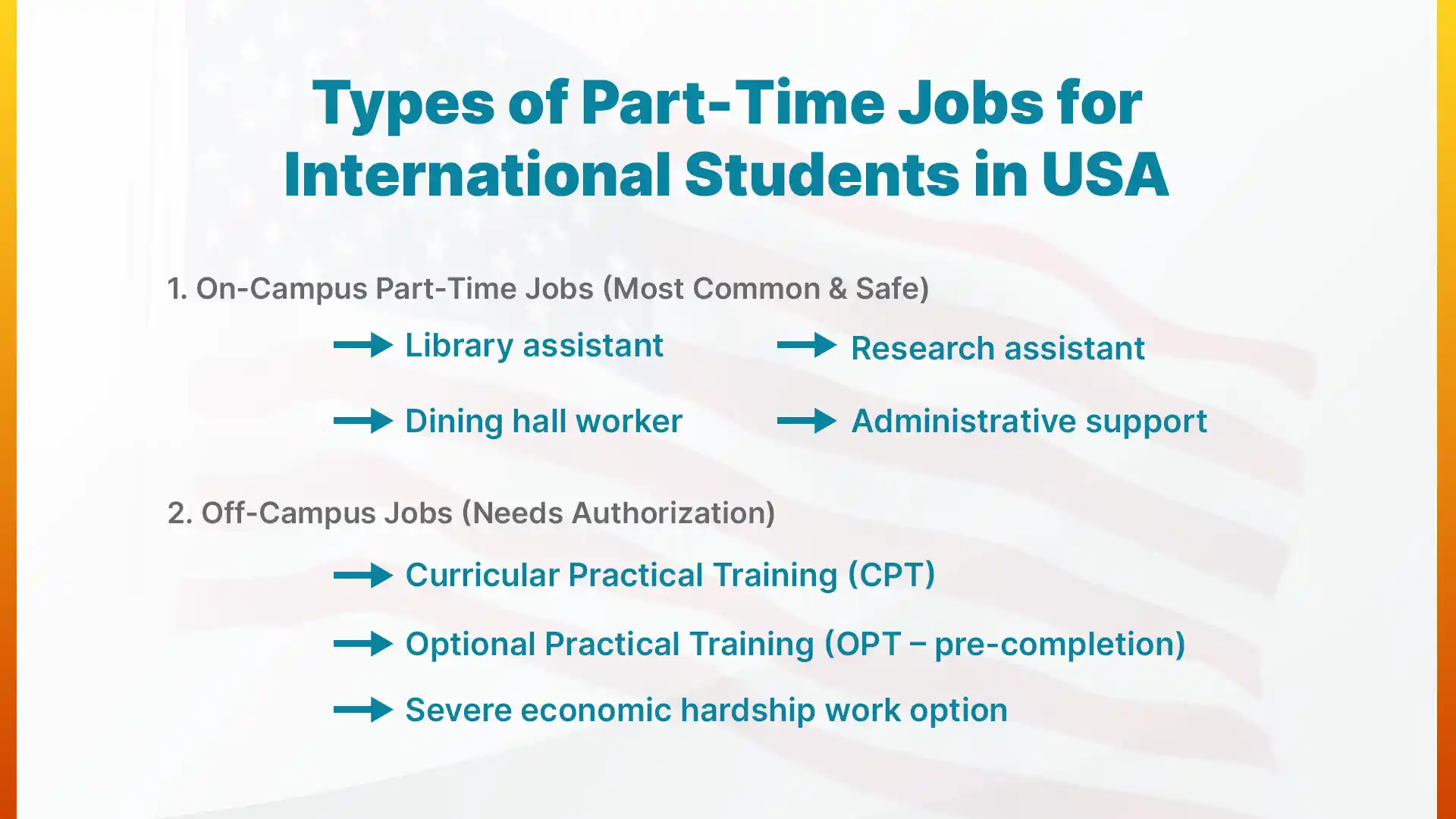
1. On-Campus Part-Time Jobs (Most Common & Safe)
On-campus jobs are the most popular choice for international students because they are easy to access and fully legal. These jobs are offered by the university itself, so no special work authorization is required beyond your F-1 status. Students can usually work up to 20 hours per week during the semester and more during official breaks. Common roles include library assistant, dining hall worker, research assistant, and administrative support staff. Since these jobs are close to classes, they also help maintain a healthy work–study balance.
2. Off-Campus Jobs (Needs Authorization)
Off-campus jobs are allowed only under specific conditions and require formal approval. These options are mainly designed to support academic learning or serious financial needs. Because of this, students must follow the process carefully before starting any off-campus work.
2.1. Curricular Practical Training (CPT)
CPT allows students to work off campus in a job directly related to their field of study. It is usually part of the curriculum, such as an internship or training course. Approval from the university is required before starting CPT. This option helps students gain real-world experience while studying.
2.2. Optional Practical Training (OPT – Pre-Completion)
Pre-completion OPT allows students to work part-time off campus while still studying. The job must be related to the student’s major field. This option requires approval from USCIS and takes time to process. It is often used by students who want early professional exposure.
2.3. Severe Economic Hardship Work Option
This option is available only if a student faces unexpected financial difficulties. Situations like currency devaluation, sponsor loss, or medical emergencies may qualify. Students must apply and get approval before working off campus. Because of strict rules, this option is less common but important in genuine cases.
Join IELTS Preparation Classes Today!
What are the Best Part-Time Jobs for International Students in USA?
Library assistant, research assistant, teaching assistant, event helpers, and cafe staff are some of the most common and high-paying part-time jobs for international students in the USA. The best student-friendly part-time jobs are those that are legal, flexible, and easy to balance with studies. Most of these roles are campus-based and offer a steady income along with useful experience.
1. Library Assistant
Library assistants help with book shelving, front-desk support, and maintaining quiet study areas. These jobs are usually offered by university libraries and have calm work environments. The schedule is flexible, making it ideal during exams. On average, library assistants earn around USD 12–16 per hour.
2. Research Assistant
Research assistants work closely with professors on academic or lab-based projects. This role is common in universities, especially for graduate and STEM students. Along with pay, it offers strong academic exposure and recommendation value. The average pay ranges from USD 15–20 per hour, depending on the field.
3. Teaching Assistant (TA)
Teaching assistants support professors with grading, tutorials, and student queries. These roles are mostly available to graduate students within academic departments. They help improve communication and subject mastery. TAs usually earn between USD 15–22 per hour or receive a monthly stipend.
4. Administrative or Office Assistant
Administrative assistants help university offices with data entry, emails, and daily tasks. Departments, student offices, and academic units commonly hire for these roles. The work is structured and builds basic professional skills. Pay typically falls between USD 12–17 per hour.
5. IT Lab or Computer Support Assistant
IT assistants help manage computer labs, troubleshoot basic issues, and support students or staff. Universities often hire tech-savvy students for these roles. This job is especially useful for IT and computer science students. The average pay ranges from USD 15–20 per hour.
6. Bookstorekeeper
Bookstore staff work at campus bookstores, helping with sales, inventory, and customer support. These roles are common during the start of semesters. The work is simple and student-friendly. Pay usually ranges from USD 12–15 per hour.
7. Tutor or Peer Mentor
Tutors help other students with specific subjects or academic skills. Universities and learning centers hire tutors based on academic performance. This role is respected and pays better than many basic jobs. Tutors often earn around USD 16–22 per hour.
8. Event Staff or Student Ambassador
Event staff support campus events, orientations, and university programs. These jobs are short-term but offer good networking opportunities. Student ambassadors may also guide new students or represent the university. Pay usually ranges from USD 13–18 per hour.
9. Graduate Assistant
Graduate assistants work part-time while supporting teaching, research, or administration. These roles are offered to eligible master’s or PhD students. They often come with added benefits like tuition support. Compensation varies but is usually higher than standard campus jobs.
10. Campus Café Staff
Campus café staff work in coffee shops or food outlets within the university. These jobs are easy to get and have flexible shifts. They are ideal for first-semester students. The average pay ranges from USD 12–15 per hour, sometimes with free meals.
How Much Can International Students Earn in the USA?
International students in the USA can earn a decent income, ranging from USD 12-20 per hour through part-time jobs. Your pay widely depends on the type of work and location. On-campus jobs usually pay a bit less, while off-campus approved roles can pay more, especially in specialized areas.
1. Average Hourly Wage for Students
Most on-campus jobs for international students pay between USD 10 and 15 per hour. Jobs like library assistant, café staff, or bookstore work fall in this range. Off-campus jobs under CPT or OPT can pay higher, sometimes USD 15–20 per hour, depending on the field. This makes part-time work a useful way to cover small expenses or save a little extra.
2. On-Campus vs Off-Campus Earnings
On-campus jobs are safe and convenient, but usually have lower pay compared to off-campus roles. Off-campus jobs, especially internships or specialized roles, often pay better but require authorization and more paperwork. Students should weigh convenience versus earning potential when choosing their job type. Both options provide valuable experience beyond money.
3. Total Monthly Income Estimation for International Students
A student working 15–20 hours per week at USD 12–15 per hour can earn roughly USD 720–1,200 per month. Off-campus specialized jobs can increase this to USD 1,200–1,600 per month. This income can cover part of living expenses like rent, groceries, and transport. Knowing these numbers helps students plan realistically while staying focused on their studies.
How to Find Part-Time Jobs in the USA as an International Student?
To find part-time jobs in the USA, start by checking your university’s job portals and career center, explore online platforms like Handshake or LinkedIn, and use networking through professors, student clubs, and campus events to discover legal and flexible opportunities. Finding part-time jobs in the USA is easier when you know where to look and how to approach opportunities.
1. University Job Portals & Career Centers
Most universities have career centers and online portals specifically for student jobs. Platforms like Handshake list on-campus jobs, internships, and sometimes off-campus roles approved for students. University internal portals also post openings for library work, research assistance, and administrative roles. These portals are reliable because they ensure the job is legal and safe for F-1 visa students.
2. Online Job Platforms for Students
Popular online job platforms like Indeed, LinkedIn, and Glassdoor can help students find part-time work, internships, and professional roles. You can filter jobs by location, hours, and whether they accept students. Many off-campus roles related to your field of study are posted here, but always check if they are authorized under CPT or OPT. Applying online lets you explore multiple options quickly and compare pay and benefits.
3. Smart Networking Tips for Students
Networking can open doors to part-time opportunities that are not widely advertised. Professors and academic departments often know about research assistant or tutoring positions. Joining student communities, clubs, or volunteer groups can also lead to casual or event-based work. Building relationships early makes it easier to learn about jobs, get recommendations, and secure positions that fit your schedule.
Taxes and Work Rules for International Students in the USA
Understanding taxes and work rules is essential for international students to stay legal and avoid future problems. Even part-time jobs require compliance with visa limits and proper tax filing. Knowing your limits, required documents, and tax responsibilities helps you work confidently and focus on your studies. Below is a detailed guide to help you manage both work hours and taxes effectively.
1. Work Hour Limits for International Students in the US
International students on an F-1 visa have strict work hour limits. On-campus jobs are usually limited to 20 hours per week during semesters, but full-time work is allowed during official breaks.
Off-campus work is allowed only with prior authorization from your university and the U.S. Citizenship and Immigration Services (USCIS). The working hour limit is the same as on-campus. You can work off-campus in the USA for 20 hours per week during your classes and full-time during breaks.
Following these limits ensures you remain in good standing with your visa. Ignoring them can lead to serious consequences, so it’s important to plan your schedule carefully.
2. When Can You Start Working After Arrival?
You can usually start working after you arrive in the USA and complete your university’s check-in process. Before starting any job, you must first secure an on-campus offer. After that, you need to apply for a Social Security Number (SSN). Once your SSN is approved, you can begin work legally and get paid without issues.
3 Documents Required to Work Part-Time in the USA
To start any part-time job, you need a few key documents. These include a valid passport and visa, your I-20 form with work authorization, and a Social Security Number (SSN). On-campus jobs usually require proof of student status, while off-campus work needs additional USCIS approval. Keeping these documents ready simplifies the hiring process and ensures you are fully legal to work.
4. Do International Students Have to Pay Taxes in the USA?
Yes, most international students must pay taxes even if they earn only part-time wages. This includes federal, state, and sometimes local taxes, depending on where you live. Filing taxes ensures you comply with the law and avoid problems later when applying for visas or OPT. Some students mistakenly think they are exempt, but almost all earnings must be reported. Understanding this requirement early makes tax season less stressful.
5. Understanding Federal, State, and Local Taxes
When you work in the USA, your paycheck may include federal, state, and local taxes. Federal tax goes to the central government, state tax varies by the state you live in, and local taxes depend on the city or county. Understanding each type helps you know why your take-home pay is different from your hourly wage. Most universities also provide resources to help you calculate taxes correctly.
6. Tax Forms International Students Commonly Need
International students commonly use forms like W-2, 1040-NR, and 8843 for tax filing. The W-2 reports wages from your employer, the 1040-NR is the main income tax form for non-residents, and 8843 is used to claim your student status exemption. Filing these forms on time is essential to avoid penalties. Universities often provide workshops or guides to help students complete them correctly.
7. Social Security Number (SSN) and Tax Reporting
The Social Security Number (SSN) is essential for legal employment and tax reporting in the USA. Employers use your SSN to report earnings and withhold taxes correctly. Without an SSN, you cannot receive wages or complete tax forms. Applying for your SSN early after arrival ensures you can start working on time and remain compliant with US laws.
8. Penalties for Violating Work Rules or Skipping Tax Filing
Breaking work rules or failing to file taxes can lead to visa problems, fines, or even deportation. Overworking, working off-campus without authorization, or ignoring tax requirements are serious violations. Consequences can also affect future applications for OPT, CPT, or H-1B visas. Following work rules and filing taxes correctly protects your legal status and future opportunities.
Common Mistakes that Violate Your F-1 Student Visa Rules
International students often make mistakes that can put their visa status at risk or cause legal problems. The most common errors include working more hours than allowed, taking off-campus jobs without proper approval, or accepting cash jobs from unverified employers. These actions can lead to fines, visa violations, or even deportation. By knowing the rules and staying careful, students can work safely and focus on both studies and experience.
1. Working More Than Allowed Hours
Exceeding the maximum hours allowed for on-campus or off-campus work is a serious violation. During the semester, students can usually work up to 20 hours per week, and more only during official breaks. Overworking can jeopardize your F-1 visa and create problems when applying for OPT or internships. Managing your schedule and keeping track of hours is essential to avoid this mistake.
2. Off-Campus Work Without Approval
Working off-campus without proper authorization is illegal under F-1 visa rules. Jobs like internships or freelance work require CPT, OPT, or severe economic hardship approval. Taking unauthorized jobs can result in fines, visa termination, or deportation. Always get written approval and guidance from your university before starting any off-campus work.
3. Cash Jobs and Fake Employers
Accepting cash jobs or offers from unverified employers is risky. These jobs often do not comply with visa or tax laws, and students may not receive proper payment or protection. Fake employers can also exploit students or provide false documents. Always verify the employer and ensure the job is legal and documented.
Challenges of Part-Time Work & How to Manage Them
Balancing part-time work with studies can be challenging for international students. Managing your time, keeping grades up, and avoiding burnout are the most common struggles. With proper planning and strategies, students can handle work and academics without stress.
1. Time Management Tips
Creating a weekly schedule helps students balance classes, assignments, and work shifts. Prioritizing important tasks and using planners or apps can save time and reduce stress. Planning ahead for exams or project deadlines ensures work doesn’t interfere with academics. Small adjustments in daily routines can make a big difference.
2. Maintaining GPA
It’s easy for work hours to affect grades if not managed carefully. Students should keep track of course requirements, complete assignments on time, and communicate with professors if needed. Setting limits on work hours during busy academic periods helps maintain strong performance. Remember, grades are as important as work experience.
3. Avoiding Burnout
Working long hours along with heavy coursework can cause physical and mental exhaustion. Students should schedule breaks, maintain hobbies, and get enough sleep. Staying connected with friends or student groups also supports mental health. Preventing burnout ensures both studies and work remain productive and enjoyable.
Conclusion
Planning both your studies and part-time work carefully is key to making the most of your time in the USA. Choosing the right university and location can make a big difference, as it affects living costs, access to on-campus jobs, and overall student support. Universities with strong career centers and job portals make it easier to find legal and flexible part-time work.
Before applying, getting proper guidance from experienced advisors can help you understand visa rules, work limits, and job options. This ensures you avoid mistakes and focus on both academics and earning opportunities. If you want to make your study and work journey smooth and successful, consulting experts who know the US education and work system can be a smart first step.