Study Bachelor of Health Science in Australia from Nepal

Jan 26, 2026

If you’ve just finished Grade 12 with science, you want a career that is meaningful, stable, and respected. Something where you can truly help people, not just sit behind a desk. If you’ve been thinking about hospitals, public health, or healthcare work, then a Bachelor's of Public Health in Australia could be your ideal course.
Many Nepali students hear about Nursing or MBBS, yet few know about another powerful option: a Bachelor of Health Science in Australia. It’s practical, career-focused, and opens doors to global healthcare jobs.
Here in this blog, we’ve explored eligibility for a BHS course in Australia, IELTS, costs, universities, visa, and future jobs. Step by step, you’ll learn everything you need to plan, apply, and confidently start your study in Australia from Nepal.
In this blog
What is a Bachelor of Health Science?
A Bachelor of Health Science is an undergraduate degree that teaches you how the human body works, how diseases spread, and how to improve the health of individuals and communities. Instead of focusing on just one job role, this course gives you broad knowledge about healthcare, prevention, nutrition, rehabilitation, and public health systems. In simple words, it prepares you to work behind the scenes and on the ground to keep people and communities healthy.
1. Difference between Health Science, Nursing, Public Health, and Allied Health
Health Science is broad and flexible, while Nursing in Australia is focused specifically on patient care and clinical treatment in hospitals. Public Health mainly deals with policies, research, and community-level programs to prevent diseases. Allied Health covers specialized roles like physiotherapy, lab technology, or radiography. Health Science sits in the middle, it gives you a foundation in all these areas and lets you later choose a direction that fits your career goals.
2. Who should choose this course? (skills, interests, personality fit)
This course is ideal if you enjoy biology, health topics, and helping people live better lives. It suits students who like both science and real-world impact, not just theory. If you are caring, practical, good at communication, and interested in community work, research, or healthcare management, you’ll fit well here. It’s especially great for students who want multiple career options instead of being limited to one fixed path.
Why Study Bachelor of Health Science in Australia?
Australia is one of the best places to study a Bachelor of Health Science because it offers world-class education, strong practical training, and excellent career opportunities after graduation. You gain real skills, global exposure, and a clear pathway to jobs and even long-term settlement. Let’s look at the key reasons that make Australia such a smart and safe choice for Nepali students.
1. Globally Recognized Australian Universities
Australian universities are respected all over the world for their quality education and modern teaching style. Degrees from these institutions are accepted by employers in Australia and internationally, which gives you more career flexibility. Many universities rank highly in global rankings and follow strict academic standards. Because of this, your qualification carries strong value wherever you decide to work.
2. Practical Learning, Labs, and Industry Placements
Health Science in Australia is not only classroom-based; it focuses heavily on hands-on learning. You will study in labs, work on real case studies, and practice skills that prepare you for real healthcare settings. Most universities also include internships or placements in hospitals, clinics, or community centres. This practical exposure builds your confidence and makes you job-ready even before graduation.
3. Strong Healthcare Job Market and Demand
Healthcare is one of the fastest-growing sectors in Australia, and skilled professionals are always needed. With an aging population and rising health awareness, the demand for health workers keeps increasing every year. This means more job openings, better salaries, and stable career growth for graduates. Simply put, you’re entering a field where your skills will always be valued.
4. Post-Study Work Visa Opportunities
After completing your degree, Australia allows international students to stay and work through post-study work visas. This gives you time to gain local experience, earn money, and strengthen your career profile. Many students use this period to find full-time jobs or move toward permanent residency pathways. So, your education doesn’t end at graduation. Instead, it can smoothly lead to employment.
5. Safe and Multicultural Environment for Nepali Students
Australia is known for being safe, welcoming, and culturally diverse, which helps international students feel comfortable. You’ll find Nepali communities, cultural events, and support networks in most major cities. This makes it easier to adjust, make friends, and feel at home while studying abroad from Nepal. As a result, you can focus on your studies with peace of mind instead of worrying about fitting in.
Course Structure and Subjects in Health Science Studies
The Bachelor of Health Science is designed to give you both strong theory and real-world practical skills, so you understand health problems and also learn how to solve them. The course starts with basic science foundations and then slowly moves toward specialized subjects and hands-on training. Step by step, you build knowledge, gain experience, and prepare for real healthcare careers by the time you graduate.
1. Core Subjects You Study in BHS
In the first year, you usually study the core subjects that form the base of all health careers. You’ll learn anatomy and physiology to understand how the human body works, along with biology to understand diseases and infections. Public health teaches you how health issues affect whole communities, not just one person. These subjects give you the scientific and practical foundation you need before moving into advanced topics.
2. BHS Specializations and Majors
After the basics, you can choose a specialization based on your interests and career goals. For example, nutrition focuses on diet and healthy living, while health promotion teaches you how to design community awareness programs. Rehabilitation looks at recovery and physical support, and mental health focuses on emotional and psychological well-being. This flexibility allows you to shape your degree according to the future you want.
3. Internship and Clinical Placement Requirements
One of the best parts of this course is the practical training built into the program. Most universities include internships, fieldwork, or clinical placements in hospitals, clinics, NGOs, or community health centres. Here, you apply what you learned in class to real patients and real situations. This experience not only builds your confidence but also makes your CV stronger when applying for jobs.
4. BHS Course Duration in Australia
The Bachelor of Health Science usually takes three to four years to complete as a full-time student. Some universities offer fast-track or honors options that may change the timeline slightly. During this period, you move from foundation learning to specialization and practical work. By the end, you graduate with both knowledge and experience, ready to step directly into the workforce or higher studies.
Top Universities in Australia for Health Science
The top universities in Australia for Health Science offer high-quality education, strong practical training, and excellent career opportunities. Schools like the University of Sydney, Monash University, and the University of Queensland are globally recognized and provide modern labs and industry placements. Let’s take a closer look at each of these universities and what they offer for Nepali students.
1. University of Sydney
The University of Sydney is one of Australia’s oldest and most prestigious universities, known for its strong health and medical programs. It offers modern labs, research facilities, and close links with major hospitals for practical learning. Students benefit from high-quality teaching and strong global recognition of the degree. If you want a top-ranked university with excellent exposure, this is a great choice.
2. Monash University
Monash University is widely respected for its focus on research and hands-on healthcare education. The Health Science programs here combine classroom learning with real clinical and community experience. It also has multiple campuses and strong industry partnerships, which help students gain practical skills. Many students choose Monash for its balance of quality education and career outcomes.
3. University of Queensland
The University of Queensland (UQ) is known for innovation, research, and student-friendly teaching methods. Its health-related courses emphasize public health, community care, and evidence-based practice. You also get access to excellent labs and placement opportunities across Queensland. With its strong academic reputation, a UQ degree is valued by employers worldwide.
4. Deakin University
Deakin University is popular among international students because of its practical and career-focused programs. It offers modern facilities, smaller class sizes, and strong support for student success. Health Science students often get early exposure to internships and real-world training. Plus, Deakin is often more affordable compared to some top-tier universities, making it budget-friendly too.
5. Griffith University
Griffith University has a strong reputation in health, nursing, and public health education. The university focuses heavily on hands-on learning, industry placements, and real community projects. Its campuses in cities like Brisbane and Gold Coast also offer a great lifestyle for students. This makes Griffith a smart option for those who want both quality education and a balanced student life.
6. Western Sydney University
Western Sydney University is known for affordable tuition fees and strong support for international students. Its Health Science programs are practical, skill-based, and designed to match real job market needs. The university has strong ties with local hospitals and health organizations for placements. For students looking for quality education at a reasonable cost, this can be a very practical choice.
Eligibility Criteria for Bachelor’s of Health Science in Australia
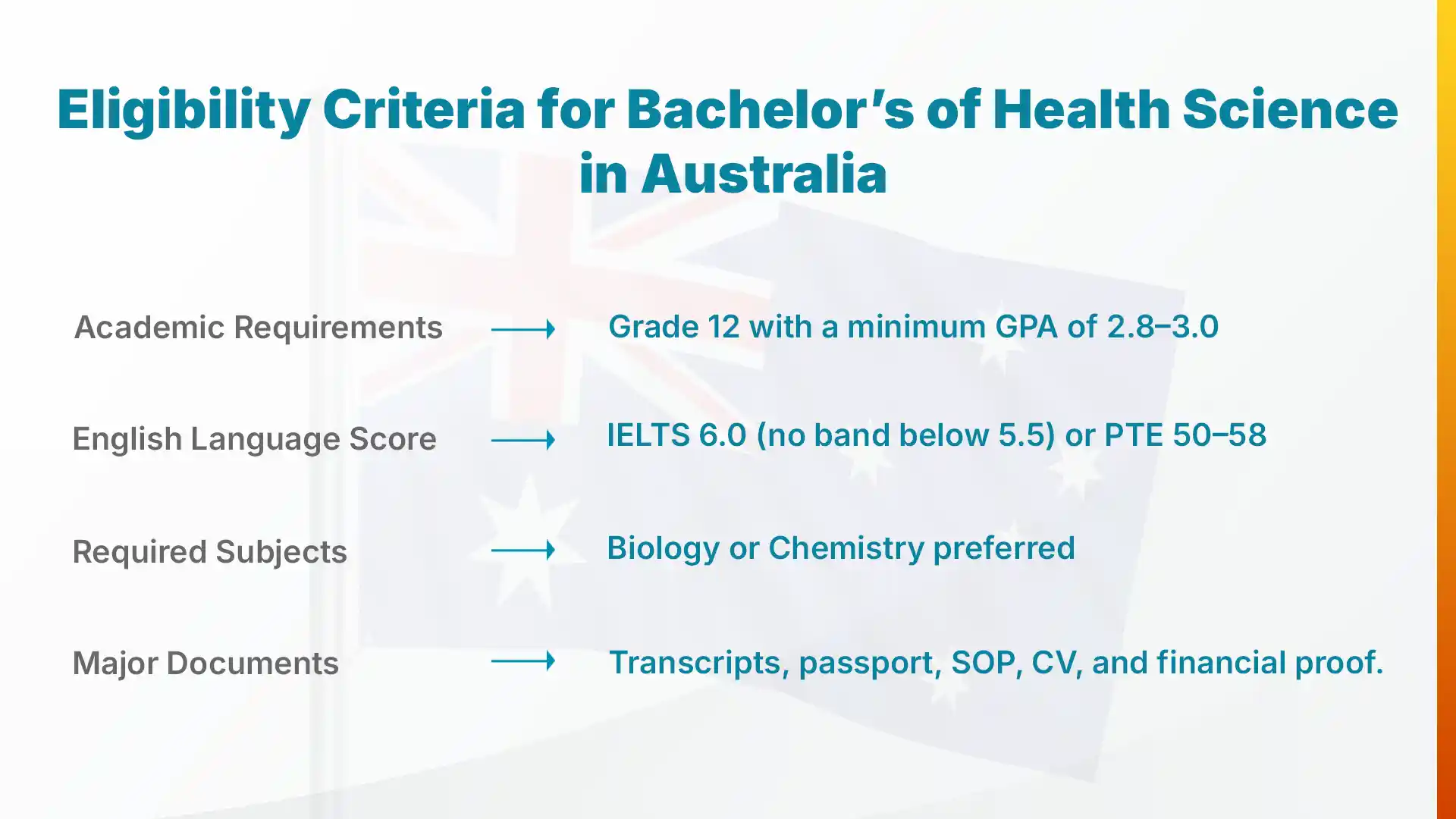
To study a Bachelor of Health Science in Australia, Nepali students must complete Grade 12 with a science background and a minimum GPA of 2.8–3.0. Preferred subjects include Biology or Chemistry. Understanding these eligibility criteria is the first step before moving on to the detailed admission process and application steps.
1. Academic Requirements
You must complete Grade 12 or +2 from a recognized board with a science background. Most universities ask for a minimum GPA between 2.8 and 3.0, though higher-ranked universities may expect slightly better scores. A strong academic record shows that you can handle science subjects at the university level. If your GPA is higher, it can also improve your chances of admission and scholarships.
2. English Language Score
Since classes are taught in English, you need to prove your language ability through IELTS or PTE. Generally, universities require an overall IELTS score of 6.0 with no band less than 5.5, or a PTE score between 50 and 58. This ensures you can understand lectures, write assignments, and communicate confidently during placements. Preparing early for the test can save you time and reduce last-minute stress.
3. Required Subjects to Study BHS
Because Health Science is a healthcare-related course, having Biology or Chemistry in Grade 12 is highly recommended. These subjects help you understand anatomy, human body systems, and disease concepts more easily. Some universities may make one of these subjects compulsory, while others simply prefer them. So, a science background gives you a clear advantage during admission.
4. Major Documents for Studying BHS in Australia
Along with your scores, you’ll need to submit several important documents during the application. These usually include academic transcripts and certificates, a valid passport, an SOP (Statement of Purpose), and a simple CV. You must also show financial proof to confirm you can cover tuition and living expenses. Keeping these documents ready in advance makes the application process smooth and stress-free.
How to Study a Bachelor of Health Science in Australia?
To study a Bachelor of Health Science in Australia, you need to meet academic and English requirements for Australia, choose a university, and apply for admission and a student visa. Careful planning of documents, finances, and course selection ensures a smooth application process. In the sections below, we will guide you step-by-step through eligibility, admissions, costs, and career opportunities.
Step 1: Choose University and Intake
Start by shortlisting universities based on your budget, course specializations, location, and ranking. Decide which intake suits you best. Most universities have February and July intakes. Picking the right university and intake early gives you enough time to meet deadlines, prepare documents, and plan finances.
Step 2: Prepare Documents
Once your university shortlist is ready, gather all necessary documents. This includes Grade 12 transcripts, passport, English test scores, Statement of Purpose (SOP), CV, and financial proof. Preparing these documents in advance avoids delays and ensures a smooth application process.
Step 3: Apply Through Consultancy or Directly
You can either apply directly on the university website or through a trusted education consultancy in Nepal. Consultancies help with document verification, application submission, and guidance on scholarships. Choosing the right method depends on your comfort level with paperwork and deadlines.
Step 4: Receive Offer Letter
After your application is submitted, universities review your documents and eligibility. If everything meets their requirements, you’ll receive an offer letter, which is a formal confirmation that you are accepted into the program. This letter is crucial for visa application and fee payment.
Step 5: Pay Fees and Apply for Student Visa
Next, confirm your admission by paying the required tuition deposit. Then, apply for the Australian student visa (Subclass 500) with your offer letter, passport, financial proof, and health insurance. Early visa application reduces stress and ensures you have time to prepare for travel.
Step 6: Pre-Departure Preparation
Once your visa is granted, focus on preparing for your life in Australia. Arrange accommodation, buy flights, and attend pre-departure briefings if available. Learn about local culture, public transport, and student support services. Being well-prepared helps you start your Health Science journey confidently and comfortably.
In short, studying a Bachelor of Health Science in Australia requires careful planning, from meeting eligibility and preparing documents to arranging your visa and travel. If you’re unsure about any step of the process, it’s wise to seek professional guidance. Visit a consultancy with a high visa success rate, trust their certified counsellors, and get expert help with your study abroad journey.
Intakes and Application Deadlines for Health Science in Australia
The main intakes for a Bachelor of Health Science in Australia are February and July, giving students two opportunities to start their studies each year. The February intake is the most popular, while the July intake is ideal for those who need extra preparation time. Let’s break down the details of each intake in Australia and when Nepali students should start applying.
1. February Intake
The February intake is considered the main intake for most Australian universities. Classes usually start in late February or early March. Applications for this intake typically open around August–September of the previous year, so students should begin preparing documents and tests at least six months in advance. This intake is ideal if you want to align with the standard academic calendar.
2. July Intake
The July intake is the mid-year intake and is offered by many universities, though not all courses are available. Classes start around July, and applications generally open around February–March. This intake is suitable for students who missed the February intake or need more time to prepare documents, English scores, or finances.
3. When Should Nepali Students Start Applying for BHS?
For Nepali students, it’s best to start preparing at least 6–9 months before the intended intake. This includes completing English tests, gathering transcripts, writing the SOP, and researching universities. Early preparation helps avoid delays and increases your chances of securing scholarships and preferred placements.
Cost of Studying Health Science in Australia
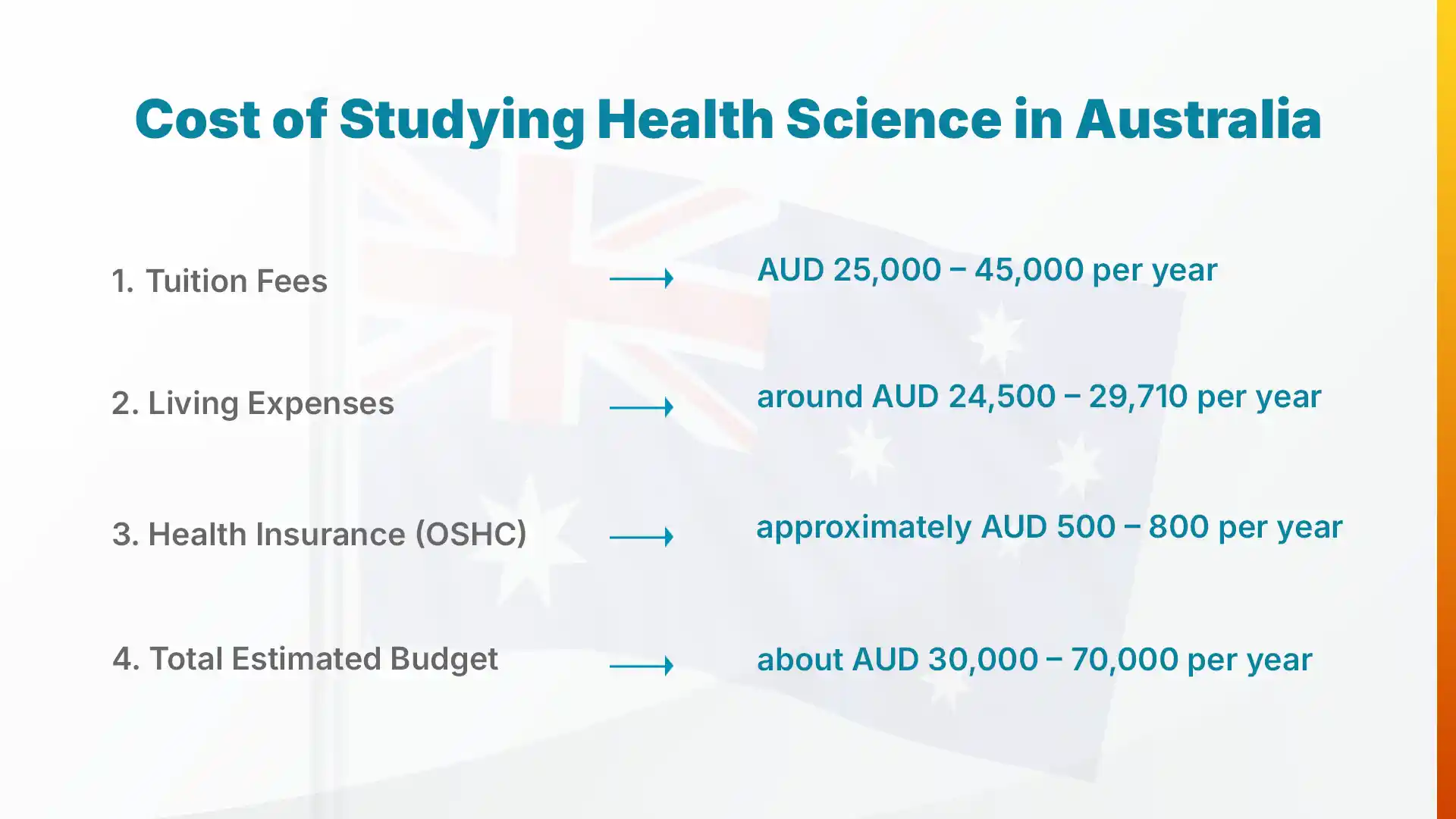
The cost of studying a Bachelor of Health Science in Australia ranges from AUD 25,000 to 45,000 for tuition. Your living expenses can take around AUD 24,500–29,710 per year. You also need to budget for health insurance (AUD 500–800) and other personal expenses, which makes planning your finances essential. Here’s a detailed look at the costs you should expect:
1. BHS Tuition Fees
Tuition fees for a Bachelor of Health Science in Australia typically range from AUD 25,000 to 45,000 per year, depending on the university and program. Top-ranked universities or specialized courses may charge on the higher side. This fee usually covers classroom learning, access to labs, library resources, and sometimes industry placement support. Planning tuition in advance allows you to explore scholarships or payment options that reduce financial pressure.
2. Living Expenses in Australia
Living expenses include accommodation, food, transport, and personal costs, and usually range from AUD 24,500 to 29,710 per year in major Australian cities. Sydney and Melbourne tend to be more expensive, while cities like Brisbane and Adelaide are slightly more affordable. Budgeting carefully for rent, groceries, and transport ensures a smooth student life without financial stress.
3. Health Insurance (OSHC)
As an international student, you must have Overseas Student Health Cover (OSHC) for the duration of your visa. This costs about AUD 500 to 800 per year, depending on the provider and coverage plan. OSHC helps cover medical expenses, doctor visits, and hospital care, giving peace of mind while studying abroad. It’s mandatory for visa approval, so you cannot skip this cost.
4. Total Estimated Budget
Combining tuition, living expenses, and health insurance, the total yearly budget ranges between AUD 30,000 and 70,000, depending on the university, city, and lifestyle. Early planning allows you to arrange finances, explore scholarships, and avoid last-minute stress. This budget ensures you can focus on studies and make the most of your Health Science journey in Australia.
Career Opportunities After a Bachelor of Health Science
A Bachelor of Health Science opens the door to a variety of healthcare and public health careers. The degree is broad, giving you the flexibility to choose a role that fits your skills and interests. With Australia’s growing healthcare industry, graduates are in demand both locally and internationally, offering strong job stability and growth.
1. Job Roles After Graduating from BHS
Graduates can work in many roles depending on their specialization. Common positions include health officer, community health worker, nutritionist, public health officer, health educator, and rehabilitation support worker. Some may also move into research, policy planning, or hospital administration. This flexibility allows you to choose a career that matches your passion for healthcare and community service.
2. Salary Expectations in Australia
Health Science jobs in Australia are well-paid compared to many other fields. Entry-level positions typically earn around AUD 55,000–65,000 per year, while experienced professionals in specialized areas can earn AUD 80,000 or more annually. Salaries vary depending on the role, location, and type of organization. Understanding potential earnings helps students plan their career and lifestyle after graduation.
3. What is the Scope of Health Science in Australia?
The scope of Health Science is wide and growing, with demand for qualified professionals in hospitals, public health, research, and community services. Australia’s aging population and focus on preventive care create continuous job opportunities. Graduates can also pursue higher studies like Master’s in Public Health, Nursing, or specialized certifications, further expanding career prospects.
4. Work Settings
Health Science graduates can work in various settings, depending on their interests and skills. Popular workplaces include hospitals, clinics, government or NGO programs, rehabilitation centers, research institutions, and community health organizations. Each setting provides different experiences, from direct patient care to policy-making and health promotion. This gives graduates a chance to choose the work environment that suits them best.
Pathways After BHS in Australia
After completing a Bachelor of Health Science in Australia, students can continue their studies through master’s programs, specialization courses, or professional certifications. These options help deepen knowledge, gain advanced skills, and improve career prospects in healthcare and public health. Let’s explore the most popular pathways and how they can shape your future:
1. Master’s in Public Health or Nursing
Many students pursue a Master’s in Public Health (MPH) to focus on population health, disease prevention, and healthcare policy. Others opt for a Master’s in Nursing in Australia if they want to move into clinical roles or advanced patient care. A master’s degree not only deepens your knowledge but also improves your chances of securing higher-paying and leadership positions.
2. Specialization Courses
After a BHS, you can also take specialization courses in areas such as mental health, nutrition, rehabilitation, health promotion, or epidemiology. These short-term or postgraduate courses help you build specific skills that make you highly employable. Specializations allow you to tailor your career path to your interests and the needs of the healthcare sector.
3. Professional Certifications
Professional certifications, like community health, infection control, or nutrition counseling, enhance your credibility and demonstrate your expertise to employers. Many of these certifications can be completed alongside work or study. They provide practical skills that help you stand out in the competitive healthcare job market.
4. Permanent Residency (PR) Pathways in Australia
Health Science graduates have a good chance of qualifying for PR in Australia due to high demand in the healthcare sector. Gaining work experience, meeting skill assessment requirements, and completing recognized qualifications can make you eligible for skilled migration programs. This pathway allows you to live, work, and grow your career in Australia long-term.
Is Bachelor of Health Science (BHS) Right for You?
Choosing a course is not just about popularity or job prospects; it’s about whether it aligns with your interests, skills, and long-term goals. The Bachelor of Health Science is broad and versatile, but it suits students who are ready to work hard, learn science, and make a real impact on people’s health. Here’s a quick self-check to see if this path is right for you.
1. Career Goals Checklist
Ask yourself if your career goals match what Health Science offers. Do you want to work in hospitals, community health, nutrition, rehabilitation, or public health? Are you interested in both practical work and research? If your answer is yes, BHS provides multiple pathways to reach these goals.
2. Strengths You Should Have
This course is best suited for students who enjoy science, problem-solving, and helping people. You should have good communication skills, attention to detail, and an interest in learning about health systems and disease prevention. Being caring, patient, and adaptable will also help you succeed in both studies and professional settings.
3. Alternatives to Consider
If your interests lean more toward direct patient care or clinical practice, Medicine or Nursing in Australia might be better options. For community-focused or policy roles, Public Health could be a stronger fit. Allied Health courses like physiotherapy, occupational therapy, or lab technology are also alternatives. Exploring these paths ensures you pick a course that aligns with both your passion and career aspirations.
In short, a Bachelor of Health Science is ideal for students who want a flexible, meaningful, and growing career in healthcare or public health. If your interests, skills, and career goals align, this course can open doors to many opportunities in Australia and beyond. To take the next step confidently, start planning your applications and preparing early. For expert guidance on studying in Australia, including choosing the right university, scholarships, and visas, you can begin by exploring the best consultancy in Nepal for Australia.
Conclusion
Studying a Bachelor of Health Science in Australia offers Nepali students an exciting pathway to a rewarding career in healthcare, public health, and allied fields. With world-class universities, practical learning opportunities, and a strong job market, this course equips you with both knowledge and experience to succeed globally.
While the journey requires careful planning, the long-term benefits make it worthwhile. Research your possibilities today. Meet eligibility requirements, prepare documents, manage costs, and choose the right city.
Seeking professional guidance can simplify the process and increase your chances of success. To get started, visit the best consultancy in Nepal for Australia and take the first step toward turning your study-abroad dream into reality.