Which Schengen Country Has the Highest Visa Success Rate? Complete Guide

May 05, 2026
Getting a Schengen visa can feel overwhelming for many travelers, especially with strict documentation rules and varying approval rates across different countries. Some applicants face quick approvals, while others struggle with rejections even after submitting complete documents. This makes choosing the right Schengen country an important step for a successful application. Understanding visa success rates can significantly improve your chances of approval.
In this blog on Which Schengen Country Has the Highest Visa Success Rate?, we will explore the countries with the highest approval rates and explain why they perform better than others. You will also learn about the key factors that influence visa decisions, common rejection reasons, and practical tips to improve your chances of getting approved. By the end, you will have a clear guide to help you choose the right country and prepare a stronger Schengen visa application for your study abroad journey.
In this blog
What is a Schengen Visa?
Schengen Visa is a short-stay visa that allows travelers to visit and move freely within the Schengen Area, which includes multiple European countries. It is mainly issued for tourism, business, or family visits for up to 90 days within 180 days. This visa removes internal border checks between member countries, making travel across Europe easier. Applicants must apply through the embassy of the country they plan to visit first or stay the longest in. It is one of the most commonly used travel visas for Europe, especially for those planning to study in Europe from Nepal.
How Does the Schengen Visa System Work?
- Applicants submit their visa application to the embassy or consulate of the main destination country
- The application includes documents like a passport, a travel plan, insurance, and financial proof
- Authorities review the application to check eligibility and travel purpose
- Biometrics such as fingerprints may be required during the process
- If approved, the visa allows travel across all Schengen countries without internal border checks
- The visa is usually valid for short stays up to 90 days within 180 days period
Which Are Some of the Famous Schengen Countries?
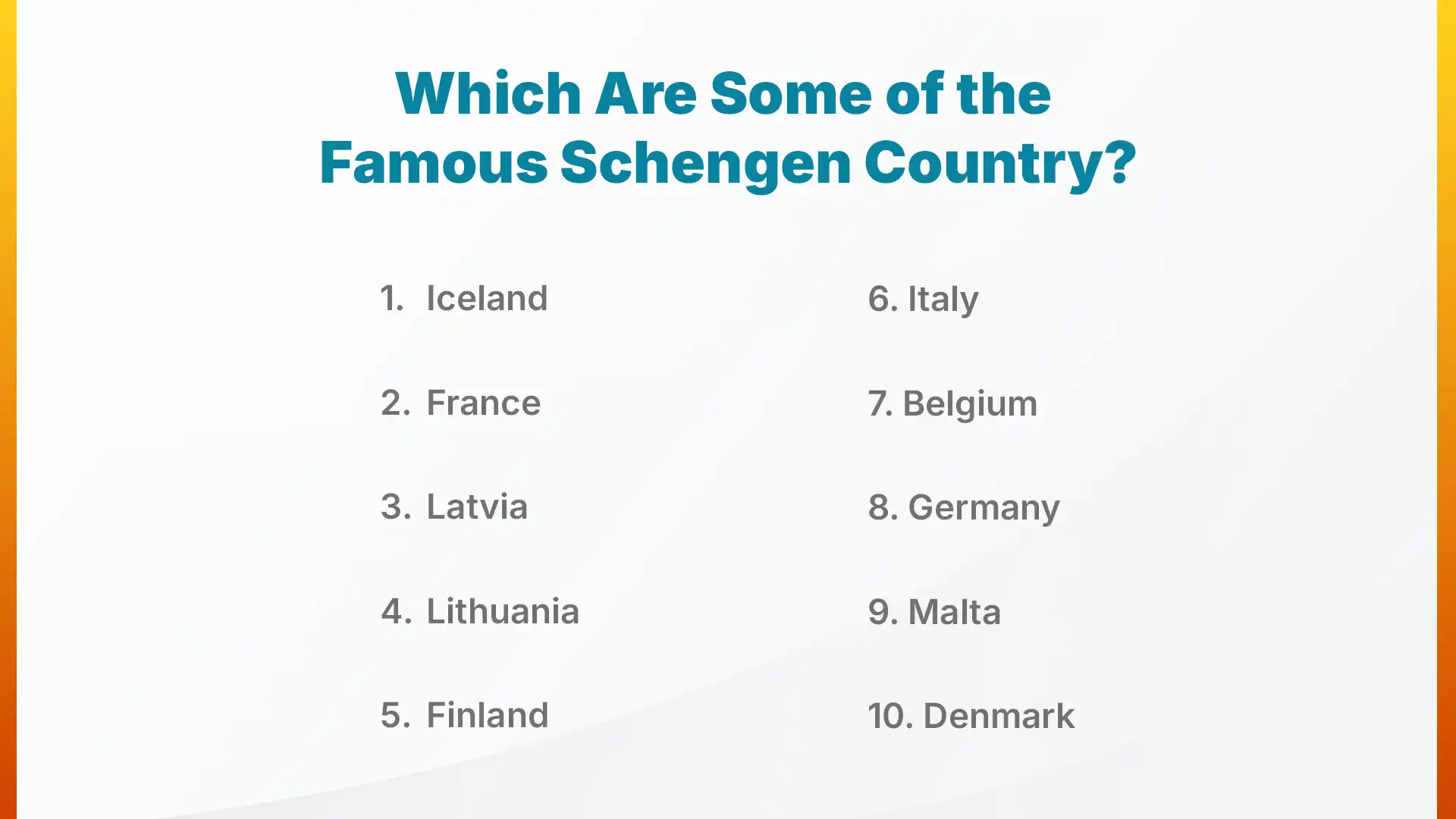
Some of the famous Schengen countries known for tourism, strong visa approval rates, and easy travel experiences include Iceland, Switzerland, Latvia, Lithuania, Slovakia, Austria, Belgium, Croatia, Malta, and Denmark. These countries are popular choices for Schengen visa applicants due to their relatively higher approval rates and well-managed visa processing systems. They also attract a large number of tourists every year for travel, work, and study purposes. Choosing the right country can improve your chances of visa success.
1. Iceland
Iceland is known for having one of the highest Schengen visa approval rates. It receives fewer applications, which often results in faster processing. Applicants with proper documents have a strong chance of approval. It is a popular destination for nature and tourism travel. The embassy process is considered straightforward and transparent.
2. Switzerland
Switzerland has a strong reputation for organized visa processing and high approval rates. It attracts tourists, business travelers, and students. Proper documentation significantly improves approval chances. The country is known for strict but fair evaluation. It is a preferred Schengen destination for many applicants.
3. Latvia
Latvia is one of the easier Schengen countries for visa approval. It receives fewer applications compared to other European nations. This increases the chances of acceptance for genuine travelers. The process is generally smooth and efficient. It is a good choice for first-time applicants.
4. Lithuania
Lithuania is also known for a relatively high visa success rate. It has simple application procedures and clear requirements. Applicants with strong documents are often approved. It is becoming a popular entry point to the Schengen area. Processing times are usually reasonable.
5. Slovakia
Slovakia offers a decent visa approval rate with straightforward requirements. It is less crowded compared to major Schengen countries. This makes the application process easier for many travelers. Proper planning increases approval chances. It is suitable for tourism and short visits.
6. Austria
Austria has a well-structured visa system with moderate to high approval rates. It is a popular destination for tourism and cultural visits. Strong documentation is important for approval. The embassy follows clear guidelines for evaluation. It remains a preferred Schengen country.
7. Belgium
Belgium processes a large number of Schengen visa applications. Approval depends on complete and accurate documentation. It is an important business and tourism hub. Applicants must show strong travel intent. The process is strict but transparent.
8. Croatia
Croatia is gaining popularity as a Schengen destination. It has a relatively positive approval rate for genuine applicants. Tourism is a major reason for visits. Proper documentation improves success chances. It is a beautiful and accessible travel destination.
9. Malta
Malta is known for its tourism-friendly visa policies. It often has favorable approval rates for short-term visitors. The country receives fewer applications compared to major destinations. This can improve approval chances. It is popular for leisure travel.
10. Denmark
Denmark has a structured and efficient visa process. It evaluates applications carefully with clear requirements. Strong financial and travel documents are essential. It is a popular destination for tourism and business. Approval depends on application quality.
Which Schengen Country Has the Highest Visa Success Rate?
Based on 2024–2026 data, Iceland and Lithuania consistently rank as the Schengen countries with the highest visa success rates, often exceeding 95% approval. These countries are considered the easiest for visa approval, mainly due to lower application volumes and efficient processing systems. Their embassies follow clear and straightforward documentation requirements, which increases the chances of approval for genuine travelers. Other countries like Finland, Latvia, and Estonia also maintain very high success rates, making them favorable options for first-time applicants.
Lithuania is frequently reported with an approval rate of around 97% to 98%, making it one of the top choices for applicants. Iceland also maintains a similar success rate of around 97.8% to 98.1%, with one of the lowest rejection rates in the Schengen area. Finland and Latvia also perform strongly with approval rates close to 95% or higher. In contrast, popular destinations like France, Italy, and Switzerland have lower approval rates due to high application volumes and stricter scrutiny. Overall, smaller Schengen countries tend to offer better visa success chances.
Schengen Visa Approval Rate Comparison by Country
Overall, countries like Iceland and Lithuania consistently rank at the top due to high approval percentages and efficient processing systems. In contrast, highly popular destinations like France and Italy tend to have lower approval rates because of stricter scrutiny and large application volumes.
Country | Approx. Approval Rate | Key Insight |
| Iceland | 97.8% to 98.1% | One of the highest approval rates with very low rejection cases |
| Lithuania | 97% to 98% | High success due to lower application volume and simple process |
| Finland | Around 97% | Fast processing and consistently strong approval rates |
| Latvia | 95% to 97% | Straightforward documentation and good approval chances |
| Estonia | 96% to 98% | Efficient digital visa system improves approval speed |
| Switzerland | 88% to 92% | Strong but strict evaluation process |
| Italy | 84% to 88% | High demand leads to moderate approval rate |
| Greece | 93% to 96% | Tourism-friendly visa policies support approvals |
| France | 81% to 85% | High application volume leads to stricter scrutiny |
| Spain | 85% to 90% | Balanced approval rate with detailed checks |
Factors That Affect Schengen Visa Success Rate
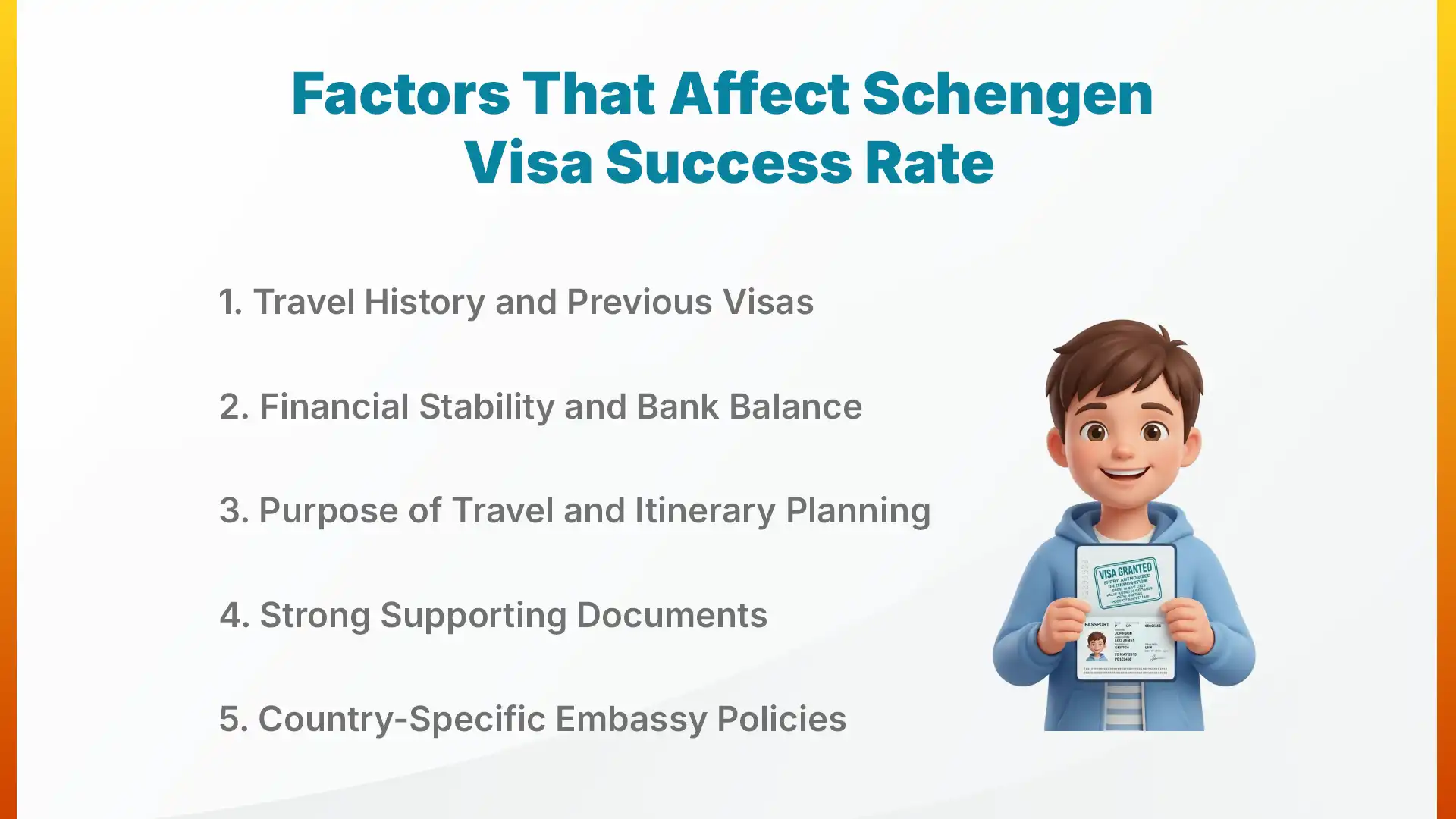
Success rate of a Schengen visa application depends on several important factors evaluated by embassies during the approval process. These factors help authorities determine whether an applicant is a genuine traveler with strong ties to their home country. Even small mistakes in documentation or unclear travel intent can lead to rejection. Understanding these factors can significantly improve your chances of visa approval. A well-prepared application always increases success probability, including for those concerned about the success rate of European student visa from Nepal.
1. Travel History and Previous Visas
Strong travel history positively impacts Schengen visa approval chances. Applicants who have previously traveled to countries like the USA, UK, or other Schengen nations are considered more reliable. A clean visa record with no overstays builds trust with embassies. First-time travelers may face stricter scrutiny. Good travel history shows responsible travel behavior. It increases overall approval confidence.
2. Financial Stability and Bank Balance
Financial stability is a key factor in visa approval decisions. Applicants must show a sufficient bank balance to support their travel expenses. Stable income and financial documents increase credibility. Embassies check whether the applicant can afford the trip. Irregular or insufficient funds may lead to rejection. Strong financial proof improves approval chances significantly.
3. Purpose of Travel and Itinerary Planning
Clear and genuine travel purpose is essential for visa success. Applicants must provide a detailed travel itinerary, including accommodation and flight plans. Unclear or inconsistent plans can raise doubts. Tourism, business, or family visits must be properly explained. A well-organized itinerary shows serious intent. It helps build trust with visa officers.
4. Strong Supporting Documents
Complete and accurate documentation is crucial for approval. Required documents include passport, insurance, financial proof, and travel itinerary. Missing or incorrect documents can result in rejection. Properly organized paperwork makes the process smoother. Supporting documents validate the applicant’s information. Strong documentation increases success rate.
5. Country-Specific Embassy Policies
Each Schengen country has its own visa processing rules and policies. Some countries have stricter checks, while others are more flexible. Smaller countries often have higher approval rates. Embassy workload and application volume also affect decisions. Understanding country-specific rules is important before applying. Choosing the right country improves approval chances.
How to Increase Your Chances of Getting a Schengen Visa?
You can increase your chances of getting a Schengen visa by preparing complete documents, showing strong financial stability, choosing high approval rate countries, and maintaining a clean travel history. These factors help demonstrate that you are a genuine traveler with clear intentions. Embassies carefully evaluate each application based on credibility and supporting evidence. A well-prepared profile significantly improves approval chances. Proper planning and accuracy are key to success.
1. Prepare Complete and Accurate Documents
Submitting complete and correct documents is the first step toward visa approval. Missing or incorrect paperwork often leads to rejection. Applicants must include passport, travel insurance, flight bookings, and hotel reservations. Accuracy in details builds trust with visa officers. Organized documentation makes the process smoother. It improves overall approval probability.
2. Show Strong Financial Proof
Financial stability is essential for a successful Schengen visa application. Applicants must show sufficient bank balance to cover travel expenses. Consistent income and financial records increase credibility. Embassies check whether you can support your stay abroad. Weak financial proof may result in rejection. Strong finances improve approval confidence.
3. Apply to High Approval Rate Countries
Choosing the right country can significantly increase visa success chances. Countries like Iceland and Lithuania have higher approval rates. These countries often have simpler processing systems. Lower application pressure improves acceptance chances. First-time applicants benefit from such destinations. Strategic selection plays a key role in approval success.
4. Maintain Clean Travel History
Clean travel history helps build trust with embassies. Previous successful international travel increases approval chances. Avoiding visa overstays or violations is very important. Good travel records show responsible behavior. First-time travelers may face stricter checks. A strong travel history improves overall credibility.
Why Some Schengen Countries Have Higher Visa Success Rates?
Some Schengen countries have higher visa success rates mainly because they receive fewer applications, follow transparent processing systems, and maintain tourism-friendly immigration policies. These factors make their evaluation process faster and less competitive compared to high-demand countries. As a result, genuine applicants have better chances of approval. Embassy workload and policy flexibility also play an important role in approval rates. Overall, the combination of these factors leads to higher visa success rates.
1. Lower Applicant Pressure and Demand
Countries with fewer visa applications generally have higher approval rates. Lower demand reduces embassy workload and allows faster processing. Applicants face less competition compared to popular destinations. This increases the chances of approval for genuine travelers. Smaller countries often benefit from this advantage. It creates a smoother visa process overall.
2. Transparent Visa Processing System
Transparent visa processing system helps improve approval rates. Clear rules and documentation requirements reduce confusion for applicants. Embassies follow consistent evaluation standards. This ensures fair and predictable decisions. Applicants who meet requirements are more likely to be approved. Transparency builds trust in the visa process.
3. Tourism-Friendly Immigration Policies
Some Schengen countries encourage tourism through flexible visa policies. They aim to attract more visitors for economic growth. This leads to more relaxed approval conditions for genuine travelers. Short-term tourist visas are processed efficiently. Countries benefit from increased tourism revenue. It results in higher visa success rates.
How to Apply For Schengen Visa? Step-by-Step
You can apply for a Schengen visa by choosing the correct country, filling out the application form, preparing documents, booking an appointment, attending the interview, and waiting for the final decision. This step-by-step process ensures your application is properly reviewed by the embassy. Each stage is important for improving approval chances. Following the correct procedure helps avoid mistakes and delays. Proper preparation increases the likelihood of getting a visa successfully.
1. Choose the Correct Schengen Country for Application
Selecting the correct Schengen country is the first and most important step. You must apply to the country where you will stay the longest or your main destination. Choosing the wrong embassy can lead to rejection or delays. It also depends on your travel itinerary and purpose. Careful selection improves approval chances. This step sets the foundation of your application.
2. Fill Out the Schengen Visa Application Form
The application form must be filled out accurately and completely. Any incorrect or missing information can cause rejection. Details like personal information, travel purpose, and duration must match your documents. It is important to double-check before submission. Consistency is key in this step. A properly filled form increases approval chances.
3. Gather Required Documents and Financial Proof
You must collect all required documents such as passport, insurance, bank statements, and travel itinerary. Financial proof is essential to show you can support your trip. Missing documents can lead to refusal. Organized paperwork helps embassy officers review your case easily. Strong documentation builds trust. This step is crucial for visa success.
4. Book Visa Appointment at Embassy or VFS Center
After preparing documents, you need to book an appointment at the embassy or VFS center. Appointment slots should be booked early due to high demand. You will submit documents and biometric data during this visit. Proper scheduling avoids delays in processing. Timely booking is very important. It ensures smooth application progress.
5. Attend Visa Interview and Submit Biometrics
During the appointment, you may attend a visa interview and provide biometrics like fingerprints. The interview helps officers understand your travel purpose. You must answer clearly and honestly. Biometrics are used for identity verification. Preparation is important for confidence. This step plays a key role in approval.
6. Wait for Visa Processing and Decision Result
After submission, your application goes through processing and evaluation. The embassy checks your documents and background carefully. Processing time may vary depending on the country. You will be informed of the final decision via email or passport return. Patience is required during this stage. Approval depends on overall application strength.
Common Reasons for Schengen Visa Rejection
Schengen visa applications can be rejected for several common reasons, mostly related to incomplete documents, weak financial stability, unclear travel plans, or doubts about the applicant’s intention to return. Embassies carefully assess whether the applicant is a genuine traveler with sufficient proof and strong ties to their home country. Even small mistakes or missing details can lead to rejection. Understanding these reasons helps applicants prepare stronger applications and improve approval chances. Proper planning and documentation are essential for success.
1. Incomplete Documentation
Incomplete documentation is one of the most common reasons for visa rejection. Missing papers, such as bank statements, insurance, or travel itinerary, create doubts in the application. Embassies require complete and accurate information for evaluation. Even small errors can lead to refusal. Proper document checking is very important. Complete paperwork increases approval chances.
2. Weak Financial Proof
Weak financial proof raises concerns about the applicant’s ability to fund their trip. Low bank balance or irregular transactions can lead to rejection. Embassies need assurance that travelers can support their stay. Strong and stable financial records are essential. Lack of funds reduces credibility. Proper financial documentation improves approval chances.
3. Unclear Travel Purpose
An unclear travel purpose can result in visa rejection. Applicants must clearly explain why they are visiting the Schengen Area. Vague or inconsistent travel plans create suspicion. A detailed itinerary is required for approval. Tourism, business, or family visits must be clearly stated. Clear intent increases trust and approval chances.
4. Doubts About Return Intent
Embassies must be convinced that applicants will return to their home country. Lack of strong ties, such as a job, family, or property, can create doubt. If the return intent is unclear, rejection is likely. Clear proof of responsibilities helps build trust. Strong home country ties are very important. This factor significantly affects visa decisions.
Conclusion
Understanding which Schengen country has the highest visa success rate is very important for increasing your chances of approval. Countries like Iceland, Lithuania, Finland, and Latvia consistently show higher approval rates due to lower application pressure and smooth processing systems. Choosing the right destination, along with proper documentation and financial stability, can make a big difference in your visa outcome. A well-prepared application always performs better in embassy evaluations, especially when guided by SAS Education Consultancy.
Overall, Schengen visa approval depends on multiple factors such as travel history, purpose of visit, and supporting documents. If you carefully follow the correct application process and choose a high approval rate country, your chances of success improve significantly. Proper planning and honest documentation are the key to securing your Schengen visa without unnecessary rejection.