How to Write SOP for South Korea: 2026 Sample & Structure

Dec 10, 2025
Writing an SOP for South Korea can feel like a puzzle. You know your goals and achievements, but turning them into a story that convinces universities is not easy. Many Nepali students get stuck wondering what to include, how much to write, or how to make their application stand out.
The good news is, this doesn’t have to be stressful. With the right approach, you can craft an SOP that clearly shows your motivation, experience, and why South Korea is the perfect place for your studies.
This guide will walk you through the entire process, from understanding what Korean universities expect, to preparing, drafting, and polishing your SOP. You’ll also find a sample to follow, helping you create a statement that is personal, clear, and effective. Let’s reach your goal of studying in Korea from Nepal together!
In this blog
What Is an SOP for South Korea?
A Statement of Purpose (SOP) for South Korea is a personal essay that explains your academic background, career goals, and reasons for choosing to study in South Korea. It is a key document in your university application because it helps admission committees understand who you are beyond your grades and test scores. In simple terms, your SOP tells your story in a clear, honest, and convincing way. Writing a strong SOP can make a big difference in how universities view your application.
Purpose of an SOP for Korean Universities
The main purpose of an SOP is to show universities your motivation and suitability for their program. It allows you to explain why you chose a particular course, how your past studies or experiences prepare you for it, and what you hope to achieve in the future. Korean universities look for students who are disciplined, focused, and committed to learning. Your SOP is the place to demonstrate these qualities with examples from your education, work, or extracurricular activities.
What Korean Institutions Expect From Applicants
Korean institutions expect applicants to clearly explain their goals and demonstrate how they fit into the program. They want to see that you have researched the university, understand its resources, and can contribute meaningfully to its academic environment. Evidence of your past achievements, relevant skills, and motivation is crucial. Admissions officers also value applicants who are culturally aware and show respect for the academic environment in Korea. A well-structured SOP can show all these points effectively.
How is SOP for South Korea Different from Western Countries
SOPs for South Korea differ from those for Western countries in tone and focus. While Western SOPs often highlight individuality and creativity, Korean SOPs emphasize discipline, dedication, and academic seriousness. You also need to show cultural awareness and an understanding of the Korean education system. Motivation and future goals should be clearly linked to your chosen program and university. Overall, your SOP should balance confidence with humility and show that you are ready to learn and grow in Korea.
Join Nepal's Top IELTS Classes Today!
How to Write SOP for South Korean Student Visa?
To write a strong SOP for South Korea, start with a clear introduction, share your academic and research background, and explain why you chose this university or program (mention professors or special resources). Show your interest in Korean culture or language, link your studies to clear career goals that help your home country, and finish by showing what you can contribute. Keep it 500–1000 words, which can take 1–2 pages. Use real examples, stay formal, and avoid copying from others.
1. Research Programs & Outcomes
Start by exploring the programs that interest you. Visit university websites, read the course modules carefully, and check alumni profiles on LinkedIn or university pages. Notice what graduates are doing, what skills they’ve gained, and where they work. This research helps you explain why the program matches your goals. When you can connect your ambitions to real outcomes, your SOP feels much more credible and convincing.
2. Map University Fit & Resources
Next, look at the university itself. Check faculty pages, labs, internship opportunities, and campus facilities. List at least three specific reasons why this university is a good fit for you. For example, a professor whose research aligns with your interests, a unique lab, or strong industry connections can strengthen your SOP. Showing that you’ve done your homework demonstrates genuine interest and makes your application stand out.
3. Gather Evidence & Documents
Before drafting, collect all your documents: transcripts, project reports, certificates, awards, internship letters, and IELTS/PTE scores. Keep both originals and certified copies. Having these ready makes it easier to include specific examples in your SOP, and it also shows universities that your achievements are well-documented.
4. Prepare Financial & Sponsor Documents
Korean universities and visa authorities like to see proof of funding. Meet your sponsor, confirm the funds, and prepare bank statements, affidavits, or scholarship letters. If needed, translate them into English. Showing financial preparedness and your ability to cover the entire cost of studying in South Korea reassures universities that you are serious and ready to study abroad.
Ready to Apply for Your Korean Student Visa?
Get expert guidance on courses, universities, scholarships, and applications. Start your study journey in South Korea with out crertified counsellors today!
5. Build Your Storyline & Outline
Now, sketch a simple roadmap for your SOP. Start with your motivation, then your academic background, practical experiences, why South Korea, and finally your future plan. Think of it as a storyboard. It helps your ideas flow naturally and keeps your SOP structured. When your story moves smoothly from one point to another, it becomes easier to read and more engaging.
6. Draft the First Version
With your outline ready, start writing freely. Focus on sharing your experiences honestly, using real examples from school, projects, or internships. Don’t worry about grammar or style yet. Just get your story down. The first draft is about putting your thoughts together; polishing comes later.
7. Translate, Attest & Organize Papers
If any supporting documents are in Nepali, get them translated and attested early. Organize all files, both digitally and physically, with clear names and notes. This saves stress later and helps you easily cross-check everything during submission. You will need these documents while applying for a South Korean student visa as well.
8. Get Targeted Feedback
Share your draft with someone experienced. Consult with a professor, a senior who has studied in Korea, or a top South Korean consultant familiar with the admissions process. Ask for feedback on clarity, credibility, and structure. Specific feedback helps you identify weak points and strengthen your SOP before final submission.
9. Revise, Proofread & Localize Tone
After feedback, revise carefully. Cut fluff, tighten sentences, and check grammar. Make sure your tone is polite, precise, and confident without being boastful. Showing respect for Korean academic culture makes a big difference and gives your SOP a professional, genuine feel.
10. Final Check & Submission Prep
Before submitting, double-check word count, format, and alignment with your documents. Make sure all required information is included and easy to verify. A final review ensures your SOP is polished, organized, and ready to impress Korean universities.
Writing an SOP for South Korea is all about telling your story clearly, showing your fit for the program, and connecting your goals to real outcomes. Once you understand these steps, the next important part is organizing your ideas effectively. If you need professional guidance, visit one of the top 10 best education consultancies in Nepal to write an SOP confidently. Let’s now look at the SOP format and structure that will help you present your story in a clear, professional, and persuasive way.
SOP Format & Structure for South Korea
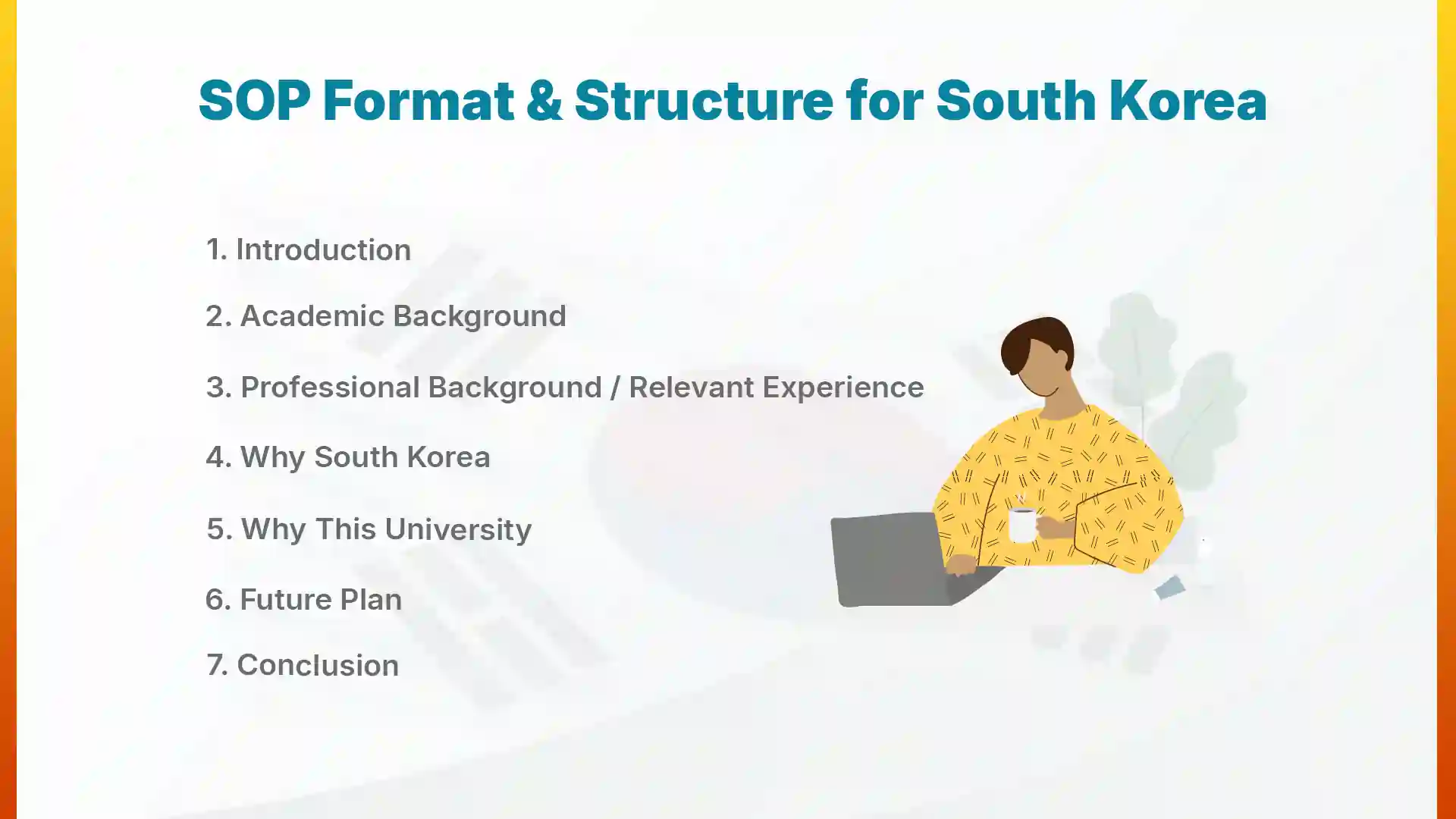
A well-organized SOP is usually 1–2 pages long (500–1000 words). It typically includes several key parts: Introduction, Academic Background, Professional or Relevant Experience, Why South Korea, Why This University, Future Plan/Career Goals, and Conclusion. Following this structure ensures your SOP flows naturally and clearly shows your motivation, preparation, and fit for the program.
1. Introduction
Start with a short introduction about yourself and your motivation to study in South Korea. You can briefly mention what inspired you or what interests you in your field. Keep it simple, honest, and engaging, as it sets the tone for the rest of your SOP. Remember, the introduction is your first impression, so make it friendly yet professional.
2. Academic Background
Next, explain your academic journey. Focus on your relevant courses, projects, or research experiences that prepared you for this program. You don’t need to list everything; highlight what shows your readiness and interest in the subject. Keep the tone reflective and genuine, so the reader can connect with your learning journey.
3. Professional or Relevant Experience
If you have internships, work experience, or volunteer activities, include them here. Mention what skills or knowledge you gained and how these experiences connect to your chosen program. This shows that you are practical and prepared. Try to write in a way that shows your enthusiasm for learning through experience, not just achievement.
4. Why South Korea
Here, explain why you want to study in South Korea. You can mention academic opportunities, research facilities, or cultural aspects that interest you. If you know some Korean language or culture, it’s good to briefly mention it, as it shows your willingness to adapt and engage. Adding a personal touch here, like a small story or reason for your interest, can make your SOP more memorable.
5. Why This University
Be specific about the university or program. You don’t have to go into too many details, but you can mention if a particular professor, lab, or resource matches your academic goals. Showing that you researched the university makes your SOP stronger. Keep your tone humble and curious, showing that you are excited to learn and grow in their environment.
6. Future Plan / Career Goals
Clearly state your short-term and long-term goals. Focus on how the program will help you achieve them. It’s important to show that your plans benefit your career and your home country, not just your desire to study abroad. Try to express your goals in a way that shows thoughtfulness and responsibility, which Korean universities appreciate.
7. Conclusion
Finally, wrap up your SOP with a short summary of your motivation and readiness. Highlight what you can contribute to the university or program. Keep it confident yet humble, leaving a positive impression. Ending with a gentle note of enthusiasm or hope can make your conclusion feel personal and authentic.
Sample SOP for South Korea
This sample SOP for South Korea shows how to structure your Statement of Purpose for a successful application. It provides a clear example of how to highlight your academic background, experiences, motivation, and career goals in a personal and convincing way.
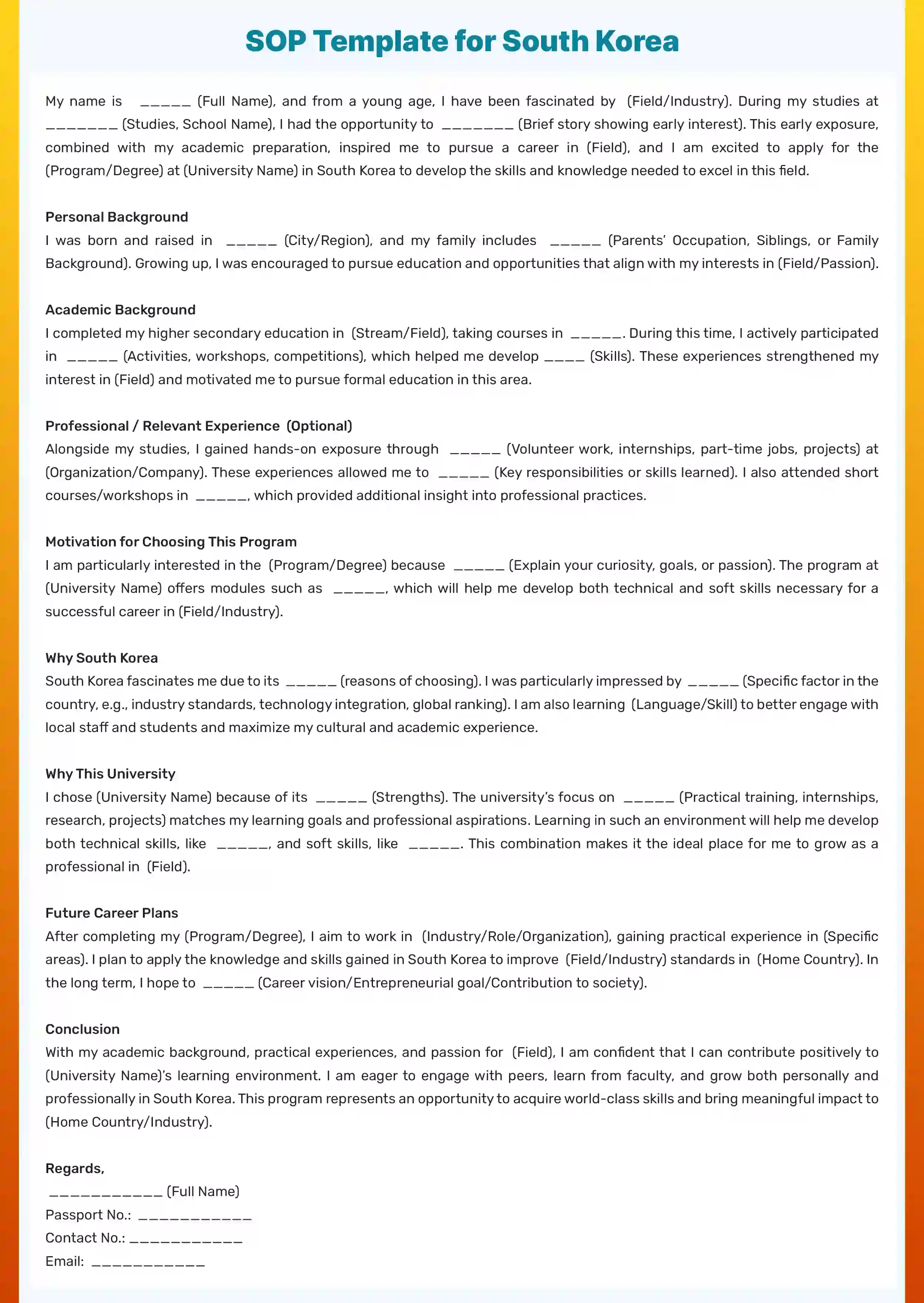
Sample SOP for BHM in South Korea
SOP for BHM in South Korea
Introduction
My name is Anisha Shrestha, and from a young age, I have been fascinated by the hospitality industry and the way it brings people together. After completing my +2 in Management at [School Name], I often helped my parents at small family events and saw how thoughtful service could create memorable experiences. This early exposure, combined with my management studies, inspired me to pursue a career in hotel management. I am excited to apply for the BHM program at [University Name] in South Korea to develop the skills and knowledge needed to excel in this dynamic field.
Academic Background
I completed my higher secondary education in Management, where I took courses in business, communication, and tourism studies. During this time, I actively participated in organizing school events and workshops, which taught me leadership, teamwork, and planning skills. These experiences strengthened my interest in hospitality management and motivated me to explore formal education in this field.
Professional / Relevant Experience
Alongside my studies, I volunteered at local hotels and restaurants during festivals and summer breaks. This hands-on exposure allowed me to interact with guests, assist in operations, and understand service standards. I also attended short courses on hotel operations and customer service, which gave me a glimpse into professional hospitality practices. These experiences have prepared me to take full advantage of the BHM program.
Why South Korea
South Korea has always fascinated me with its unique blend of tradition and modernity, and I was particularly intrigued by how its hospitality sector maintains high standards while embracing innovation. While researching, I came across the country’s global hotel rankings and learned about the emphasis on guest experience, technology integration, and teamwork in Korean hotels. These aspects impressed me because they align perfectly with my goal of becoming a skilled hospitality professional. I am also learning basic Korean, which will help me connect with local staff and students and make the most of cultural experiences on campus. Studying in South Korea will not only give me professional knowledge but also a global perspective that I can bring back home.
Why This University
I am especially drawn to [University Name] because of its hands-on approach to hotel management education, including training in front-office operations, food and beverage management, and hospitality marketing. The university’s partnerships with leading hotels and resorts give students the chance to gain real-world experience through internships, which I find very valuable. I was impressed by the faculty’s practical approach, combining theory with real case studies and projects. Learning in such an environment will help me develop both technical skills, like hotel operations and event management, and soft skills, like communication, leadership, and guest interaction. This comprehensive approach makes it the perfect place for me to grow as a hospitality professional.
Future Plan / Career Goals
After completing my BHM, I plan to work at an international hotel or resort, first gaining hands-on experience in areas like front-office management, guest services, and event planning. I aim to apply what I learn in Korea, especially in areas like technology-driven guest experiences and efficient hotel operations, to improve hospitality standards in Nepal. In the long term, I hope to open my own boutique hotel that combines modern service standards with Nepali culture, offering guests a unique experience. This program will equip me with the skills, global exposure, and practical insights needed to turn this vision into reality.
Conclusion
With my academic background, hands-on experiences, and genuine passion for hospitality, I am confident that I can contribute positively to [University Name]’s learning environment. I am eager to learn, engage with peers, and grow both professionally and personally in South Korea. For me, this program is an opportunity to bring world-class hospitality skills back home and make a difference in Nepal’s tourism sector.
Regards,
Anisha Shrestha
Passport No.: 131887766
Contact No.: +977-9860123456
Email: [email protected]
Wondering what is NOC in Nepal? It’s a certificate confirming that your school, college, or employer allows you to study abroad. In Nepal, it is issued by the Ministry of Education (or relevant authority) and is required for your student visa and university applications. If you need guidance or help obtaining it, you can visit trusted education consultancies for step-by-step support.
Common Mistakes Students Make in Their SOP for South Korea
Common mistakes in an SOP for South Korea include being too generic, copying templates, or writing vague statements. Some students use clichés or make exaggerated claims. Others forget to clearly connect their past experiences to the program or to show realistic career goals. Korean universities also expect students to show cultural fit, like humility, diligence, and respect. To avoid these mistakes, focus on your academic fit, relevant experiences, and how you can contribute to the university and your field in the future.
1. Using Generic or Template-Like Statements
One of the biggest mistakes is writing statements that could fit anyone. Phrases like “I want to study abroad to gain knowledge” or “I love hospitality” are too vague and don’t show your personal story. Korean universities want to know why you specifically are applying and what makes your experience unique. Instead, share real examples from your academics, projects, or experiences that show your interest and preparation.
2. Weak Explanation of “Why South Korea”
Many students mention South Korea without explaining why they chose it. Simply saying “I want to study in Korea because it is developed” is not enough. You need to show that you understand the country’s strengths, such as its modern hospitality training, global service standards, or cultural approach to guest experiences. This demonstrates that your decision is thoughtful and intentional, not random.
Study in UK – Start Your Journey Now
3. Poor Connection Between Past Experience and Chosen Program
Some SOPs list achievements or experiences but fail to connect them to the program. For example, mentioning volunteering at a hotel is not enough if you don’t explain what skills or lessons you gained and how these prepare you for a BHM program. Always link your past experiences to the program you are applying for so the university sees your readiness and fit.
4. Unrealistic or Vague Career Goals
Stating goals like “I want to work anywhere abroad” or “I will be successful in hospitality” is too vague. Universities want to see realistic, specific goals that show you understand the field. For a BHM student, this could include working in international hotels, learning modern management techniques, or improving hospitality standards in Nepal. Clear goals demonstrate planning, maturity, and a sense of responsibility.
These mistakes are common, but easy to avoid with thoughtful writing and self-reflection. Being aware of these pitfalls can help you avoid them and make your SOP stronger.
Conclusion
Writing a strong SOP for South Korea is all about showing who you are, what you have achieved, and why you are the right fit for your chosen program. Remember to structure your SOP clearly, share your academic and practical experiences, explain why you chose South Korea and your university, and outline realistic career goals. Avoid generic statements, clichés, or vague stories, and instead make your SOP personal, specific, and honest.
With careful preparation, research, and reflection, you can create an SOP that stands out and strengthens your study abroad application. Take the time to tell your story, connect your experiences to your goals, and show your readiness to embrace both learning and culture in South Korea. Your dream of studying abroad can become real with a well-crafted SOP.