What is the Success Rate of France Student Visa from Nepal?

Feb 05, 2026

Dreaming of studying in France is exciting! But, many Nepali students tend to get overwhelmed by the fear of student visa rejection. It’s normal to worry, especially when Europe sometimes feels complicated or intimidating.
France has a strong student visa approval rate, especially for students who prepare their documents correctly and follow the rules. Most Nepali students succeed in securing their visa on their very first application
In this guide, you’ll get a clear picture of the France student visa success rate from Nepal, understand why some applications fail, and learn practical steps to maximize your chances of approval. By the end, you’ll feel confident and ready to plan your journey.
In this blog
What is the Success Rate of a France Student Visa in 2025?
Official statistics are not published by French authorities, so it’s hard to find exact numbers. However, based on recent trends and student experiences, the approval rate for France student visas is generally very high, usually over 80%, especially for those who submit complete and accurate documents. At SAS Education Consultancy, for example, the visa success rate for Nepali students applying to France has been an impressive 99%. The results are a testament to our students’ and visa consultants’ careful preparation and genuine applications.
One reason for this high success rate is that France prioritises genuine students over strict quotas or lottery systems. This means that if your profile is clear, your finances are in order, and your study plan is well-documented, your chances of approval are strong. Of course, the final outcome depends on your individual profile and preparation, but with the right guidance and attention to detail, securing a French student visa is very achievable.
Why is the France Student Visa Approval Generally High?
The France student visa approval rate is generally high because the system is designed to support genuine students rather than restrict numbers unnecessarily. France prioritizes clear documentation, realistic financial planning, and authentic study plans, which help applicants from Nepal secure visas with confidence. Let’s break down the main reasons that make this possible.
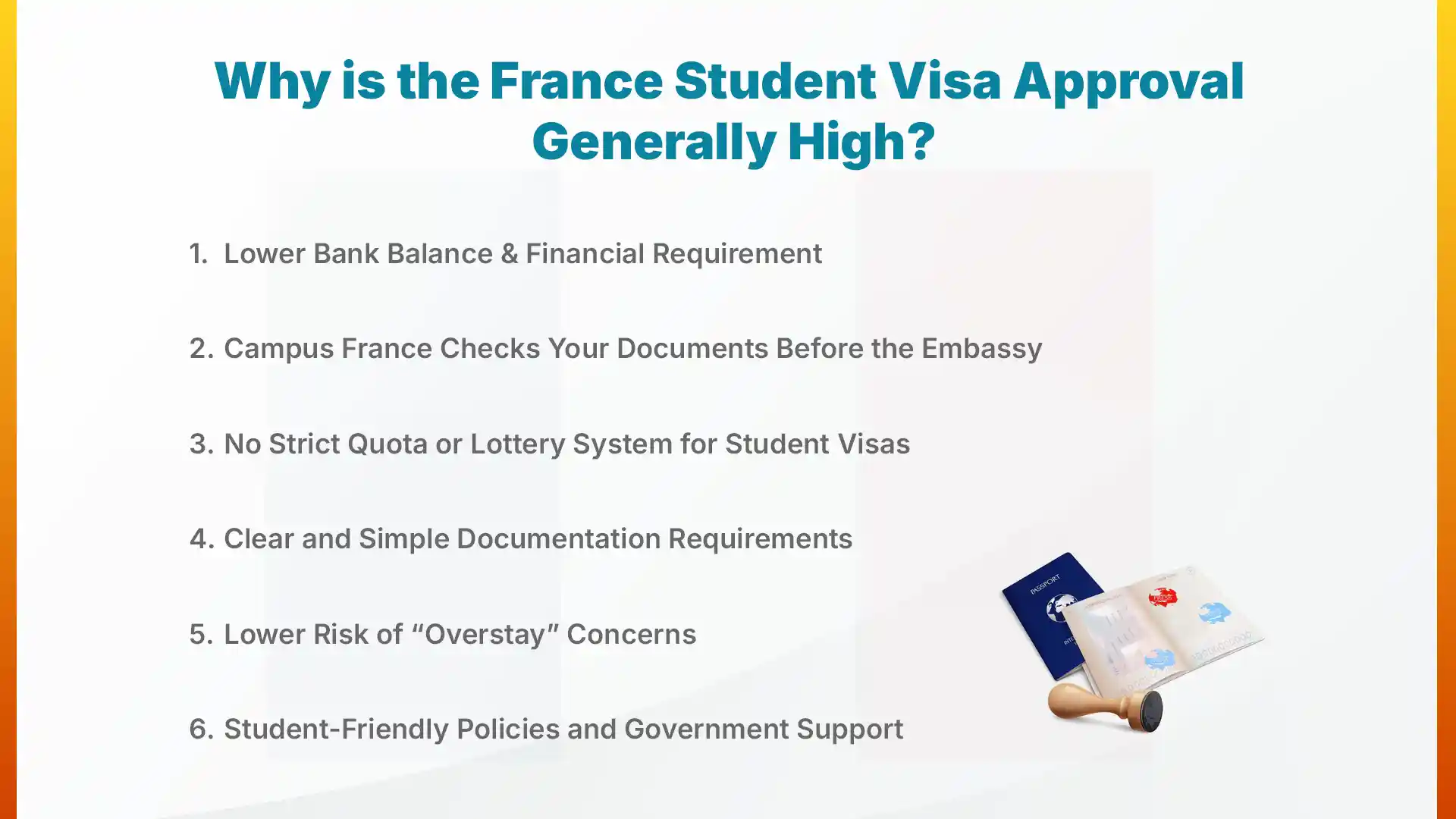
1. Lower Bank Balance & Financial Requirement
France does not ask for huge bank balances like some other countries. Applicants only need to show enough funds to cover tuition and living expenses, which makes it realistic for Nepali students from middle-class backgrounds. Additionally, proof of part-time work or scholarships can further strengthen your financial profile. This approach reduces the financial burden while giving visa officers confidence that students can support themselves.
2. Campus France Checks Your Documents Before the Embassy
Before your application even reaches the embassy, Campus France reviews your documents thoroughly. They verify your admission, financial proof, and other paperwork, and guide you if corrections are needed. This pre-screening reduces errors and ensures your application is strong. Because of this system, most genuine students face fewer rejections at the embassy stage.
3. No Strict Quota or Lottery System for Student Visas
France does not limit student visas with strict quotas or lottery systems, unlike some countries. Approval mostly depends on the quality of your application rather than luck. As long as you meet requirements and provide complete, authentic documents, your chances of success are high. This policy makes France a predictable and reliable option for Nepali students.
4. Clear and Simple Documentation Requirements
The visa checklist is straightforward and easy to follow, including items like offer letters, proof of funds, and accommodation. There are no hidden forms or complicated steps, which reduces confusion for first-time applicants. Clear requirements for France student visa allow students to submit complete applications, avoiding delays or rejections.
5. Lower Risk of “Overstay” Concerns
France offers structured study programs and post-study options, which reduces embassy concerns about students overstaying. Demonstrating a clear study plan and intent to return home reassures officers that you are a genuine student. This lowers the risk of rejection for reasons related to immigration concerns.
6. Student-Friendly Policies and Government Support
The French government actively encourages international students and has policies to make studying abroad accessible. Programs like Campus France guidance, part-time work permissions, and simplified visa procedures make the system welcoming. These policies create an environment where genuine Nepali students have a much higher chance of approval.
What are the Different Types of France Student Visas?
France offers three main types of student visas, Short-Stay Visa, Temporary Long-Stay Visa, and Long-Stay Student Visa (VLS-TS), depending on the duration and purpose of your studies. Each visa type has specific eligibility requirements and is designed to suit short-term courses, temporary programs, or long-term degrees. Understanding which visa applies to you is crucial before starting your application process.
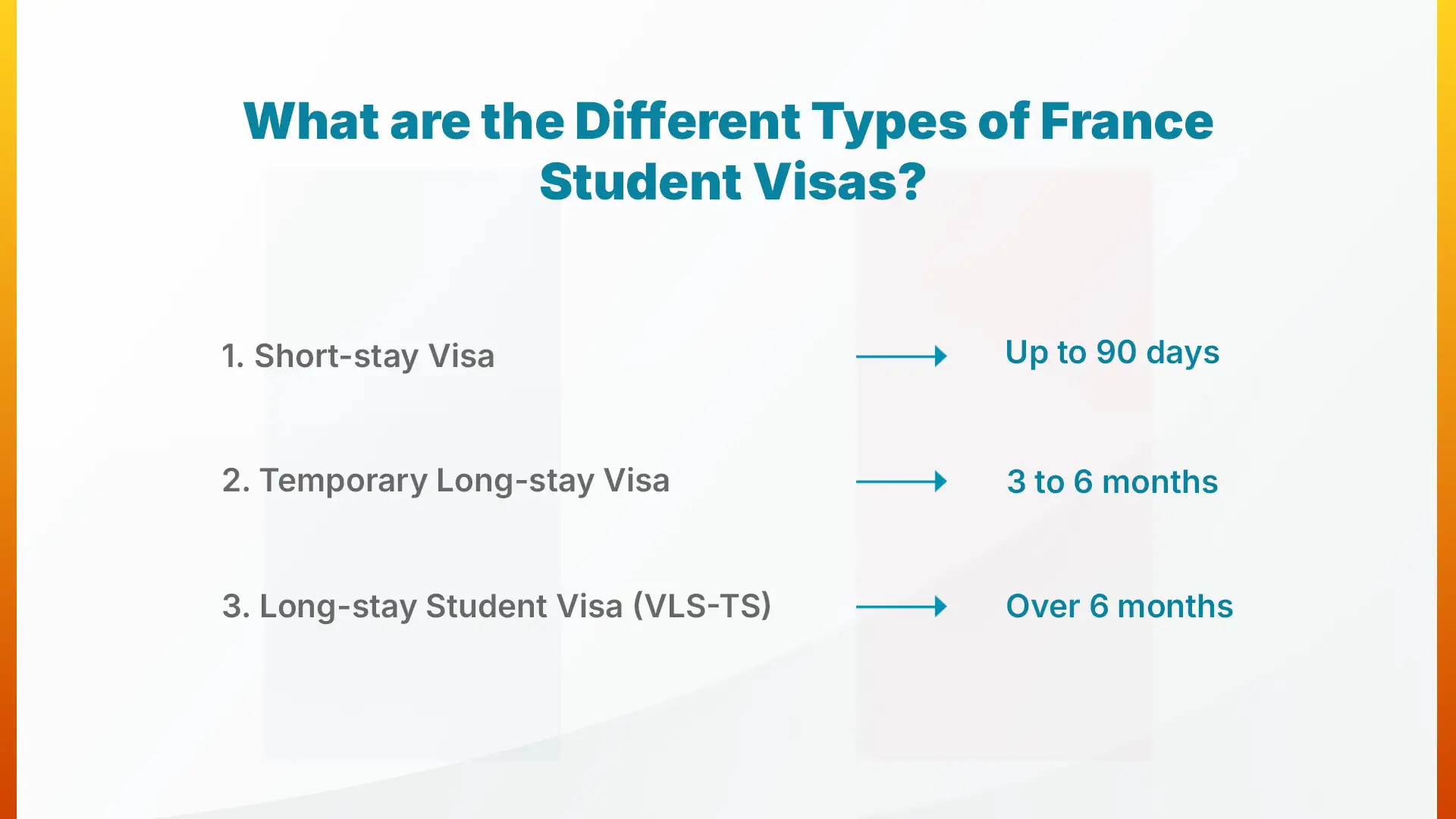
1. Short-Stay Visa
The Short-Stay Visa is designed for students attending courses, workshops, or exchange programs lasting less than 90 days. It is ideal for short language programs, summer schools, or brief academic exchanges. While this visa allows study in France, it is not suitable for full-time degree programs, and students usually cannot work with this visa.
2. Temporary Long-Stay Visa
This visa type is intended for students enrolled in programs lasting between three and six months. It allows you to stay in France for short-term courses that are longer than typical summer programs but shorter than full-degree programs. Students on this visa can usually participate in part-time work depending on program guidelines, making it slightly more flexible than the short-stay option.
3. Long-Stay Student Visa (VLS-TS)
The Long-Stay Student Visa, or VLS-TS, is the most common visa for Nepali students pursuing full-time undergraduate, postgraduate, or professional courses in France. It allows stays longer than six months and can be renewed or converted into a residence permit if your studies continue. This visa also permits part-time work and is generally the preferred choice for most students who aim for a full degree in France.
France Student Visa Requirements from Nepal
The France student visa requires a set of specific documents to prove your eligibility and genuine intent to study. These documents ensure that your academic background, finances, and study plans are all in order, making the approval process smoother. Below is a detailed checklist of what you need to prepare before applying for a French student visa:
Document / Requirement | Purpose / Details (2026 Checklist) |
| Offer Letter | Official admission from a French institution via the Etudes en France (EEF) platform. |
| Campus France NOC | Official approval/interview completion certificate required for the pre-consular process. |
| Proof of Funds | Minimum €615 per month ($7,380/year) via bank statements, scholarships, or a blocked account. |
| Accommodation Proof | Hotel booking (min. 3 months), rental lease, or an Attestation d'accueil (host letter). |
| Passport & Photos | Valid for 3 months beyond visa expiry; at least 2 blank pages. 3 recent biometric photos. |
| Academic Documents | Original transcripts/certificates (SEE, +2, Bachelor's) and MOI/IELTS/DELF results. |
| SOP / Motivation Letter | Must detail your study project, "Genuine Student" intent, and career plans post-France. |
| Travel Insurance | Mandatory coverage of at least €30,000 for health, hospitalization, and repatriation. |
| Visa Fee Receipt | Proof of payment for the VLS-TS visa (approx. €99) and VFS service fees. |
Common Reasons for France Student Visa Rejection
France student visas are most commonly rejected due to preventable issues with documents, finances, or application clarity. Understanding these reasons can help Nepali students avoid mistakes and improve their approval chances. Below, we explain the main causes of rejection so you can prepare better and apply confidently.
1. Incomplete Documents
Submitting incomplete documents is one of the simplest ways to get your visa delayed or rejected. Missing items like transcripts, proof of funds, or accommodation details create doubt about your eligibility. Ensuring every document is included, organized, and correct helps embassy officers process your application smoothly.
2. Weak Financial Proof
Financial proof is a critical part of the visa process, and insufficient evidence can lead to rejection. If your bank statements do not clearly show enough funds for tuition and living expenses, or if scholarship documents are missing, the embassy may doubt your ability to support yourself. Providing complete and verifiable financial documents significantly improves your chances.
3. Unclear Study Purpose
Visa officers need to understand why you want to study in France and how it fits your career goals. Vague explanations, missing SOPs, or unclear academic plans can signal a lack of genuine intent. Writing a clear and detailed statement of purpose strengthens your application and shows you are a serious student.
4. Fake or Incorrect Papers
Submitting fake, altered, or incorrect documents is a major reason for outright visa denial. Even small discrepancies, like mismatched dates or missing stamps, can raise red flags. Always ensure every document is authentic and double-check for accuracy to avoid rejection.
5. Poor Interview Performance
The visa interview tests your communication and understanding of your study plan. Hesitation, vague answers, or lack of knowledge about your course or finances can make officers doubt your preparation. Practicing your answers and presenting yourself confidently can turn the interview into a smooth, positive experience.
6. Last-Minute Application
Applying too close to your intended travel date can reduce your chances of approval due to rushed document verification and processing delays. Early submission allows time for corrections, additional documents, or embassy requests. Planning ahead ensures your application is thorough and reduces stress.
How to Increase Your France Visa Approval Chances?
The best way to improve your chances of getting a France student visa is accurate documentation and presenting a genuine study plan to make your application stronger and more convincing. Let’s break down the most important steps you can take to maximize your visa approval.
Step 1: Choose Recognized Universities Only
Applying to officially recognized and accredited French universities is crucial. Universities listed in the Campus France system or those approved by the French government are preferred by visa officers. Avoid small, unverified institutions, as this can raise doubts about the legitimacy of your study plan. Choosing a well-known university also helps with smoother document verification.
Step 2: Prepare Strong Financial Proof
Your financial documents should clearly show you can cover tuition, living expenses, and any other costs during your stay. This can include bank statements, scholarship letters, or sponsor affidavits. Make sure the statements are recent, verifiable, and consistent with your declared plans. Strong financial proof reassures officers that you are capable of supporting yourself.
Step 3: Write a Clear SOP Explaining Study Plan
A well-written Statement of Purpose (SOP) explains why you chose your course, how it fits your career goals, and why France is the right destination. Avoid vague statements; provide specific reasons, such as course content, university reputation, or future plans in Nepal. A strong SOP demonstrates your genuine intent and commitment to your studies.
Step 4: Show Genuine Return Intention
French authorities want to know that you intend to return home after completing your studies. Highlight ties to Nepal, such as family, career goals, or property, to prove you are not planning to overstay. Clear evidence of return intention makes your application more trustworthy.
Step 5: Avoid Document Mistakes
Even small errors, missing pages, or mismatched dates can lead to delays or rejection. Double-check every document for accuracy, completeness, and consistency. Organize your papers neatly and submit them in the format requested by Campus France and the embassy. Attention to detail shows professionalism and seriousness.
Step 6: Apply Early
Submitting your visa application well in advance allows time for document review, embassy questions, or unexpected delays. Early applications reduce stress and increase the chances that corrections can be made if needed. Planning ahead ensures your application is thorough and strengthens your overall success rate.
France Student Visa Processing Time from Nepal
On average, the entire France student visa process takes about 4 to 8 weeks, but this can vary depending on your profile, university, and the time of year. Understanding each stage can help you plan and avoid unnecessary delays.
1. Campus France Timeline
Before your visa reaches the embassy, Campus France reviews your documents. This step usually takes 2 to 4 weeks, during which they verify your admission, financial proof, and other paperwork. Early submission here ensures your application is complete and ready for embassy processing.
2. Embassy Decision Time
Once your application reaches the French Embassy in Kathmandu, the decision typically takes 1 to 3 weeks. This includes document verification, interviews (if required), and final approval. Complex cases or missing documents can extend this timeline, so preparedness is key.
3. When to Apply for Your Student Visa to France?
To avoid stress and ensure a smooth process, it’s best to start your visa application at least 3 months before your program begins. This gives enough time for Campus France processing, embassy verification, and any corrections if needed. Applying early also increases your chances of securing appointments during peak admission periods.
Can You Work in France on a Student Visa?
As a student in France, you are allowed to work part-time while studying. This opportunity helps you manage living expenses, gain work experience, and become more independent during your studies. Understanding the rules and limits will make your work plan safe and manageable.
1. Part-Time Work Hours
International students can work up to 964 hours per year, which is roughly 20 hours per week during the academic term. During official holiday breaks, you can work full-time without restrictions, giving you extra flexibility. Following these limits is important because working beyond the allowed hours can affect your visa status.
2. Minimum Wage Idea
The legal minimum wage in France is around €11–€12 per hour, depending on the year. Even working a few hours each week can cover small expenses like groceries, transport, or personal items. This makes part-time work a practical supplement to your financial planning without relying fully on family support.
Part-time work is not meant to fund your tuition entirely but can significantly ease day-to-day expenses. Many students use it to pay for rent, food, transportation, or other personal needs while studying. Combining part-time work with careful budgeting allows you to live comfortably and focus on your studies.
With reasonable tuition fees, financial planning, and the ability to work part-time, living in France becomes much more affordable for Nepali students. Visa officers also view students positively when they demonstrate a realistic plan for supporting themselves.
Conclusion
Securing a France student visa from Nepal is completely achievable when you prepare carefully and follow the right steps. The approval largely depends on how well you organize your documents, demonstrate financial stability, and present a genuine study plan. While some students worry about rejection, the truth is that most applications are approved when preparation is thorough and complete.
The key is to start early, give yourself enough time for Campus France verification, and double-check every detail before submission. Avoid last-minute applications, incomplete paperwork, or vague statements about your study plans. With careful planning, attention to detail, and a clear purpose, you can confidently navigate the visa process and focus on the exciting journey of studying in France. If you feel the need for professional guidance, do not hesitate to partner with the best consultancy in Nepal for France and benefit from their experience and expertise.
Remember, preparation beats luck, and every step you take today brings you closer to your dream of studying abroad.