Best Part-Time Jobs in South Korea for Nepalese Students

Jan 21, 2026
Are you a student in Nepal planning to study in South Korea and wondering how you will manage your living expenses? Many Nepalese students choose South Korea not only for quality education but also for the opportunity to work part-time while studying. Understanding part-time job options before you arrive can help you plan your finances better and avoid unnecessary stress.
In this blog, we explain part-time jobs in South Korea for Nepalese students planning to study in South Korea from Nepal. You will learn about common student jobs, work-hour rules, expected salaries, and legal requirements. This guide will help you prepare in advance and make informed decisions before starting your study journey in South Korea.
In this blog
Types of Part-Time Jobs in South Korea for International Students
South Korea offers several part-time job options for international students, including Nepalese students planning to study at various universities in Korea for international students. These jobs help students manage living expenses and gain work experience. Job availability depends on visa type, language skills, and location. Students can choose on-campus, off-campus, or skill-based jobs. Understanding these options early helps in better financial planning.
1. On-Campus Part-Time Jobs
On-campus jobs are offered directly by universities and are considered the safest option for international students. Common roles include library assistant, office helper, and cafeteria staff. These jobs usually have fixed schedules that fit around class times. Language requirements are often lower than for off-campus jobs. Approval from immigration is usually easier. Competition for these jobs can be high. These roles are ideal for students new to South Korea.
2. Off-Campus Part-Time Jobs
Off-campus jobs include work in restaurants, convenience stores, factories, and warehouses. These roles often pay slightly more than on-campus jobs. Basic Korean language skills are usually required. Students must receive permission from immigration before starting work. Work hours are strictly limited during semesters. These jobs offer real-world work exposure. They help students understand the Korean work culture.
3. Flexible & Skill-Based Jobs
Flexible jobs include tutoring, translation, content writing, and online work. These roles depend on individual skills and experience. English tutoring is popular among international students. Such jobs offer flexible working hours. Income can be higher compared to physical jobs. Proper work permission is still required for legal compliance. These jobs suit students with strong language or digital skills.
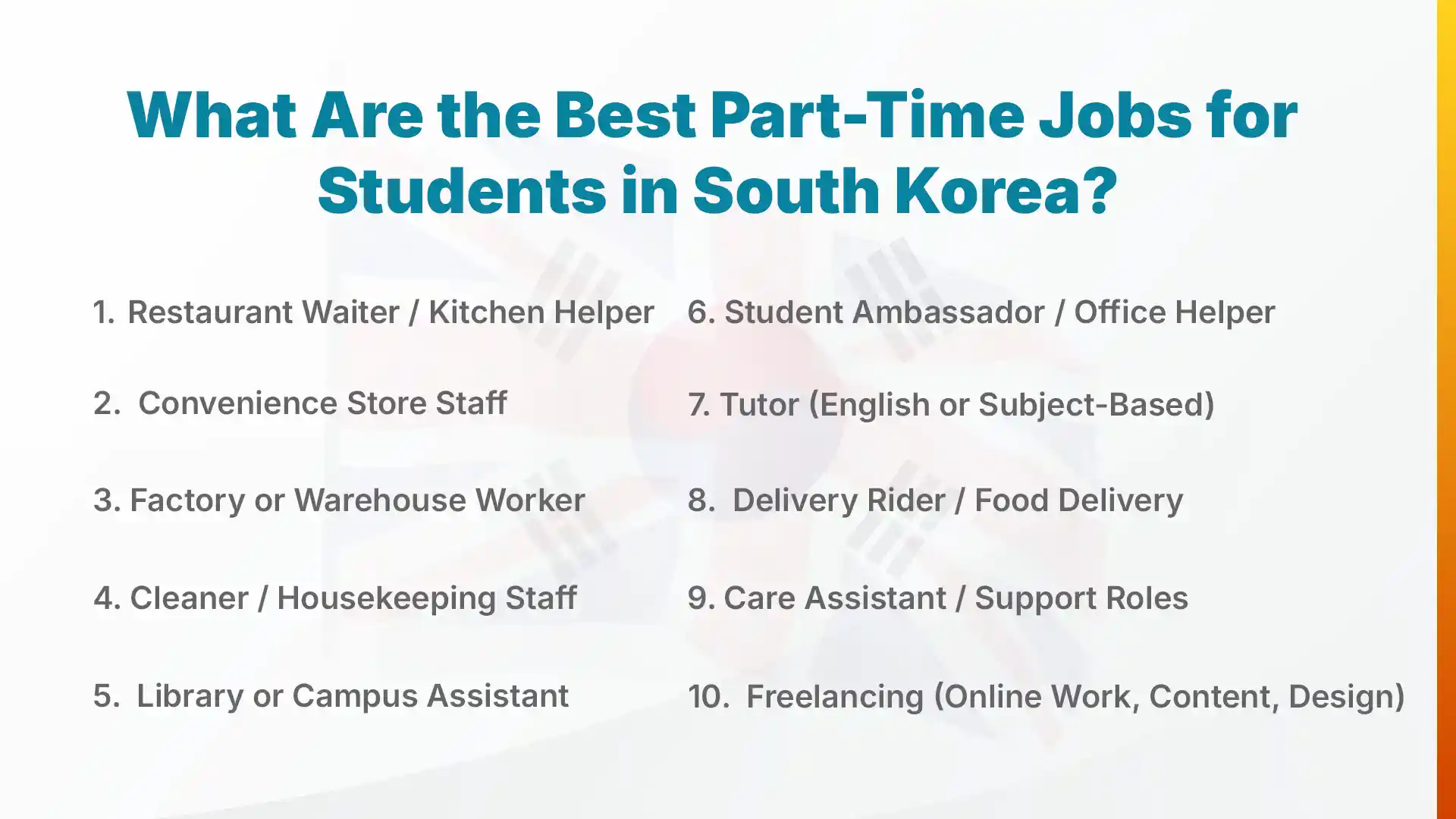
What Are the Best Part-Time Jobs for Students in South Korea?
The best part-time jobs for students in South Korea are those that are legal, flexible, and suitable for international students. These jobs help Nepalese students manage living expenses while balancing studies. Job choice depends on Korean language ability, visa rules, and location. Some jobs offer stable hours, while others provide higher pay. Planning early helps students choose the right option.
1. Restaurant Waiter / Kitchen Helper
Restaurant jobs are among the most common part-time jobs for students in South Korea. Duties include serving food, washing dishes, or assisting in the kitchen. Basic Korean language skills are usually required. Work schedules may include evenings and weekends. These jobs provide a steady income. They also help improve spoken Korean through daily interaction. Tips and overtime can increase total earnings.
2. Convenience Store Staff
Convenience store jobs involve billing, stocking shelves, and providing customer service. These roles often require simple Korean communication skills. Shifts may be day or night-based. Pay is usually hourly and stable. Students gain customer-handling experience. These jobs are widely available near campuses. Night shifts may offer slightly higher pay.
3. Factory or Warehouse Worker
Factory and warehouse jobs include packing, sorting, and light manufacturing work. These roles usually require less customer interaction. Physical work can be demanding. Pay is often higher than in restaurant jobs. Work hours may be fixed. These jobs are popular during vacations. Safety rules must be followed strictly.
4. Cleaner / Housekeeping Staff
Cleaning and housekeeping jobs are available in offices, hotels, and dormitories. These roles require minimal language skills. Work is usually task-based and flexible. Pay is stable but moderate. These jobs suit students with limited Korean proficiency. Physical effort is required. Early morning shifts are common in this role.
5. Library or Campus Assistant
Campus assistant jobs include helping in libraries, offices, or student centers. These are safe and student-friendly roles. Work schedules match class timings. Language requirements are low to moderate. Competition is high due to limited seats. These jobs are ideal for new students. They also provide a quiet work environment.
6. Student Ambassador / Office Helper
Student ambassadors assist universities with events, admissions, or student services. These roles suit students with good communication skills. English-speaking ability is often valued. Work hours are flexible. These jobs improve professional experience. They also enhance networking opportunities. Leadership skills are developed through such roles.
7. Tutor (English or Subject-Based)
Tutoring jobs involve teaching English or academic subjects. These roles pay more than many physical jobs. Strong subject knowledge is required. Flexible scheduling is a major benefit. Proper permission is necessary. Tutoring is popular among skilled students. Online tutoring options are also available.
8. Delivery Rider / Food Delivery
Delivery jobs include food and parcel delivery using bikes or scooters. Pay depends on the number of deliveries completed. Work hours are flexible. Basic navigation skills are needed. These jobs can be physically tiring. Insurance and legal permission are important. Peak hours offer higher earnings.
9. Care Assistant / Support Roles
Care roles involve assisting elderly or disabled individuals. These jobs require patience and responsibility. Language skills may be needed. Pay is usually stable and decent. Work can be emotionally demanding. Proper training may be required. Long-term commitment is often preferred.
10. Freelancing (Online Work, Content, Design)
Freelancing includes writing, graphic design, video editing, and online tasks. These jobs offer full flexibility. Income depends on skills and clients. No physical travel is required. Legal guidelines should be followed. Freelancing suits tech-savvy students. Time management is crucial for success.
Work Hour Limits & Rules for International Students in South Korea
International students in South Korea must follow specific work regulations set by immigration authorities. These rules apply to Nepalese students holding a D-2 student visa. Working legally requires prior permission from both the university and the immigration office. The allowed working hours depend on academic level and study period. Following these rules is essential to avoid visa issues and penalties.
1. Term-Time Work Rules
During the academic semester, international students are allowed to work up to 30 hours per week. This limit applies to most undergraduate and graduate students. Students must obtain a work permit before starting any job. Work should not affect class attendance or academic performance. Only approved job types are allowed. Employers must also follow legal employment rules.
2. Work Rules During Vacations
During official university vacations, students are allowed to work full-time without hourly limits. Immigration approval is still required before starting work. This period is ideal for earning more income. Students often work in factories, restaurants, or service sectors. Legal job categories must still be followed. Academic enrollment status must remain valid.
3. What Happens If You Break Korean Work Rules
Violating work rules can lead to serious consequences. Students may face fines or cancellation of work permission. Repeated violations can result in visa cancellation. Future visa extensions may be denied. Employers hiring students illegally can also be punished. Illegal work can damage your academic and immigration record. Following the rules ensures a safe study experience in Korea.
How Much Can International Students Earn in South Korea?
International students can earn around KRW 9,000 to KRW 15,000 per hour in South Korea, depending on job type, location, skills, and working hours allowed under visa rules. Earnings vary between on-campus and off-campus jobs, and income increases during vacations when full-time work is permitted. While part-time income may not cover all expenses, it helps manage daily living costs and gain work experience.
1. Average Hourly Wage in South Korea
The average hourly wage for student part-time jobs ranges from KRW 9,000 to KRW 12,000. Basic jobs like restaurants or convenience stores usually pay minimum wage. Factory, warehouse, or night-shift jobs may pay more. Skill-based work like tutoring or translation can pay KRW 15,000 or higher. Wages depend on city, employer, and shift timing. Seoul generally offers slightly higher pay.
2. On-Campus vs Off-Campus Earnings
On-campus jobs usually pay KRW 9,000 to KRW 10,000 per hour. These jobs are safer and more flexible with class schedules. Off-campus jobs often pay more, ranging from KRW 10,000 to KRW 13,000 per hour. Restaurants, factories, and delivery jobs fall under off-campus work. Off-campus roles may involve longer hours and physical work. Both require official permission.
3. Monthly Income Estimation for Students in South Korea
Working up to 30 hours per week, students can earn around KRW 900,000 to KRW 1,300,000 per month during semesters. Income increases during vacations due to full-time work. Actual savings depend on rent, food, and transport costs. Seoul's living costs are higher than those in smaller cities. Part-time income mainly supports daily expenses. Careful budgeting is important for students.
Cost of Living in South Korea vs Part-Time Income
The cost of living in South Korea depends on the city, lifestyle, and housing type. For Nepalese students planning to study in the best student cities in South Korea, understanding expenses versus part-time income is very important. While part-time jobs help cover daily costs, they usually do not fully cover all living expenses, especially in major cities like Seoul. Students should plan their finances carefully before arrival.
1. Rent, Food, Transport, and Utilities
Rent is the biggest expense for students. Dormitories cost less, while shared rooms or studios cost more. Monthly rent ranges from KRW 300,000 to 700,000. Food expenses average KRW 300,000 to 500,000 per month. Public transport is affordable, costing around KRW 60,000 to 100,000 monthly. Utilities and internet add KRW 50,000 to 100,000, depending on usage. Living outside Seoul is usually cheaper.
2. Can Part-Time Income Cover Living Costs?
Part-time income can cover basic living expenses like food and transport. However, it usually cannot fully cover rent, tuition, and other costs. Students working the maximum allowed hours may manage daily needs. During vacations, full-time work helps save more money. Financial support from family or scholarships is still important. Part-time jobs should be seen as support, not full funding.
How to Find Part-Time Jobs in South Korea as a Nepali Student?
Nepali students can find part-time jobs in South Korea by using university resources, online platforms, and personal networks. Most students start job hunting after settling into campus life and understanding work rules. Having basic Korean language skills makes the process easier. Legal permission from the university and immigration office is also required. Applying early increases your chances of getting suitable work.
1. University Career Services & Notice Boards
Universities regularly post part-time job openings on campus notice boards and career service portals. These jobs include library work, office help, and cafeteria roles. On-campus jobs are safer and follow student work rules. Staff can also guide students on work permits. Checking notice boards weekly is very helpful. Seniors often share job updates informally.
2. Online Job Platforms in South Korea
Online job websites and mobile apps list many part-time jobs for students. Common jobs include restaurants, convenience stores, and factories. Filters help find student-friendly and legal jobs. Some listings require basic Korean skills. Always verify work hours and employer details. Avoid unofficial or suspicious job offers.
3. Smart Networking Tips for Students
Networking is one of the fastest ways to find part-time jobs. Seniors, classmates, and Nepali student communities often share job leads. Joining student groups and local communities helps build connections. Professors and university staff may also recommend opportunities. Social media groups are useful for updates. Good relationships can lead to better and stable jobs.
Conclusion
Part-time jobs in South Korea offer Nepalese students a valuable way to support living expenses while gaining work experience. Popular options include on-campus roles, restaurant and convenience store jobs, factory work, tutoring, and flexible skill-based online jobs. These opportunities help students manage daily costs and develop practical skills alongside their studies.
However, students must always follow legal work rules, including work-hour limits and proper permissions. Balancing studies with part-time work is essential for academic success and well-being. Choosing legal jobs, managing time wisely, and prioritizing education will help Nepalese students make the most of their study experience in South Korea. Finally, consulting experts or trusted education consultancies in Nepal, such as SAS Education Consultancy, can make your transition smoother and ensure your part-time work supports both your studies and future goals.