Master’s In Psychology in USA For International Students

Mar 26, 2026
Ever wondered what it really takes to study psychology in the USA, the land where theories meet real-world practice and research actually shapes lives? For many international students, it’s not just about getting a degree, it’s about stepping into a career that understands the human mind at a global level. But let’s be honest, the process can feel a bit overwhelming, universities, requirements, costs, where do you even start?
In this blog, we’ll walk you through everything about Master’s in Psychology in USA for International Students, from top universities and specializations to admission requirements, costs, scholarships, and career opportunities. Whether you’re just exploring or already planning to apply, this guide will help you make informed decisions (without getting lost in too much confusion) to study in USA.
In this blog
What Is Master’s In Psychology?
Master’s in Psychology is a postgraduate degree that focuses on advanced study of human behavior, mental processes, and psychological theories. It allows students to specialize in areas like clinical, cognitive, or organizational psychology while gaining research and practical skills. The program typically includes coursework, internships, and sometimes thesis-based research. In simple terms, it’s where you move from learning basic concepts to actually applying psychology in real-world settings.
Why Study Master’s In Psychology in USA For International Students?
Study Master's in Psychology in USA because it offers world-class education, advanced research opportunities, and strong career prospects globally. The USA is known for its cutting-edge psychology programs that combine theory with real-world practice. International students benefit from exposure to diverse learning environments and modern facilities. It’s not just a degree, it’s a gateway to global career opportunities in psychology, and why study in USA.
1. Globally Recognized Universities and Research Excellence
The USA is home to some of the world’s top-ranked universities known for their psychology programs and research output. These institutions provide access to advanced labs, expert faculty, and groundbreaking studies in human behavior. Students get the opportunity to work on real research projects, not just theoretical assignments. This level of exposure builds strong academic and professional credibility. In short, a degree from the USA carries global recognition that opens doors worldwide.
2. Advanced Clinical Training and Practical Exposure
One of the biggest advantages of studying in the USA is the focus on hands-on learning and clinical experience. Students often participate in internships, supervised practice, and real-world case studies. This helps bridge the gap between theory and actual psychological practice. You don’t just learn concepts, you apply them in real scenarios. And honestly, that practical exposure makes a huge difference when starting a career.
3. Wide Range of Psychology Specializations in USA
The USA offers a wide variety of psychology specializations, allowing students to tailor their studies based on career goals. From clinical psychology and neuropsychology to organizational and counseling psychology, the options are extensive. This flexibility helps students focus on their area of interest and build expertise. It also increases employability in specific sectors. So, you’re not stuck with one path, you can choose what fits you best.
4. Strong Career Opportunities and Global Recognition
A Master’s in Psychology from the USA significantly enhances career opportunities both locally and internationally. Graduates can work in healthcare, research, corporate sectors, or education. The degree is widely respected, making it easier to find jobs across different countries. Additionally, networking opportunities and internships help students connect with industry professionals. It’s basically a strong launchpad for a global career.
5. Multicultural Learning Environment for International Students
Studying in the USA means being part of a diverse and multicultural environment where students from all over the world come together. This exposure helps develop communication skills, cultural awareness, and adaptability. It also creates opportunities to build global connections and friendships. Learning in such an environment prepares students for international careers. Plus, it makes the whole study experience more enriching and less boring, honestly.
Top Universities Offering Master’s In Psychology in USA
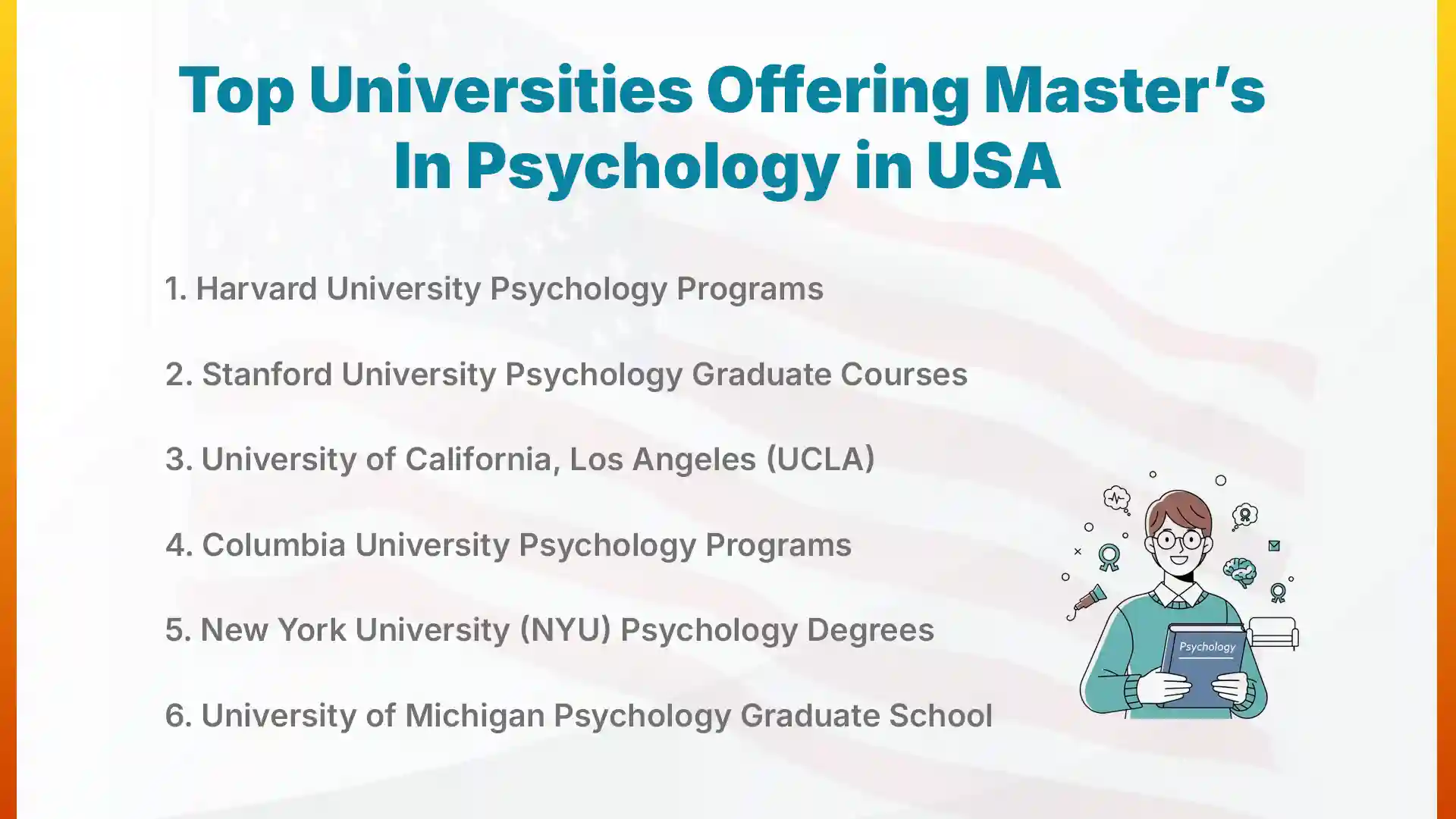
USA is home to some of the world’s top universities offering highly respected Master’s in Psychology programs for international students. These institutions are known for their research excellence, experienced faculty, and strong focus on practical learning. Students benefit from advanced facilities, global exposure, and opportunities to work on real-world psychological studies. Choosing the right university can significantly shape your academic journey and future career, so yeah, this part matters more than most people think when exploring the best universities in USA.
1. Harvard University Psychology Programs
Harvard University offers some of the most prestigious psychology programs in the world, with a strong emphasis on research and interdisciplinary learning. Students get access to top-tier faculty, advanced labs, and global research opportunities. The curriculum focuses on both theoretical foundations and practical applications in psychology. It’s highly competitive, but the exposure and recognition are unmatched. A degree from Harvard, well, it kind of speaks for itself.
2. Stanford University Psychology Graduate Courses
Stanford University is known for its innovation-driven approach to psychology education and research. Its programs focus on cognitive psychology, behavioral sciences, and neuroscience. Students benefit from hands-on research opportunities and collaboration with leading experts. The learning environment encourages critical thinking and problem-solving skills. It’s a place where psychology meets cutting-edge ideas and innovation.
3. University of California, Los Angeles (UCLA)
UCLA offers highly ranked psychology programs with a strong focus on clinical training and research. The university provides diverse specializations and practical exposure through internships and projects. Students can work on real case studies and gain hands-on experience in different psychology fields. Its location also offers great networking and career opportunities. Overall, it’s a balanced mix of academics and real-world learning.
4. Columbia University Psychology Programs
Columbia University provides comprehensive psychology programs that combine academic excellence with practical exposure. Students can specialize in areas like clinical psychology, counseling, and behavioral sciences. The university’s strong research focus allows students to contribute to meaningful studies. Being located in New York also opens doors to internships and professional networks. It’s an ideal choice for students looking for both academic and career growth.
5. New York University (NYU) Psychology Degrees
NYU offers flexible and diverse psychology programs designed for international students. The courses focus on both theoretical knowledge and real-world applications in mental health and behavioral studies. Students benefit from strong industry connections and internship opportunities. Its urban location provides exposure to a wide range of professional environments. It’s a great option for those who want practical learning with global exposure.
6. University of Michigan Psychology Graduate School
The University of Michigan is known for its strong research-oriented psychology programs and academic excellence. Students can explore various specializations and participate in innovative research projects. The university provides excellent resources, faculty support, and career opportunities. It also has a collaborative learning environment that encourages growth and development. A solid choice for students aiming for both research and professional careers.
Popular Specializations in Master’s In Psychology in USA
Master’s in Psychology in the USA offers a wide range of specializations, allowing students to focus on specific areas based on their interests and career goals. These specializations combine theoretical knowledge with practical application, making learning more career-oriented. Whether you’re interested in clinical work, research, or corporate roles, there’s a path for everyone. Choosing the right specialization is important; it basically decides where your psychology journey is headed.
1. Clinical Psychology and Mental Health Counseling
Clinical psychology focuses on diagnosing and treating mental health disorders, while mental health counseling emphasizes therapeutic support. Students learn about psychological assessment, therapy techniques, and patient care. Programs often include internships or supervised clinical practice. This specialization is ideal for those who want to work directly with patients in hospitals, clinics, or private practice. It’s one of the most popular and demanding fields in psychology.
2. Cognitive and Behavioral Psychology Programs
This specialization explores how people think, learn, and behave in different situations. It focuses on understanding mental processes like memory, perception, and decision-making. Students also study behavioral patterns and how they can be changed through therapy or interventions. It’s widely used in therapy, research, and even fields like marketing and UX design. If you’re curious about how the mind actually works, this is where things get really interesting.
3. Neuropsychology and Brain Sciences in USA
Neuropsychology combines psychology with neuroscience to study how the brain functions and affects behavior and emotions. Students learn about brain structure, neurological disorders, and cognitive functioning. This field often involves research, lab work, and clinical assessments. It’s ideal for those interested in working in healthcare, research institutions, or neurological rehabilitation. Fair warning, it can get quite technical, but also incredibly fascinating.
4. Child and Developmental Psychology Courses
This specialization focuses on how individuals grow and develop from childhood to adulthood. Students study emotional, cognitive, and social development across different life stages. It’s particularly useful for those interested in working with children, schools, or family counseling. Programs often include practical exposure through internships or case studies. It’s a great choice if you want to make a direct impact on early human development.
5. Industrial and Organizational Psychology in USA
Industrial and organizational psychology applies psychological principles to workplace environments. It focuses on improving employee performance, organizational behavior, and workplace culture. Students learn about leadership, motivation, and human resource management. This specialization is highly relevant for corporate careers and HR roles. Basically, it’s psychology, but in suits and office meetings.
6. Health and Counseling Psychology Programs
Health and counseling psychology focus on promoting mental well-being and helping individuals cope with life challenges. Students learn counseling techniques, stress management, and behavioral interventions. This field is widely applied in hospitals, wellness centers, and community services. It’s suitable for those who want to support people in improving their mental and emotional health. A rewarding path, especially if helping people is your thing.
Master’s In Psychology in USA For International Students
Pursuing a Master’s in Psychology in the USA for international students involves meeting specific academic, language, and application requirements. Universities follow structured admission processes to ensure students are well-prepared for advanced study. While the process may seem complex at first, it becomes manageable when broken into clear steps. With the right preparation, getting into a good university is absolutely achievable (yes, even if it feels overwhelming at the start).
1. Eligibility Criteria for International Students in USA
International students must meet basic eligibility criteria set by universities, including academic qualifications and language proficiency. Most universities require applicants to have completed a relevant undergraduate degree. Some programs may also expect prior coursework in psychology or related subjects. Additionally, students should meet visa requirements and financial eligibility. Overall, eligibility ensures that students are academically and practically ready for the program.
2. Academic Background Requirements for Psychology Programs
A bachelor’s degree in psychology or a closely related field is usually required for admission. Some universities may accept students from other backgrounds, but they might need to complete prerequisite courses. A strong academic record with a good GPA increases your chances of acceptance. Relevant coursework in subjects like statistics, research methods, or behavioral science is often preferred. Basically, the stronger your academic base, the smoother your application journey.
3. English Language Requirements (IELTS, TOEFL, Duolingo)
Since courses are taught in English, international students must prove their language proficiency through tests like IELTS, TOEFL, or Duolingo. Each university has its own minimum score requirements. These tests ensure that students can understand lectures, complete assignments, and communicate effectively. Preparing well for these exams is crucial for admission success. Think of it as your entry ticket into the classroom.
4. Required Documents for USA University Applications
Applying to US universities requires submitting several important documents. These typically include academic transcripts, a statement of purpose (SOP), letters of recommendation, and test scores. Some programs may also ask for a resume or portfolio. All documents must be accurate, complete, and submitted within deadlines, especially your SOP for USA. Missing even one document can delay or affect your application outcome, so attention to detail really matters here.
5. Application Process Through University Portals and Common App
Most US universities accept applications through their official portals or centralized platforms like the Common App. Students need to create an account, fill in personal and academic details, and upload required documents. Application fees are usually required before submission. After applying, students may need to attend interviews or submit additional materials. The process may feel long, but taking it step by step makes it much easier to handle.
How to Apply for Master’s In Psychology in USA?
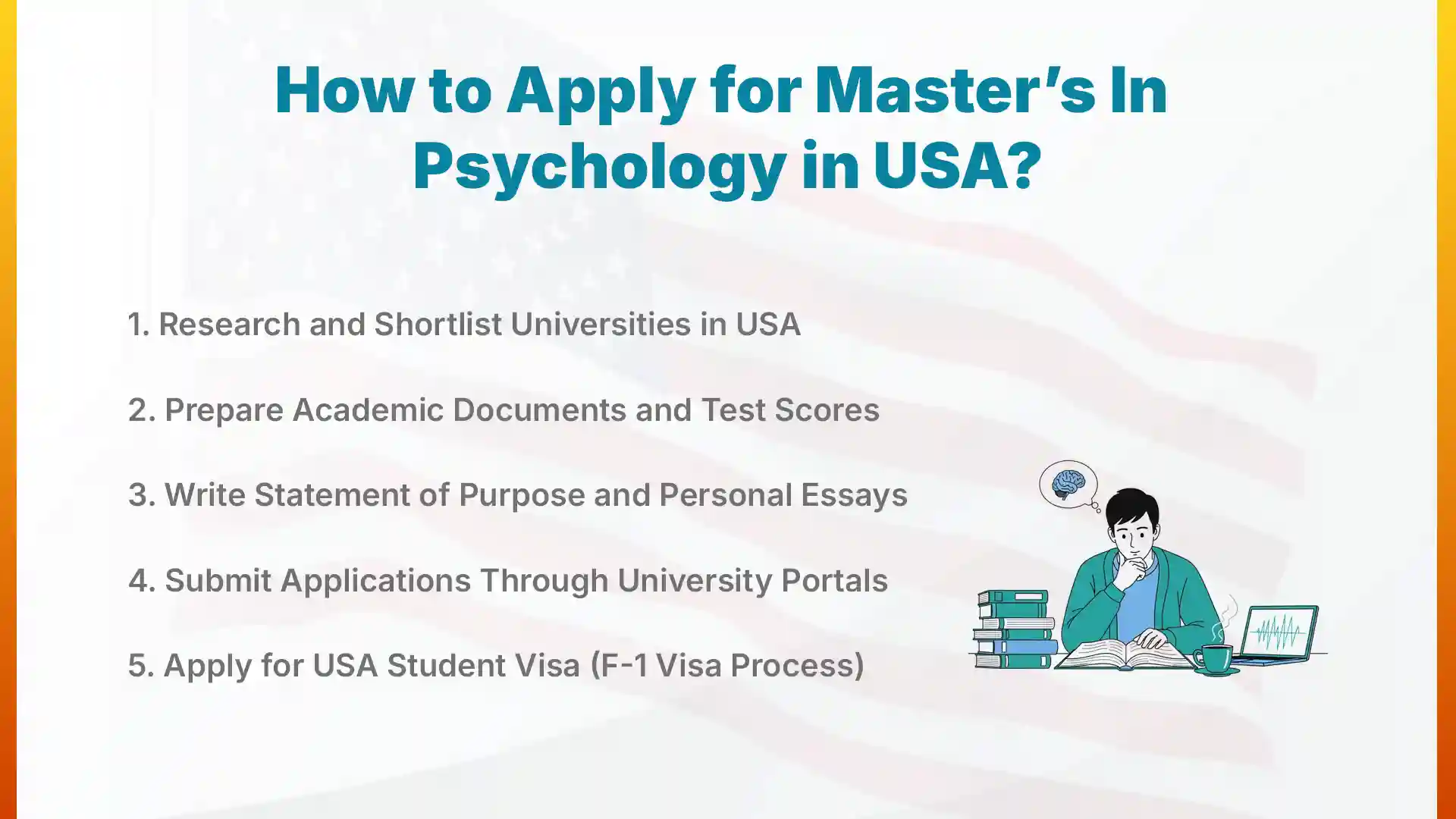
To apply for master’s in psychology in USA you must research universities, prepare the required documents, meet eligibility criteria, and complete the application process step by step. It involves academic preparation, submitting applications, and securing a student visa. While the process may seem long, following a structured approach makes it much more manageable. Think of it as a checklist, clear steps, one at a time.
1. Research and Shortlist Universities in USA
The first step is to research universities offering psychology programs that match your interests and career goals. Look at rankings, course structure, specializations, tuition fees, and location. Shortlist universities based on your academic profile and budget. It’s important to apply to a mix of safe, moderate, and ambitious options. A good shortlist increases your chances of acceptance.
2. Prepare Academic Documents and Test Scores
You’ll need to gather all required academic documents, such as transcripts, certificates, and test scores like IELTS, TOEFL, or GRE (if required). Make sure everything is updated and meets university requirements. Some universities may also ask for credential evaluations. Preparing these early helps avoid last-minute stress. It’s one of those steps where organization really pays off.
3. Write Statement of Purpose and Personal Essays
The Statement of Purpose (SOP) is a crucial part of your application; it’s where you tell your story. You need to explain your academic background, career goals, and why you chose psychology and that particular university. Personal essays should reflect your motivation and personality. A strong SOP can significantly boost your chances of getting accepted. So yeah, don’t rush this part, it matters more than most students think.
4. Submit Applications Through University Portals
Once everything is ready, submit your application through the university’s official portal. Fill in all details carefully and upload the required documents. Pay the application fee and double-check everything before submission. Some universities may also require interviews or additional materials. Accuracy here is key, small mistakes can lead to unnecessary delays.
5. Apply for USA Student Visa (F-1 Visa Process)
After receiving your admission offer, the next step is applying for the F-1 student visa. You’ll need your I-20 form, financial proof, and other supporting documents. Schedule a visa interview and prepare to answer questions about your study plans and intentions. Once approved, you’re all set to begin your journey in the USA. This is basically the final step before everything becomes real.
What Are the Admission Requirements for Master’s In Psychology in USA?
The admission requirements for master’s in psychology in USA are academic qualifications, test scores, language proficiency, and supporting application documents. Universities evaluate both your academic background and overall profile, including your motivation and readiness for advanced study. While requirements may vary by university, most follow a similar structure. Preparing these in advance makes the application process much smoother (and less stressful, honestly), especially when understanding the requirements to study in USA.
1. Bachelor’s Degree in Psychology or Related Field
A bachelor’s degree in psychology or a closely related field is typically required for admission. Some universities may accept students from other disciplines, but they might need prerequisite coursework. Having a strong foundation in psychology subjects gives you an advantage during selection. It also helps you adapt better to advanced-level studies. Simply put, your undergraduate degree sets the base for everything that follows.
2. Minimum GPA Requirements for USA Universities
Most universities require a minimum GPA, usually around 3.0 on a 4.0 scale, though top universities may expect higher. A strong academic record increases your chances of getting accepted into competitive programs. Some institutions may also consider overall profile strength if GPA is slightly lower. Consistency in your academic performance matters more than just one high score. So yeah, your grades do play a big role here.
3. Standardized Tests (GRE Optional or Required)
Some universities require GRE scores, while others have made it optional in recent years. If required, a good GRE score can strengthen your application, especially for competitive programs. It helps universities assess your analytical and reasoning skills. Even if optional, submitting a strong score can give you an edge. Think of it as an extra boost rather than a strict requirement in many cases.
4. English Proficiency Test Scores Requirements
International students must prove English proficiency through tests like IELTS, TOEFL, or Duolingo. Each university has minimum score requirements that applicants must meet. These tests ensure you can understand lectures and communicate effectively in an academic environment. Preparing well for these exams is essential for admission. It’s basically your proof that you can handle studying in English.
5. Letters of Recommendation and Statement of Purpose
Letters of recommendation (LORs) and a strong Statement of Purpose (SOP) are key parts of your application. LORs provide insights into your academic abilities and character from professors or employers. The SOP explains your goals, interests, and why you chose the program. Together, they give universities a complete picture of who you are beyond grades. This is where your story and personality really come through.
Cost of Studying Master’s In Psychology in USA
Studying for a Master’s in Psychology in the USA typically costs between $40,000 and $70,000 per year, including tuition, living expenses, and basic fees. For a full two-year program, international students should budget around $100,000 to $160,000 in total. The cost can vary depending on the university, location, and lifestyle choices. It may sound expensive (because… it is), but with proper planning, scholarships, and part-time work, it becomes manageable.
1. Tuition Fees for International Psychology Students in USA
Tuition fees are the biggest part of the total cost and vary depending on the type of university. Public universities usually cost between $20,000 and $40,000 per year for international students. Private universities range from $30,000 to $60,000 annually, while top-tier or Ivy League institutions can exceed $65,000 per year. Psychology programs are generally more affordable compared to STEM or MBA programs. Some public universities may even offer lower-cost options starting around $8,000 to $15,000, though these are less common.
2. Living Expenses for Students in USA
Living expenses depend heavily on the city and lifestyle, typically ranging from $10,000 to $25,000 per year. In expensive cities like New York, San Francisco, or Boston, costs can go up to $25,000-$37,000 annually. Moderate cities like Austin or Dallas may cost around $18,000-$26,000, while more affordable areas like Ohio or Kansas range between $14,000-$20,000. These expenses include accommodation, food, transportation, and daily needs. Choosing the right location can significantly impact your overall budget.
3. Additional Costs (Accommodation, Insurance, Books, Visa)
Apart from tuition and living expenses, students must budget for additional costs that are often overlooked. Accommodation can cost $10,000-$17,000 annually on-campus or $600-$1,200 per month off-campus. Health insurance is mandatory and ranges from $1,000 to $4,800 per year. Books and study materials may cost around $500-$1,500 annually. Visa-related expenses include the SEVIS fee ($350), visa application fee ($185), and test fees like IELTS, TOEFL, or GRE costing around $200-$300. These costs add up quickly, so planning is essential.
Scholarships for Master’s In Psychology in USA
Scholarships for a Master’s in Psychology in the USA help international students reduce the financial burden of tuition and living costs. These funding options come from government programs, universities, and private organizations. While competition can be high, there are plenty of opportunities if you apply strategically. With the right preparation, scholarships can make studying in the USA much more affordable (and less stressful on your wallet), especially when exploring scholarships to study in USA.
1. USA Government and Federal Scholarships for Students
The US government offers several scholarships for international students, such as the Fulbright Program, which covers tuition, living expenses, and travel costs. These scholarships are highly competitive and focus on academic excellence and leadership potential. They are ideal for students with strong academic records and clear career goals. The application process can be detailed, but the benefits are significant. If you qualify, it’s definitely worth applying.
2. University-Specific Scholarships for Psychology Programs
Many US universities offer their own scholarships specifically for international students enrolled in psychology programs. These may be merit-based, need-based, or department-specific awards. Some universities automatically consider applicants for scholarships, while others require separate applications. The amount varies from partial tuition waivers to full funding in rare cases. Checking each university’s website carefully is key to not missing opportunities.
3. Assistantships (Teaching and Research Opportunities)
Graduate assistantships are one of the best ways to fund your studies in the USA. Students can work as teaching assistants (TAs) or research assistants (RAs) and receive stipends or tuition discounts. These roles also provide valuable academic and professional experience. However, they are competitive and often require strong academic performance. It’s a great option if you want to gain experience while studying.
4. Private Scholarships for International Students in USA
Various private organizations, foundations, and international bodies offer scholarships for students studying in the USA. These scholarships may be based on academic merit, field of study, or country of origin. While the funding amount may vary, they can significantly reduce overall expenses. Students need to research and apply to multiple options to increase their chances. Sometimes, combining smaller scholarships can make a big difference.
5. Tips to Increase Chances of Getting Scholarships
To improve your chances of getting scholarships, focus on maintaining strong academic performance and preparing a compelling application. A well-written Statement of Purpose and strong recommendation letters can make a big impact. Apply early to multiple scholarships instead of relying on just one. Highlight your achievements, leadership skills, and career goals clearly. And honestly, consistency and effort matter more than luck here.
Career Opportunities After Master’s In Psychology in USA
Master’s in Psychology in the USA opens up a wide range of career opportunities across healthcare, corporate, research, and social sectors. The degree equips students with both theoretical knowledge and practical skills, making them job-ready in multiple fields. Depending on your specialization, you can work in clinical settings, organizations, or academic institutions. The USA also offers strong networking and internship opportunities that boost employability. Overall, it’s a versatile degree with global career potential.
1. Clinical Psychologist and Mental Health Counselor
Clinical psychologists and mental health counselors work directly with individuals dealing with emotional, behavioral, and psychological issues. They assess, diagnose, and provide therapy to help patients improve their mental well-being. This role often requires supervised practice and, in some cases, licensing depending on the state. It’s a highly rewarding career for those who want to make a direct impact on people’s lives. However, it also demands patience, empathy, and continuous learning.
2. Organizational Psychologist and HR Specialist
Organizational psychologists apply psychological principles to workplace environments to improve employee performance and organizational culture. They work on areas like leadership development, employee motivation, and team dynamics. HR specialists with a psychology background are highly valued in corporate settings. This role blends psychology with business, making it ideal for those interested in corporate careers. It’s basically where psychology meets boardrooms and office strategy.
3. Researcher and Academic Career Paths in Psychology
Students interested in research can pursue careers as researchers or continue into PhD programs. This path involves conducting studies, publishing papers, and contributing to advancements in psychological science. Academic roles may include teaching at universities and mentoring students. It’s ideal for those who enjoy exploring theories and working in a scholarly environment. The journey can be long, but it’s intellectually rewarding.
4. Behavioral Therapist and Counseling Professional
Behavioral therapists focus on helping individuals change negative behaviors and develop healthier coping mechanisms. They work with clients dealing with issues like anxiety, addiction, or developmental challenges. Counseling professionals provide guidance and emotional support in various settings, including schools and clinics. This career requires strong interpersonal skills and empathy. It’s a people-centered role that focuses on real-life impact.
5. Opportunities in Healthcare and Social Services
Psychology graduates can work in hospitals, rehabilitation centers, NGOs, and community service organizations. These roles involve supporting mental health initiatives, counseling patients, and working on social welfare programs. The demand for mental health professionals is growing globally, increasing job opportunities in this sector. It’s a meaningful career path for those who want to contribute to society. Plus, it offers diverse work environments and roles.
Scope and Job Demand After Master’s In Psychology in USA
The scope after a Master’s in Psychology in the USA is broad, with increasing demand across healthcare, corporate, and research sectors. As mental health awareness grows, the need for qualified professionals continues to rise. Graduates have opportunities to work in diverse roles depending on their specialization. Overall, the field offers strong job prospects and long-term career stability (which is exactly what most students are looking for).
1. Growing Demand for Mental Health Professionals in USA
The demand for mental health professionals in the USA has been increasing due to rising awareness of psychological well-being. More individuals are seeking therapy, counseling, and mental health support services. This has created a need for qualified psychologists, counselors, and therapists across various sectors. Government and private organizations are also investing more in mental health services. As a result, job opportunities in this field are expanding steadily.
2. Average Salary After Master’s In Psychology in USA
The average salary after completing a Master’s in Psychology in the USA varies depending on specialization and experience. Entry-level roles may start around $50,000 to $70,000 per year, while experienced professionals can earn significantly higher. Clinical psychologists, organizational psychologists, and researchers often have different salary ranges. Location and industry also play a role in determining earnings. Overall, psychology offers a stable and rewarding income potential over time.
3. Work Opportunities for International Graduates in USA
International students can explore work opportunities in the USA through programs like Optional Practical Training (OPT). This allows graduates to gain work experience related to their field after completing their degree. Many employers value international perspectives and diverse skill sets. However, long-term employment may require visa sponsorship. With the right skills and networking, international students can build successful careers in the USA.
4. Career Options in Global and International Organizations
Psychology graduates can also work with international organizations, NGOs, and global institutions focused on mental health and social development. These roles involve research, counseling, program development, and community outreach. Organizations like WHO, UNICEF, and NGOs often require psychology professionals. This opens opportunities beyond the USA in global settings. It’s a great path for those interested in making an international impact.
Is Master’s In Psychology in USA Worth It for International Students?
Yes, a Master’s in Psychology in the USA is worth it for international students due to its global recognition, strong career opportunities, and advanced learning environment. It offers both academic depth and practical exposure that can significantly boost your career.
- Globally recognized degree that improves career prospects worldwide
- Access to top universities, research facilities, and expert faculty
- Wide range of specializations to match different career goals
- Strong job opportunities in healthcare, corporate, and research fields
- Exposure to multicultural environments and global networking opportunities
Which Is the Best Education Consultancy to Study in USA?
SAS Education Consultancy is the best education consultancy to study in USA because it provides expert guidance, personalized counseling, and end-to-end support throughout the entire application process. From university selection and SOP writing to visa assistance and interview preparation, they help students at every step. Their experienced team understands international admission requirements and ensures a smooth process. With a strong track record and student-focused approach, they make studying in the USA much more achievable (and far less confusing).
Conclusion
Pursuing a Master’s in Psychology in the USA for international students is more than just earning a degree; it’s about building a globally recognized career with strong academic and practical foundations. From top universities and diverse specializations to career opportunities and scholarships, the USA offers everything needed to grow in the field of psychology. Yes, the process can feel a bit overwhelming at first, but with the right guidance and planning, it becomes much easier.
At the end of the day, the key is to stay informed, prepare early, and make smart choices that align with your goals. Whether it’s selecting the right university or securing funding, every step matters. And once you’re there, the experience itself, learning, networking, growing, makes it all worth it.