Gap Acceptable for Australia Study Visa & University Admission

Jan 27, 2026

Thinking about studying in Australia, but worried about your study gap?
Many students hesitate to apply because they think a break in their education could hurt their chances of admission or a student visa. But a study gap isn’t automatically a deal-breaker. What really matters is how you explain it and connect it to your goals.
Whether you spent your gap working, preparing for exams, volunteering, or focusing on personal growth, Australian universities and visa officers understand meaningful breaks, especially when they show progress and purpose. For undergraduates, 1–2 years of a gap is usually fine, and for postgraduates, even up to 5 years can be accepted if properly documented.
In this guide, we’ll walk you step by step on how to justify your study gap, turn it into a strength, and confidently apply to study in Australia.
In this blog
How Much Study Gap Does Australia Accept?
Australia does not have a strict limit on study gaps, but acceptance depends on your level of study and the reasons for the gap. Typically, undergraduate courses accept gaps of 1–2 years, while postgraduate programs can allow up to 5 years, as long as they are justified with proper documentation like work experience, internships, or professional development. Gaps longer than 5 years are possible but require a strong, documented explanation in your Statement of Purpose (SOP). Short gaps are usually easier to justify, while longer gaps need careful planning and clear evidence. Let’s break down what is generally accepted for different types of courses.
1. Acceptable Study Gap for Undergraduates in Australia
For undergraduate studies, a gap of 0–1 year is usually accepted without any problem. If your gap is 1–2 years, it is also accepted, but you should have a good reason for it. Gaps longer than 3 years are possible, but you will need strong justification, like exam preparation, short courses, or other productive activities.
2. Acceptable Gap for Postgraduate Study in Australia
Postgraduate courses generally accept a gap of 2–5 years if you can explain it properly. If your gap is more than 5 years, it may still be accepted, especially if you have relevant work experience or achievements. The key is to show that the gap helped you grow or prepared you for your studies.
3. Acceptable Gap for PhD in Australia
For PhD programs, there is no fixed limit for study gaps. Admissions focus more on your research experience and readiness for the program. Even if your gap is long, relevant projects, publications, or work can strengthen your application.
4. Acceptable Study Gap for Diploma & VET
Diploma and VET courses in Australia are flexible with study gaps as long as you explain your pathway clearly. Short gaps are easily accepted, and longer gaps are fine if you can show productive activities or relevant experience. The main goal is to prove that you are prepared and serious about your studies.
Australia is flexible with study gaps as long as they are justified and documented. Short gaps are easier to explain, while longer ones need clear evidence and a strong SOP. If you want extra confidence in your application, consider finding the best consultancy in Nepal for Australia for professional guidance. With the right support, you can navigate admissions smoothly and move forward on your study journey with peace of mind.
What are the Commonly Accepted Reasons for Study Gaps in Australia?
Australia accepts study gaps for many practical reasons. Admissions and visa officers look for gaps that show growth, learning, or preparation for further studies. Understanding which reasons are commonly accepted can help you frame your gap effectively, and we’ll go through each one in detail.
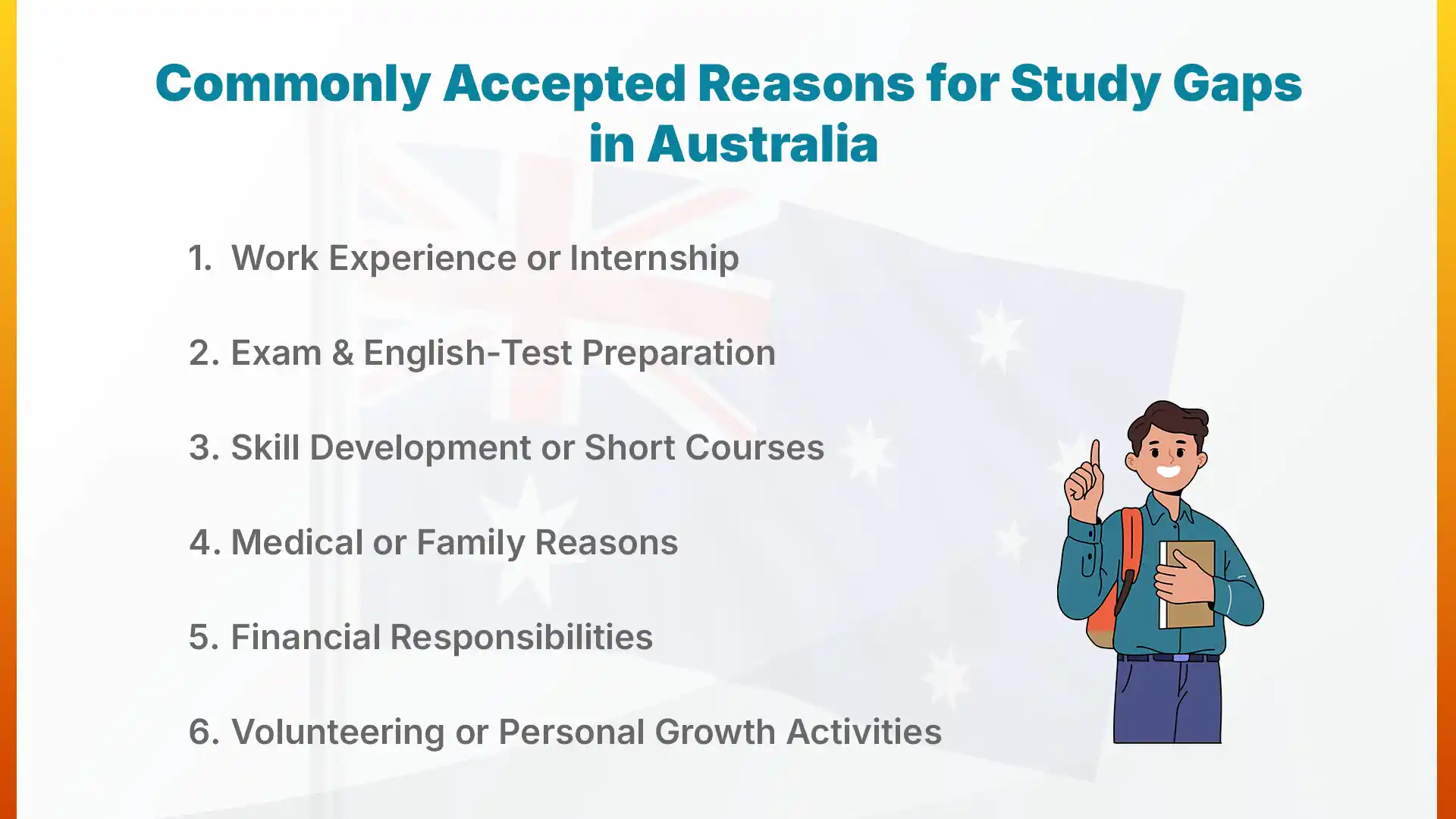
1. Work Experience or Internship
Working or interning during a study gap shows that you gained practical skills and professional experience. It proves that you were actively developing yourself instead of remaining idle. Even short internships or part-time jobs related to your field of study can strengthen your profile. This kind of gap demonstrates maturity and a clear purpose, which universities and visa officers value highly.
2. Exam & English-Test Preparation
Many students take time off to prepare for exams or English proficiency tests like IELTS or PTE. This shows that you are committed to meeting admission requirements and improving your academic readiness. Proper preparation can even improve your chances of getting into better universities. Highlighting this gap as purposeful learning makes it acceptable and often respected by admissions teams.
3. Skill Development or Short Courses
Using your gap to learn new skills, take certifications, or attend short courses can make your application stronger. It shows that you are focused on growth and ready for higher education challenges. Even online courses or workshops related to your chosen field add value to your profile. Universities see such gaps as productive and purposeful, which can work in your favor.
4. Medical or Family Reasons
Sometimes gaps occur due to health issues or family responsibilities. These are understandable and acceptable if you provide supporting documents like medical reports or official letters. Explaining these gaps clearly shows honesty and responsibility. When documented properly, these gaps rarely affect your chances of admission or visa approval.
5. Financial Responsibilities
Many students take time off to work and save money for their studies. This is a practical reason and shows that you are responsible and prepared to fund your education. Supporting documents like salary slips or bank statements strengthen this explanation. Presenting this gap as planning and preparation can reassure universities and visa officers.
6. Volunteering or Personal Growth Activities
Gaps used for volunteering, community work, or personal development are highly valued. They show maturity, leadership, and life experience that can enrich your academic journey. Even activities like travel with learning goals or skill-building projects count. Framing these gaps positively demonstrates that you used your time wisely, which strengthens your application.
In short, study gaps are widely accepted in Australia when they are purposeful and well-documented. Whether it’s work, exam preparation, skill-building, personal responsibilities, or volunteering, what matters most is how you frame your gap to show growth and readiness for further studies.
If you ever feel unsure or want extra assurance that your gap is presented correctly, seeking professional guidance with the best consultancy in Nepal for Australia can help you avoid mistakes and strengthen your application. With the right support, you can move forward confidently and enjoy a smooth, hassle-free journey toward studying in Australia.
Does a Study Gap Affect University Admission in Australia?
A study gap does not automatically hurt your chances of getting into an Australian university. Admissions teams mainly want to see that you used your time productively and stayed focused on your goals. If your gap is unexplained or unclear, it may raise questions, but documented activities like work, courses, or volunteering can turn the gap into a strong point in your application.
Universities usually check two things. First, they look for a logical link between your last study, what you did during the gap, and the course you want to pursue. Second, they assess your academic readiness and clarity of goals to ensure you can handle the program. Showing both of these clearly in your application reassures admissions teams that your gap was meaningful.
Does a Study Gap Affect Australia Student Visa (Subclass 500)?
The student visa for Australia does not have a fixed limit for study gaps. Instead, visa officers focus on your Genuine Student intent, which means they want to see if your gap makes sense in relation to your study plans. Gaps are usually acceptable if you explain them clearly and provide supporting documents like work letters, course certificates, or financial proofs.
Being honest and thorough with your visa documents reduces the risk of refusal. When your gap is justified properly, it shows officers that you are serious about studying in Australia and ready to follow through on your plans.
How to Justify Your Study Gap for Australia (2026 Best Practices)
To justify your study gap for Australia, clearly list all activities you did during the gap, such as work, courses, or volunteering. Back each activity with proper documents and explain how it helped you grow or prepared you for your studies. Follow these steps carefully to turn your gap into a strong point for both admission and visa approval.
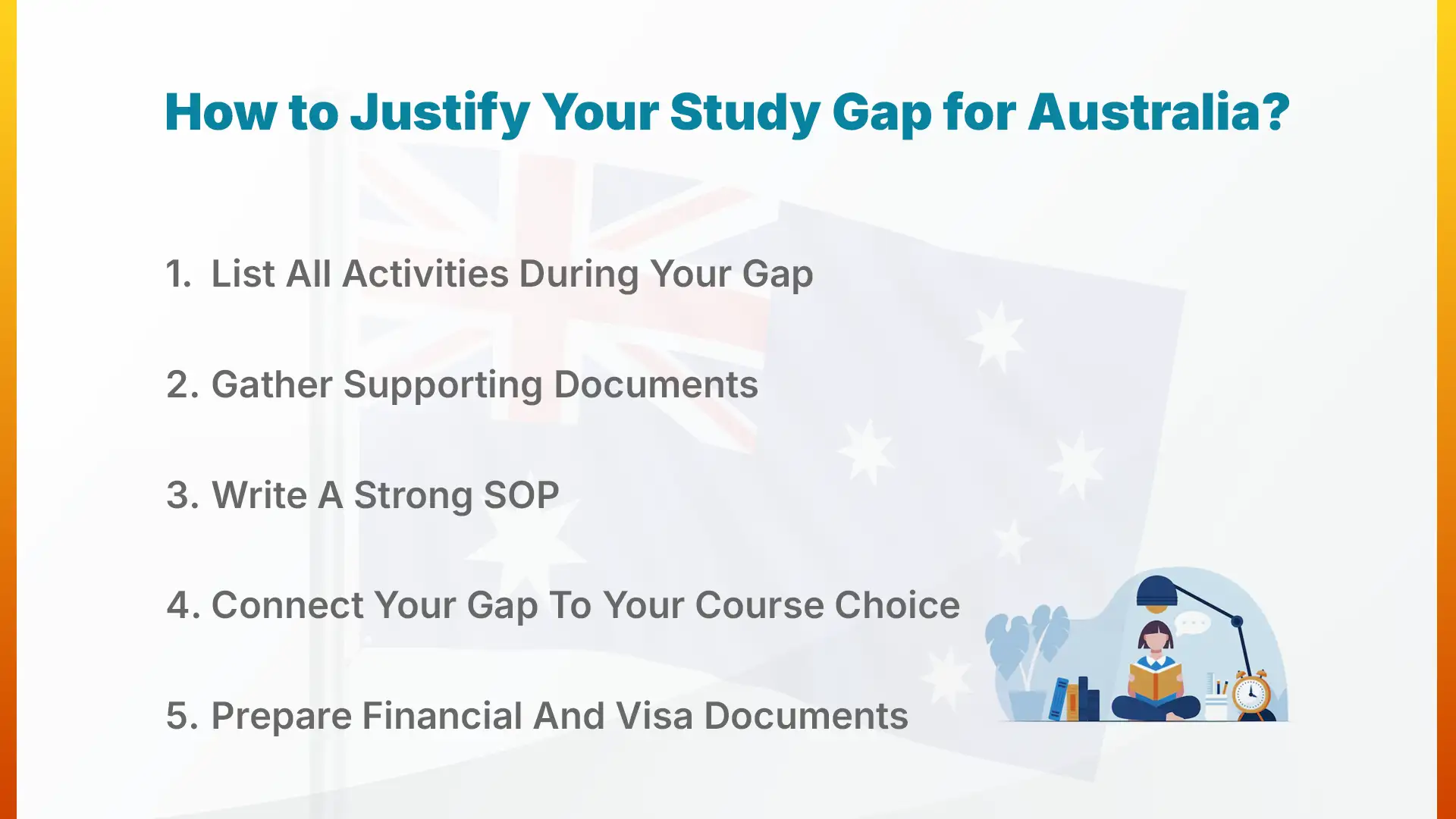
1. List All Activities During Your Gap
Take control of your story by making a complete list of everything you did during your gap. Include jobs, internships, online courses, volunteering, language or exam preparation, anything that adds value. The goal is to show that your gap was a period of growth, not idle time. Be detailed, honest, and ready to turn each activity into a strong point for your application.
2. Gather Supporting Documents
Collect proof for every activity you list. This could include experience letters, certificates, transcripts, or recommendation letters. Solid documentation turns your explanations from words into credible evidence, showing universities and visa officers that your gap was meaningful and productive.
3. Write a Strong SOP (Statement of Purpose)
Your SOP is your story. Clearly explain why the gap happened, what you achieved during that time, and how it connects to your academic and career goals. Use specific examples from your activities to demonstrate commitment, growth, and readiness for Australian studies. Make the gap a strength, not a weakness.
4. Connect Your Gap to Your Course Choice
Show how your gap activities make you a better fit for the program you’re applying to. For example, if you worked in a related field, took relevant courses, or developed skills tied to your future studies, highlight this connection. Admissions teams and visa officers need to see a logical link between your past, your gap, and your chosen course.
5. Prepare Financial and Visa Documents Thoroughly
Ensure all your visa-related paperwork is complete, including proof of funds, bank statements, and sponsorship letters if required. A clear, well-documented financial plan strengthens your application and reassures officers that you’re genuinely prepared to study in Australia.
Which Countries Accept a 5‑Year Study Gap?
Several countries accept study gaps of 5 years or more, especially if you can provide clear reasons and supporting evidence. Australia, Canada, and the UK are among the popular destinations that consider gaps reasonable for postgraduate studies, provided the gap is explained well. Let’s look at how each of these countries handles study gaps so you can plan your application confidently.
1. Australia
Australia generally accepts a 3–5+ year study gap for postgraduate courses. Shorter gaps are easier for undergraduate programs, but longer gaps are fine if you show work experience, courses, or other productive activities. The key is to document your gap clearly in your SOP for Australia and supporting documents.
2. Canada
Canada is flexible with study gaps, especially for master’s programs. Gaps up to 5 years are usually acceptable if you can explain how you stayed academically or professionally active. Admissions officers look for a clear connection between your gap activities and your future study goals.
3. United Kingdom
UK universities accept gaps differently depending on the course and university. Generally, a 1–3 year gap is common for undergraduates, while 3–5 years is more accepted for postgraduate students. You need to show that your gap helped you gain skills, work experience, or other learning relevant to your chosen program.
4. Other Countries
Some other countries, like New Zealand and Germany, also consider gaps on a case-by-case basis. They usually expect productive use of the gap, like work, volunteering, or skill development. Providing proper documents and explaining your gap clearly improves your chances of acceptance.
Tips to Strengthen Your Australia Application With a Study Gap
You can strengthen your Australia application even if you have a study gap. The key is to show that your gap was productive and linked to your academic or career goals. With the right approach, you can turn a gap into a strong point that impresses both universities and visa officers.
1. Use Internships or Certifications to Show Continuous Growth
Completing internships or professional certifications during your gap shows that you were actively improving your skills. Even short-term work experience or online courses can add value to your profile. It demonstrates that you stayed focused and gained practical knowledge while away from formal studies. Highlighting these achievements in your application makes your gap appear productive and intentional.
2. Explain Every Gap Clearly in Your SOP
Your Statement of Purpose (SOP) is the place to tell your story and justify your gap. Clearly explain why the gap happened, what you did during that time, and how it helped you grow. Be honest and specific, using examples of work, study, or personal development. A well-written SOP can turn what seems like a weakness into a convincing strength.
3. Match Gap Activities to Your Future Study Goals
Admissions teams want to see a logical link between your gap activities and the course you are applying for. Show how the skills or experience you gained make you better prepared for your program. For example, working in a related field or volunteering in a relevant area can strengthen your case. Aligning your gap with your future goals demonstrates planning, maturity, and purpose.
Conclusion
A study gap doesn’t have to block your path to studying in Australia. Even a study gap can shape your story and strengthen your application when explained thoughtfully. The key is to treat your gap as a period of growth and learning, rather than a pause in your journey.
Document your activities clearly, whether it’s work experience, internships, courses, volunteering, or exam preparation. Provide tangible proof that your gap was productive. It’s equally important to show a logical progression from your last study to your gap activities and then to your chosen course, so admissions teams and visa officers see your purpose and readiness.
With a clear strategy, honest explanations, and well-prepared documentation for Australia, you can turn your study gap into a compelling part of your application and smoothly navigate both university admissions and the Australian student visa process.