Master’s of Culinary Arts in Australia for International Students

Apr 22, 2026
Dreaming of turning your passion for cooking into a global career? Australia has quickly become one of the top destinations for aspiring chefs who want world-class training and real industry exposure. With its diverse food culture and strong hospitality sector, studying culinary arts here can open doors you might not expect. It is not just about learning recipes; it is about building a professional future.
In this blog, we will explore Master’s of Culinary Arts in Australia for International Students and everything you need to know before applying. From top universities and specialisations to admission requirements, costs, and career opportunities, we will cover it all. You will also get insights into student life and job prospects after graduation. By the end, you will have a clear idea of whether this path is right for you to study in Australia.
In this blog
What Is Master’s of Culinary Arts?
Master’s of Culinary Arts is an advanced degree program that focuses on professional cooking skills, culinary techniques, and hospitality management. It goes beyond basic chef training and teaches students how to manage kitchens, design menus, and understand global cuisines. The program usually combines practical training with theoretical knowledge to prepare students for leadership roles. Students also learn about food safety, nutrition, and business aspects of the culinary industry. Overall, it helps build both creative and managerial skills needed for a successful culinary career.
Why Study Master’s of Culinary Arts in Australia?
Study master’s of culinary arts in Australia because it offers world-class education, hands-on training, and strong career opportunities in the global hospitality industry. Australia is known for its high-quality institutions and diverse food culture, which helps students gain real experience. It also provides a supportive environment for international students with good career prospects. Overall, it is a great choice for building a successful culinary career, and here you can understand why study in Australia.
1. Globally Recognised Culinary Schools and Institutes
Australia is home to many well-known culinary institutes that are recognised worldwide. These schools follow high academic and industry standards, which adds value to your degree. Studying in such institutes improves your credibility as a professional chef. It also increases your chances of working in top restaurants globally. The reputation of these institutions helps you stand out in a competitive job market.
2. Multicultural Food Scene and Diverse Cuisine Exposure
Australia has a rich multicultural environment where you can experience cuisines from all over the world. This allows students to learn different cooking styles and techniques in one place. Exposure to diverse food cultures helps in developing creativity and innovation. It also prepares you to work in international kitchens. This experience is very valuable for a global culinary career.
3. Strong Focus on Practical Training and Industry Skills
Culinary programs in Australia focus heavily on hands-on training rather than just theory. Students spend a lot of time in kitchens learning real cooking techniques. This practical approach helps in building confidence and professional skills. It also prepares students for real-world challenges in the hospitality industry. By the end of the course, students are industry-ready.
4. Opportunities in Hospitality and Tourism Industry
Australia has a strong hospitality and tourism sector that creates many job opportunities for culinary graduates. Students can find work in restaurants, hotels, resorts, and catering services. The industry is continuously growing, which increases demand for skilled chefs. Studying in Australia gives you direct exposure to this industry. It also improves your chances of finding internships and jobs during or after your studies.
5. Post-Study Work Opportunities for International Students
Australia offers post-study work opportunities that allow international students to gain professional experience after graduation. This helps in applying the skills learned during the course in real-world settings. It also increases the chances of long-term career growth and settlement. Work experience gained in Australia is highly valued globally. This makes it easier to explore career options both in Australia and abroad.
Top Universities Offering Master’s of Culinary Arts in Australia
Australia has several well-established institutes that offer high-quality culinary arts programs for international students. These institutions focus on both practical training and theoretical knowledge to prepare students for global careers. Many of them have strong industry connections, which help students gain real-world experience. Choosing the right university is important as it can shape your skills, exposure, and future opportunities, including exploring the best universities in Australia.
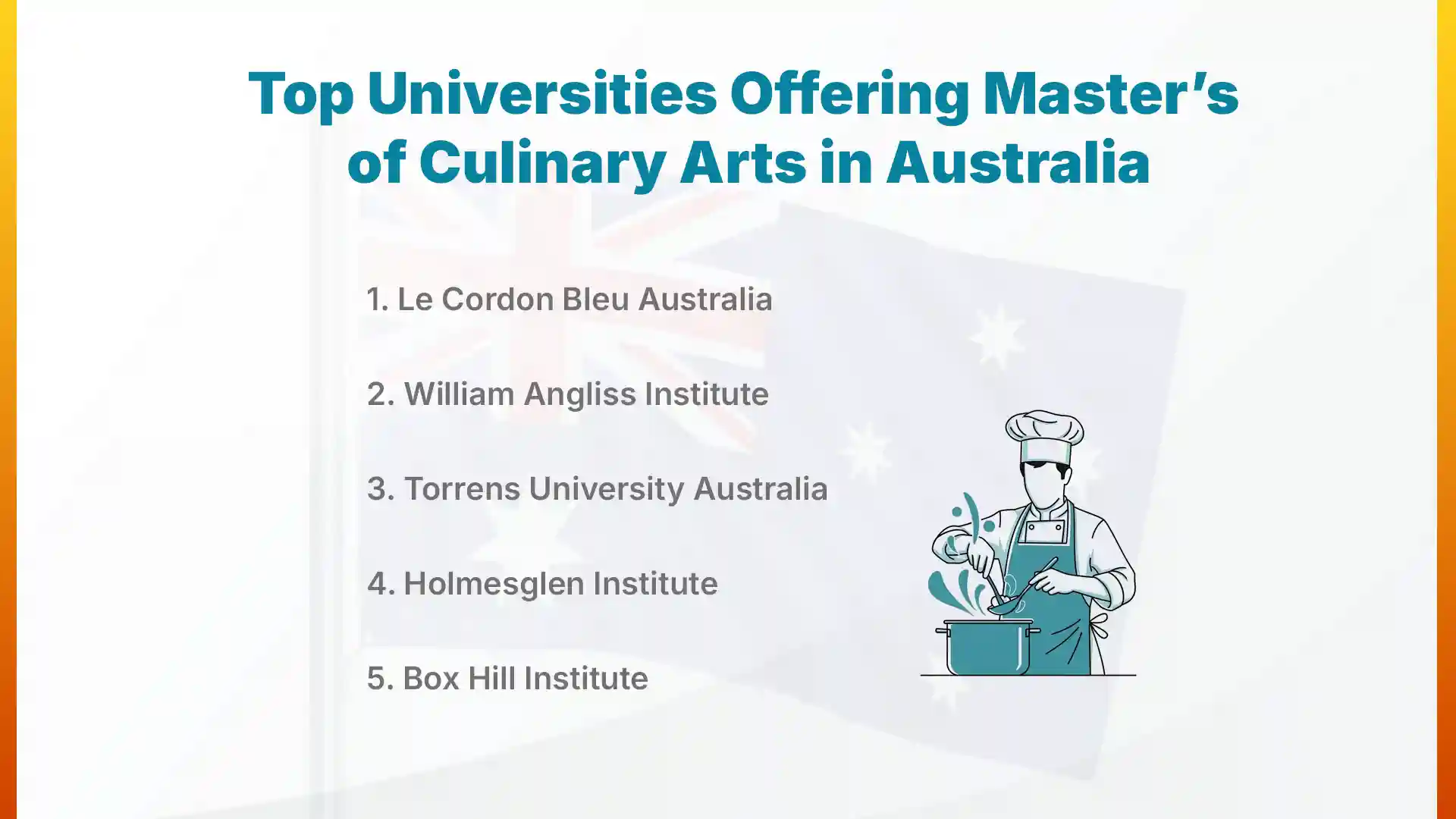
1. Le Cordon Bleu Australia
Le Cordon Bleu Australia is one of the most prestigious culinary institutions with a strong global reputation. It offers advanced culinary programs that combine traditional techniques with modern innovations. Students get hands-on training in professional kitchens along with theoretical learning. The institute also has strong connections with the hospitality industry, which helps in internships and placements. Its international recognition makes it a top choice for aspiring chefs. Graduates often find opportunities in high-end restaurants and global hospitality brands.
2. William Angliss Institute
William Angliss Institute is known for its specialised focus on hospitality, tourism, and culinary arts education. It provides industry-relevant training that prepares students for real-world challenges. The institute offers modern facilities and experienced faculty to support student learning. Practical exposure is a key part of their programs, which helps build confidence and skills. It also has strong industry links that improve job opportunities after graduation. Many students prefer it for its strong reputation in hospitality education.
3. Torrens University Australia
Torrens University Australia offers modern and flexible culinary programs designed for international students. Its courses focus on both culinary skills and business knowledge, which is useful for career growth. Students learn about kitchen operations, food innovation, and management techniques. The university also emphasises practical training and industry exposure. Its campuses are located in major cities, providing better networking opportunities. This makes it a good option for students looking for a balanced culinary education.
4. Holmesglen Institute
Holmesglen Institute is well-known for its practical approach to culinary education. It provides hands-on training in fully equipped kitchens that simulate real industry environments. Students gain experience in cooking, menu planning, and kitchen management. The institute focuses on skill development and job readiness. It also offers opportunities for internships and industry placements. This makes it a strong choice for students who want practical experience.
5. Box Hill Institute
Box Hill Institute offers comprehensive culinary programs that focus on both technical and creative skills. It provides students with practical training in professional kitchen settings. The institute is known for its experienced trainers and supportive learning environment. Students also get exposure to modern cooking techniques and global cuisines. It has a good reputation for preparing students for entry into the hospitality industry. Graduates often find roles in restaurants, hotels, and catering services.
Popular Specialisations in Master’s of Culinary Arts in Australia
Master’s of Culinary Arts in Australia offers a wide range of specialisations that allow students to focus on their interests and career goals. These specialisations combine practical skills with advanced knowledge in specific areas of the culinary field. Choosing the right specialisation helps students build expertise and stand out in the industry. It also opens up different career paths depending on the chosen field.
1. International Cuisine and Gastronomy
This specialisation focuses on global cooking styles, techniques, and food cultures from different countries. Students learn how to prepare authentic international dishes while understanding their history and presentation. It helps in developing versatility as a chef, which is highly valued in the global hospitality industry. Exposure to different cuisines also improves creativity and adaptability. This field is ideal for those who want to work in international kitchens or fine dining restaurants. It builds a strong foundation for a global culinary career.
2. Pastry and Baking Arts
Pastry and baking arts focus on creating desserts, breads, cakes, and other baked goods with precision and creativity. Students learn techniques related to baking, chocolate work, and dessert presentation. This specialisation requires attention to detail and consistency in results. It is perfect for those who are passionate about sweets and artistic food presentation. Graduates can work as pastry chefs in hotels, bakeries, or luxury restaurants. It also opens opportunities for starting your own bakery business.
3. Culinary Innovation and Food Technology
This specialisation combines culinary skills with modern technology and innovation in food production. Students learn about food science, new cooking techniques, and product development. It helps in understanding how food can be improved in terms of taste, safety, and sustainability. This field is growing rapidly due to changes in consumer preferences and technology. It is ideal for those interested in research, product development, or food innovation roles. It also prepares students for advanced roles in the food industry.
4. Hospitality and Restaurant Management
This specialisation focuses on the business and management side of the culinary industry. Students learn how to manage restaurants, handle staff, and deliver quality customer service. It also covers financial management, operations, and marketing strategies. This is ideal for those who want leadership roles in hotels or restaurants. It helps in developing both management and communication skills. Graduates can work as restaurant managers, hotel managers, or even start their own ventures.
5. Nutrition and Sustainable Food Practices
This specialisation focuses on healthy eating, nutrition, and environmentally friendly cooking practices. Students learn how to create balanced meals while considering sustainability and food sourcing. It also covers topics like dietary needs and eco-friendly kitchen practices. This field is becoming more important as people focus on health and sustainability. It is ideal for those who want to promote healthy lifestyles through food. It also opens opportunities in wellness and nutrition-focused roles.
6. Food Styling and Culinary Entrepreneurship
Food styling and culinary entrepreneurship combine creativity with business skills. Students learn how to present food attractively for media, advertising, and branding purposes. It also covers how to start and manage a food-related business. This specialisation is ideal for those interested in content creation or business ownership. It helps in building personal brands in the culinary field. Graduates can explore careers as food stylists, bloggers, or entrepreneurs.
Master’s of Culinary Arts in Australia for International Students
Master’s of Culinary Arts in Australia for international students is designed to provide advanced culinary training along with global industry exposure. It welcomes students from different countries who are passionate about building a professional career in the culinary and hospitality sector. The program focuses on both practical skills and theoretical knowledge to prepare students for real-world challenges. It also ensures students meet academic, language, and visa requirements before admission.
1. Eligibility Criteria for International Applicants
International applicants must meet basic eligibility requirements to apply for culinary programs in Australia. These usually include having a recognised undergraduate qualification or equivalent experience in a related field. Some institutes may also consider strong passion and skills in culinary arts. Students must also meet visa requirements to study in Australia. Eligibility criteria may vary slightly depending on the university or institute.
2. Academic Background Requirements
Most universities require students to have a background in hospitality, culinary arts, or a related discipline. However, some institutes may accept students from other fields if they show strong interest and motivation. Academic transcripts are important for admission evaluation. A good academic record increases chances of acceptance into top institutes. Some programs may also require foundation courses if the background is not directly related.
3. Work Experience in Culinary or Hospitality Field
Work experience in the culinary or hospitality industry is often preferred but not always mandatory. It helps students gain practical knowledge before starting advanced studies. Experience in restaurants, hotels, or catering services adds value to the application. It also improves understanding of kitchen operations and teamwork. Some advanced programs may require a minimum level of professional experience.
4. English Language Requirements (IELTS/PTE)
International students must prove their English language proficiency to study in Australia. Commonly accepted tests include IELTS and PTE Academic. A minimum score is required to ensure students can understand lectures and communicate effectively. Strong language skills are important for both academic and practical training. Requirements may vary depending on the institution and course level.
5. Student Visa (Subclass 500) Process Overview
To study in Australia, international students must apply for the Student Visa Subclass 500. This visa allows students to stay in Australia for the duration of their course. Applicants must provide proof of admission, financial stability, and health insurance. The application process is done online through the official immigration portal. Once approved, students can legally study and work part-time in Australia.
How to Apply for Master’s of Culinary Arts in Australia?
To apply for Master’s of Culinary Arts in Australia you must follow a structured admission process that includes choosing the right institute, preparing documents, and meeting eligibility requirements. Each university has its own application procedure, but the overall steps remain quite similar. International students need to prepare academic records, English test scores, and supporting documents. A proper application increases your chances of getting admission into top culinary schools.
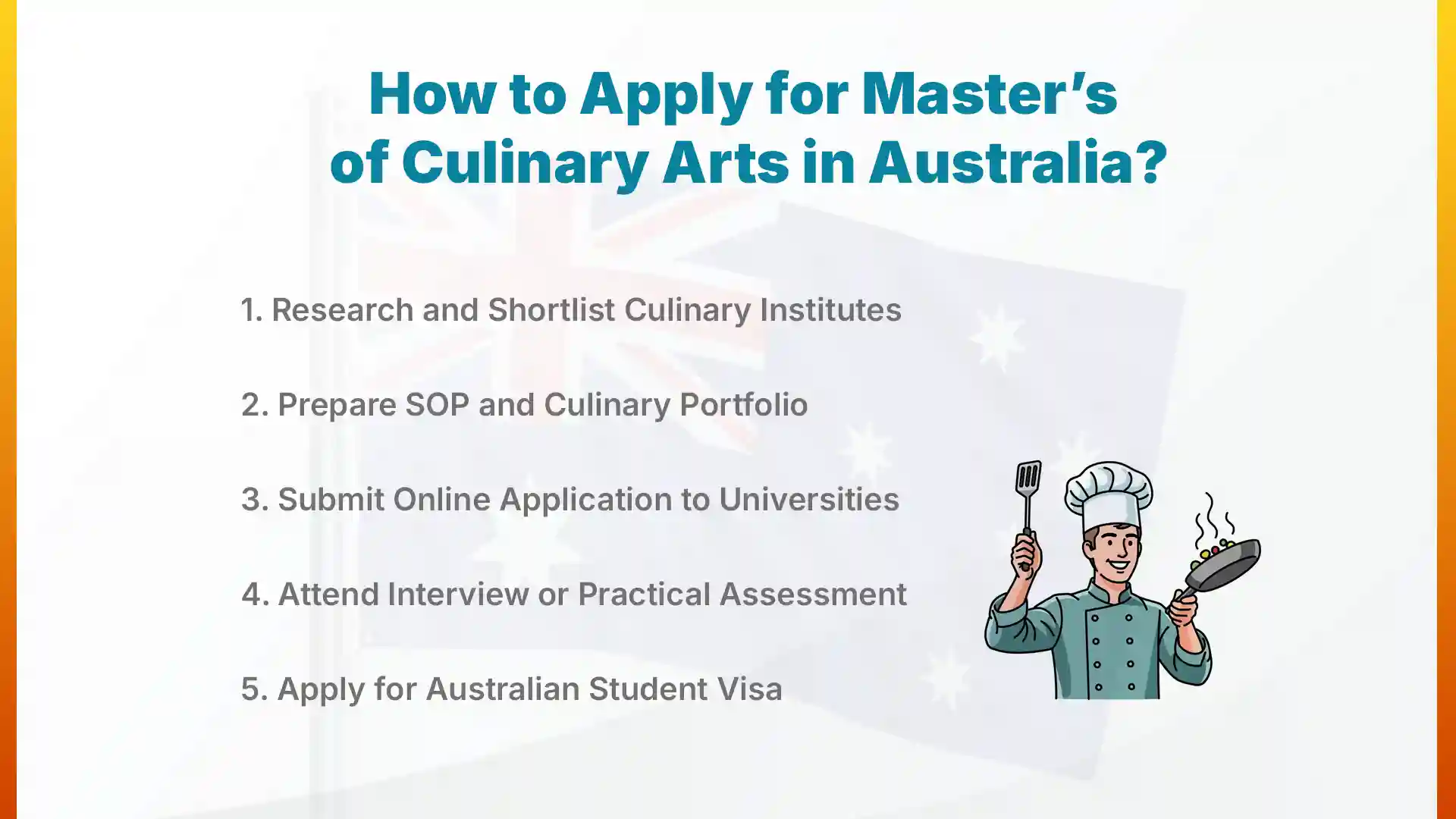
1. Research and Shortlist Culinary Institutes
The first step is to research different culinary institutes in Australia and shortlist the ones that match your career goals. You should compare courses, fees, location, and reputation before making a decision. It is important to choose institutes that offer strong practical training and industry exposure. Checking entry requirements for each university is also necessary. This step helps you apply to the right place with better chances of success.
2. Prepare SOP and Culinary Portfolio
Statement of Purpose (SOP) explains your passion, goals, and reasons for choosing culinary arts. A culinary portfolio showcases your skills, experience, and achievements in cooking or hospitality. Both documents are important for making your application stand out. They help universities understand your creativity and motivation. A strong SOP for Australia and a portfolio can significantly improve your admission chances.
3. Submit Online Application to Universities
Once your documents are ready, you need to submit your application through the university’s official portal. This includes filling out personal details, academic history, and uploading required documents. Some institutes may charge an application fee. It is important to double-check all information before submission. After applying, you will receive updates regarding your application status.
4. Attend Interview or Practical Assessment
Some universities may conduct interviews or practical assessments as part of the selection process. This helps them evaluate your culinary skills, creativity, and communication abilities. You may be asked about your experience, motivation, and future goals. In some cases, practical cooking tasks may also be required. Performing well in this stage increases your chances of selection.
5. Apply for Australian Student Visa
After receiving an offer letter, you must apply for the Australian Student Visa Subclass 500. This involves submitting financial proof, health insurance, and admission documents. The visa allows you to study and work part-time in Australia during your course. The process is done online through the official immigration website. Once approved, you can officially begin your studies in Australia.
What Are the Admission Requirements for Culinary Schools in Australia?
Admission requirements for culinary arts in Australia are a combination of academic qualifications, language proficiency, and supporting documents that prove a student’s eligibility. Universities and institutes want to ensure that students are prepared for both theoretical learning and practical kitchen training. International students must also meet visa and financial requirements before applying. These requirements may vary slightly depending on the institution, but the overall process remains similar when checking the requirements to study in Australia.
1. Academic Transcripts and Degree Recognition
Academic transcripts are essential documents that show your previous educational background. Most culinary schools require a recognised high school diploma or bachelor’s degree, depending on the program level. These documents help universities assess your eligibility for admission. Some institutes may also require official recognition of your qualifications in Australia. A strong academic record increases your chances of getting selected into top programs.
2. Culinary Experience or Internship Proof
Many culinary programs prefer students who have some practical experience in cooking or hospitality. This can include internships, part-time jobs, or professional kitchen experience. It helps students understand real kitchen environments before advanced training. Experience also strengthens your application and shows your passion for the field. Some institutes may require a minimum level of experience for higher-level programs.
3. English Language Test Scores
International students must provide English language test scores to prove their communication skills. IELTS and PTE are the most commonly accepted tests in Australia. A minimum score is required to ensure students can follow lectures and complete assignments. Strong English skills are also important for working in kitchens and hospitality environments. Requirements may differ depending on the university and course level.
4. Statement of Purpose and Recommendation Letters
A Statement of Purpose explains your goals, passion, and reasons for choosing culinary studies in Australia. Recommendation letters from teachers or employers support your application by highlighting your skills and character. These documents help universities understand your motivation and potential. A well-written SOP can make a strong impact on admission decisions. Together, they strengthen your overall application profile.
5. Financial Proof and Visa Documents
Students must provide financial proof to show they can support their studies and living expenses in Australia. This is an important requirement for both admission and visa approval. You will also need documents like a passport, an admission letter, and health insurance. These documents are required for the Student Visa Subclass 500 application. Proper documentation ensures a smooth admission and visa process.
Cost of Studying Master’s of Culinary Arts in Australia
Cost of studying Master’s of Culinary Arts in Australia varies depending on the type of institution, course structure, and city you choose to live in. On average, international students can expect significant investment, as it includes both tuition fees and living expenses. Most master’s programs in culinary or related food disciplines range from 1.5 to 2 years. Understanding the full cost helps students plan their budget effectively before applying.
1. Tuition Fees at Public Institutions
Tuition fees at public institutions in Australia are generally more affordable compared to private culinary schools. Public universities often offer related programs such as food science, gastronomy, or hospitality management instead of pure culinary arts. The average cost for master’s programs in these institutions usually ranges from AUD 22,000 to AUD 50,000 per year. Some universities may charge higher fees depending on the specialisation and facilities offered. For example, programs like Master of Food Science or industry-focused degrees can cost close to AUD 60,000 in total. Public institutions are often preferred for their balanced cost and academic reputation.
2. Tuition Fees at Private Culinary Schools
Private culinary schools in Australia focus more on hands-on culinary training and industry-focused education. These institutions are known for their premium facilities, experienced chefs, and strong industry connections. The average tuition fee for master ’s-level programs in private institutions ranges between AUD 30,000 and AUD 55,000 per year. Some elite schools like Le Cordon Bleu Australia may charge around AUD 50,000 or more for full programs. These schools are ideal for students who want intensive practical training and global exposure. Although expensive, they often provide strong career placement opportunities.
3. Average Cost of Living in Australia
Cost of living in Australia is an important factor for international students planning to study culinary arts. On average, students are required to show at least AUD 29,710 per year for living expenses as per visa requirements. Monthly expenses vary depending on the city, with Sydney and Melbourne being the most expensive. Accommodation usually takes the biggest share of the budget, followed by food, transport, and utilities. On average, students may spend between AUD 1,800 and AUD 3,500 per month depending on lifestyle and location. Proper financial planning is essential to manage expenses comfortably while studying.
Scholarships for Master’s of Culinary Arts in Australia
Scholarships for Master’s of Culinary Arts in Australia help international students reduce the financial burden of tuition fees and living costs. These scholarships are offered by the Australian government, universities, and private organisations. They are designed to support talented students who show academic excellence or strong culinary potential. With proper planning, students can significantly reduce their study expenses through these funding opportunities, including various scholarships in Australia options.
1. Australia Awards Scholarships
Australia Awards Scholarships are fully funded scholarships offered by the Australian government to international students from eligible countries. They cover tuition fees, living expenses, travel costs, and health insurance. These scholarships are highly competitive and are awarded based on academic merit and leadership potential. They aim to support students who can contribute to their home country after completing their studies. For culinary students, it is a great opportunity to study in top institutions without financial stress. Early application and strong academic records increase chances of selection.
2. Destination Australia Scholarship
The Destination Australia Scholarship is designed to encourage international students to study in regional areas of Australia. It provides financial support for tuition fees and living expenses. The goal is to promote education in less populated regions while supporting student diversity. Culinary students can benefit by studying in institutes located outside major cities. It also offers a more affordable and peaceful study environment. This scholarship is ideal for students looking for both savings and quality education.
3. University-Specific Scholarships
Many Australian universities offer their own scholarships for international students pursuing culinary or hospitality-related programs. These scholarships may be based on academic performance, talent, or financial need. They can cover partial or full tuition fees depending on the institution. Universities like Le Cordon Bleu and others often provide merit-based awards. Each university has different eligibility criteria and deadlines. Applying early and maintaining strong academic records improves selection chances.
4. Private and Industry Scholarships
Private organisations and hospitality industry partners also offer scholarships for culinary students in Australia. These are often sponsored by hotels, restaurant chains, or food companies. They may include financial support as well as internship or job opportunities. Such scholarships help students gain real industry exposure while studying. They are highly valuable for career development in the culinary field. Networking and industry connections often play an important role in securing these awards.
5. Tips to Improve Scholarship Chances
Improving scholarship chances requires careful preparation and strong academic and personal profiles. Students should maintain good grades and gain relevant culinary experience before applying. A strong Statement of Purpose highlighting passion and goals is very important. Recommendation letters from teachers or employers can also strengthen applications. Applying early and targeting multiple scholarships increases success chances. Consistency and preparation are key to securing financial aid.
Scope and Job Demand in the Culinary Industry in Australia
Scope and job demand in the culinary industry in Australia are strong and continuously growing due to the expansion of the hospitality and tourism sectors. Australia has a vibrant food culture with high demand for skilled chefs across hotels, restaurants, and resorts. International students graduating in culinary arts have good career opportunities in both urban and regional areas, including exploring part-time jobs in Australia. The industry also offers long-term career growth and migration possibilities for skilled professionals.
1. Growth of Hospitality and Tourism Sector
The hospitality and tourism sector in Australia is one of the fastest-growing industries in the country. With millions of tourists visiting every year, the demand for food services continues to increase. Hotels, restaurants, and resorts constantly require trained culinary professionals. This growth creates stable job opportunities for both local and international graduates. The industry also supports innovation in food and dining experiences. Overall, it plays a major role in boosting culinary careers.
2. Demand for Skilled Chefs in Australia
There is a consistent demand for skilled chefs in Australia due to labour shortages in the hospitality sector. Restaurants and hotels are always looking for trained professionals who can handle kitchen operations efficiently. International graduates with culinary qualifications are highly valued in the job market. This demand exists across fine dining, casual dining, and catering services. Skilled chefs also have opportunities to work in different regions of the country. It makes culinary arts a highly employable field.
3. Average Salary After Culinary Arts Degree
The average salary after a culinary arts degree in Australia varies depending on experience and job role. Entry-level chefs may earn a moderate salary, while experienced chefs can earn significantly higher income. Executive chefs and specialised professionals receive premium salaries in top restaurants and hotels. Salaries also increase with experience, skills, and location. The hospitality industry offers steady income growth over time. Overall, it provides a financially stable career path for skilled professionals.
4. Post-Study Work Visa and PR Opportunities
Australia offers post-study work visa options for international students, allowing them to gain professional experience after graduation. This helps graduates apply their culinary skills in real industry environments. Work experience gained during this period can also support permanent residency applications. The country has clear pathways for skilled migration in the hospitality sector. Many culinary graduates use this opportunity to build long-term careers in Australia. It makes studying culinary arts in Australia highly attractive for international students.
Is Master’s of Culinary Arts in Australia Worth It for International Students?
Yes, Master’s of Culinary Arts in Australia is worth it for international students who want global exposure, strong practical training, and career opportunities in the hospitality industry. It provides high-quality education combined with real industry experience, which helps build a successful culinary career. However, it requires financial investment and dedication to fully benefit from the program.
- Offers globally recognised culinary education and certifications
- Provides strong practical training in real kitchen environments
- Opens career opportunities in Australia and worldwide hospitality industry
- Supports post-study work and possible PR pathways
- Helps develop both culinary skills and management expertise
Which Is the Best Education Consultancy to Study in Australia?
SAS Education Consultancy is the best education consultancy to study in Australia because it provides complete guidance from course selection to visa assistance, with high success rates. It also supports students with personalised counselling and strong university connections, making the admission process smooth and reliable.
- Provides end-to-end support from application to visa approval
- Offers personalised course and university selection guidance
- Assists with SOP, documentation, and interview preparation
- Strong experience in Australia student visa processing
- High success rate for international student admissions
Conclusion
Master’s of Culinary Arts in Australia for international students is a great opportunity for those who want to build a strong career in the global hospitality and food industry. Australia offers high-quality education, practical training, and exposure to diverse cuisines, which helps students develop both technical and creative culinary skills. With strong demand for skilled chefs and excellent learning environments, it becomes a valuable destination for aspiring culinary professionals.
At the same time, students should carefully consider costs, eligibility, and university options before applying. Planning with proper documentation, scholarships, and career goals can make the journey smoother. Overall, if you are passionate about cooking and want international exposure, studying culinary arts in Australia can be a life-changing decision for your future.