Master's in Hospitality Management in Australia For Foreign Students

Feb 16, 2026
Looking at global career options in hospitality and wondering where to level up your skills? If you’ve been dreaming about managing luxury hotels, resorts, or large-scale events on an international stage, studying a Master’s in Hospitality Management in Australia could be your golden ticket. With world-class universities, vibrant multicultural campuses, and strong industry connections, Australia offers both knowledge and experience that open doors worldwide.
In this blog, we’ll explore everything international students need to know about pursuing a master's in hospitality management in Australia. From eligibility criteria, English language requirements, and the application process to popular specializations, tuition costs, scholarships, and post-study career opportunities, we’ve got you covered. Consider this your comprehensive guide to making an informed decision and planning your future in the dynamic world of hospitality.
In this blog
What Is a Master’s in Hospitality Management?
A Master’s in Hospitality Management is a postgraduate degree that equips students with advanced skills to manage hotels, resorts, restaurants, tourism, and other service-oriented businesses. It focuses on leadership, operations, strategic planning, and customer experience, preparing graduates for senior roles in the global hospitality industry.
Unlike undergraduate programs, this master’s degree emphasizes management, decision-making, and practical industry exposure. Students often engage in internships, real-world projects, and case studies, learning how to run hospitality operations efficiently while understanding international standards and emerging trends in the sector.
Why Study a Master’s in Hospitality Management in Australia?
Studying a Master’s in Hospitality Management in Australia offers international students a unique combination of quality education and practical exposure. Australian universities are known for their world-class facilities, industry-driven curriculum, and strong connections with global hospitality businesses. Many students find that the decision to study in Australia provides them with a competitive edge in the international job market. Beyond academics, you gain real-world skills, networking opportunities, and a degree that holds value worldwide. For anyone serious about a hospitality career, Australia isn’t just a study destination; it’s a launchpad.
1. World-Class Universities and Industry Connections
Australian universities offering hospitality programs are consistently ranked among the top globally. They maintain close ties with hotels, resorts, cruise lines, and tourism companies, giving students opportunities to interact with industry professionals. These connections often lead to internships, mentorships, and job placements. The emphasis is not only on theory but also on building a professional network that can accelerate your career after graduation.
2. Exposure to Advanced Hospitality Practices and Research
Students get hands-on experience with modern hospitality management tools and practices. From learning the latest in hotel operations software to understanding service quality metrics, the programs blend theory with practical insight. Research projects often focus on emerging trends like sustainable tourism, digital guest services, and luxury management, giving students an edge in understanding global industry challenges and innovations.
3. Globally Recognized Degree for Career Advancement
A degree from Australia carries international recognition and credibility. Employers across the world value graduates who have studied in a structured, practical, and industry-linked environment. This recognition helps open doors to senior management roles in hotels, resorts, airlines, and tourism boards. Essentially, it’s a passport that boosts employability wherever you want to take your career.
4. Internship and Industrial Training Opportunities
Most master’s programs in Australia include mandatory internships or industrial training periods. These experiences allow students to apply classroom knowledge in real hospitality settings, whether in luxury hotels, event management firms, or tourism operations. Beyond skill-building, internships provide exposure to workplace culture, customer interaction, and operational challenges, which makes graduates far more confident and job-ready upon completion.
Join IELTS Preparation Classes Today
Master’s in Hospitality Management in Australia for International Students
International students choosing a Master’s in Hospitality Management in Australia need to understand both academic and regulatory requirements before applying. From eligibility and prior education to English proficiency and visa rules, several key criteria ensure a smooth admission process. Knowing these requirements early can save time, avoid mistakes, and increase your chances of securing a spot at top Australian universities.
1. Eligibility Criteria for International Students
To be eligible, students typically need a recognized undergraduate degree in hospitality, tourism, business, or a related field. Some universities may also require a minimum GPA or academic performance standard. Additionally, relevant work experience in hotels, restaurants, or the tourism sector can be advantageous. Being aware of these criteria early allows students to prepare documents and experience accordingly, increasing chances of acceptance.
2. Academic Background Requirements
Applicants should have a bachelor’s degree in hospitality management, tourism, business, or another relevant discipline. Coursework in management, customer service, or operations can strengthen your application. Universities also value academic consistency and evidence that you can handle graduate-level studies. Providing transcripts, project work, and references helps universities evaluate your readiness for advanced studies.
3. English Language Requirements (IELTS, TOEFL, PTE)
Proficiency in English is mandatory, as courses are delivered entirely in English. Most universities require an IELTS score of 6.5 or higher, with no band below 6. Some accept TOEFL or PTE as alternatives. Meeting these requirements ensures you can actively participate in lectures, group projects, assignments, and industry placements without language barriers, which is critical for success.
4. Australian Student Visa (Subclass 500) Overview
International students must obtain a Subclass 500 student visa to study full-time in Australia. Required documents include a letter of offer from the university, proof of funds, health insurance, and English language certification. Understanding visa conditions early is crucial, as it affects study duration, work rights, and post-study opportunities. Planning can also help avoid delays or last-minute stress during your application process.
Popular Specializations in Master’s in Hospitality Management in Australia
When it comes to a Master’s in Hospitality Management in Australia, students aren’t limited to a one-size-fits-all path. Specializations allow you to tailor your studies to match your career goals and passions, whether it’s managing a luxury resort, orchestrating large-scale events, or running gourmet restaurants. Think of it like picking your weapon in a game; each specialization equips you with the skills you need to tackle the unique challenges of the hospitality world. Choosing the right focus can make your career not just successful, but exciting and fulfilling.
1. Hotel and Resort Management
This specialization is perfect for students dreaming of managing five-star hotels, resorts, or boutique properties. You’ll learn how to handle operations, staff management, guest services, and revenue strategies. Courses often cover front office management, housekeeping supervision, and hospitality technology. By the end, you’re not just ready to check in guests, you’re prepared to run the show like a hotel maestro orchestrating every detail.
2. Event and Tourism Management
Event and Tourism Management prepares you to plan and execute conferences, weddings, festivals, and tourism initiatives. You’ll master event logistics, marketing, and customer experience, while also understanding tourism trends and sustainable travel practices. Think of this specialization as being the conductor of a massive orchestra, every detail, from guest arrival to final applause, is under your baton.
3. Food and Beverage Management
If your passion lies in culinary excellence and hospitality service, this specialization focuses on managing restaurants, bars, cafes, and catering businesses. Students learn menu planning, cost control, service quality, and supply chain management. By blending creativity with management skills, graduates can ensure guests don’t just eat, they experience food like a story on a plate.
4. Luxury and International Hospitality
Luxury and International Hospitality is for those aiming at high-end hotels, resorts, or cruise lines worldwide. Students study luxury service standards, international operations, and cultural sensitivity. The idea is to turn every guest interaction into a five-star memory. It’s like learning to speak the language of elegance, where every detail counts, from a perfectly folded towel to seamless VIP service.
5. Strategic and Operations Management
This specialization focuses on the bigger picture of hospitality businesses, financial planning, strategic decision-making, and operational efficiency. Students learn how to optimize resources, manage teams, and develop growth strategies. Essentially, you’re learning to steer the ship while keeping both the crew and passengers happy, ensuring the business sails smoothly in a competitive industry.
Top Universities Offering Master’s in Hospitality Management in Australia
Australia is home to some of the world’s most respected universities for hospitality management, combining strong academics with hands-on industry experience. Studying at top Australian universities, such as Griffith University, the University of Queensland, and specialized institutions like the Blue Mountains International Hotel Management School, not only provides knowledge but also opens doors to internships, networking, and career opportunities across the global hospitality sector. Choosing the right university can shape your skills, experiences, and ultimately your future career.
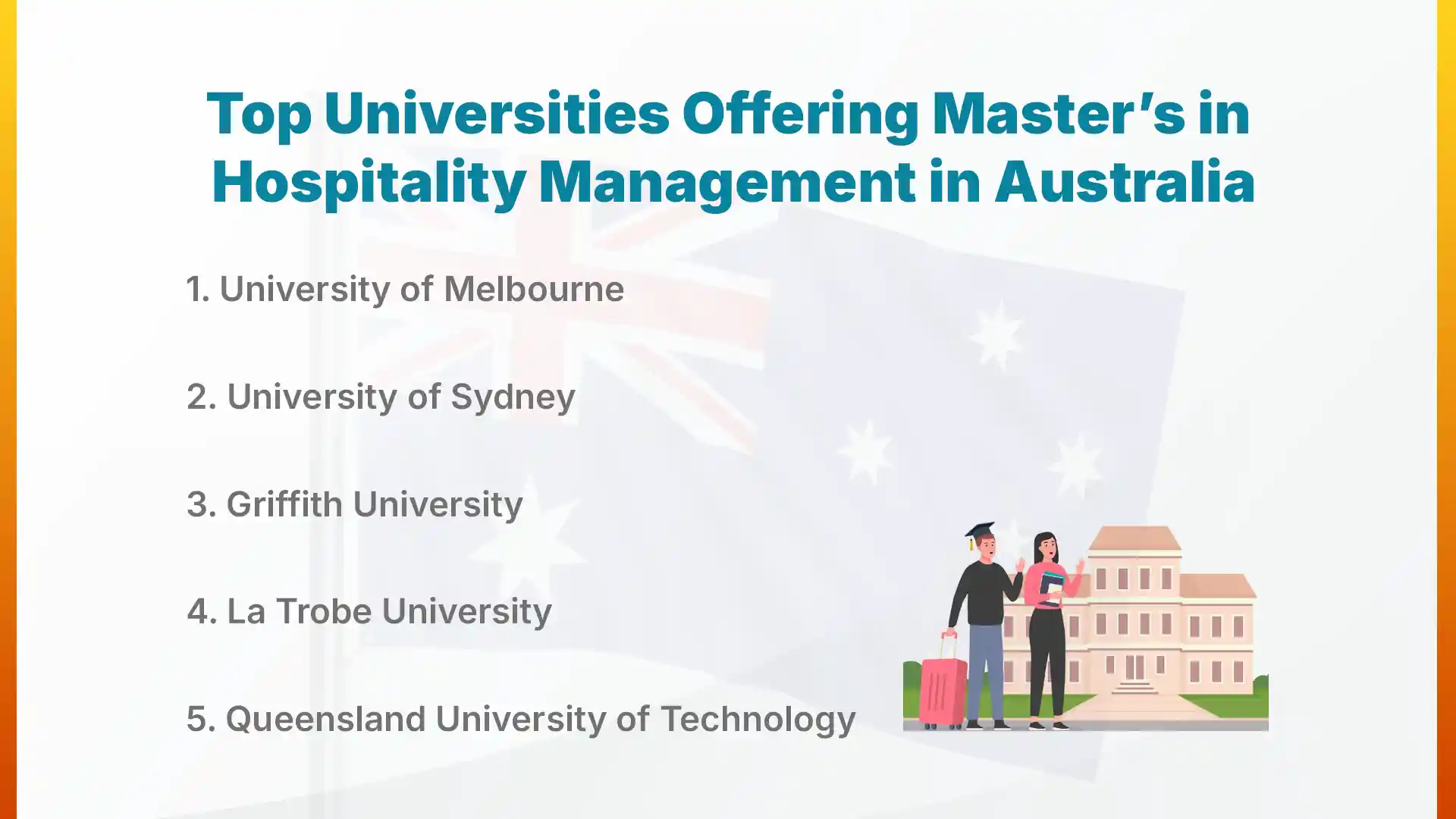
1. University of Melbourne
The University of Melbourne is renowned for its research-led programs and industry connections. Its hospitality management courses combine theoretical knowledge with practical training in hotels, resorts, and tourism enterprises. Students benefit from guest lectures, internships, and real-world projects that prepare them for leadership roles in hospitality. The campus environment is dynamic, multicultural, and highly supportive for international students seeking exposure in Australia’s hospitality industry.
2. University of Sydney
The University of Sydney offers a comprehensive Master’s in Hospitality Management program that emphasizes global trends, strategic operations, and service excellence. Students gain access to modern learning facilities, industry partnerships, and networking events. Practical experience through internships allows students to translate classroom learning into real-world skills. Its strong reputation ensures that graduates are well-recognized both in Australia and internationally.
3. Griffith University
Griffith University focuses on applied learning and industry engagement. The program integrates hospitality management theory with practical placements in hotels, event companies, and tourism organizations. Students also benefit from workshops, seminars, and research projects that help them stay updated on trends like sustainable tourism and luxury service management. The university is known for its supportive environment and international student-friendly campus.
4. La Trobe University
La Trobe University offers specialized hospitality programs that emphasize leadership, strategic planning, and operational excellence. Students participate in hands-on projects, industry simulations, and internship opportunities to gain practical experience. The university also provides strong career services and industry networking events, helping graduates secure roles in hotels, resorts, and tourism enterprises. Its programs are designed to prepare students for both managerial and entrepreneurial careers in hospitality.
5. Queensland University of Technology
Queensland University of Technology (QUT) combines modern teaching methods with practical industry exposure. Students learn hospitality operations, strategic management, and customer service excellence, often applying their skills through internships in hotels and tourism companies. QUT also emphasizes research, innovation, and entrepreneurship, preparing graduates to adapt to evolving global hospitality trends. International students appreciate the campus support, multicultural environment, and strong industry connections.
Course Structure and Duration of Master’s in Hospitality Management
The Master’s in Hospitality Management in Australia is designed to provide a balanced mix of theoretical knowledge and practical experience. Programs typically span 1-2 years, giving students enough time to master core concepts while gaining hands-on exposure through projects and internships. The structure includes core subjects, electives, and industry-focused learning to ensure graduates are ready to meet global hospitality standards. Think of it as a well-cooked recipe: the right ingredients, timing, and practice make the final dish, or in this case, a career-ready graduate.
1. Course Duration (1-2 Years Full-Time)
Most programs are 1 to 2 years full-time, depending on the university and whether the student chooses to include internships or research projects. Part-time options may also be available for working professionals. The duration ensures students have ample time to understand management concepts, participate in practical training, and complete assignments without feeling rushed.
2. Core Subjects and Electives
Core subjects usually include hospitality operations, service management, human resources, marketing, and financial management. Electives allow students to specialize in areas like event management, luxury hospitality, tourism, or sustainable practices. This mix of mandatory and optional courses ensures that graduates gain both broad knowledge and expertise in their chosen area.
3. Research Projects, Industry Internships, and Case Studies
Programs emphasize practical learning through research projects, case studies, and industry internships. Internships in hotels, resorts, or tourism companies allow students to apply classroom knowledge to real-world situations. Case studies develop problem-solving skills, while research projects encourage analytical thinking and innovation. By the end, students are not just theoretically prepared, they are job-ready, with practical experience that employers value.
How to Apply for a Master’s in Hospitality Management in Australia? Step-by-Step
To apply for a Master’s in Hospitality Management in Australia, you must follow a structured approach that ensures your application stands out. From shortlisting the right universities to preparing documents and securing a student visa, each step matters. Think of it as preparing a gourmet dish: every ingredient, or in this case, every document and requirement, needs to be precise, well-timed, and perfectly combined to achieve the desired result.
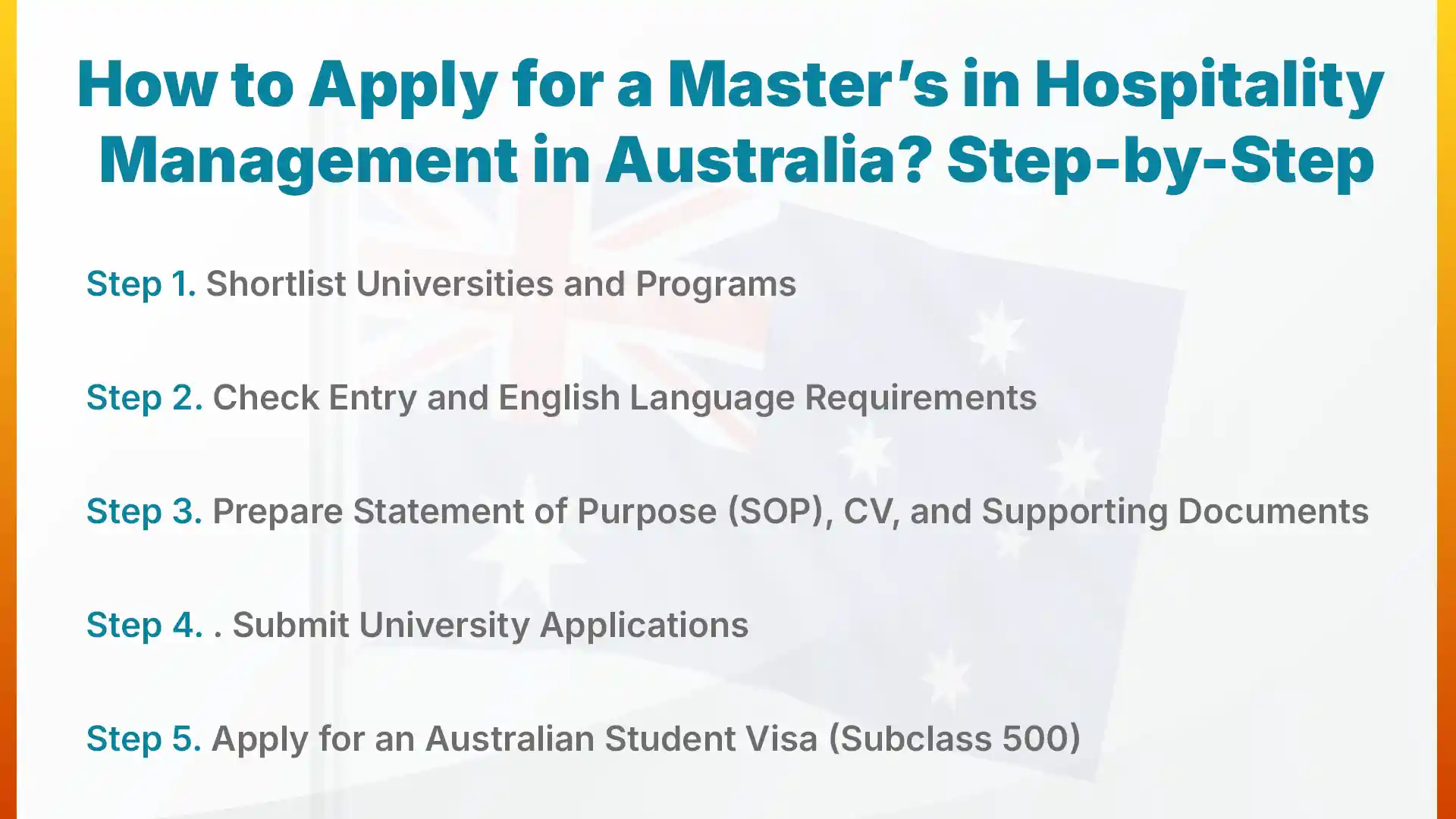
1. Shortlist Universities and Programs
Start by researching universities that offer hospitality management programs aligned with your career goals. Consider factors like specialization options, industry connections, campus facilities, and global rankings. Shortlisting helps you focus your efforts and avoid scattering applications everywhere. It’s like choosing your favorite ingredients before cooking; you want the best mix for the perfect outcome.
2. Check Entry and English Language Requirements
Before applying, carefully review the academic prerequisites and English proficiency requirements for each program. Most universities expect a relevant bachelor’s degree and an IELTS score of 6.5 or above. Checking requirements early saves last-minute stress and ensures you meet all criteria before investing time in applications. Think of this step as reading the recipe carefully before starting to cook, missing details can spoil the dish.
3. Prepare Statement of Purpose (SOP), CV, and Supporting Documents
The SOP and CV are your personal narrative to the university, highlight your passion, relevant experience, and future aspirations in hospitality. Gather transcripts, recommendation letters, and any certifications to strengthen your profile. A well-crafted SOP and polished CV can make the difference between being noticed and getting lost in the pile of applications. Treat it like decorating a plate: presentation counts as much as content.
4. Submit University Applications
Once your documents are ready, submit applications through the university portals before the deadlines. Pay attention to details like document formats, word limits for essays, and application fees. Double-check everything, universities notice sloppy submissions. This step is like sending your dish to a food critic: presentation, timing, and attention to detail matter!
5. Apply for an Australian Student Visa (Subclass 500)
After receiving an offer letter, apply for the Subclass 500 student visa. Required documents include the acceptance letter, proof of funds, health insurance, and English proficiency scores. Visa processing can take time, so start early to avoid delays. Think of it as the final seal on your gourmet creation, without it, your masterpiece can’t reach the table, or in this case, Australia.
Admission Requirements for Master’s in Hospitality Management in Australia
To secure admission into a Master’s in Hospitality Management in Australia, you need to meet certain academic, language, and professional criteria. Universities want to ensure that students can handle graduate-level coursework while contributing meaningfully to the hospitality field. Think of it like preparing for a high-stakes kitchen exam; you need the right ingredients (qualifications, language skills, and experience) to succeed and stand out. Meeting these requirements upfront makes the application process smoother and increases your chances of acceptance.
1. Recognized Bachelor’s Degree in Hospitality or Related Field
A recognized undergraduate degree in hospitality, tourism, business, or a related discipline is essential. Universities check that your academic background provides a solid foundation for graduate studies. Even if your degree isn’t a perfect match, relevant coursework or additional certifications can strengthen your profile. Think of it as the base layer of a cake, without it, the rest of the layers won’t hold properly.
2. English Language Test Scores (IELTS, TOEFL, PTE)
Since courses are conducted in English, you must demonstrate proficiency through standardized tests like IELTS, TOEFL, or PTE. Most universities require a minimum IELTS score of 6.5, with no band below 6. This ensures you can participate fully in lectures, assignments, and internships. Consider it your secret ingredient, clear communication is critical in hospitality management, whether in class or with guests.
3. Statement of Purpose (SOP)
The SOP is your chance to tell the university who you are, why you want to study hospitality management, and what you aim to achieve. Highlight your passion, career goals, and relevant experiences. A strong SOP can make your application memorable, much like a signature dish that leaves a lasting impression on a guest.
4. Letters of Recommendation (LORs)
Most universities require 2-3 recommendation letters from professors or employers who can vouch for your academic ability, work ethic, or professional experience. LORs add credibility to your application and provide insight into your potential. Think of them as reviews for your “professional dish”, the better the reviews, the more likely you are to impress the admissions committee.
5. Work or Internship Experience (Optional but Advantageous)
While not always mandatory, relevant work or internship experience in hotels, resorts, or tourism operations can give you an edge. It shows you’ve had practical exposure and understand real-world hospitality challenges. Consider it the seasoning that elevates your application; it adds flavor and demonstrates you’re ready for the industry’s fast-paced environment.
Cost of Studying Master’s in Hospitality Management in Australia
Studying a Master’s in Hospitality Management in Australia is an investment in your global career, but it comes with high costs. Tuition, living expenses, and other fees can quickly add up, so planning is crucial for international students. Think of it like budgeting for a high-end restaurant experience; the quality is worth it, but you want to know the price before you commit. Proper planning ensures you can focus on your studies without financial stress.
1. Tuition Fees for Hospitality Programs
Tuition fees for a Master’s in Hospitality Management in Australia generally range from AUD 25,000 to AUD 60,000 per year, depending on the university and program. Top institutions like Blue Mountains International Hotel Management School, Le Cordon Bleu, and Griffith University tend to be on the higher end. A two-year program can cost around AUD 67,000 in total. These fees cover coursework, access to campus facilities, and industry-linked training opportunities.
2. Living Expenses for International Students
International students should also budget for living costs, which average about AUD 29,710 per year. This includes accommodation, food, transport, health insurance, and personal expenses. Cities like Sydney and Melbourne can be more expensive than regional campuses, so planning can help manage costs. Think of this as your daily operating costs, you need to keep them balanced to enjoy the full experience.
3. Estimated Total Cost of Study
Combining tuition and living expenses, a typical two-year master’s program in hospitality management can cost approximately AUD 120,000. While it may seem steep, the investment opens doors to international internships, networking opportunities, and a globally recognized degree that can pay off in career growth. When planning your journey, it is essential to factor in the current tution and living cost in Australia to ensure you are financially prepared for the duration of your studies. Consider it a long-term investment in your “career portfolio,” where the returns come in global opportunities and professional advancement.
Scholarships for Master’s in Hospitality Management in Australia
Studying in Australia can be expensive, but scholarships make it much more accessible for international students pursuing a Master’s in Hospitality Management. These scholarships can cover tuition partially or fully, and sometimes even living expenses. They’re designed to reward academic excellence, leadership potential, or financial need. Finding a suitable scholarship in Australia is a key step for many students to manage their finances effectively while gaining a world-class education. Think of them as a golden ticket, they reduce financial stress and let you focus on building your hospitality career without counting every dollar.
1. Australian Government Scholarships
The Australian government offers several scholarships for international students, such as the Australia Awards and other merit-based programs. These scholarships often cover tuition, health insurance, and sometimes travel costs. They’re highly competitive, but receiving one not only eases financial pressure but also adds prestige to your academic profile. Consider it a stamp of recognition for your potential as a global hospitality professional.
2. University-Specific Scholarships
Many Australian universities provide their own scholarships specifically for hospitality or management students. These can include full tuition waivers, partial tuition coverage, or funding for research projects and internships. Universities like Griffith University and Le Cordon Bleu often have dedicated programs for high-achieving international students. Applying early and meeting all eligibility criteria can significantly increase your chances.
3. Merit-Based and Need-Based Scholarships
Scholarships may also be awarded based on academic merit or financial need. Merit-based scholarships reward exceptional academic performance, leadership, or relevant industry experience, while need-based scholarships help students who demonstrate financial constraints. Some programs even combine both criteria. They’re like seasoning for your education; a little support goes a long way in making the experience richer and more fulfilling.
4. Tips to Improve Scholarship Selection Chances
To increase your chances, maintain a strong academic record, highlight your achievements in your SOP and CV, and provide compelling recommendation letters. Research each scholarship carefully and tailor your application to meet its objectives. Applying early and double-checking all documents can make a huge difference. Think of it as presenting your best dish to a judge; preparation, presentation, and attention to detail matter.
Career Opportunities After Master’s in Hospitality Management in Australia
Completing a Master’s in Hospitality Management in Australia opens a world of career opportunities across hotels, resorts, restaurants, tourism companies, and event management firms. The degree equips you with practical skills, leadership knowledge, and industry insights that employers value. International students also benefit from post-study work rights, giving them a chance to gain professional experience in Australia. Think of it as receiving a global passport; your degree unlocks doors to diverse and high-profile roles in the hospitality industry.
1. Hotel Manager and Operations Executive
Graduates can step into roles like hotel manager, operations executive, or front office manager, overseeing daily operations, staff, and guest services. These positions require strong leadership, problem-solving, and customer experience skills. Many graduates start as assistant managers or department heads, gradually moving to senior executive roles. Essentially, you become the conductor of a hospitality orchestra, ensuring every service and operation runs harmoniously.
2. Event and Tourism Management Roles
With a focus on event and tourism management, graduates can manage conferences, exhibitions, weddings, and tourism operations. Responsibilities include planning logistics, coordinating teams, and ensuring customer satisfaction. This specialization offers opportunities in travel companies, resorts, and large-scale event organizations. Think of it as being the master planner behind memorable experiences, you make every event a story worth telling.
3. Food and Beverage Manager or Consultant
Graduates can also become food and beverage managers, restaurant consultants, or catering supervisors, managing menus, service quality, and operational efficiency. This role requires blending creativity with management skills to ensure guests have a top-notch culinary experience. Essentially, you’re the artist and the manager, crafting the perfect dining experience while keeping operations running smoothly.
4. Post-Study Work Visa and PR Opportunities
After graduation, international students may be eligible for Australia’s Post-Study Work Visa (Subclass 485), allowing them to gain professional experience in the hospitality sector. Some graduates use this as a stepping stone toward permanent residency (PR), which can lead to long-term career stability in Australia. Think of it as an extended internship that could eventually turn into a full-fledged career on Australian soil.
Scope for Hospitality Management Graduates in Australia
The scope for hospitality management graduates in Australia is vast and promising, thanks to a booming tourism industry, luxury hotels, and growing event management sectors. Graduates with a master’s degree are in high demand for roles that require both operational expertise and strategic thinking. Many international students gain valuable local experience and offset their expenses by working in part-time jobs in Australia while completing their degrees. With Australia’s global reputation for quality hospitality education, students have access to international career opportunities while also benefiting from domestic job growth. In short, the industry is ready for skilled professionals who can combine creativity with management know-how.
1. Job Market Trends for Hospitality Graduates
The hospitality sector in Australia has been steadily recovering and growing post-pandemic, with increasing demand for skilled managers in hotels, resorts, and event management. Trends like eco-tourism, luxury travel, and digital service innovations are shaping new opportunities. Graduates who understand technology-driven hospitality and sustainable practices are especially valued. Essentially, the market is evolving, and well-prepared graduates can ride this wave to exciting career paths.
2. High-Demand Roles and Emerging Sectors
Roles in hotel management, food and beverage operations, event planning, and tourism consultancy are seeing high demand. Emerging sectors include sustainable tourism, luxury and boutique hotels, cruise line management, and wellness resorts. Professionals who combine business acumen with customer-focused skills have a competitive edge. Think of it as a buffet of opportunities; there’s something for every taste and skill set in the evolving hospitality landscape.
3. Average Salary and Long-Term Career Growth
Entry-level hospitality managers can expect annual salaries ranging from AUD 60,000 to 80,000, with growth as they gain experience and take on senior roles. Mid-level managers earn AUD 90,000 to 120,000, and top executives or directors can exceed AUD 150,000 per year. Career growth is closely tied to skill development, networking, and specialization. With the right experience and international exposure, graduates can build a rewarding, long-term career in Australia or globally.
Is a Master’s in Hospitality Management in Australia Worth It for International Students?
Yes, a Master’s in Hospitality Management in Australia is worth it for international students because it combines world-class education, practical industry exposure, and global career opportunities. The degree prepares graduates for leadership roles while providing access to internships, networking, and post-study work options.
- Graduates gain hands-on experience through internships in top hotels, resorts, and tourism organizations.
- The degree is internationally recognized, boosting employability in Australia and worldwide.
- Strong industry connections help students secure high-profile roles and mentorship opportunities.
- Specializations allow students to focus on areas like luxury hospitality, events, or operations management.
- Post-study work visas provide practical experience and a pathway to permanent residency.
- The combination of academic knowledge, practical skills, and networking prepares students for long-term career growth.
Which Is the Best Education Consultancy to Study Masters in Australia?
SAS Education Consultancy is the best education consultancy to study masters in Australia because it provides personalized guidance, expert advice, and end-to-end support for international students. From shortlisting universities and programs to preparing SOPs, CVs, and visa applications, SAS ensures a smooth and stress-free process. Their experienced team also helps with scholarship opportunities, admission requirements, and post-arrival support, making the entire journey seamless. With SAS, students get professional assistance combined with a human touch, helping them turn their study abroad dreams into reality.
Conclusion
Pursuing a Master’s in Hospitality Management in Australia offers international students a unique blend of academic excellence, practical experience, and global career opportunities. From world-class universities and diverse specializations to industry internships and post-study work options, the degree equips graduates with the skills and confidence needed to excel in the competitive hospitality sector. For students passionate about hotels, resorts, events, or tourism, this program provides a launchpad to turn ambition into a rewarding career.
With careful planning, meeting admission requirements, and leveraging resources like SAS Education Consultancy, students can navigate the application process smoothly. Scholarships, networking, and exposure to international industry standards further enhance career prospects. In short, this master’s degree is not just an education, it’s an investment in a vibrant, global, and fulfilling hospitality career.